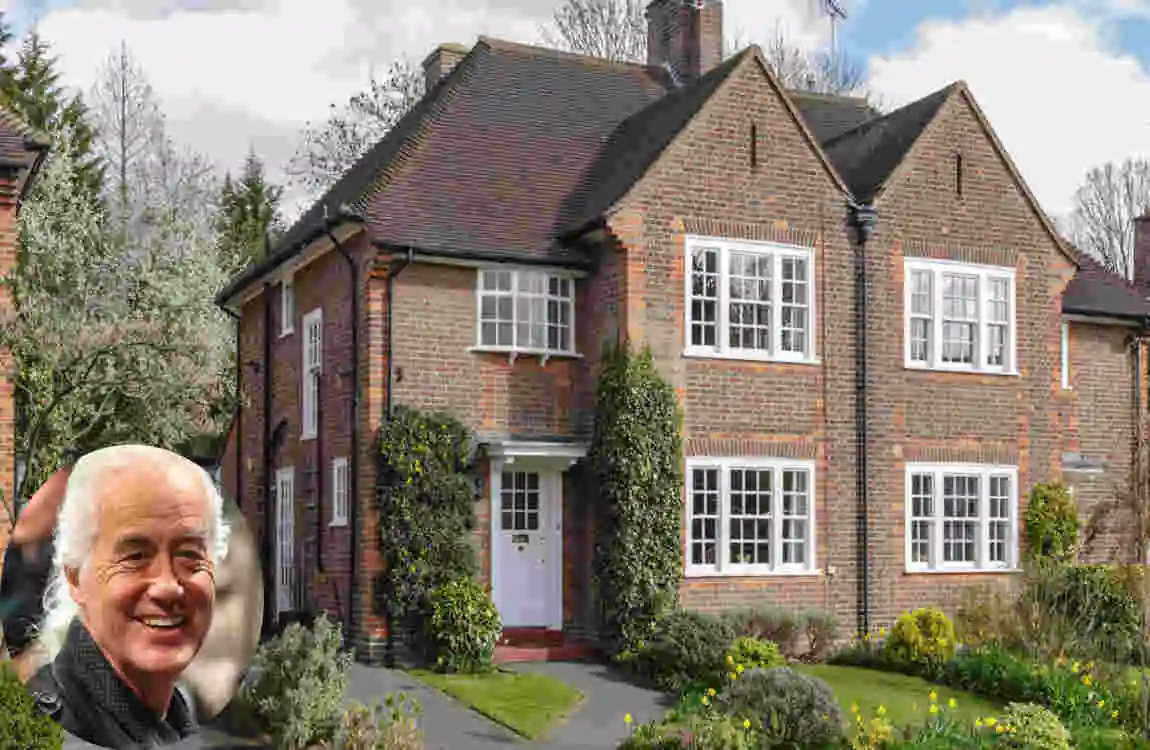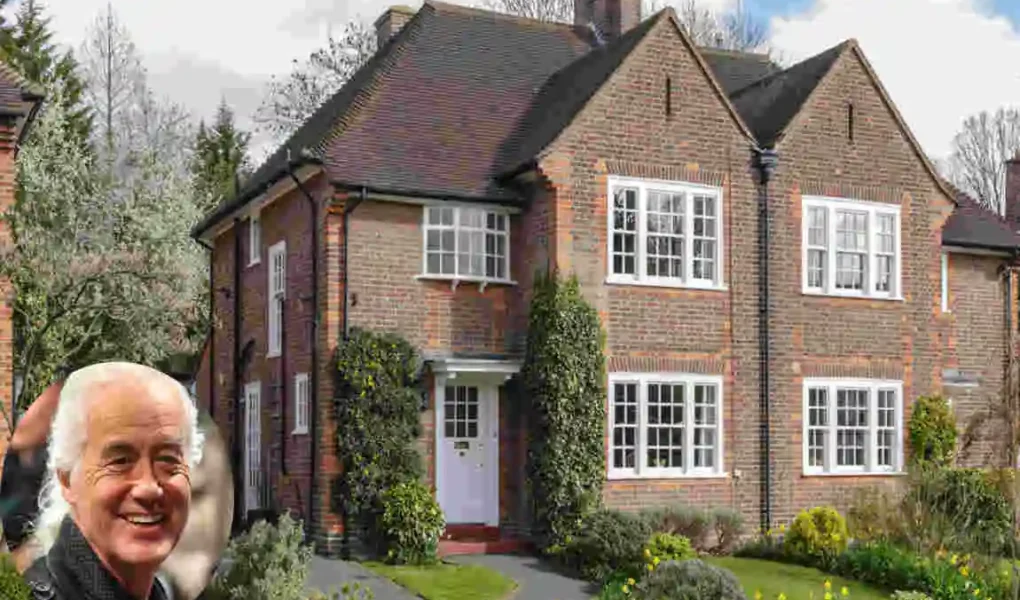
walking down a quiet, leafy street in one of London’s most affluent neighborhoods. Surrounded by neat, polite, and traditional white-stucco homes, you suddenly stumble upon a structure that looks like it was plucked straight out of a medieval fairytale. This is a mystical Victorian fortress, complete with towering red-brick turrets, gothic windows, and an aura of deep, undeniable mystery.
Step inside Jimmy Page’s house, the iconic Tower House mansion in London’s Royal Borough of Kensington, and you are stepping into a world where rock and roll history meets 19th-century architectural magic. For decades, this home has stood as a physical mirror to Led Zeppelin’s enigmatic, larger-than-life legacy. It is a place of grand design, rumored mystical rituals, and unparalleled musical history.
You might know Jimmy Page as the guitar-wielding wizard behind the heaviest riffs in rock history. But away from the flashing concert lights and roaring stadiums, he is a dedicated custodian of history. He purchased this incredible property in the early 1970s, and it has served as his ultimate private sanctuary ever since.
The History of Tower House: Jimmy Page’s Victorian Masterpiece
You cannot fully appreciate Jimmy Page’s house without traveling back in time to the 19th century. The story of this building is just as dramatic and colorful as a Led Zeppelin guitar solo.
Origins in the 19th Century
The Tower House was built between 1875 and 1881. It was the personal passion project of William Burges, a highly eccentric and brilliant architect. Burges was a leading figure in the Gothic Revival movement.
What is Gothic Revival? Simply put, it was an architectural trend that looked backward to the Middle Ages for inspiration. Think of pointed arches, steep roofs, intricate stone carvings, and vibrant stained glass. Burges didn’t just want to build a house; he wanted to build an earthly paradise, a medieval fantasy right in the heart of Victorian London.
Burges designed the house to resemble a French Gothic townhouse. He filled it with mythical motifs, relying on themes of time, love, and literature for the interior decorations. Every single room had a specific theme and a story to tell.
Notable Past Owners and Events
Because the house is so unique, it has naturally attracted a fascinating cast of characters over the decades. It has always been a magnet for creative, slightly eccentric individuals.
At one point, the famous author Rudyard Kipling (who wrote The Jungle Book) had connections to the property’s history, as the artistic circles of London frequently overlapped. Later on, in the 1960s, the famous actor Richard Harris (whom modern audiences might know as the original Albus Dumbledore in the Harry Potter films) bought the house.
Legend has it that the incredible musician David Bowie also desperately wanted to buy the Tower House. He was reportedly outbid or beaten to the punch by Jimmy Page. How might the history of the house have changed if Ziggy Stardust had moved in instead?
There were also whispers that the house had a “cursed” reputation. William Burges died in the house shortly after it was completed. Some previous owners claimed to experience bad luck or strange occurrences. But for a man like Jimmy Page, who embraced the dark and the mysterious, a supposedly cursed house was likely just an added bonus.
Jimmy Page’s Restoration Efforts
When Page bought the home, it needed work. But instead of tearing out the old to make way for the new, he embarked on multi-million-pound restoration efforts.
He painstakingly preserved the occult-looking symbols, the massive, ornate fireplaces, and the delicate stained glass. He hired specialist artisans to touch up the faded paint on the ceilings and repair the complex wood carvings.
Here is a quick timeline of the history of Jimmy Page’s house:
- 1875 – 1881: Initial construction by architect William Burges.
- Late 1800s – Mid 1900s: Passes through various owners, maintaining its eccentric reputation.
- 1969: Actor Richard Harris buys the home, saving it from potential demolition.
- 1972: Jimmy Page buys the home, outbidding other celebrities, and begins his lifelong stewardship.
- 2000s – Present: Continuous, careful modern upgrades that respect the original Victorian architecture, including major battles to protect the foundation from neighboring construction.
Architectural Marvels of Jimmy Page’s House
Let’s take a closer look at the actual bricks, mortar, and magic that make up this incredible property. Inside Jimmy Page’s house architecture, you will find details that boggle the mind. It is a sensory overload of color, texture, and hidden meanings.
Exterior Glory: Turrets, Towers, and Mythical Designs
If you stand on the sidewalk outside, the first thing you notice is the striking red-brick facade. It completely stands out from the polite, white-painted houses surrounding it.
The most prominent feature is the large, cylindrical tower that gives the house its name. This tower features a conical roof covered in slate, looking like a wizard’s lookout post.
But look closer. The exterior is decorated with intricate stone carvings. There are dragons, griffins, and strange mythical beasts watching over the street. For a rockstar deeply invested in mythology—remember, Led Zeppelin frequently referenced The Lord of the Rings and ancient legends in their music—these exterior details were a perfect match.
Interior Highlights: Lavish Rooms and Hidden Features
The moment you step through the heavy front doors, you enter a different universe. The interior of the Jimmy Page Tower House is heavily themed. William Burges designed the ground floor for entertaining, the first floor for relaxing, and the upper floors for sleeping.
The Grand Hall welcomes you with incredible warmth. The floors are laid with intricate mosaic tiles, and the walls are paneled in rich, dark wood.
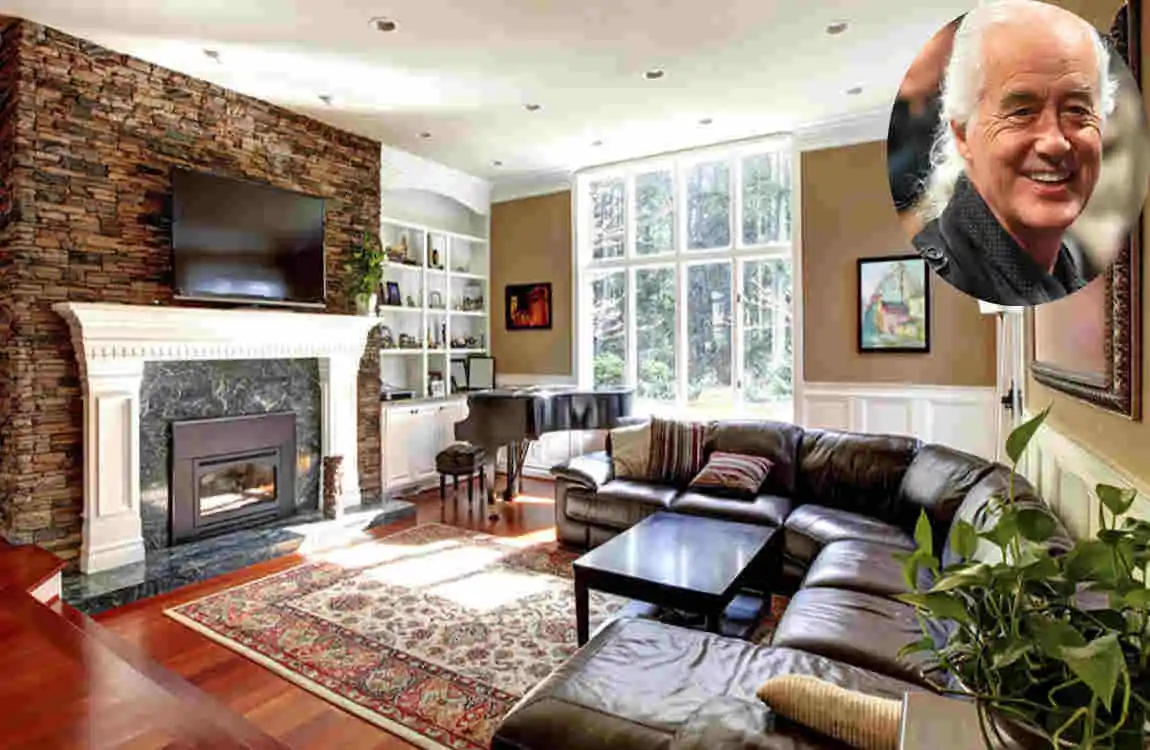
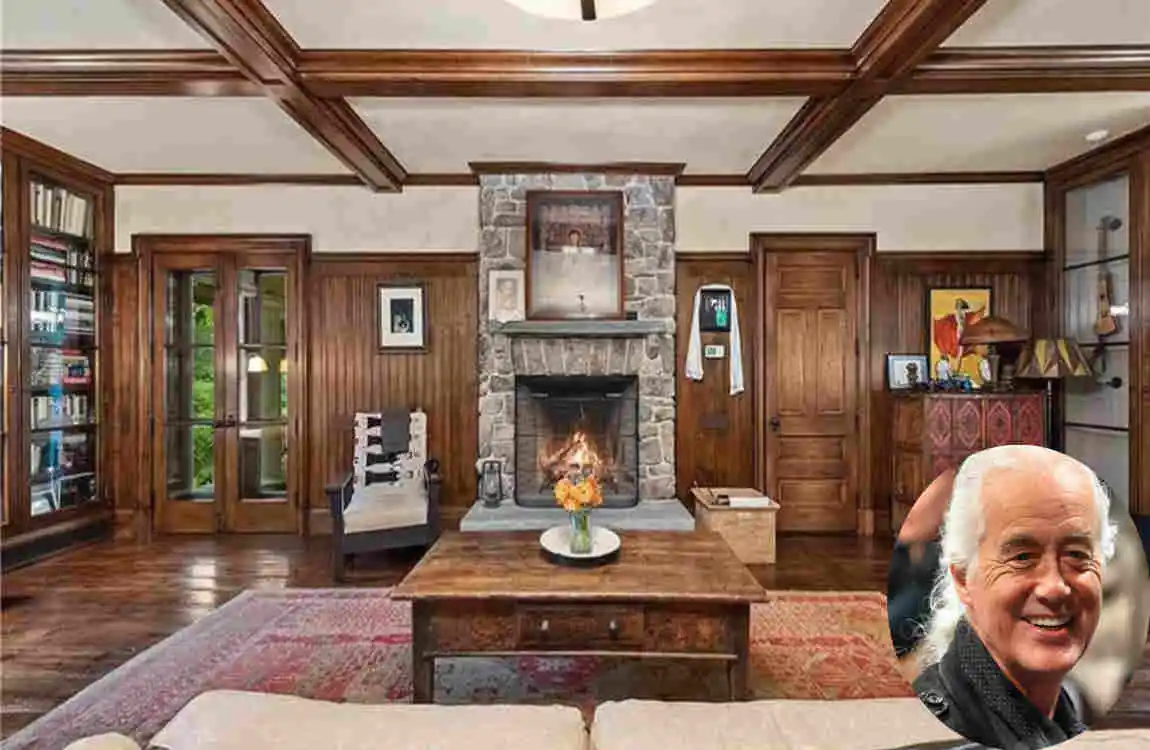
One of the most famous spaces is the Library. This room is a masterpiece of design, featuring a massive, sculpted fireplace meant to represent the dispersal of languages at the Tower of Babel. For Page, this library became the perfect place to house his extensive collection of rare books, including works by the controversial occultist Aleister Crowley.
Then there is the Drawing Room, which focuses on the theme of love. The walls are painted with romantic figures from history and mythology. The ceilings in the house are an absolute marvel, often painted with maps of the stars, zodiac signs, and swirling galaxies.
Unique Amenities and Luxury Touches
While the house is incredibly old, it is still a luxury mansion. Page has ensured the home fits his lifestyle while respecting its history.
Here are a few standout features of the property:
- The Zodiac Ceilings: Elaborate, hand-painted astrological maps that cover the ceilings of the main bedrooms, reflecting both the architect’s and Page’s love for the cosmos.
- The Butterfly Room: A specific bedroom where the dome ceiling is painted with hundreds of delicate butterflies, creating a dreamy, ethereal atmosphere.
- The Great Bookcase: A massive, custom-built piece of furniture designed by Burges himself, which Page fiercely protects.
- Custom Gardens: While urban gardens in London are usually small, the grounds around the Tower House are lush, overgrown, and highly private, acting as a green moat against the busy city.
- Soundproof Spaces: As a musician, Page naturally required spaces to play and listen to music loudly without disturbing the neighbors. He created specialized Audio rooms to enjoy his massive vinyl collection in perfect acoustics.
- The Wine Cellar: A deep, cool basement area perfect for storing rare vintages, typical of grand Victorian homes.
- Hidden Doors: The house features several concealed entryways and hidden panels built into the wooden wainscoting, adding to the mansion’s mysterious vibe.
Led Zeppelin Secrets Tied to Jimmy Page’s Tower House
You cannot talk about Jimmy Page’s home without diving into the folklore of his band. The house and the band are permanently linked in rock history. The dark, brooding, and deeply creative atmosphere of the mansion perfectly mirrored the music Led Zeppelin was creating in the 1970s.
Occult Influences and Aleister Crowley Connections
It is a well-known fact that Jimmy Page had a deep fascination with the early 20th-century occultist Aleister Crowley. Page even owned an occult bookshop in London called The Equinox and bought Crowley’s former home, Boleskine House, up in Scotland.
Because of this, many people assumed the Tower House was also a hub of dark magic. The media loved to spin stories about secret rituals taking place in the basement. The gothic architecture of the house—with its gargoyles, zodiac ceilings, and heavy shadows—only fueled these rumors.
While Page has always remained tight-lipped about the extent of his occult practices, he admitted that the atmosphere of the Tower House was deeply inspiring. Fans have long debated whether the mystical vibes of the house directly inspired the lyrics and composition of monumental tracks like “Stairway to Heaven.” While the song was mostly written elsewhere, the spiritual energy Page cultivated at home undoubtedly bled into his creative process.
Recording Sessions and Band Lore
Did Led Zeppelin record in the Tower House? Officially, the band used major recording studios and famous country houses like Headley Grange to record their albums.
However, the Tower House was absolutely a place of musical creation. Rumors suggest that Page used his private soundproofed rooms to listen to early mixes of Led Zeppelin albums, tweaking the production to perfection.
The house also ties deeply into the band’s visual lore. The mystical, heavily symbolic artwork found on albums like Led Zeppelin IV (which features the famous hermit on the mountain) feels perfectly at home in the gothic halls of the Kensington mansion. The house was a physical manifestation of the band’s brand.
Famous Visitors and Wild Stories
During the 1970s, Led Zeppelin was notorious for their wild, destructive partying. But interestingly, the Tower House was rarely the scene of trashed hotel rooms or thrown televisions. Page respected the house too much to let it be destroyed by rock and roll excess.
That said, the house saw its fair share of famous visitors. Bandmates like Robert Plant and John Paul Jones were frequent guests. Other rock legends of the era, from members of The Rolling Stones to Pink Floyd, likely passed through those heavy doors for private gatherings.
There are also the inevitable ghost stories. Given its age, its original owner dying inside, and its spooky aesthetic, visitors have occasionally claimed to feel strange cold spots or hear unexplained footsteps echoing on the wooden staircases. Whether these are true ghosts or just the settling of an old Victorian house is up for debate.
Modern-Day Mysteries
Today, the biggest secret of the Tower House is simply what it looks like on the inside right now. Jimmy Page is notoriously private. He fiercely guards his personal life and his sanctuary.
Despite intense fan fascination, the public is strictly denied access. You cannot buy a ticket to tour Jimmy Page’s house. This extreme privacy has only heightened the mystery. People stand on the sidewalk outside, snapping photos of the brickwork, wondering what the guitar legend is doing inside at that very moment.
Lifestyle Inside Jimmy Page’s House: A Rock Legend’s Haven
So, what is it actually like to live in a 19th-century Gothic castle in the middle of modern-day London? For Jimmy Page, it is a lifestyle that balances quiet contemplation with fierce battles for privacy.
Daily Life and Privacy Measures
Living as a rock god in a major city requires intense security. Kensington is home to many wealthy individuals, but Page is a global icon. The Tower House is equipped with high-tech security systems, cameras, and reinforced gates to keep overzealous fans at bay.
Page’s daily routine is said to be quite reclusive. He spends his days managing the extensive Led Zeppelin archives, remastering old live recordings, and tending to the endless maintenance a historic property requires. He is often seen as a quiet, polite neighbor, a far cry from his wild touring days in the 1970s.
However, living in such close quarters with neighbors has led to some highly publicized drama. The most famous example is his long-running feud with his next-door neighbor, the pop star Robbie Williams.
Williams bought the house next door and wanted to build a massive underground basement, complete with a swimming pool. Page fought this construction tooth and nail for years. He argued that the heavy vibrations from the digging would cause irreversible damage to the fragile, historic foundations of the Tower House. This feud made tabloid headlines for years, proving that even rock legends have to deal with annoying neighbor disputes!
The Home as a Creative Sanctuary
Beyond the security cameras and neighborly spats, the home remains a vibrant, creative sanctuary.
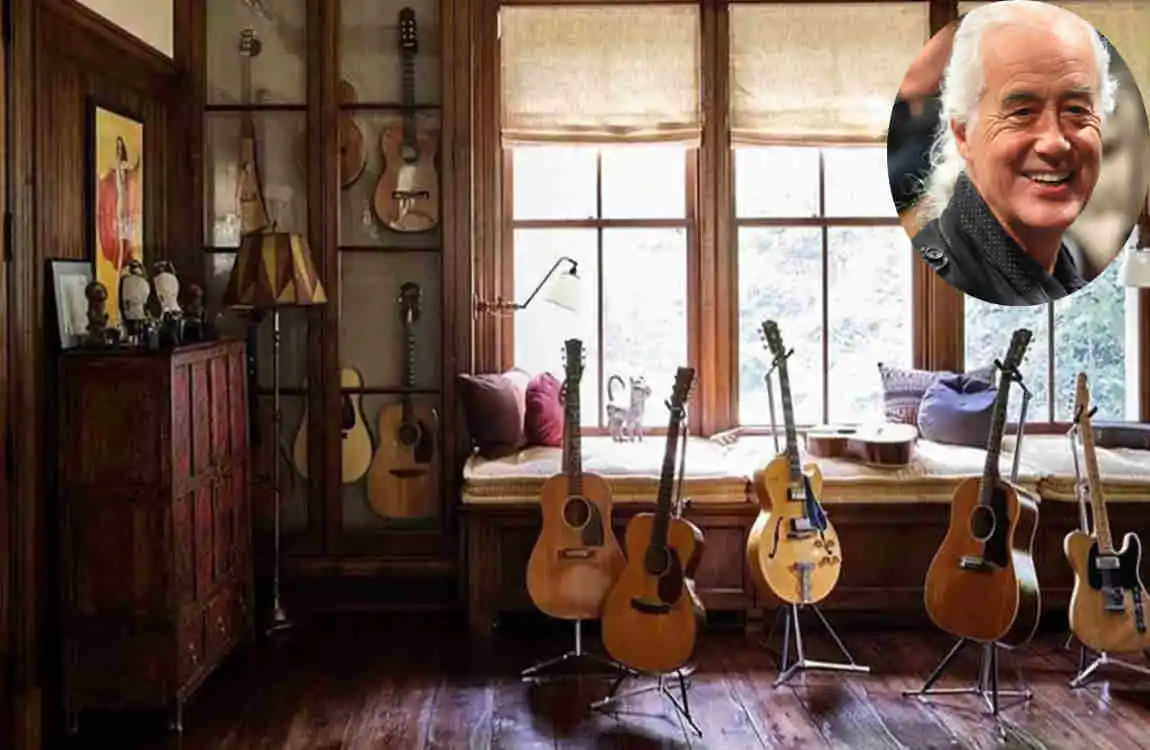
Inside, you will find incredibly valuable art collections, vintage music posters, and, of course, a staggering collection of guitars. Page’s iconic double-neck Gibson SG and his beloved sunburst Les Pauls have all rested within these walls.
The environment of the house continues to influence him. It is easy to see how sitting by a roaring fire in a medieval-style library, surrounded by ancient books, would keep a musician’s mind sharp and imaginative. Even his later solo work and collaborations carry the heavy, dramatic weight that seems to seep from the very bricks of his home.
Comparisons to Other Rockstar Homes
When you compare Jimmy Page’s house to the homes of his peers, his unique taste becomes even more obvious.
Take Mick Jagger of The Rolling Stones, for example. Jagger is known for owning multiple sleek, highly modern apartments around the globe, favoring clean lines and contemporary art. The late David Bowie, while he loved the Tower House initially, eventually settled into beautiful, modern estates in New York and the Caribbean.
Most rock stars use their money to buy convenience, sunshine, and modern luxury. Jimmy Page used his money to buy a piece of history, complete with all the drafts, creaky floorboards, and maintenance headaches that come with it. It shows a deep level of dedication to art over simple comfort.
Current Value, Market Buzz, and Visiting Jimmy Page’s House
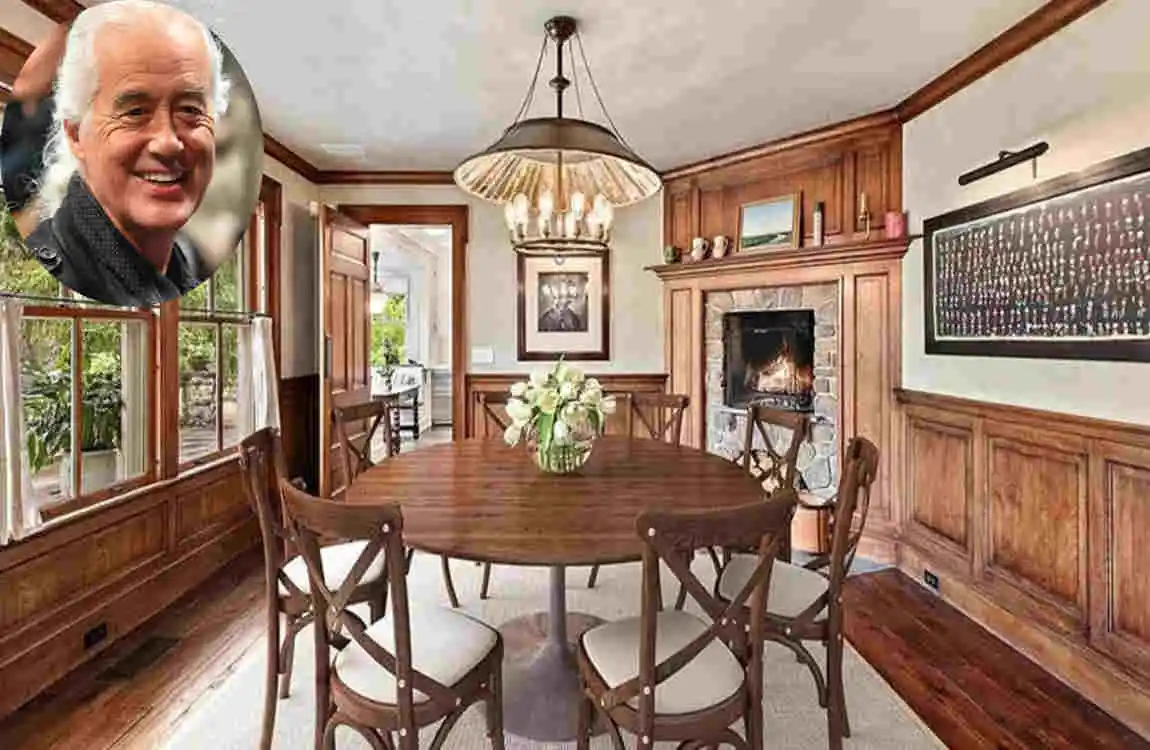
As property values in London continue to skyrocket, the Tower House stands as one of the most intriguing pieces of real estate in the United Kingdom.
Estimated Worth and Real Estate Scoop
Kensington is already one of the most expensive places to live on Earth. When you take a prime piece of land in this borough and place a completely unique, historically significant, celebrity-owned mansion on top of it, the value becomes astronomical.
Real estate experts currently estimate the value of Jimmy Page’s house today to be anywhere between £15 million and £25 million (or more, depending on the current market).
However, if you are a wealthy buyer hoping to snatch it up, you are out of luck. Page has made it abundantly clear that he has absolutely no plans to sell. He views himself as a temporary guardian of the house, and he will likely remain there for the rest of his life.
Can You Visit or Tour the Mansion?
For Led Zeppelin fans and architecture nerds, the burning question is always: “Can I go inside?”
The short answer is no. The house is a strictly private residence. There are no guided tours, no gift shops, and no public open days. Jimmy Page values his privacy above almost everything else.
However, all is not lost. Over the years, a few lucky journalists and architectural historians have been granted brief access to photograph the interiors. Because of this, you can find virtual glimpses and historical photographs online. Additionally, because the house is a Grade I listed building (meaning it is protected by the government for its historical importance), detailed architectural plans and descriptions are available in public historical archives.
Investment Lessons from Jimmy Page’s House
There is a surprising financial lesson to be learned from Page’s eccentric purchase. Buying historic properties can be an incredible investment.
When Page bought the modern house for £350,000 in 1972, people thought he was crazy for spending so much on a drafty old building. But by fiercely protecting its original features rather than modernizing it, he preserved its unique market value. Today, it is a priceless artifact.
Here is a quick breakdown of the property’s stats:
Feature Details
Property Size Approx. 6 massive bedrooms, spanning over 0.5 acres in the city
Estimated Value £20 Million+ (Highly dependent on market and historical Premium)
Location Melbury Road, Kensington, West London
Architectural Style Victorian, French, Gothic Revival
Protection Status Grade I Listed Building (Highest level of historical protection in the UK)
Frequently Asked Questions About Jimmy Page’s House
Where is Jimmy Page’s house located? The magnificent Tower House is located on Melbury Road in the Royal Borough of Kensington, West London. It sits in an incredibly affluent neighborhood known for its prime real estate and celebrity residents.
How much is Jimmy Page’s house worth? While it is not currently on the market, real estate experts estimate the historic property to be worth somewhere around £20 million. Its unique architectural status and famous owner add a massive Premium to its value.
Are there Led Zeppelin secrets in Jimmy Page’s house? Yes! The house is famously tied to Page’s deep interest in the occult and esoteric philosophies, including connections to the works of Aleister Crowley. The mystical atmosphere of the home is widely believed to have inspired the brooding, magical tone of many classic Led Zeppelin song compositions.
Can I tour Jimmy Page’s Tower House? Unfortunately, you cannot. The mansion is Jimmy Page’s strictly private residence, and he guards his privacy fiercely. While you can admire the stunning red-brick exterior and turrets from the public sidewalk, the interior remains closed to the public. However, occasional historical photos and virtual glimpses can be found online for curious fans.
Where Does Jimmy Page Currently Live?
Jimmy Page currently lives at The Tower House, a historic late‑Victorian mansion at 29 Melbury Road in Holland Park, Kensington and Chelsea, West London.
Jimmy Page’s house Photo