Did you know that windows are responsible for up to 30% of a home’s energy loss? That’s a significant amount of energy—and money—literally going out the window. But here’s the good news: upgrading to energy-efficient windows can help you recover these costs in as little as 5-7 years while making your home more comfortable and eco-friendly.
Let’s dive into why upgrading your windows is one of the smartest investments you can make for your home.
Why Upgrade Windows?
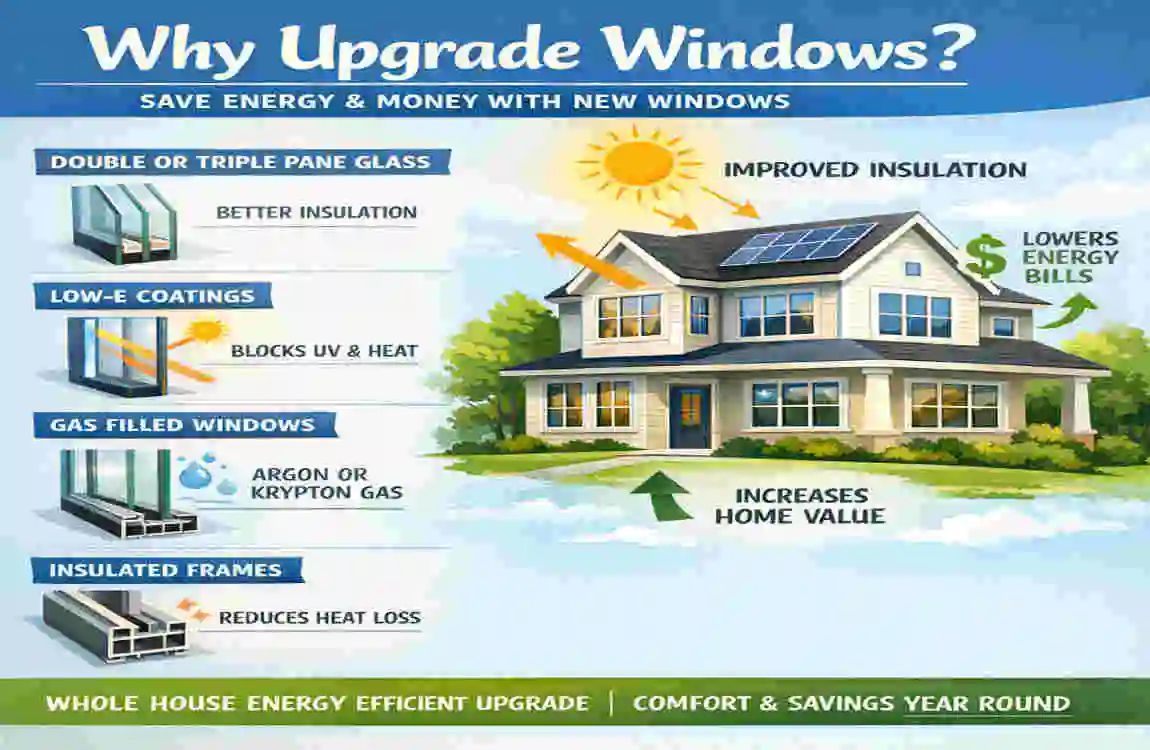
Upgrading your windows isn’t just about aesthetics—it’s about improving your home’s energy efficiency, comfort, and overall value. Let’s explore why this upgrade is worth considering.
How Windows Contribute to Energy Loss
Windows are a major source of energy loss in homes due to:
- Conduction: Heat passes through the glass and frame.
- Radiation: Sunlight heats your interiors, increasing cooling costs.
- Air Leaks: Poorly sealed windows allow drafts, making your HVAC system work harder.
Key Benefits of Energy-Efficient Windows
- Lower Energy Bills: Save 30-50% on heating and cooling costs by reducing energy loss.
- UV Protection: Protect your furniture and flooring from harmful UV rays.
- Noise Reduction: Enjoy a quieter home with better insulation against outside noise.
- Consistent Comfort: Eliminate hot and cold spots by maintaining uniform indoor temperatures.
Climate Considerations
In hot, humid climates like, energy-efficient windows with a low Solar Heat Gain Coefficient (SHGC) are ideal. These windows block excess heat, reducing the need for air conditioning.
Tax Credits and Rebates
Many governments offer tax credits and rebates for installing ENERGY STAR-certified windows. These incentives can significantly offset the initial cost of upgrading.
Key Features of Energy-Efficient Windows
When shopping for energy-efficient windows, it’s essential to understand the features that make them effective. Here’s a breakdown of the most important specifications and technologies.
U-Factor
The U-factor measures how well a window resists heat transfer. Look for windows with a U-factor between 0.20 and 0.30 for optimal insulation.
Solar Heat Gain Coefficient (SHGC)
SHGC measures how much solar heat a window allows in. For hot climates, aim for an SHGC of 0.25 to 0.40 to minimize heat gain.
Low-E Coatings
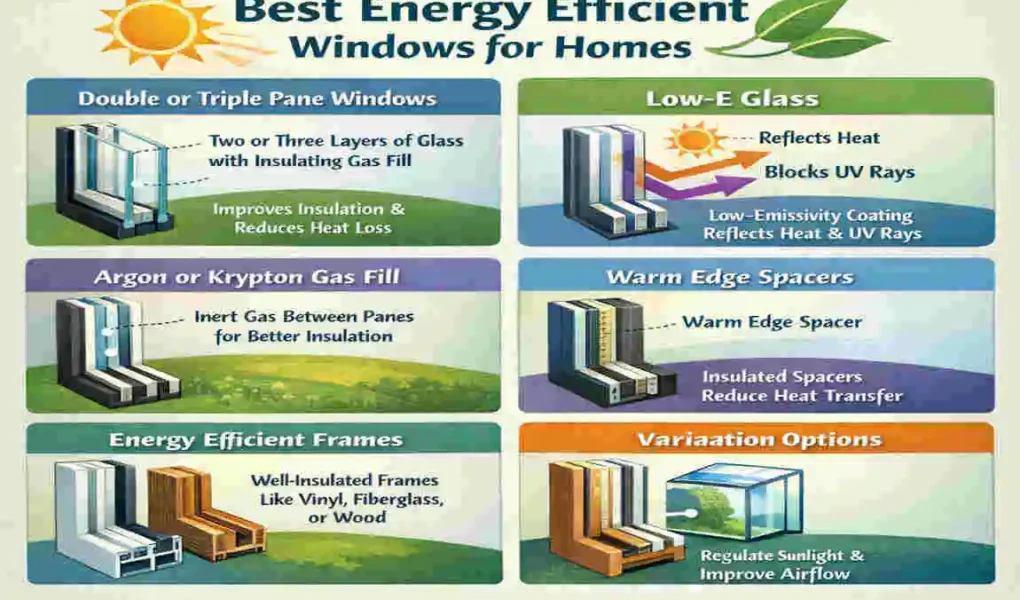
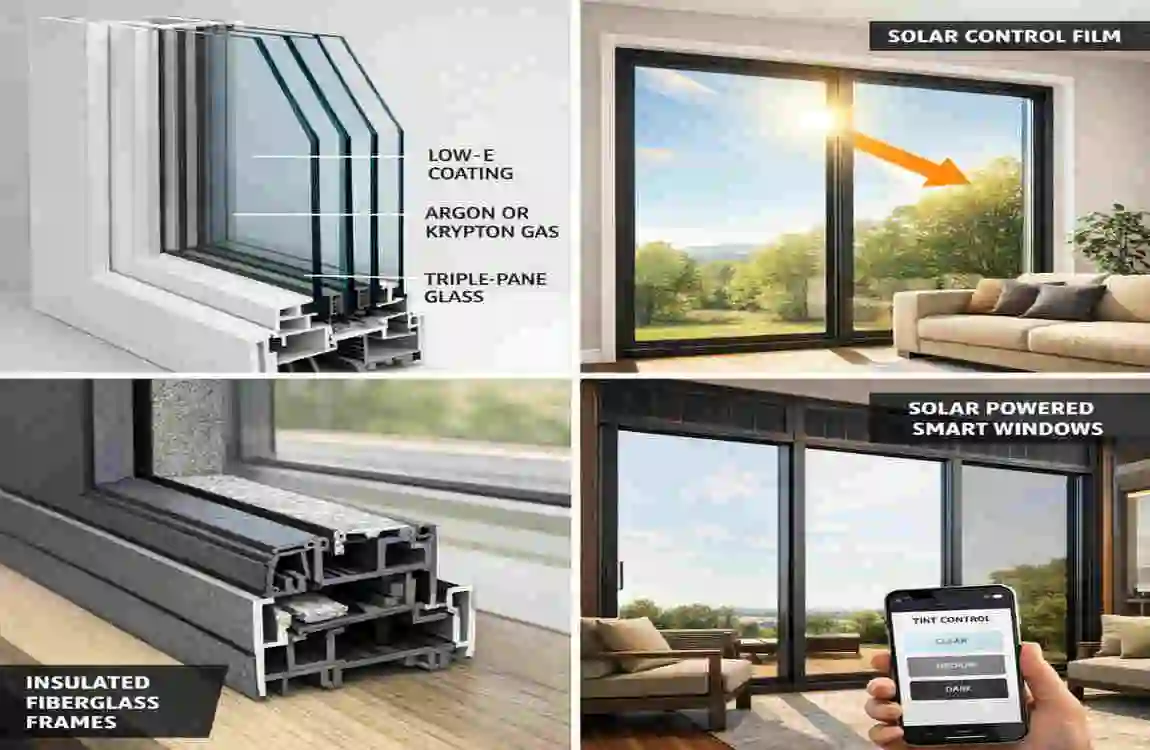
Low-E (low-emissivity) coatings are thin metallic layers applied to glass. They reflect heat and UV rays while allowing natural light to pass through. Types like LoE3-366 are particularly effective in hot climates.
Gas Fills
Windows with argon or krypton gas between panes provide better insulation by reducing heat transfer.
Warm-Edge Spacers
These spacers reduce heat loss at the edges of the glass, improving overall efficiency.
Multi-Pane Glass
- Double-Pane Windows: A good baseline for insulation.
- Triple-Pane Windows: Offer superior efficiency with an R-value of 5 or higher.
Feature Comparison Table
FeatureBenefitEfficiency Gain
Double-Pane Good baseline insulation 50% vs. single
Triple-Pane Superior for extremes 20-30% more
Low-E Glass Blocks 70% IR rays 45-70% seasonal
Fiberglass Frame Durability in heat , Low expansion
Top Window Types for Whole House Upgrades
Different window types offer varying levels of energy efficiency. Here’s a look at the best options for a whole-house upgrade.
Fixed/Picture Windows
- Efficiency: Airtight design with the best U-factor.
- Best For: Living rooms and areas where ventilation isn’t needed.
Double/Triple-Hung Windows
- Efficiency: Versatile and easy to clean.
- Best For: Bedrooms and common areas.
Casement/Awning Windows
- Efficiency: Tight seals when closed, ideal for ventilation.
- Best For: Kitchens and bathrooms.
Sliding Windows
- Efficiency: Space-saving design with moderate insulation.
- Best For: Kitchens and smaller spaces.
Best Brands & Models
Choosing the right brand is just as important as selecting the right window type. Here are some top-rated options:
Brand/ModelKey FeatureU-FactorPrice Range (per window)Best For
Ply Gem R-5 Triple-pane, 30% savings 0.20 $400-800 Cold/mixed climates
Andersen 400 Series EcoExcel package, 70% summer efficiency , 0.27 $500-900 Custom upgrades
JELD-WEN Custom LoE3-366 + argon 0.28 $450-850 UV protection
Marvin Signature Fiberglass durability 0.22 $600-1000 High-end homes
Cost Breakdown & ROI
Cost Factors
- Size and Type: Larger windows and triple-pane designs cost more.
- Frame Material: Vinyl is the most affordable, while fiberglass is Premium.
- Installation: Professional installation ensures airtight seals.
ROI
Expect to pay $10,000-$25,000 for a whole-house upgrade (10-15 windows). However, with 20-40% energy savings, you can recoup your investment in 5-10 years.
Installation Guide for Whole House
Steps to install Energy-Efficient Windows
- Energy Audit: Assess your home’s current energy efficiency.
- Choose a Contractor: Look for certified professionals to ensure quality.
- Preparation: Remove old frames and prep openings for airtight seals.
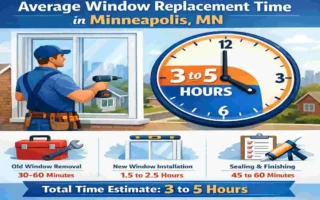
- Installation: Typically takes 1-2 weeks for a full upgrade.
Common Pitfalls
- Poor sealing can negate the benefits of energy-efficient windows. Ensure proper installation for maximum efficiency.
Maintenance & Longevity
To keep your windows performing at their best:
- Clean Quarterly: Use a mild cleaner to maintain clarity.
- Inspect Seals Annually: Check for drafts or damage.
- Lifespan: Expect 20-40 years with proper care.
FAQ
What are the most energy-efficient window options?
Triple-pane windows with Low-E coatings and argon gas are the best.
Double vs. Triple-Pane Windows?
Triple-pane windows offer better insulation and energy savings.
What’s the cost of a whole-house upgrade?
The average cost is around $15,000, with a fast ROI.