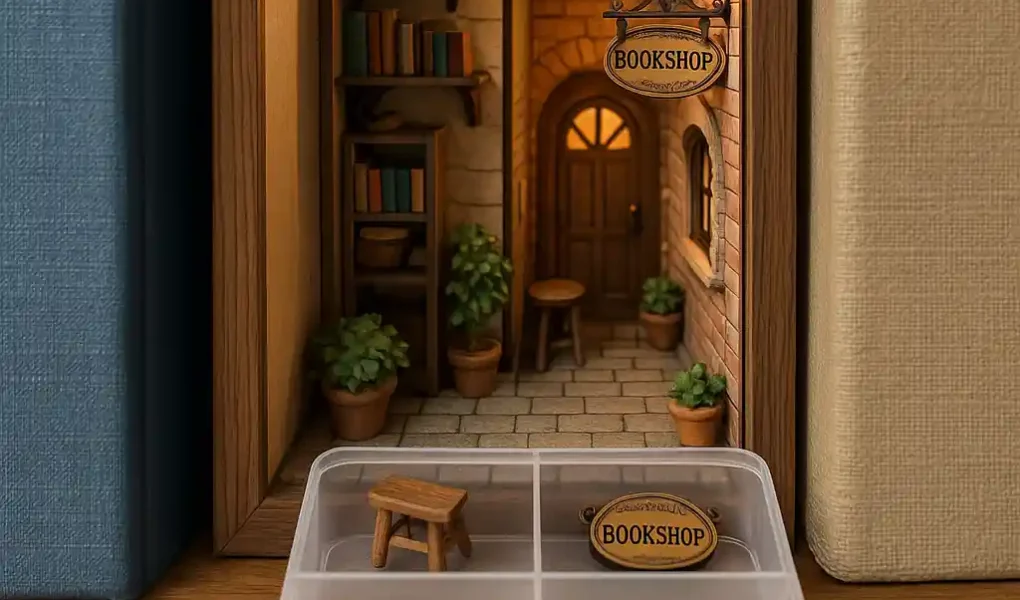
Small decorative parts in book nook kits often disappear before the final scene takes shape. Each door handle, lamp, or sign plays a part in bringing the miniature world to life, yet their size makes them easy to misplace. The best way to keep these parts safe is to create a clear, organised system before assembly begins.
Simple habits such as sorting, labelling, and storing pieces in shallow trays or small containers save both time and frustration. Builders who take a few minutes to arrange everything before glue or paint touches the pieces work more confidently and make fewer mistakes. This approach also helps spot missing parts early and protects delicate details from damage.
A tidy workspace turns a complex project into an enjoyable, creative task. Those who maintain order throughout the build process often find their finished book nooks cleaner, sturdier, and more detailed. The steps that follow explain practical methods and tools to keep every tiny item exactly where it belongs.
Basic Strategies for Preventing Loss of Small Decorative Parts
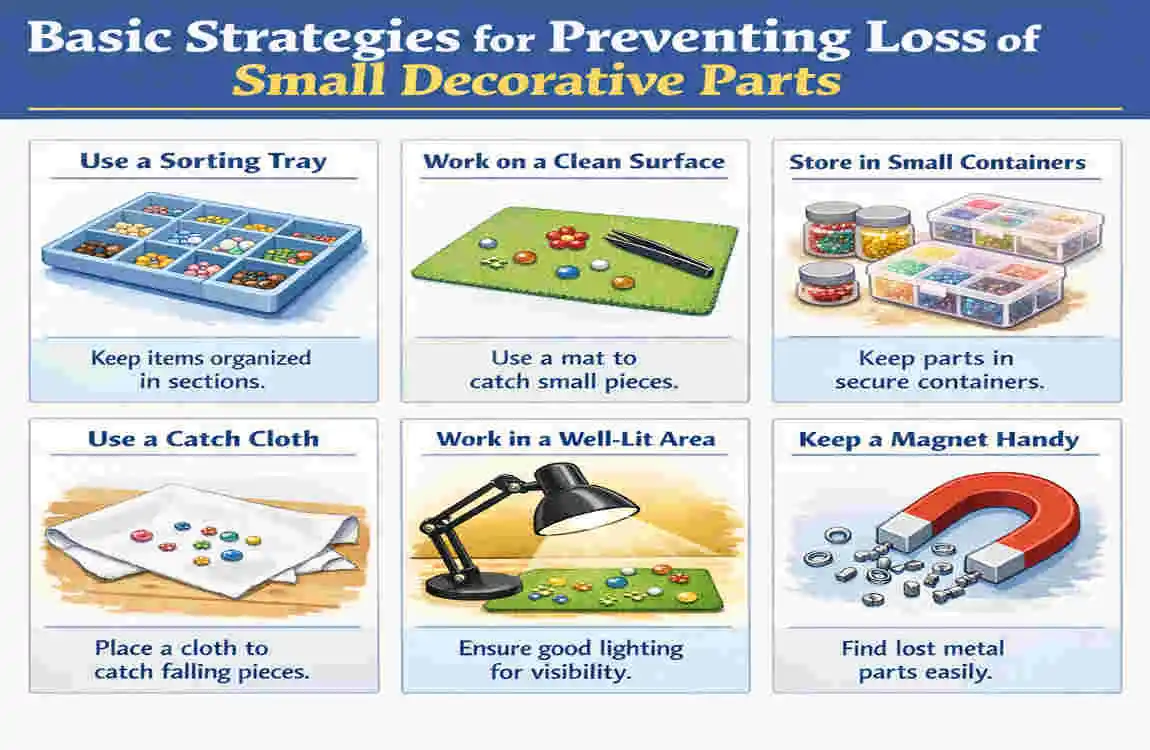
A good organisation protects small pieces and keeps every part easy to find. Simple habits, proper labelling, and gentle handling help builders maintain order and prevent small objects from slipping out of sight during work with decorative book nook sets.
Organising and Labelling Miniature Components
Labelling each part in a consistent way helps builders avoid confusion later. Grouping items by type, such as walls, furniture, or lights, allows quick access during assembly. Small trays, resealable bags, or divided boxes work well for keeping each category separate.
A clear label system adds another layer of control. Labels can include short descriptions, part numbers, or colour codes. Sticky notes or printed tags prevent mix-ups, especially in sets with many similar pieces. Builders should place labels on the outside of containers to make contents visible without opening them.
Keeping a short checklist helps track items. This record might note how many spare parts remain or which pieces have already been used. Regular updates reduce frustration and keep the assembly smooth from start to finish.
Choosing Effective Storage Solutions for Tiny Parts
Safe storage keeps materials protected and ready for use. Clear plastic boxes with multiple compartments allow visibility while preventing pieces from scattering. Stackable drawers or small containers fit neatly on shelves and make the most of limited space.
For delicate items like resin decorations or paper cut-outs, airtight containers prevent damage from moisture or dust. A small silica gel packet can help maintain a dry environment. Builders can store each part in its own compartment to prevent scratches or bending.
Well-planned storage also saves time during future repairs. Labelling each container and returning every piece immediately after use maintains order. A tidy workspace supports focus and prevents accidents that lead to missing items.
Handling and Assembly Techniques to Minimise Misplacement
Careful handling protects tiny parts and keeps them in sight. Using tweezers or small tongs allows better control over fragile or narrow pieces. Placing each item on a soft cloth between steps keeps them from rolling or sliding off the surface.
Building on a clean, flat workspace limits the chance of losing items on the floor. A shallow tray under the work area can catch any small parts that might drop. This simple measure saves time and avoids damage.
During assembly, working with one section at a time helps maintain focus. Builders should return unused parts to containers right away rather than leaving them unguarded. By keeping both hands and space organised, every piece stays safe for the final display.
Best Tools and Materials to Secure, Assemble, and Protect Book Nook Parts
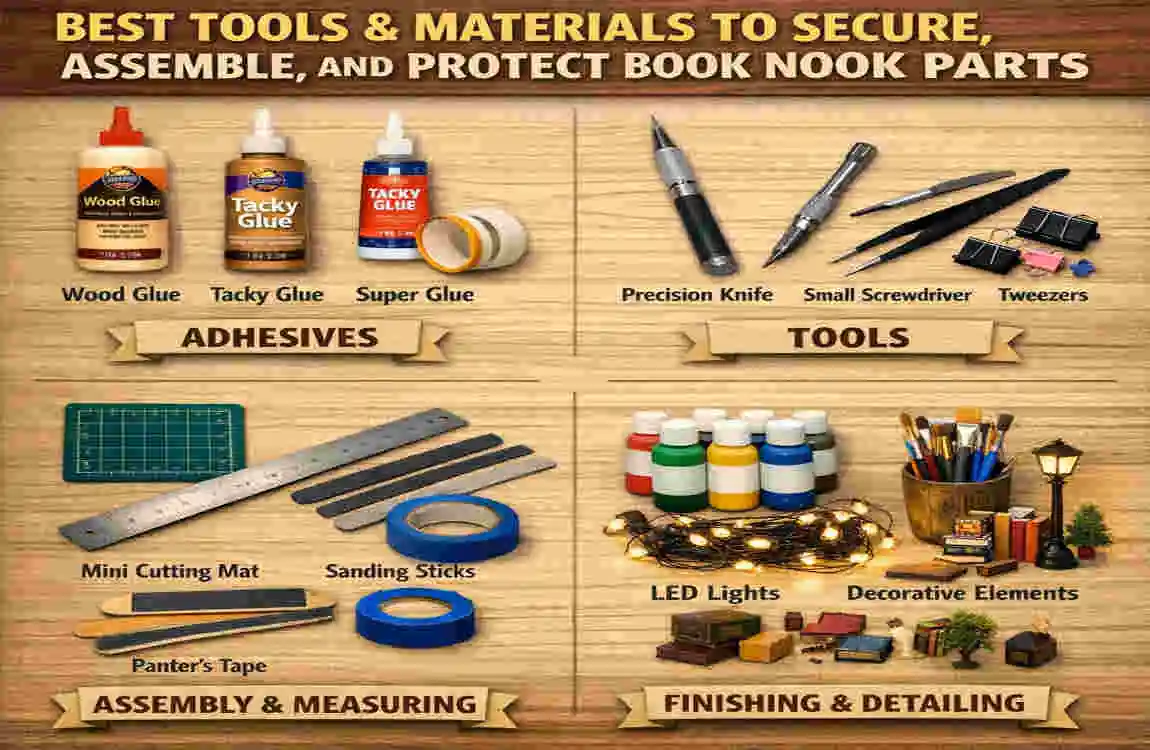
Careful tool use and proper storage make assembly smoother and keep small pieces safe. Sharp blades, fine adhesives, and durable surfaces help parts fit neatly, while clean containers and controlled space conditions preserve them for years.
Recommended Tools for Precision and Safe Handling
Accurate cutting defines how well each piece fits. A craft knife or precision cutting tool allows neat edges on wood, paper, or cardboard. A self-healing cutting mat under the work surface protects tables and stops blades from slipping. Builders who prefer wood, such as basswood, benefit from using sharp blades that leave minimal roughness.
Smooth edges prevent misalignment. A fine emery board or sandpaper removes small splinters without scraping off too much material. A measuring tape and pencil help mark outlines clearly, which reduces waste and error.
Glue choices affect both strength and flexibility. Super glue bonds tightly, while tacky glue works better for slower adjustments. A narrow glue applicator gives control and prevents mess on small joints. Tiny components, like tiny LED lights, should be attached with adhesives that dry clear to maintain a neat finish. To achieve consistent colour and protection, acrylic paint can seal surfaces before assembly begins.
Storage Materials and Environment for Long-term Protection
Environmental conditions affect how small decorative parts age. A dry area with low humidity helps prevent wood warping and adhesive breakdown. Closed plastic boxes, labelled compartments, or resealable bags stop miniature parts from vanishing or mixing during work.
Soft fabric liners or foam inserts add a cushion for fragile details like windows or lamp posts. Keeping each section in separate containers makes reassembly simpler if parts become detached.
Dust-free conditions extend the lifespan of painted pieces. Unused acrylic paint, extra glue, and precision tools should stay sealed and upright to prevent drying or clogging. A workspace with even light and proper airflow supports safer projects and preserves the delicate look of every finished book nook.
Conclusion
Keeping small decorative parts from getting misplaced in book nook sets depends on steady habits and a clear system. Builders benefit from labelled containers, small trays, or resealable bags that keep every piece visible and sorted by type. This approach saves time and prevents frustration during repairs or upgrades.
Careful handling also helps protect delicate materials. Using soft padding for fragile parts or storing wooden pieces in dry, shaded areas maintains their condition for future projects.
Regular checks of stored items help confirm that everything stays in place and ready for use. With thoughtful organisation and simple storage tools, hobbyists can preserve their miniature scenes and keep every detail exactly where it belongs.
How to Keep Small Home Decorative Parts From Getting Misplaced in Book Nook Sets — FAQ
Why do book nook decorations get lost easily?
They are usually small, lightweight, and not secured properly inside tight display spaces.
What is the best way to secure tiny parts?
Use clear craft glue, museum putty, or double-sided adhesive to keep pieces fixed in place.
Should I use storage compartments?
Yes. Small labeled boxes or organizers help store extra pieces safely when not in the display.
Can I use glass covers for protection?
Yes, acrylic or glass covers prevent dust and stop pieces from falling out or moving.
How does labeling help?
Labeling each miniature or part helps you quickly identify and replace missing items.
Is it good to keep spare parts?
Yes, keeping duplicates or spare miniatures ensures easy replacement if something is lost.
What about using glue that can be removed?
Removable adhesives are useful for rearranging without damaging delicate pieces.
How can I organize parts during setup?
Sort items by theme or section before placing them to avoid confusion and misplacement.
Does lighting or display setup matter?
Yes, stable shelves and enclosed displays reduce the chance of items falling or shifting.
What is the simplest long-term solution?
A sealed display case with fixed placements is the most reliable way to prevent loss.