If you have ever asked “how high is a two storey house”, you are not alone. Homeowners, buyers, builders, and even neighbors ask this question all the time. It matters more than people think.
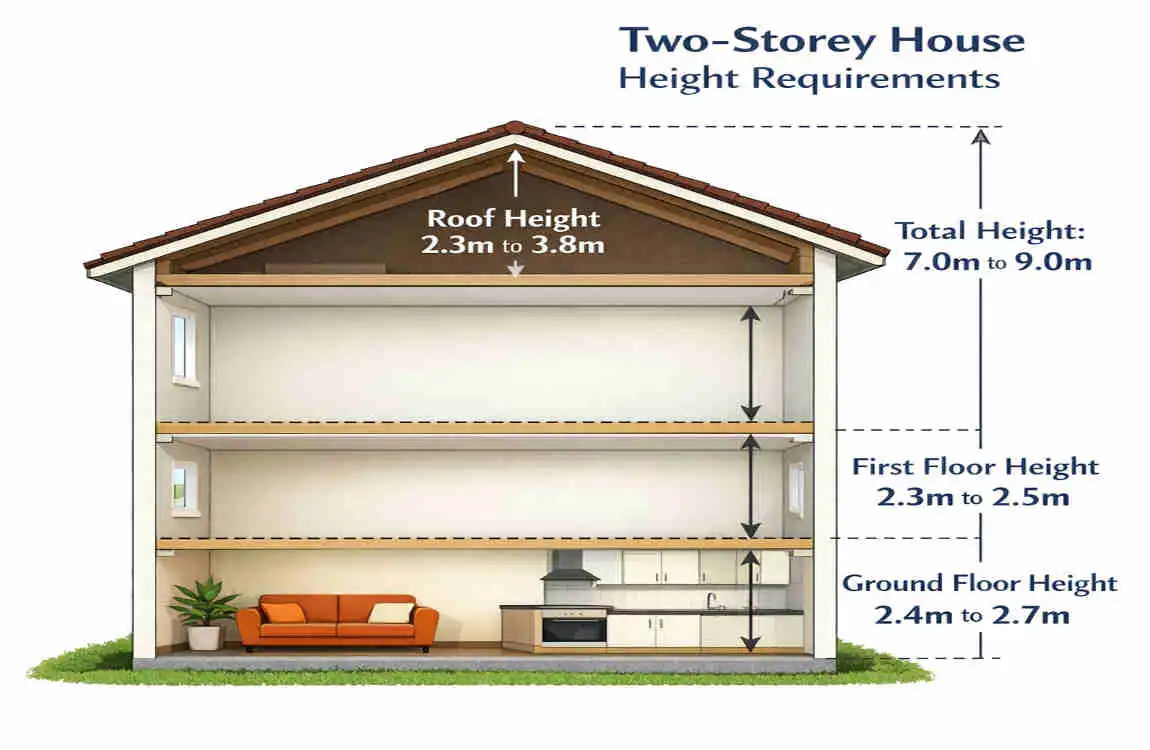
| Aspect | Typical Range / Explanation |
|---|---|
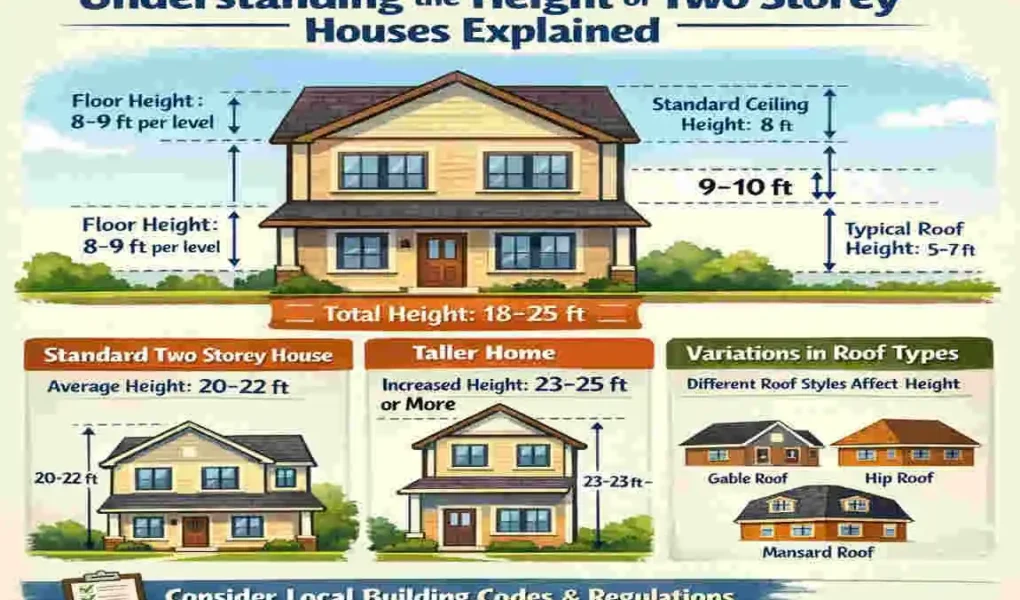
| Total height (2 storeys) | About 20–25 feet (roughly 6–7.5 meters) |
| Height per storey | About 8–10 feet (2.4–3 meters) for each floor |
| Floor structure thickness | Around 1 foot (0.3 meters) between the two floors |
| Roof height | About 3–7+ feet depending on how steep (flat vs steep roof) |
| Factors that change height | Ceiling height, roof slope, foundation height, local codes |
A house’s height affects design planning, renovation work, property rules, solar panel setup, ladder access, and even how a home looks next to nearby buildings. It also helps when comparing homes or estimating building costs.
How High Is a Two Storey House on Average?
Standard Height Range
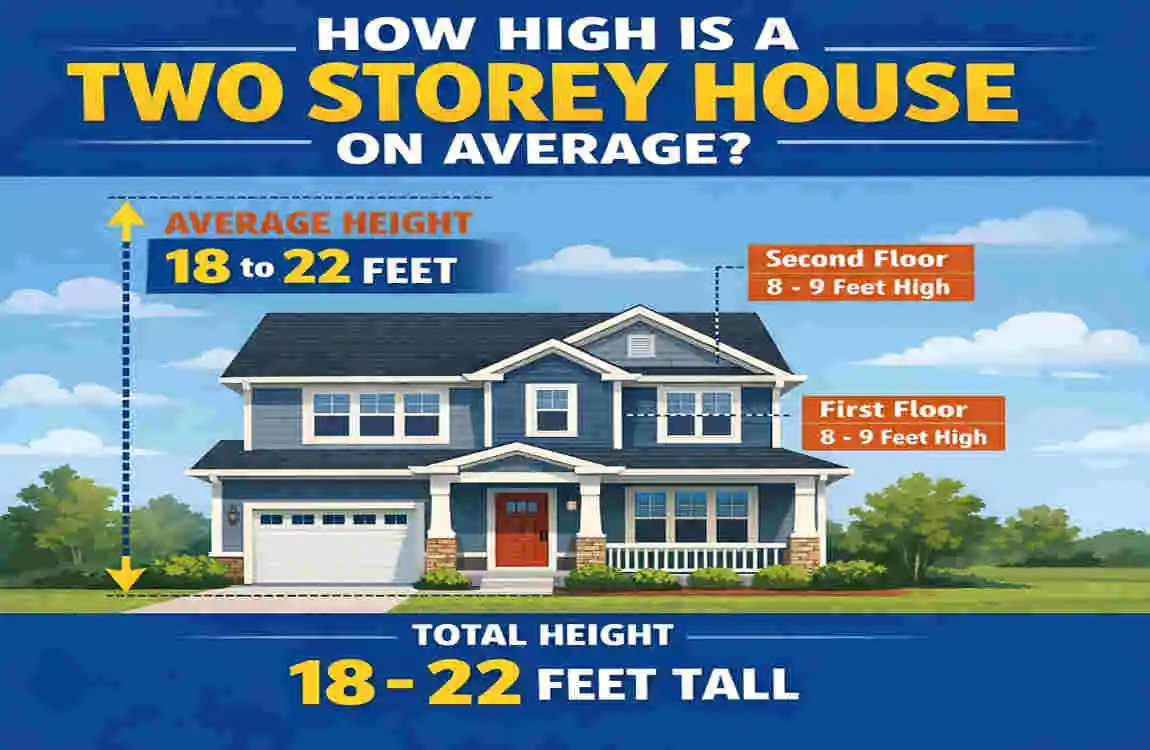
A standard two-storey home is usually 18 to 25 feet tall. In metric units, that is about 5.5 to 7.6 meters.
There is no single fixed number because houses are built in different ways. Some homes have low ceilings and flat roofs, while others have tall ceilings and steep rooflines. That changes the final height a lot.
Average Height by House Type
Different house styles often fall into different height ranges:
- Compact suburban homes: usually on the lower side
- Luxury homes: often taller because of higher ceilings
- Townhouses: usually space-efficient and moderate in height
- Modern minimalist homes: often lower, especially with flat roofs
Quick Height Breakdown
House ComponentAverage Height
First floor ceilings 8–10 feet
Second floor ceilings 8–10 feet
Floor structure thickness 1–2 feet
Roof height 4–8 feet
Total average height 18–25 feet
This table shows why the answer to the question “How tall is a two-story house?” is never exact. Every part adds up.
What Determines the Height of a Two Storey House?
Ceiling Height
One of the biggest factors is ceiling height. Most homes use 8-foot ceilings, which is still the standard in many places. Some homes use 9-foot ceilings for a more open feel.
High-end custom homes may go even taller, sometimes reaching 10 to 12 feet in certain rooms. When that happens, the whole house grows taller too.
Roof Design
The roof makes a big difference in the height of the two-storey house.
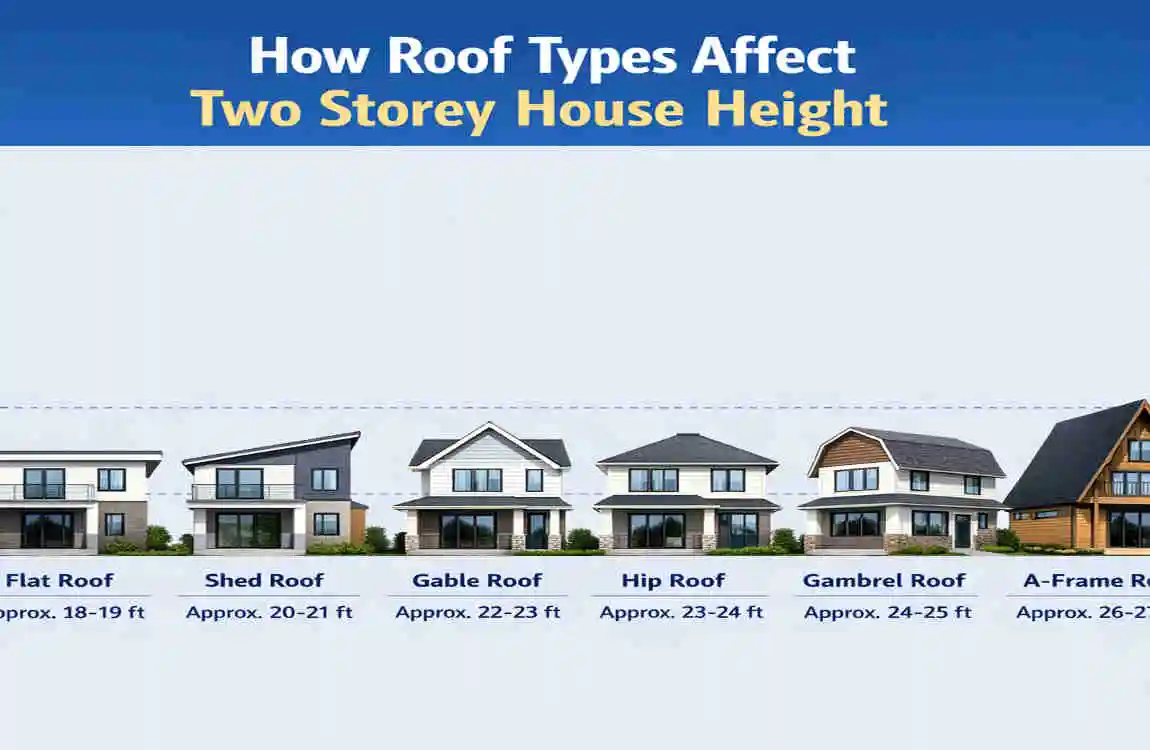
- Flat roof: keeps the home lower
- Gable roof: adds more height and often attic space
- Hip roof: adds moderate height and handles wind well
- Mansard roof: can make the home look much taller
A steeper roof naturally provides more vertical space, increasing the house’s total height.
Foundation and Elevation
Not every house starts at the same ground level. A home built on a raised foundation will look taller than one built directly on flat land.
Basement homes can also change the height story. A house on sloped land may have one side that sits much higher than the other. So when people ask how high is a two storey house with roof, the ground level matters too.
Building Materials and Structural Systems
The type of structure also affects height.
- Wood framing is common and flexible
- Steel framing can support different layouts
- Concrete construction may need thicker structure layers
These material choices do not always change the height a lot, but they can affect floor thickness and overall proportions.
Local Building Codes
Local rules matter more than many people expect. Some neighbourhoods have strict height limits. Others allow more freedom.
Zoning laws, permit rules, and residential height standards can all affect the final result. Before building or remodeling, always check the local code.
Average Height of Different Two Storey House Styles
Traditional Family Homes
Traditional family homes usually sit in the middle of the height range. They often have standard ceilings and a normal roof pitch, so they look balanced and practical.
Modern Contemporary Houses
Modern homes often use taller ceilings and flat or low-slope roofs. This can make them look sleek and simple, but not always very tall.
Colonial Houses
Colonial homes often have a symmetrical shape and a medium-pitch roof. They usually feel a little taller than a basic family home because of their formal style.
Farmhouse Designs
Farmhouse homes often use steep roofs, which can add height. Their roofs are a major part of the visual style, so they often appear taller than they actually are.
Townhouses and Duplexes
Townhouses and duplexes are built to save space. They usually have a compact vertical shape, so their height is often practical rather than dramatic.
House StyleTypical Height
Modern flat roof 18–22 feet
Colonial 20–25 feet
Farmhouse 22–27 feet
Townhouse 20–24 feet
If you are comparing homes, this table gives a quick view of the average height of a two storey house by style.
How Roof Types Affect Two Storey House Height
Flat Roof Homes
Flat roof homes usually have a lower overall profile. This is common in urban areas and modern designs where a clean look matters.
Gable Roof Homes
Gable roofs are among the most common choices for residential homes. They add height and often create attic space, which makes the home feel larger.
Hip Roof Homes
Hip roofs slope on all sides. They usually add a moderate amount of height and also help with wind resistance, which is useful in storm-prone areas.
Mansard and Steep Roofs
Mansard and steep roofs can make a two-storey home look much taller. They also create more usable upper space and give the house a more decorative look.
Roof Pitch Explained
Roof pitch means how steep the roof is. A steeper pitch means the roof rises higher from the walls. That increases the total height of the house, even if the wall height stays the same.
Ceiling Heights in Two Storey Houses
Standard Ceiling Heights
Most homes have 8-foot ceilings, while many newer homes have 9-foot ceilings for a more open, modern feel.
Luxury Home Ceiling Heights
Luxury homes often go taller, with ceilings around 10 to 12 feet in some rooms. This can make the house feel grand, but it also adds to the total height.
Open-to-Below Spaces
Some homes include double-height foyers or living rooms. These open spaces do not add a full second floor, but they make the home feel much taller inside and sometimes affect the exterior shape too.
Energy Efficiency Considerations
Higher ceilings can look beautiful, but they may also increase heating and cooling costs. That is why many homeowners balance style with energy use.
How to Measure the Height of a Two Storey House
Measuring from Ground to Roof Peak
If you want a simple estimate, measure from the ground at the lowest visible point to the highest point of the roof.
Here is an easy method:
- Start at ground level near the front of the house.
- Measure up to the top of each floor.
- Add the roof height.
- Include any foundation or raised base if present.
Using Digital Tools
You can also use laser measuring tools or smartphone measurement apps. These tools are helpful for rough estimates, but they may not be exact for final building plans.
Professional Surveying Methods
For official measurements, architects, contractors, or surveyors use more precise tools. This is the best choice if you are planning construction, a remodel, or a permit application.
Safety Tips During Measurement
- Do not climb onto the roof without proper training
- Use safe equipment
- Ask a professional if the height is hard to reach
A careful measurement gives you a more accurate idea of the height of a two floor house.
Two Storey House Height vs One Storey and Three Storey Homes
House TypeAverage Height
One storey 10–15 feet
Two storey 18–25 feet
Three storey 30–40 feet
Advantages of Two Storey Homes
- They use land more efficiently
- They give you more living space
- They often provide better views
Potential Drawbacks
- Stairs can be difficult for some people
- Maintenance may cost more
- Exterior cleaning can be harder
A two-storey home is often a good middle ground between space and practicality.
Building Regulations for Two Storey House Heights
Residential Zoning Laws
Some neighborhoods have rules about how tall homes can be. These rules help keep the area uniform and prevent one house from overpowering the rest.
Maximum Height Limits
Cities and towns may set maximum height limits for residential areas. These limits vary so that the same house design may be allowed in one area but not in another.
HOA and Community Guidelines
If your home is part of a homeowners association, there may also be style rules. These can affect roof shape, exterior height, and the building’s overall look.
Permit Requirements
Before building or adding to a dream home, permits are often required. Permits help make sure the home meets safety rules and height standards.
Questions About Two Storey House Heights
How high is a typical two storey house in feet?
A typical two-storey house is usually 18 to 25 feet tall.
How high is a two storey house in meters?
Most are about 5.5 to 7.6 meters tall.
Does roof type change the total height?
Yes. Roof height explained is simple: the steeper or larger the roof, the taller the house becomes.
Are modern homes taller than older homes?
Often, yes. Modern homes may have taller ceilings and larger open spaces, which can increase the sense of height.
Can a two storey house be under 20 feet?
Yes, especially if it has low ceilings and a flat roof. Some compact designs stay below 20 feet.
What is the minimum ceiling height allowed?
This depends on local building rules. Many areas allow around 7 to 8 feet, but exact limits vary.
How tall is a two storey house with a garage?
A garage usually does not change the main house’s height much, but attached rooflines or upper structures can affect the overall look.
How does attic space affect house height?
Attic space can raise the roof height if the roof is steeper or built with extra room inside.