If you are thinking about how to build timber frame house for your next home, you are not alone. Timber frame construction has become popular because it is fast, flexible, and attractive. Many people also like it because it can be energy efficient and easier to customize than some traditional building methods.
| Key Activities | ||
|---|---|---|
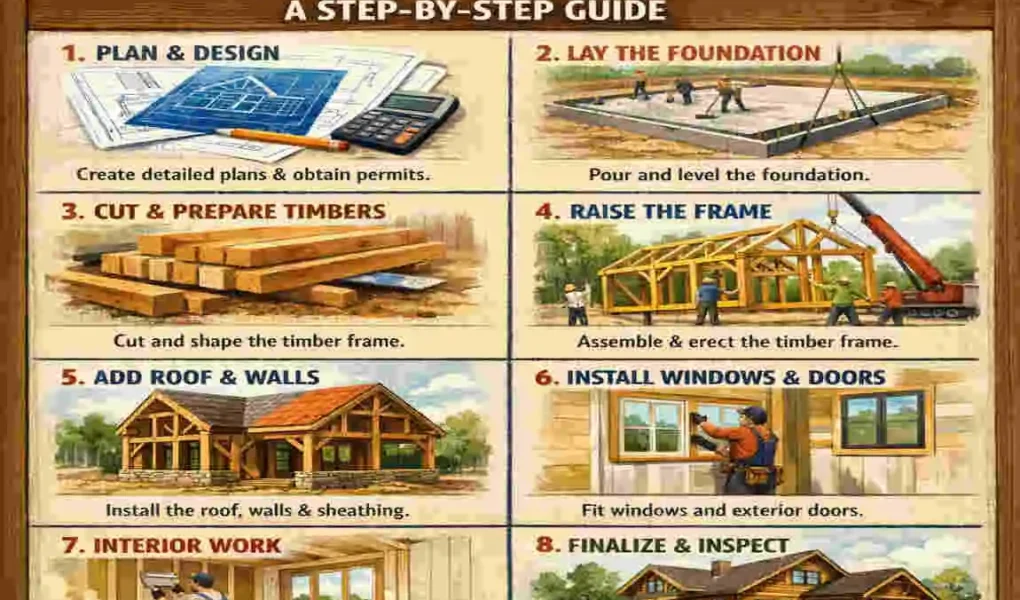
| Planning & Design | Decide size, style, budget; hire architect/designer; create floor plans and timber frame details; check local building codes and permits in Sindh/Karachi context . | |
| Site Preparation & Foundation | Clear and level site; excavate; lay footings; pour concrete foundation walls or slab; install damp-proof membrane and floor framing over foundation . | |
| Timber Frame Fabrication | Cut and mill timbers (posts, beams, braces); cut traditional joinery (mortise & tenon, dovetails) or use modern metal plates; pre-assemble bents (wall sections) if possible . | |
| Frame Raising | Erect foundation sill plates; lift and set bents onto foundation; plug in joinery (pegs, bolts); brace temporarily; install girts, plates, and roof structure; perform “topping off” if desired . | |
| Envelope (Roof & Walls) | Install Structural Insulated Panels (SIPs) or other wall/roof sheathing between timbers; add house wrap, windows, and doors; ensure air-tightness and weather protection . |
A timber frame house uses a strong wooden skeleton to support the structure. This makes the home feel solid while giving you greater freedom in how it looks and functions. You can choose a modern design, a rustic style, or something in between.
What Is a Timber Frame House?
Understanding Timber Frame Construction
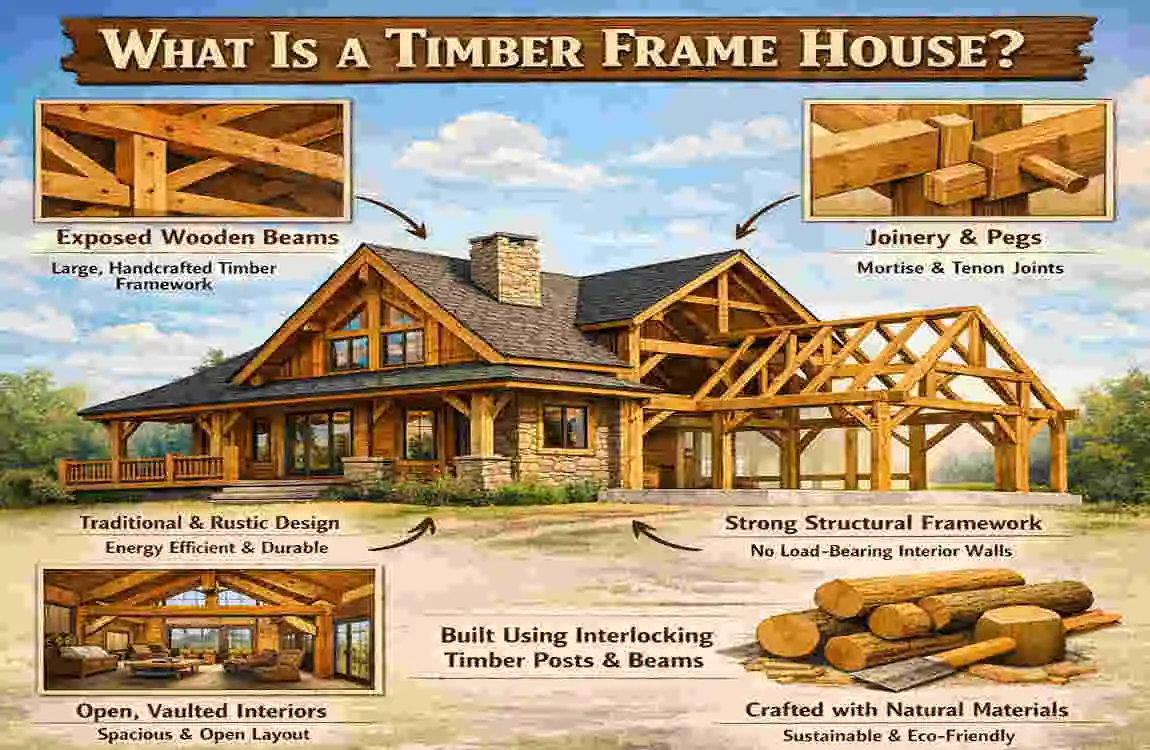
A timber frame house is built around a strong wooden frame made from large posts and beams. This frame carries the majority of the building’s weight. The walls do not carry all the structural load, which gives the house a flexible, open feel.
This is different from conventional building, where more of the structure is spread across walls and smaller framing parts. In timber framing, the frame itself is the star of the build.
Main Components of a Timber Frame Home
A typical timber frame home includes:
- Structural posts
- Beams
- Trusses
- Braces
- Wall panels
These parts work together to hold the house up and keep it stable.
Types of Timber Frame Houses
There are several styles to choose from:
- Traditional timber frame with visible wood joinery
- Post and beam construction with open interior spaces
- Hybrid timber frame that mixes timber with other building methods
- Modern prefabricated timber frame homes that arrive ready to assemble
Each type has its own look, cost, and build speed.
Why Choose a Timber Frame House?
Advantages of Timber Frame Construction
Timber frame homes are popular for good reasons. The biggest benefits include:
- Faster construction time
- Energy efficiency
- Sustainability
- Design flexibility
- Durability
If you want a home that can be built efficiently and still feel warm and welcoming, timber-frame construction is worth serious consideration.
Potential Challenges to Consider
Of course, no building method is perfect. Timber frame homes also come with some challenges:
- Detailed planning is needed early
- Material costs can be higher at the start
- Moisture protection matters a lot
- Local building codes must be followed
These challenges are manageable if you plan carefully and work with the right professionals.
Planning Your Timber Frame House Project
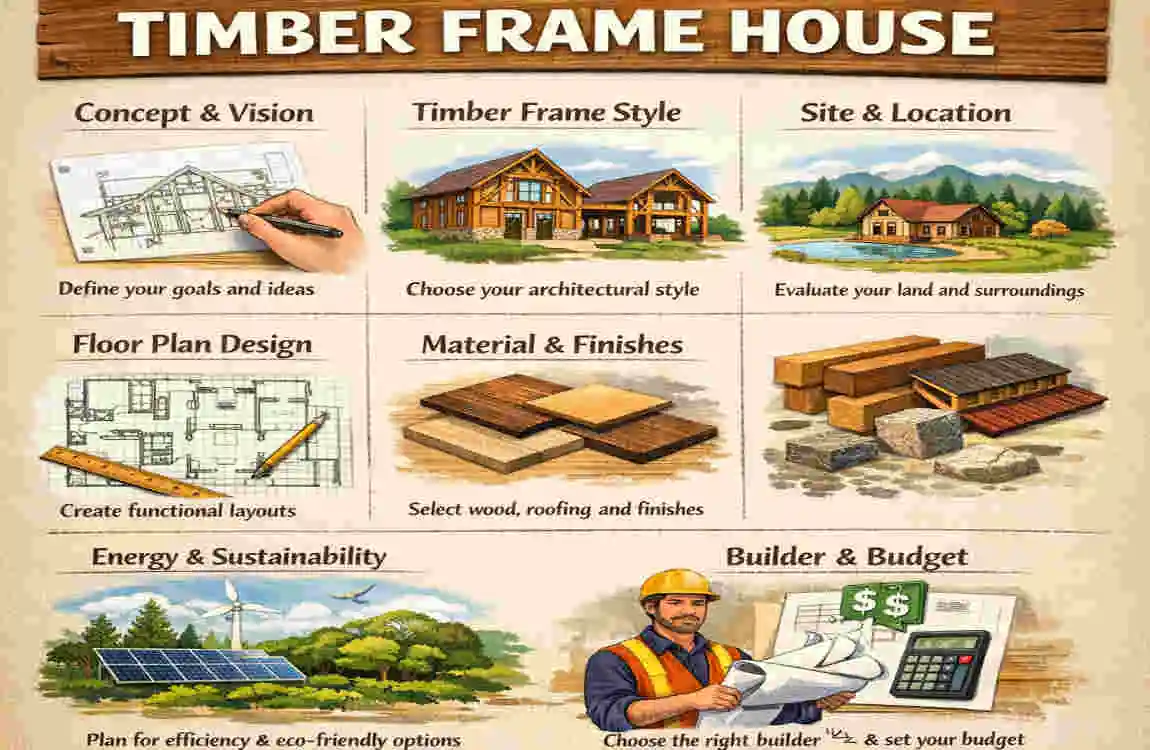
Define Your Goals and Budget
Before you build, think about what you really need. Ask yourself:
- How large should the house be?
- How many bedrooms and bathrooms do you want?
- Do you need open space or more private rooms?
- What is your overall budget?
Good timber frame house planning starts with honest answers.
Choose the Right Location
Your land matters just as much as your design. Look for:
- Easy site access
- Good ground conditions
- Nearby utility connections
- A layout that suits your house plans
A poor site can make the project more expensive and more complicated.
Research Local Building Codes
You must also check your local rules. These may cover:
- Planning permission
- Zoning rules
- Environmental limits
- Structural requirements
This step is important because the right plan in one area may not be allowed in another.
Designing Your Timber Frame House
Create a Functional Floor Plan
A good floor plan makes daily life easier. Think about how you move through the home. Many people like open-plan living because it feels spacious and bright.
Also consider:
- Bedroom placement for privacy
- Storage in the right places
- Easy access between kitchen, living, and outdoor areas
A smart timber frame home design supports comfort and simplicity.
Work with an Architect or Designer
You can choose a custom plan or a pre-designed plan. A professional designer can help you avoid mistakes and make better use of your budget.
Custom plans give you more freedom. Pre-designed plans can save time and reduce costs. The best choice depends on your goals.
Energy-Efficient Design Features
Good design can save money for years. Focus on:
- Solar orientation
- Natural lighting
- Ventilation strategies
- Insulation planning
These features help create energy efficient timber homes that are comfortable in every season.
Materials Needed to Build a Timber Frame House
Essential Timber Materials
The main timber frame materials include:
- Structural timber
- Posts and beams
- Roof trusses
Choose quality wood suitable for structural work and that meets local standards.
Foundation Materials
A strong base is essential. You will need:
- Concrete
- Reinforcement steel
- Damp-proof membranes
This is the foundation of the entire build, so it must be done right.
Additional Building Materials
Other important items include:
- Insulation
- Exterior cladding
- Roofing materials
- Windows and doors
These materials protect the home and make it livable.
Tools and Equipment Required
Common tools and equipment include:
- Saws
- Drills
- Measuring tools
- Lifting equipment
- Safety gear
Accurate tools help you build faster and safer.
Prepare the Building Site
Conduct Site Surveys
Before construction begins, the site should be checked carefully. Soil testing and topographic surveys help you understand the land and plan the build properly.
Clear and Level the Land
Next, remove vegetation and level the ground. This creates a safe, usable area for the foundation work.
Mark the Building Layout
Use clear markers to show:
- Property boundaries
- Foundation position
- Building lines
This helps prevent costly layout mistakes later.
Build the Foundation
Choose the Right Foundation Type
The right timber frame foundation depends on your site and design. Common options include:
- Slab foundation
- Crawl space foundation
- Basement foundation
Each one has pros and cons, so choose carefully.
Pour Concrete Footings
The foundation usually begins with excavation, formwork, and reinforcement. These footings help safely spread the house’s load.
Install Moisture Protection Systems
Moisture control is very important. Use:
- Damp-proofing materials
- Drainage systems
- Protective membranes
This helps protect the timber structure over time.
Fabricate the Timber Frame Structure
Selecting Quality Timber
Choose timber that is strong, dry, and properly graded. Some projects use hardwood, while others use softwood. The best option depends on design, budget, and local standards.
Cutting and Preparing Components
The timber must be measured and cut with care. Good joinery work makes the frame fit together properly and improves long-term strength.
Common Timber Joints Used
A few common timber frame construction techniques include:
- Mortise and tenon joints
- Pegged connections
- Steel connector systems
These joints help the frame stay secure and stable.
Raise the Timber Frame
Assemble Structural Components
Once the pieces are ready, the frame is assembled on site. Workers install the posts, place the beams, and secure the braces.
Safety Considerations During Frame Raising
This stage needs careful handling. Make sure you use:
- Proper lifting equipment
- A well-organized crew
- Fall protection gear
Safety should always come first during frame raising.
Inspect Structural Alignment
After assembly, check that everything is level and aligned. This ensures the load is carried correctly and the frame performs as it should.
Install Floor Systems and Wall Panels
Construct Floor Structures
The next step is to install joists and subfloor materials. These create the base for the interior flooring and help support the home.
Install Wall Panels
Wall systems may include:
- Structural insulated panels (SIPs)
- Conventional wall systems
These panels improve insulation and help close in the structure.
Ensure Structural Stability
Temporary bracing and fastener checks are important here. The frame needs to stay stable while the rest of the building is completed.
Build the Roof Structure
Install Roof Trusses or Rafters
The roof must be strong enough to carry weather loads. The shape and structure should match the building design and local climate.
Add Roof Sheathing
Roof sheathing creates a solid base for the final roofing material. It helps protect the structure and adds strength.
Apply Roofing Materials
Common roofing choices include:
- Metal roofing
- Asphalt shingles
- Tile roofing
Your choice may depend on budget, style, and weather conditions.
Weatherproof the House
Install Exterior Cladding
Exterior cladding protects the structure from rain and wind. Popular options include:
- Wood siding
- Fiber cement
- Brick veneer
This also affects the finished home’s appearance.
Fit Windows and Doors
Windows and doors should be sealed carefully to prevent leaks and air loss. Energy-efficient models can also lower heating and cooling costs.
Add Weather Barriers
Use house wrap and waterproof membranes to create another layer of defense. This helps keep moisture out and protects the timber frame.
Install Insulation and Utilities
Insulation Options for Timber Frame Homes
Good insulation improves comfort and energy use. Common options include:
- Spray foam
- Fiberglass batts
- Rigid foam boards
The right choice depends on your wall design and budget.
Electrical Installation
Electrical work must follow safety rules. Wiring should be planned before the walls are fully closed up.
Plumbing Installation
Plumbing includes water supply lines and drainage systems. These must be placed carefully to avoid future problems.
HVAC Systems
Heating, cooling, and ventilation all matter. A good system keeps the house comfortable and healthy all year.
Complete Interior Finishing
Install Drywall and Interior Walls
Once the services are in place, you can finish the interior walls. This gives the home its final shape and feel.
Flooring Installation
Popular flooring choices include:
- Hardwood
- Tile
- Laminate
Each one has a different look and level of upkeep.
Painting and Decorating
This is where the house starts to feel like a home. Choose colors and finishes that match your style and make the rooms feel open and inviting.
Kitchen and Bathroom Installation
Install cabinets, fixtures, and appliances after the major interior work is complete. These spaces should be both practical and attractive.
Final Inspection and Move-In
Conduct Building Inspections
Before moving in, the home should be checked for:
- Structural safety
- Electrical safety
- Plumbing quality
This step helps catch problems before they become serious.
Obtain Occupancy Approval
You may need approval from local authorities before the house can be occupied. Keep your documents ready and follow the required process.
Prepare for Move-In Day
Before moving in, finish a final cleaning, activate utilities, and complete a simple maintenance check.
How Much Does It Cost to Build a Timber Frame House?
Factors Affecting Cost
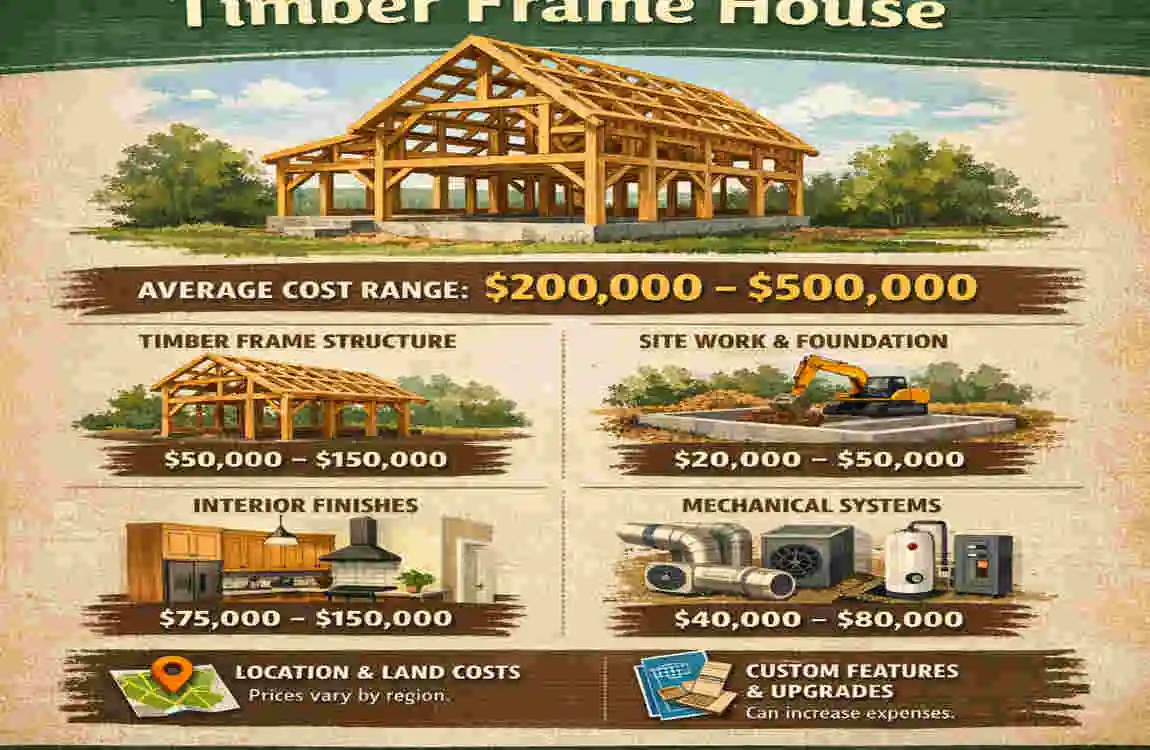
The timber frame house cost depends on:
- House size
- Material quality
- Labor expenses
- Location
A larger or more complex house will usually cost more.
Typical Cost Breakdown
Cost Area What It Includes
Land preparation Clearing, grading, site work
Foundation Excavation, concrete, reinforcement
Timber frame package Posts, beams, trusses, joinery
Roofing Sheathing, roofing material, labor
Interior finishes Drywall, flooring, paint, fixtures
Ways to Save Money
You can reduce costs by:
- Using prefabricated components
- Choosing efficient designs
- Selecting materials wisely
A smart plan can save both time and money.
Common Mistakes to Avoid When Building a Timber Frame House
Poor Site Preparation
If the site is not prepared well, the whole project can suffer.
Underestimating Costs
Always allow for delays and extra work in your budget.
Ignoring Moisture Control
Moisture can damage timber if it is not properly protected.
Choosing Low-Quality Timber
Cheap timber may save money at first, but it can create bigger problems later.
Overlooking Energy Efficiency
Good insulation and ventilation should be part of the plan from the start.
Timber Frame House Maintenance Tips
Annual Inspections
Check the house each year for wear, leaks, and damage.
Protecting Timber from Moisture
Keep an eye on drainage, seals, and any areas exposed to water.
Roof and Gutter Maintenance
Clean gutters and inspect the roof regularly to prevent water from building up.
Pest Prevention Strategies
Timber should be protected from insects and other pests through regular checks and proper treatment.
Long-Term Structural Care
A well-built timber frame house can last a long time if you maintain it carefully.
Frequently Asked Questions (FAQ)
How long does it take to build a timber frame house?
It depends on design, weather, and labor, but timber frame projects are often faster than many traditional builds.
Is a timber frame house cheaper than a brick house?
Not always. The upfront cost can be similar or sometimes higher, but the build speed and efficiency may offer savings over time.
How long do timber frame houses last?
A properly built and maintained timber frame home can last for many decades.
Are timber frame homes energy efficient?
Yes, they can be very energy-efficient when insulation, windows, and ventilation are well planned.
Can I build a timber frame house myself?
A DIY timber frame house may be possible for experienced builders, but most people should work with professionals for safety and quality.
What is the best timber for house framing?
The best timber depends on local standards, budget, and climate. Strong, graded structural timber is usually the safest choice.