Plumbing is the invisible lifeline of every household. It’s something we rarely think about, but when it fails—like during an unexpected midnight leak—it can disrupt our lives and cost us a fortune. A well-designed plumbing system for a house ensures efficiency, durability, and safety while reducing long-term costs. It prevents common plumbing nightmares, keeps water flowing smoothly, and ensures you’re not hit with surprise repairs.
Understanding the Foundations of a Well-Designed Plumbing System for a House
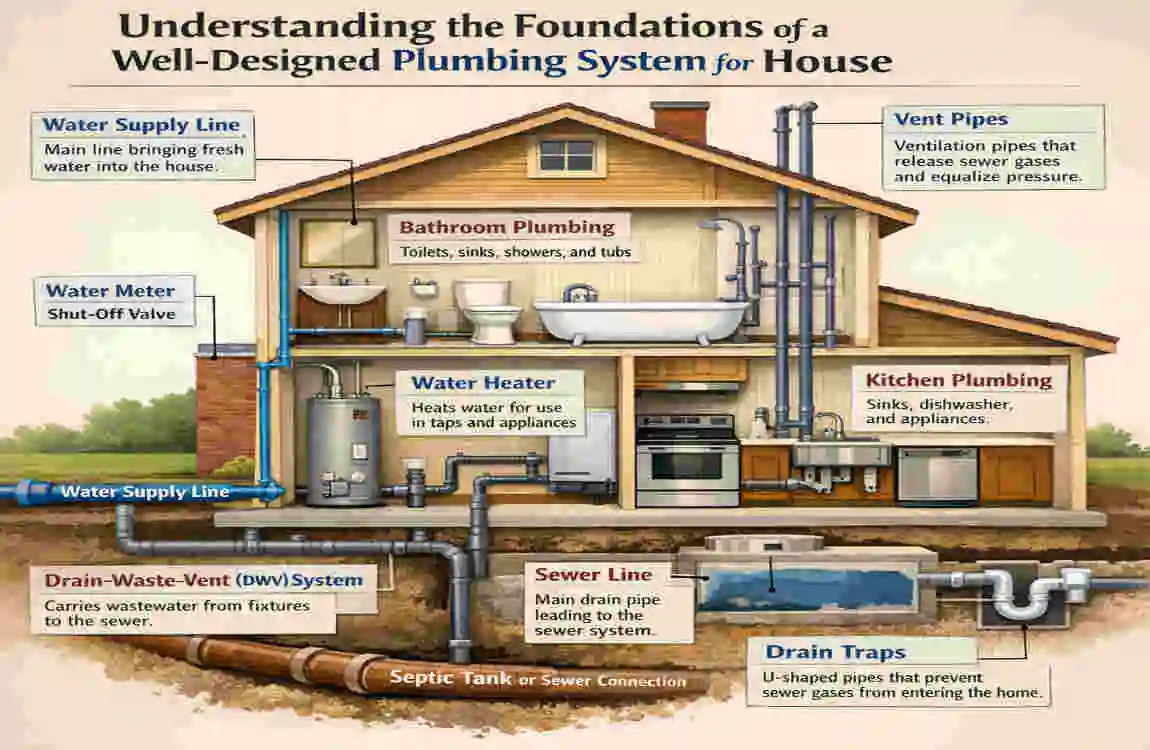
A well-designed plumbing system is built on solid principles and avoids costly mistakes. To kick things off, let’s explore the basics.
Core Principles of House Plumbing Design
To design an efficient plumbing system, several principles come into play:
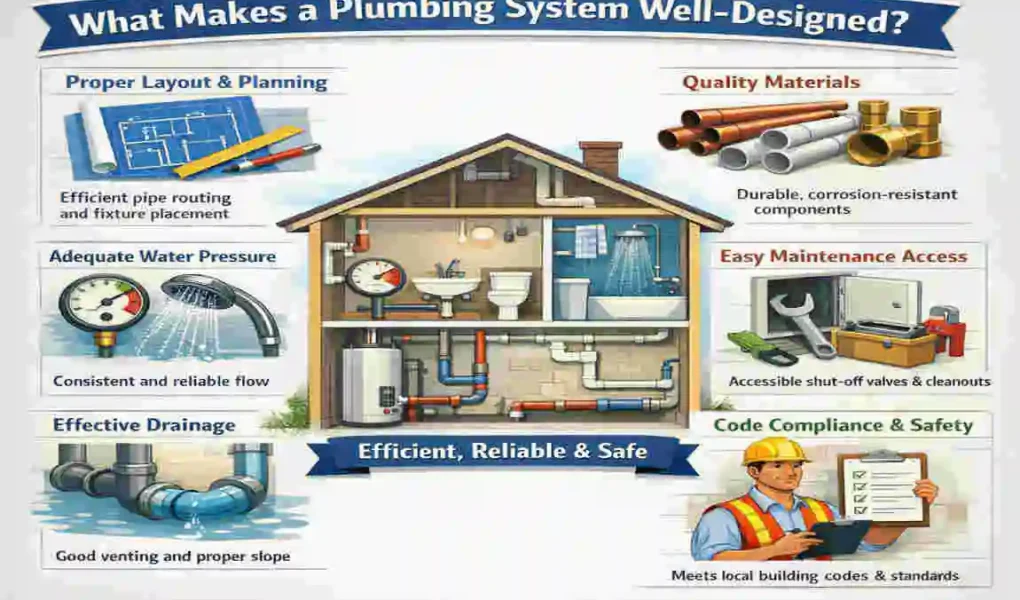
- Efficiency in Water Flow and Pressure: Pipes should ensure smooth water flow without pressure loss, even when multiple fixtures are in use.
- Durability Against Wear and Corrosion: Quality materials can withstand wear, rust, and temperature fluctuations over decades.
- Safety from Leaks and Contamination: Proper seals and fittings prevent leaks, while measures like backflow preventers ensure clean, safe water.
When these principles are followed, your plumbing system will function smoothly for years.
Why Poor Plumbing Design Costs Homeowners Thousands
Poorly designed systems can lead to expensive headaches. Common mistakes, such as undersized pipes or failure to comply with local building codes, often result in water pressure problems, leaks, or even floods. For instance, a family in Lahore once spent thousands to fix a poorly planned retrofit, only to save 30% on water bills after proper redesign.
Takeaway: Investing in quality design upfront avoids these costly pitfalls and ensures long-term savings.
Essential Materials for a Durable, Well-Designed Plumbing System
The choice of materials plays a vital role in the durability and efficiency of your plumbing system. Let’s break it down.
Best Pipe Materials for Modern Homes
Not all pipes are created equal. Here’s a comparison of the most common materials:
Material Lifespan Cost per Foot Best For
PEX 50+ years $0.50 Flexible house plumbing
Copper 70+ years $2.00 High-pressure systems
PVC 25-40 years $0.40 Drainage and vent lines
- PEX Pipes: Flexible, easy to install, and ideal for hot and cold water systems.
- Copper Pipes: Durable and corrosion-resistant, but expensive.
- PVC Pipes: Lightweight and cost-effective, but best suited for drainage.
Fittings, Valves, and Seals That Prevent Failures
A well-designed plumbing system relies on high-quality fittings and valves to prevent leaks. For example:
- Compression Fittings: Easy to install and reliable for water-tight connections.
- Backflow Preventers: Stop contaminated water from flowing back into your supply line.
- Rubber Seals and Gaskets: Essential for durability and leak prevention.
Cost Comparison and Longevity Chart
Here’s a quick look at the cost vs. lifespan of popular materials:
Component Expected Lifespan Approx. Cost
Pipes (PEX, Copper) 50-70 years Moderate to High
Valves 10-15 years Low
Fittings/Seals 20+ years Low
Optimal Layout and Sizing in a Well-Designed Plumbing System for a House
The layout and sizing of your plumbing system determine its efficiency and long-term performance.
Strategic Pipe Routing for Efficiency
Efficient pipe routing ensures minimal water waste and pressure loss. Here are some strategies:
- Zoning: Divide the plumbing into hot- and cold-water zones to avoid pressure drops.
- Avoid Bends: Minimize sharp turns in pipes to maintain water flow.
- Fixture Units Calculation: Use proper sizing formulas to ensure pipes can handle simultaneous water use.
Balancing Flow for Multi-Story Homes
If you live in a multi-story house, balancing flow is critical. This involves:
- Vent Stacks: Prevent gurgling noises by allowing air to escape.
- Pressure Balancing Valves: Ensure even water pressure across floors.
For example, a typical 3-bedroom house might have a centralized pipe layout with strategically placed vent stacks to prevent backflow and noise.
Common Layout Mistakes to Avoid
Even small design flaws can lead to major problems. Avoid these mistakes:
- Overloading main lines with too many fixtures.
- Ignoring expansion space for pipes to account for temperature changes.
- Skipping proper insulation for pipes in cold climates.
Key Features of Water Efficiency and Conservation
A well-designed plumbing system for a house isn’t just about function—it’s also about sustainability.
Low-Flow Fixtures in a Well-Designed Plumbing System
Installing low-flow fixtures can save 20-50% of your water usage. Examples include:
- Aerators: Attach to faucets to limit water flow without reducing pressure.
- Dual-Flush Toilets: Use less water for liquid waste and more for solid waste.
Greywater Recycling for Sustainable Houses
Greywater recycling systems reuse water from sinks, showers, and washing machines for irrigation. This is especially useful in water-scarce areas like Lahore, where every drop counts.
Smart Tech Integration
Smart plumbing technology takes efficiency to the next level:
- Leak Detectors: Alert you to leaks before they cause damage.
- App-Controlled Shutoffs: Let you remotely control water flow.
Safety and Compliance Standards for House Plumbing Design
Safety and compliance are non-negotiable in any plumbing system.
Building Codes and Regulations
The PPCP standards ( Plumbing Code of Practice) govern plumbing design. Key requirements include:
- Pressure testing for new installations.
- Proper venting to prevent backflow and contamination.
Protecting Against Contaminants and Backflow
Safety measures like air gaps, backflow preventers, and water filters are essential to keep your drinking water clean.
Emergency Shutoff Strategies
Automated shutoff valves can prevent catastrophic floods by stopping water flow during emergencies.
Maintenance Tips to Keep Your Well-Designed Plumbing System Thriving
Even the best-designed plumbing system needs regular care.
Routine Checks and Cleaning Schedules
- Inspect pipes annually for leaks or corrosion.
- Clean faucets and showerheads to remove mineral buildup.
DIY vs. Pro Maintenance
Here are five quick homeowner tasks:
- Check for leaks under sinks.
- Test water pressure regularly.
- Flush water heaters annually to remove sediment.
- Insulate exposed pipes in winter.
- Replace worn-out washers in faucets.
Signs of Trouble and When to Call Experts
Watch for low water pressure, discolored water, or slow drains. These are signs you need professional help.
Cost Breakdown: Investing in a Well-Designed Plumbing System for a House
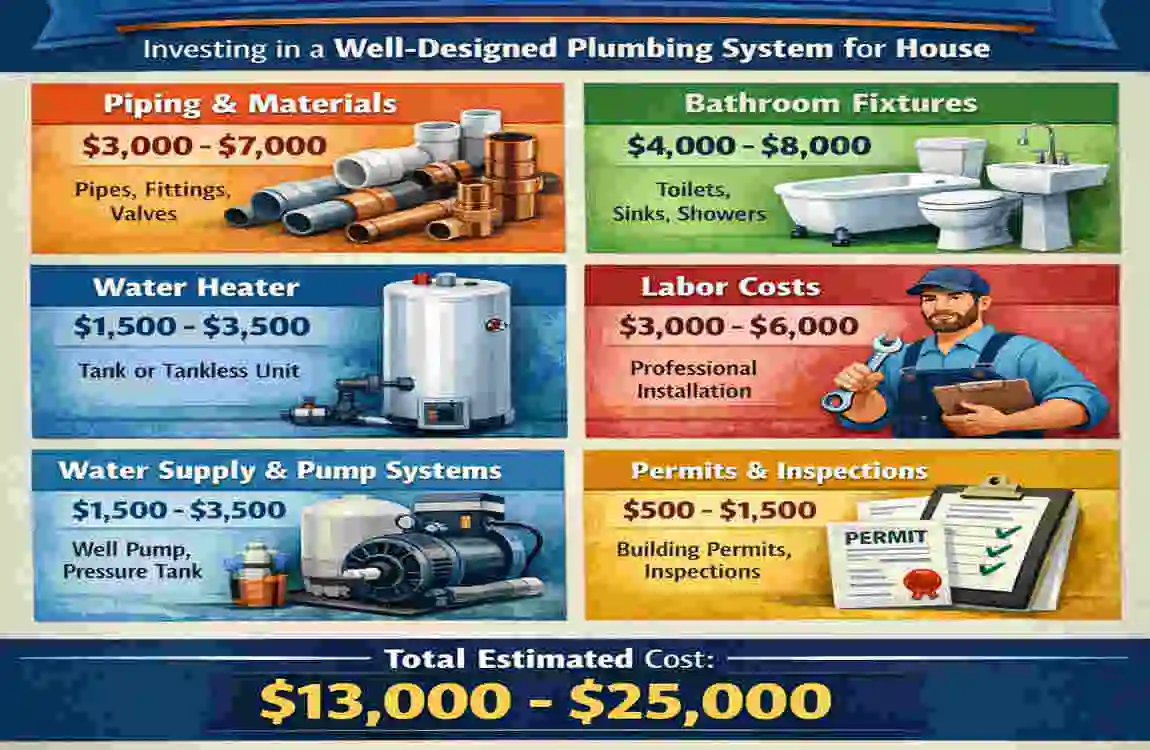
Upfront vs. Long-Term Savings
A high-quality plumbing system might cost more upfront. Still, it saves you money in the long run by reducing repairs and water waste.
Type: Initial Cost, Annual Savings
Basic System PKR 500,000 Minimal
Premium System PKR 1,000,000 15-20% utility savings
ROI Examples from Real Projects
For instance, a Premium system in a 2000 sq ft home could save PKR 50,000 annually on water and repair costs.
FAQs about a well-designed plumbing system for a house:
What is a well-designed plumbing system?
A well-designed plumbing system ensures efficient water supply, proper drainage, and minimal leaks or pressure issues in a home.
Why is good plumbing design important?
It helps prevent water damage, reduces maintenance costs, improves water pressure, and ensures hygiene and safety.
What are the main parts of a plumbing system?
- Water supply system
- Drainage system
- Vent system
What materials are commonly used in plumbing?
PVC, CPVC, copper, and PEX pipes are commonly used for durability and efficiency.
How can I improve water pressure at home?
Use the right pipe size, minimize bends, and install a pressure booster if needed.
What is the role of a vent pipe?
Vent pipes allow air into the system, helping wastewater flow smoothly and preventing bad odors.
| Feature | Key Traits | Benefits for Your House |
|---|---|---|
| Quality Materials | PEX/copper pipes, durable fittings | 50+ year lifespan, leak-proof |
| Smart Layout | Proper sizing, zoning, vent stacks | Even flow, no clogs or pressure drops |
| Water Efficiency | Low-flow fixtures, greywater reuse | Cuts bills 20-50%, eco-friendly |
| Safety Standards | Backflow prevention, auto-shutoffs | Prevents floods/contamination |
| Easy Maintenance | Accessible valves, smart sensors | Low repair costs, early leak detection |