If you are a licensed plumber, moving to a new state can feel exciting and stressful at the same time. You may already have the skills, the experience, and the work history. Still, one big question comes up fast: can you transfer a house plumbing license to another state?
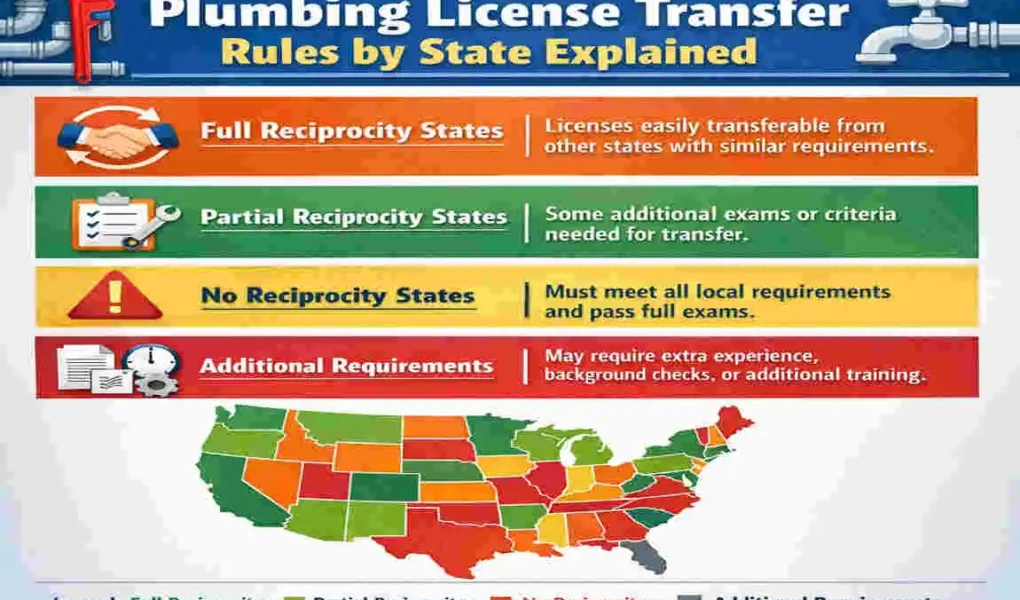
The short answer is usually not in a direct way. Plumbing licenses are often controlled by state boards, and sometimes even by local cities or counties. That means the rules can change a lot from one place to another. Some states make the process smoother through reciprocity or endorsement. Others may ask you to apply as if you are new, or they may require an exam.
Can You Transfer a House Plumbing License to Another State?
Understanding Plumbing License Transfer
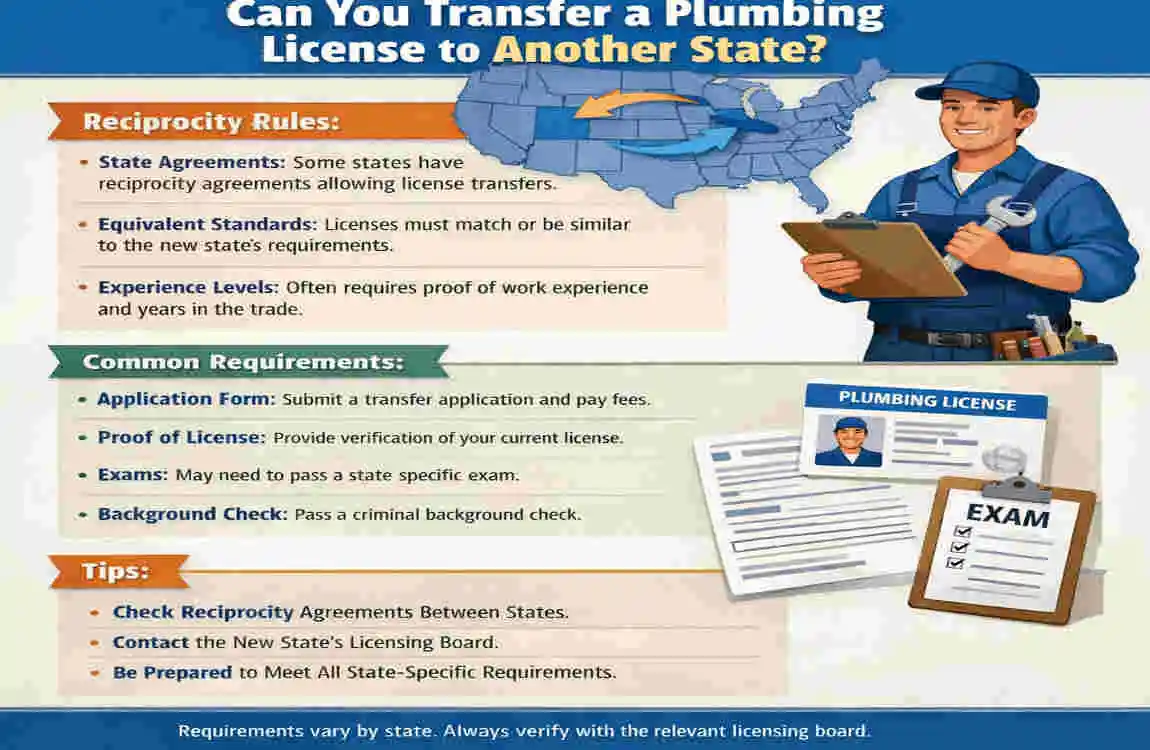
A plumbing license usually does not transfer automatically from one state to another. Instead, most states have a separate process that lets you prove your qualifications.
This process may be called:
- Reciprocity
- Endorsement
- Licensing by credentials
These options can make things easier if you already have experience and a valid license. But they do not always guarantee approval. In many cases, the new state still wants to check your training, work history, and code knowledge.
So, when people ask whether you can transfer a house plumbing license to another state, the better answer is that you may be able to qualify for a new license faster, but you usually cannot simply move the old one over unchanged.
Why Plumbing Licenses Differ Between States
Plumbing rules are not the same everywhere. Each state sets its own standards based on local needs.
Some of the main reasons include:
- Different building codes
- Different safety rules
- Different experience requirements
- Different licensing boards
For example, one state may focus heavily on residential plumbing inspection rules, while another may care more about master plumber experience or local exam scores. This is why a plumber who is fully licensed in one state may still need extra steps in another.
How Plumbing License Reciprocity Works
What Is Plumbing License Reciprocity?
Reciprocity means one state agrees to recognize a license from another state, at least in part. This can help experienced plumbers avoid repeating the full licensing process.
It is important to understand that reciprocity is often limited. A state may only recognize licenses from certain other states. Or it may accept your experience but still ask for a short exam or local code test.
Common Requirements for Reciprocity
Even if a state offers reciprocity, you may still need to provide proof that you are qualified. Common requirements include:
- An active plumbing license
- Proof of work experience
- A background check
- Application and licensing fees
- Verification from your current or previous licensing board
- Proof that you meet the new state’s rules
Some states also want to see apprenticeship records, exam results, or insurance documents. The more complete your paperwork is, the smoother the process usually becomes.
Does Every State Offer Plumbing License Reciprocity?
No, not every state offers the same kind of reciprocity.
Some states have formal agreements with specific states. Others review each application individually. A few states may still require a new exam, even if you have years of experience.
That is why it is so important to check the rules before you move. The answer to can you transfer a house plumbing license to another state depends heavily on the destination state.
Steps to Transfer Your Plumbing License to Another State
Check the New State’s Plumbing Licensing Board
Start with the official licensing board in the state where you want to work. This is the most important step because the board will tell you:
- Whether reciprocity is available
- Which license type you can apply for
- What forms you need
- Whether there are deadlines or testing dates
Do not rely on rumors or old advice. Plumbing rules change often, and an outdated answer can cost you time.
Gather Required Documents
Before you apply, collect all your important records. This often includes:
- Your current plumbing license
- Proof of identity
- Work history or employment records
- Apprenticeship certificates
- Exam scores
- Insurance records, if needed
It helps to keep copies of everything. If one document is missing, the board may delay your application.
Submit a Reciprocity Application
Once you have the paperwork, you can file the application. This usually includes a form, a fee, and license verification from your current state.
Processing times vary. Some boards move quickly, while others take several weeks or longer. If your documents are incomplete, the process may slow down even more.
Complete Additional Requirements
Even after applying, you may still need to meet extra conditions. These can include:
- A state plumbing exam
- A local code exam
- Continuing education
- Additional proof of training
This is why the phrase can you transfer a house plumbing license to another state can have different answers depending on your background and the state rules.
Plumbing License Transfer Rules by State
State Comparison Table
State License Transfer Rules Exam Required?
California Requires application review and meeting state requirements May require exam.
Texas Offers limited reciprocity depending on qualifications Sometimes
Florida Allows endorsement for qualified licensed plumbers Possible
Arizona Reciprocity available with approved states May vary
Colorado Requires verification and application approval Sometimes
Nevada Requires state approval and licensing requirements Yes in some cases
New York Mostly local licensing rules apply Often required
North Carolina Reciprocity available with certain states May vary
State-by-State Reality
Some states are known for being more flexible, especially when they recognize experience from another jurisdiction. Others are more strict because they want plumbers to understand local codes in detail.
For example, states like Texas, Florida, and North Carolina may offer pathways that help qualified plumbers move faster. On the other hand, places like New York or California may involve more review and testing.
This does not mean one state is “better” than another. It simply means the process can be different. If you want a smooth move, your best tool is preparation.
States With Easier Plumbing License Transfers
States Known for Reciprocity Agreements
Some states are more open to plumbers who already hold a license elsewhere. They may accept out-of-state credentials if you meet experience and exam requirements.
These states often care about:
- Prior license status
- Passing history
- Clean professional record
- Verified work experience
Factors That Make Transfer Easier
A transfer is usually easier if you have:
- Several years of experience
- A current journeyman or master plumber license
- A clean licensing history
- Completed apprenticeship training
- Strong documentation
In simple terms, the more proof you have, the easier it is for the new state to trust your background.
What Happens If Your New State Does Not Accept Your Plumbing License?
Taking a New Plumbing Exam
If reciprocity is not available, the state may ask you to take an exam. This can include a written test on plumbing theory, safety, and code rules.
Some states also include practical or code-based questions. This may sound frustrating, but it is often the fastest path if you already have good experience.
Applying as a New License Holder
In some cases, you may need to apply like a new candidate. That does not mean your old experience is useless. It simply means the board wants to verify it in their own system.
You may need to show:
- Employment history
- Apprenticeship proof
- Exam records
- References or work verification
This is one more reason to ask early: can you transfer a house plumbing license to another state, or will you need a fresh license path?
Journeyman vs. Master Plumbing License Transfers
Journeyman Plumber License Transfer
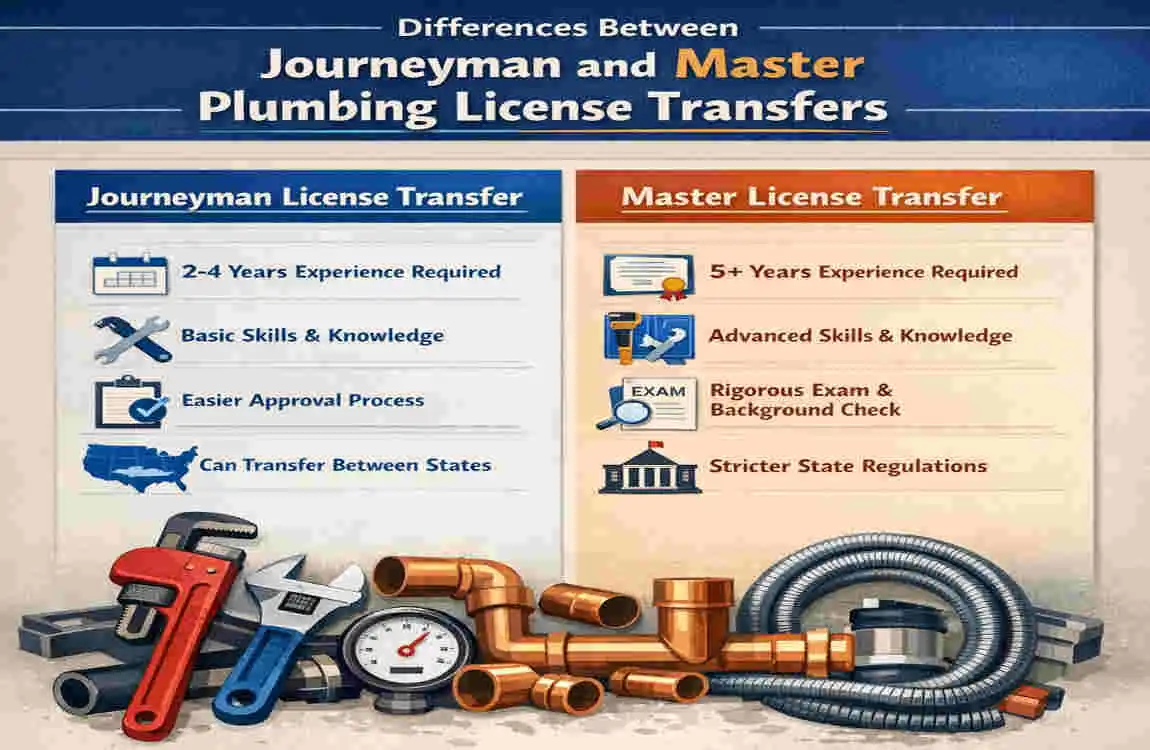
A journeyman plumber usually needs experience verification and may need to pass a state test. Since the license level is lower than master status, the new state may want more proof before approval.
Master Plumber License Transfer
A master plumber often has more experience and training, so the process can be easier in some states. Still, master status does not guarantee automatic approval.
The new state may see your higher qualification as a strong advantage, but you still need to meet its own rules.
How Long Does It Take to Transfer a Plumbing License?
The time depends on the state and how complete your application is.
In general, the process may take:
- Several weeks for review
- More time for license verification
- Extra time if an exam is required
- Longer delays if documents are missing
Background checks and busy licensing boards can also slow things down. If you are planning a move, start early.
Cost of Transferring a Plumbing License
The price varies by state, but these are common costs:
Expense Estimated Cost
Application Fee $50–$300
License Verification $20–$100
Exam Fee $50–$200
Renewal Fee Varies
Additional Training Depends on requirements
It is smart to budget for more than just the application fee. If testing or extra training is required, the total cost can rise quickly.
Tips to Make Plumbing License Transfer Easier
If you want to save time and avoid stress, use these simple tips:
- Start before you move. Do not wait until you arrive in the new state.
- Keep copies of every document. This includes licenses, certificates, and exam results.
- Contact the licensing board early. Ask exactly what they need.
- Watch expiration dates. An expired license can create delays.
- Keep your record clean. A professional history helps a lot.
These steps may sound basic, but they often make the difference between a smooth move and a long delay.
Common Mistakes When Transferring a Plumbing License
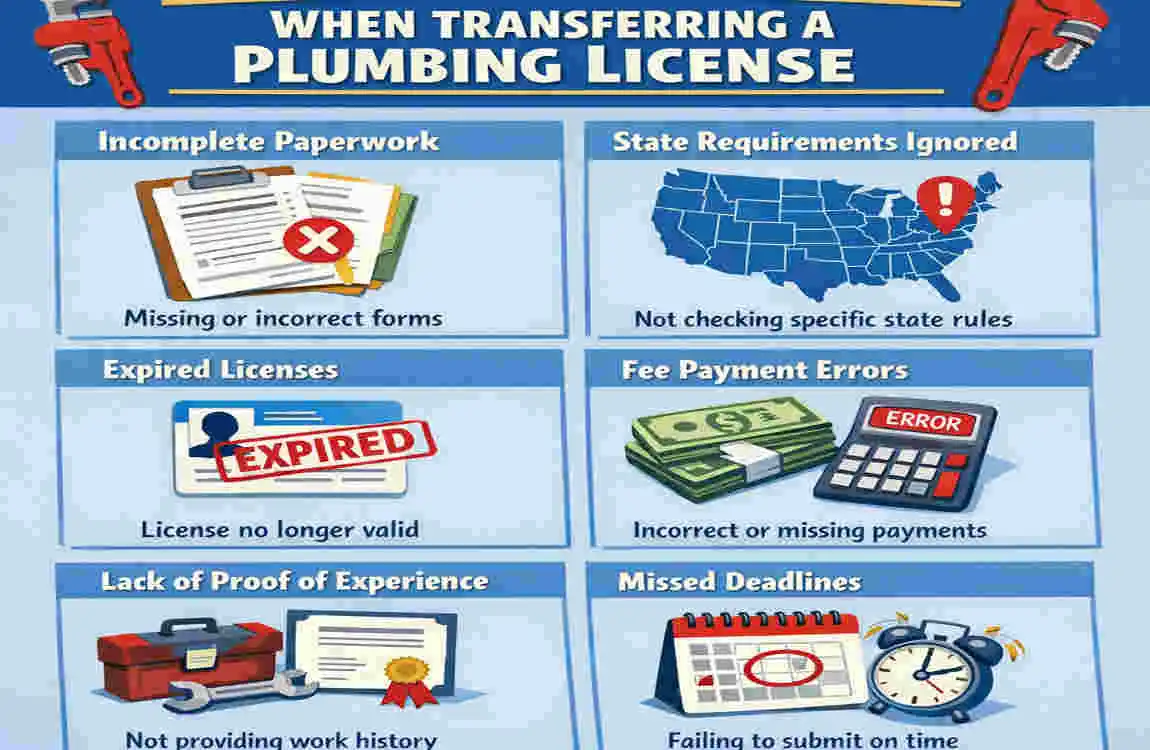
Many plumbers make the same mistakes when moving to a new state.
Some of the most common ones are:
- Assuming the license transfers automatically
- Ignoring local plumbing codes
- Missing deadlines
- Forgetting to verify work experience
- Moving before approval is complete
If you avoid these mistakes, you will save yourself a lot of frustration.
Frequently Asked Questions
Can you transfer a house plumbing license to another state?
A plumbing license usually cannot be transferred automatically. Most states require reciprocity, endorsement, or a new license application.
Which states have plumbing license reciprocity?
Many states offer some form of reciprocity, but the agreements vary. You should always check with the licensing board in the state where you want to work.
Do I have to retake the plumbing exam in another state?
Not always. Some states waive the exam for experienced plumbers, while others require state-specific testing.
How long does plumbing license reciprocity take?
It can take several weeks to a few months, depending on document checks and state processing times.
Can a master plumber transfer a license more easily than a journeyman?
Often yes. A master plumber may have more experience and qualifications, which can make approval easier.
| State | License Transfer Rule (Reciprocity) | Key Requirements |
|---|---|---|
| California | Limited reciprocity agreements; licenses are usually not directly transferred | Verify experience, pass required exams, submit application |
| Texas | Allows some reciprocity with approved states | Valid license, work experience, fees, background check |
| Florida | Offers endorsement for qualified plumbers from other states | Active license, similar exam standards, proof of experience |
| New York | No statewide plumbing license; rules depend on local authorities | Check city/county licensing requirements |
| Pennsylvania | Mostly handled locally; some areas offer reciprocity | Local approval, experience verification |
| Arizona | Reciprocity available with certain states | Current license, exams may be waived, application fees |
| Colorado | Allows license by endorsement for eligible plumbers | License history, experience proof, state requirements |
| Washington | Reciprocity is limited | Submit credentials and meet state requirements |
| Georgia | Some license reciprocity options available | Comparable license, experience, application approval |
| Nevada | Reciprocity available for certain licensed plumbers | Active license, required years of experience, fees |