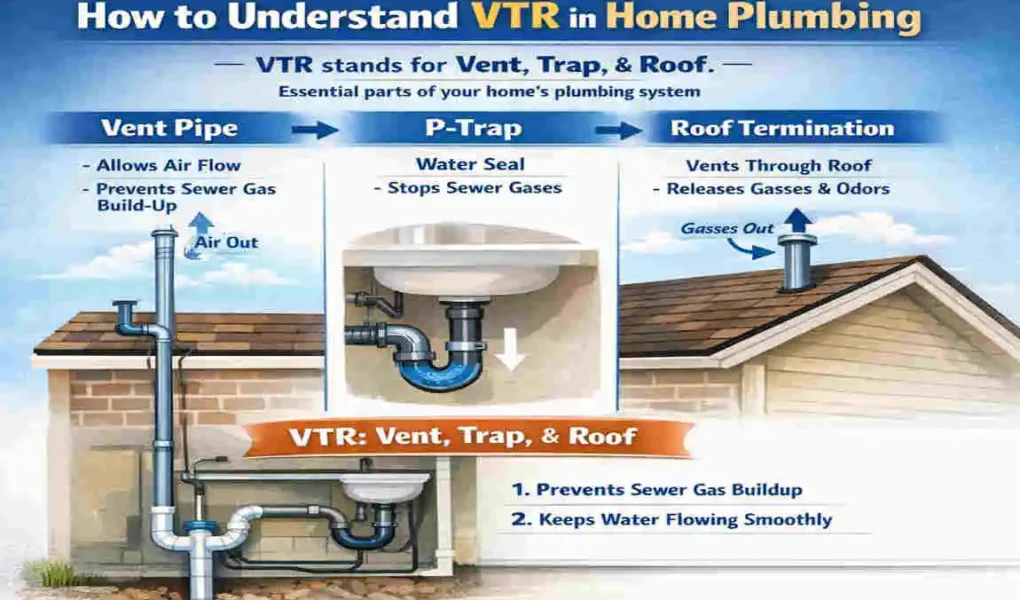
VTR is a common abbreviation you might see on a roof‑line or in a plumbing diagram. Knowing what it means helps you spot the parts of your home that keep wastewater flowing smoothly and keep foul gases out of the living space.
| VTR Term | Simple Explanation |
|---|---|
| VTR | Vent Through Roof |
| Main Purpose | Allows the plumbing system to receive and release air |
| Location | Usually extends through the roof |
| Helps With | Proper drainage and pressure balance |
| Common Problems | Blockages, damage, and roof leaks |
| Warning Signs | Slow drains, gurgling, or sewer odors |
| Maintenance | Inspect vents and roof seals regularly |
| Professional Help | Recommended for roof access, blockages, or repairs |
What Does VTR Stand for in Home Plumbing?
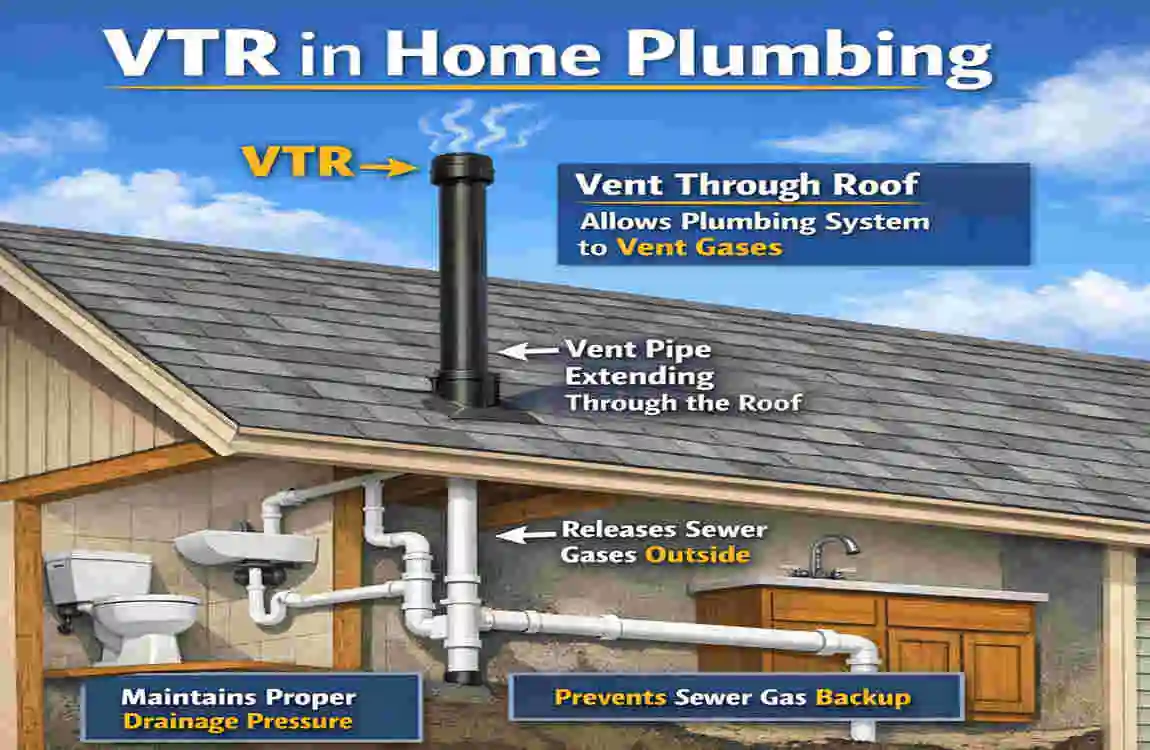
VTR stands for Vent Through Roof. It is the section of a plumbing vent that actually passes through the roof and opens to the outside air. Unlike a drainpipe, which carries wastewater down to the sewer, a VTR provides a path for air to move in and out of the plumbing system.
What Is a Plumbing Vent?
A plumbing vent lets fresh air enter the drainage system and lets sewer gases escape. This balance prevents vacuum locks that could stop water from draining and protects your home from smells.
What Does a VTR Look Like?
- A short pipe that rises above the roofline.
- Usually capped with a vent hood or a metal “cap” to keep rain out.
- Often painted the same colour as the roof or left as bare metal.
Why Is VTR Important?
- Keeps water flowing: Air pressure equalizes, so wastewater doesn’t get “stuck.”
- Stops odours: Sewer gases have an outlet instead of seeping through floor drains or toilets.
- Protects traps: Proper venting ensures the water seals in traps stay full.
How Does a VTR Work in a House?

Air moves freely through the vent while wastewater travels down the drainpipes. The VTR is the final exit point for that air, allowing pressure changes to equalize.
VTR and Drainage
When water rushes down a pipe, it pushes air ahead of it. The vent supplies that air so that the water can flow without resistance.
VTR and Plumbing Traps
Each fixture (sink, toilet, tub) has a U‑shaped trap that holds water to block gases. The vent supplies the air needed to keep the water in those traps from being siphoned out.
VTR and Sewer Gas
If the vent is blocked or missing, gases can’t escape and may travel back through the fixtures, creating unpleasant smells.
Where Is a VTR Located in Home Plumbing?
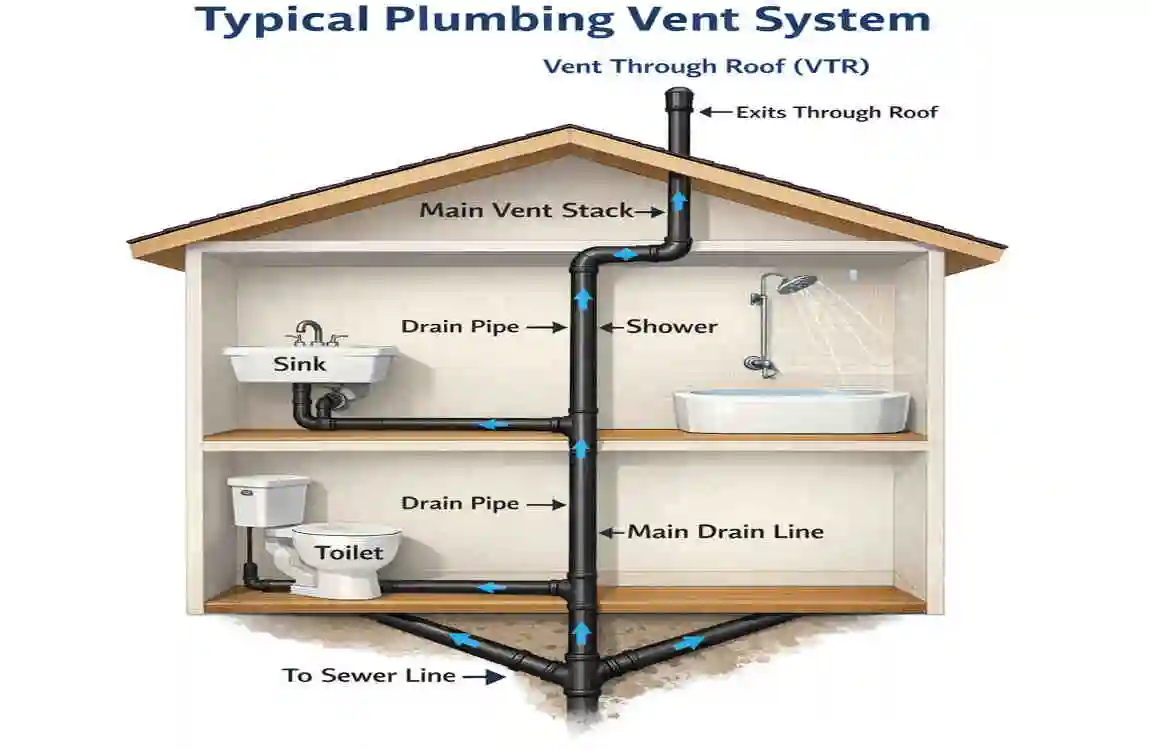
You’ll usually see a VTR where a vertical vent stack reaches the roof. The exact spot depends on where the main waste lines are located.
Common Roof Vent Locations
- Above bathrooms and kitchens.
- Near laundry rooms or utility closets.
- Sometimes grouped in a “vent island” where several stacks combine.
VTR Pipes and Roof Penetrations
The pipe cuts through the roofing material and is sealed with metal flashing. A good seal keeps rainwater out of the roof cavity.
Can Every Plumbing Vent Be Seen From the Roof?
Not always. Some homes use hidden, or “wet vent,” designs where the vent runs inside the wall and only a small opening is visible on the roof.
Common VTR Problems and Warning Signs
Even a small vent can cause big headaches if it’s not working right.
Blocked Plumbing Vents
Leaves, bird nests, or debris can clog the vent opening and limit airflow.
Damaged or Loose Vent Pipes
Weather, tree branches, or settlement can bend or crack the pipe.
Roof Leaks Around VTR Pipes
Failed flashing or cracked sealant lets water seep down behind the vent.
Unusual Plumbing Odours
A sour or sewer‑like smell often points to a vent issue, but it can also be a cracked pipe or dry trap.
VTR Maintenance, Inspection, and Repair
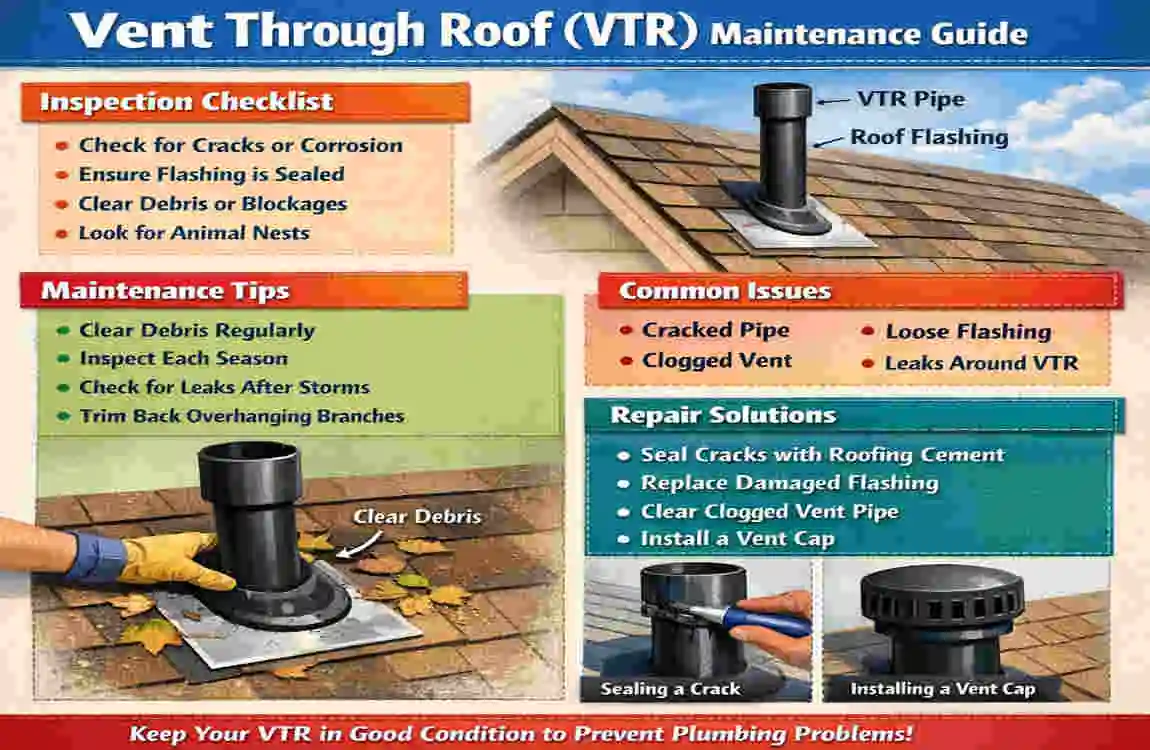
You don’t need to climb onto the roof yourself, but a quick visual check can catch problems early.
How Often Should VTRs Be Inspected?
- At least once a year, preferably during a routine roof check.
- After any major storm or when you notice drainage issues.
Should Homeowners Clean a Roof Vent?
Cleaning can be dangerous. It’s safest to hire a professional who can clear the vent without risking a fall.
Repairing VTR Pipes and Flashing
- Small cracks in the pipe usually need a replacement section.
- Leaking flashing often requires a roofer to reseal the penetration.
When to Call a Plumber
- Persistent slow drains or gurgling noises.
- Continuous foul odours despite cleaning traps.
- Visible damage to the vent pipe or flashing.
VTR vs. Other Plumbing Terms and FAQs
Below is a quick comparison to help you keep the terminology straight.
Term Primary Role Typical Location
VTR (Vent Through Roof) Provides air exit for the drainage system Through the roof
Vent Stack Main vertical vent that feeds multiple branches Inside walls, rises to the roof.
Soil Stack Carries wastewater and solids down to the sewer Inside walls, often parallel to vent stack.
Drainpipe Moves wastewater away from fixtures Inside walls, under floors
Roof Vent (non‑plumbing) Allows attic air to escape for temperature control Often near ridge or gable, not connected to plumbing
VTR vs. Vent Stack
The vent stack is the whole vertical pipe network; the VTR is simply the part that sticks out through the roof.
VTR vs. Drainpipe
A drainpipe carries water; a VTR carries air. Both are essential, but they serve opposite functions.
VTR vs. Roof Vent for Other Systems
A mechanical roof vent moves warm air out of the attic, while a VTR is a plumbing component that moves air in and out of the waste system.
Frequently Asked Questions
What does VTR stand for in home plumbing?
It stands for Vent Through Roof, the pipe that lets air escape from the plumbing system at the roof line.
What is the purpose of a VTR pipe?
To equalize air pressure, keep drains flowing, and prevent sewer gases from entering the home.
Does every house have a VTR?
Most homes need some form of roof‑penetrating vent, but the exact design can vary.
Can a blocked VTR cause slow drains?
Yes, a blockage can restrict airflow, which may lead to sluggish drainage.
Can a VTR cause a roof leak?
The vent itself doesn’t leak, but poorly sealed flashing around the pipe can allow water in.