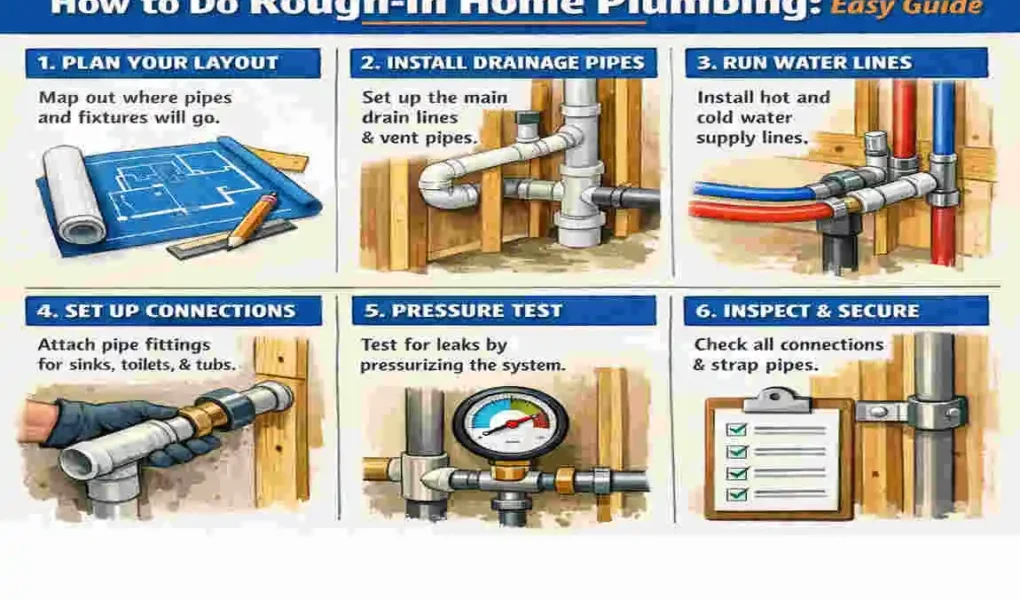
How to Rough-In Home Plumbing Like a Pro
Home Improvement Plumbing

How to Do Rough-In Home Plumbing: DIY Step-by-Step Guide for Beginners

If you are remodeling a bathroom, adding a laundry room, or finishing a basement, learning how to do rough in home plumbing can save you a surprising amount of money. For many homeowners, this part of the job feels intimidating at first. Pipes, drain lines, vent stacks, fittings, and code rules are a lot to manage. But once you break the process down into clear steps, rough-in plumbing starts to make sense.

Think of rough-in plumbing as the hidden framework of your plumbing system. It is the stage where you install the water supply lines, drain lines, and vent pipes before the walls are closed and the floors are fully finished. In simple terms, this is the plumbing work that happens behind the scenes. It is what gives your future sink, toilet, shower, and tub the ability to get clean water in and send wastewater out.

This stage matters more than many beginners realize. If the rough-in is done well, the rest of the project goes much more smoothly. If it is done poorly, you may end up opening walls later, fixing leaks, moving pipe locations, or even failing inspection. That is why a good plumbing rough-in guide is not just helpful. It is essential.

One of the biggest reasons homeowners want to learn how to do rough in home plumbing is cost. Hiring a licensed plumber for a small bathroom rough-in can cost thousands of dollars, depending on your area, the pipe material, the permit process, and the layout complexity. A careful DIYer can often cut that bill down dramatically by handling the planning, layout, drilling, pipe runs, and prep work themselves. Of course, this only makes sense if the job stays within your skill level and local rules.

There is another benefit too. Understanding rough-in plumbing builds your confidence. You start to see how your house actually works. You learn why a drain needs slope, why a vent matters, why pipe size changes from one fixture to another, and why placement is everything. Even if you eventually hire help for part of the job, having this knowledge helps you make better decisions and avoid costly mistakes.

What Is Rough-In Plumbing?

How to Rough-In Home Plumbing Like a Pro

The Simple Definition

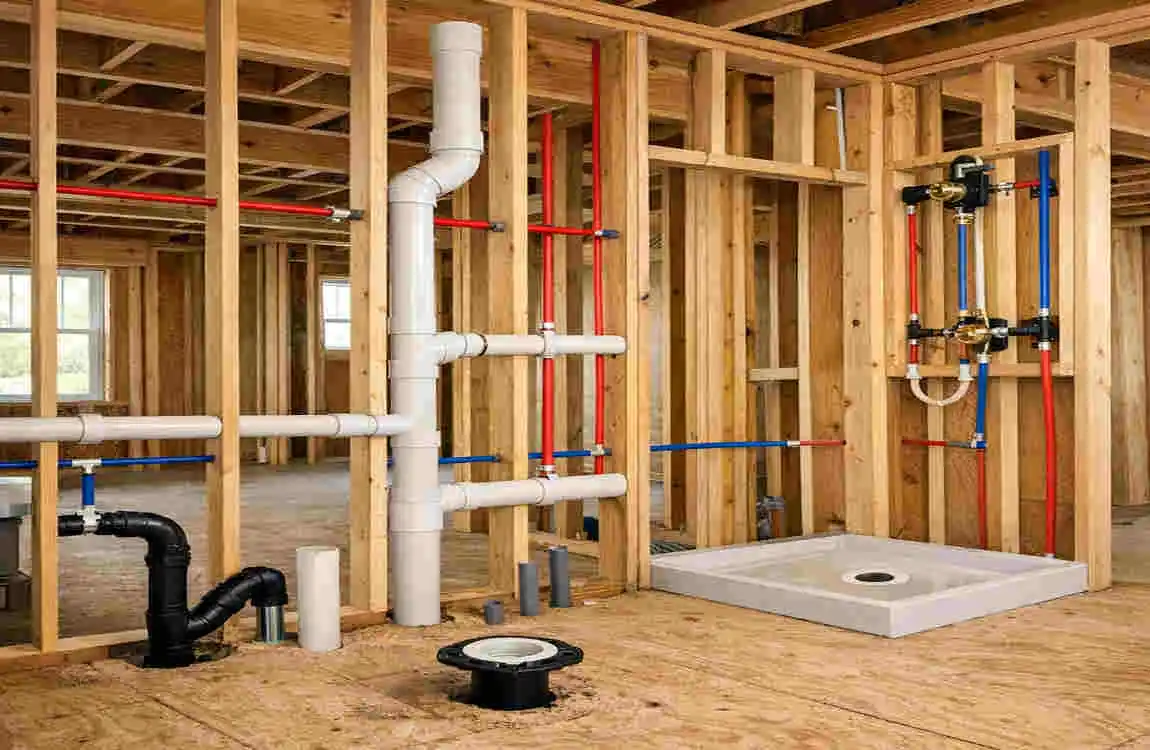
Rough-in plumbing is the stage where you install the core plumbing system before the finished surfaces go in. That means the walls are still open, the framing is visible, and you have access to the areas where pipes need to run.

At this point, you are not installing the pretty, visible parts yet. You are not putting in the faucet handles, toilet tank, shower trim, or sink drain assembly. Instead, you are installing the hidden parts that make those fixtures work later.

This usually includes:

  • Water supply rough-in
  • Drain-waste-vent piping
  • Pipe supports and brackets
  • Stub-outs for future fixture connections

That is why people often call rough-in plumbing the system’s skeleton. It is not the finished look, but it is the structure that supports everything else.

Rough-In Plumbing vs Finish Plumbing

Many beginners confuse rough-in plumbing with finish plumbing. The difference is easy to understand once you see them side by side.

Aspect Rough-In Plumbing Finish Plumbing

Timing Before walls and floors are closed After drywall, tile, and finishes are in place

Focus Pipes, drains, vents, supply lines Fixtures, faucets, valves, trim, final hookups

Visibility Mostly hidden inside walls and floors Mostly visible and user-facing

DIY Feasibility Often beginner-friendly for simple layouts Requires more precision and fixture-specific work

Where Rough-In Plumbing Is Used

You will usually deal with rough-in plumbing during one of these projects:

  • New home construction
  • Bathroom remodels
  • Kitchen renovations
  • Basement bathroom additions
  • Laundry room relocations
  • Home additions

If you are adding a toilet, sink, tub, shower, washing machine, or utility sink in a new location, you will likely need rough-in plumbing.

Why It Matters So Much

If your rough-in is off by even a small amount, it can affect the whole project. A drain placed too high can ruin the slope. A toilet flange installed in the wrong spot can cause the toilet to fit poorly. A vent line that is too far from the fixture can cause slow drains and gurgling. A supply stub-out that is not centered can make finish plumbing harder than it should be.

That is why learning how to do rough-in home plumbing is really about learning the layout first, not just the plumbing.

Tools and Materials You Will Need

Essential Tools for Rough-In Plumbing

Before you start any DIY rough-in plumbing steps, gather your tools. You do not need a huge professional truck full of gear, but you do need the basics.

Here are the most common tools for a beginner setup:

  • Tape measure
  • Permanent marker or pencil
  • Level
  • Drill
  • Hole saws or spade bits
  • Pipe cutter
  • Hacksaw
  • Channel-lock pliers
  • Adjustable wrench
  • Utility knife
  • PEX crimp tool if you are using PEX
  • Deburring tool or sandpaper
  • PVC primer and cement if using PVC
  • Safety glasses
  • Work gloves

If you plan to use copper supply lines, you may also need a torch, solder, flux, and more experience. Many beginners prefer PEX because it is easier to run and cut, and more forgiving in tight spaces.

Common Plumbing Materials

The exact materials depend on your local code and the type of project, but most rough-in jobs include a mix of these items:

  • PEX or copper pipes for water supply
  • PVC or ABS pipes for drains and vents
  • Elbows
  • Tees
  • Couplings
  • Adapters
  • P-traps
  • Closet bend and flange components
  • Pipe clamps
  • Hangers
  • Protective nail plates
  • Shutoff valves
  • Test caps or plugs

A Beginner Budget Table

Item Category Examples Estimated Cost

Tools Cutter, drill bits, crimp tool, level $150–$300

Pipes and fittings PEX, PVC, tees, elbows, valves $100–$400

Miscellaneous supplies Cement, primer, tape, supports, caps $50–$100

Permit and inspection Local fees vary $100–$300

Smart Buying Tips

If this is your first time learning how to do rough in home plumbing, do not rush into buying everything at once. Start with the materials that match your plan. It is easy to overspend on fittings you never use.

A few practical tips:

  • Choose PEX for supply lines if your code allows it and you want easier installation.
  • Rent expensive tools if you only need them once.
  • Buy a few extra fittings because mistakes happen.
  • Use pipe supports and nail plates from the start, rather than treating them as optional extras.
  • Stick to one system whenever possible, rather than mixing too many materials.

The goal is not just to get the job done. The goal is to create a rough-in that is clean, well-supported, and easy to finish later.

Planning Your Rough-In

How to Rough-In Home Plumbing Like a Pro

Why Planning Is the Most Important Step

Before you start how to do rough in home plumbing, stop and plan everything. This is the part many DIYers want to skip because it feels slow. But planning is where you save the most time, money, and frustration.

A rough-in project is much easier when you know exactly where each fixture goes, how the drain line will run, where the vent connects, and how the supply lines will enter the space.

Good planning also helps you avoid one of the most common beginner mistakes: installing plumbing that physically fits, but fails inspection or creates future performance issues.

Start With the Fixture Layout

The first question is simple: What fixtures are going in the room?

For example, in a small bathroom, you may have:

  • A toilet
  • A vanity sink
  • A tub or shower

Each fixture needs:

  1. A drain
  2. A vent connection
  3. Hot and/or cold water supply

From there, sketch the room. Mark the walls, studs, doorway, and fixture locations. You do not need a fancy software program. A neat paper sketch is enough if the measurements are accurate.

Know the Key Measurements

When learning how to do rough in home plumbing, common measurements matter. A toilet rough-in, for example, is often based on the distance from the finished wall to the center of the toilet drain. A common standard is 12 inches, but fixture models vary, so always confirm the product specs.

For sinks and lavatories, supply stub-outs and drain heights can vary too. A good rule is to plan around the actual cabinet, vanity, or wall-hung fixture you are using. Do not guess if you already know the product.

Map the Drain Path First

Many experienced plumbers plan the drain system before the supply lines. That is smart because drains need gravity and space. They also need the correct slope and proper venting.

As you sketch the drain layout, think about:

  • Where the main drain line runs
  • Which fixture connects first
  • How each branch will tie in
  • How the vent will rise
  • Whether joists or beams affect the route

Drain lines are often less flexible than water lines. That is why they usually control the layout.

Check Slope, Venting, and Pipe Size

Your drains need consistent fall so wastewater moves properly. Too little slope can cause clogs and standing waste. Too much slope can allow water to outrun solids, which is not good either.

You also need to think about venting. Plumbing vents let air into the system so drains flow properly and traps do not get siphoned dry. Beginners often focus so much on the pipes that carry water that they forget the air side of the system.

Make a Simple Pre-Start Checklist

Before cutting anything, go through this checklist:

  1. Confirm fixture locations
  2. Measure all center points and wall offsets
  3. Identify stud and joist pathways
  4. Plan drain line routes
  5. Plan vent line routes
  6. Plan hot and cold supply runs
  7. Verify local permit rules
  8. Check code requirements for pipe size, slope, and support
  9. List all fittings and materials
  10. Mark inspection stages

That checklist alone can save you from a lot of expensive rework.

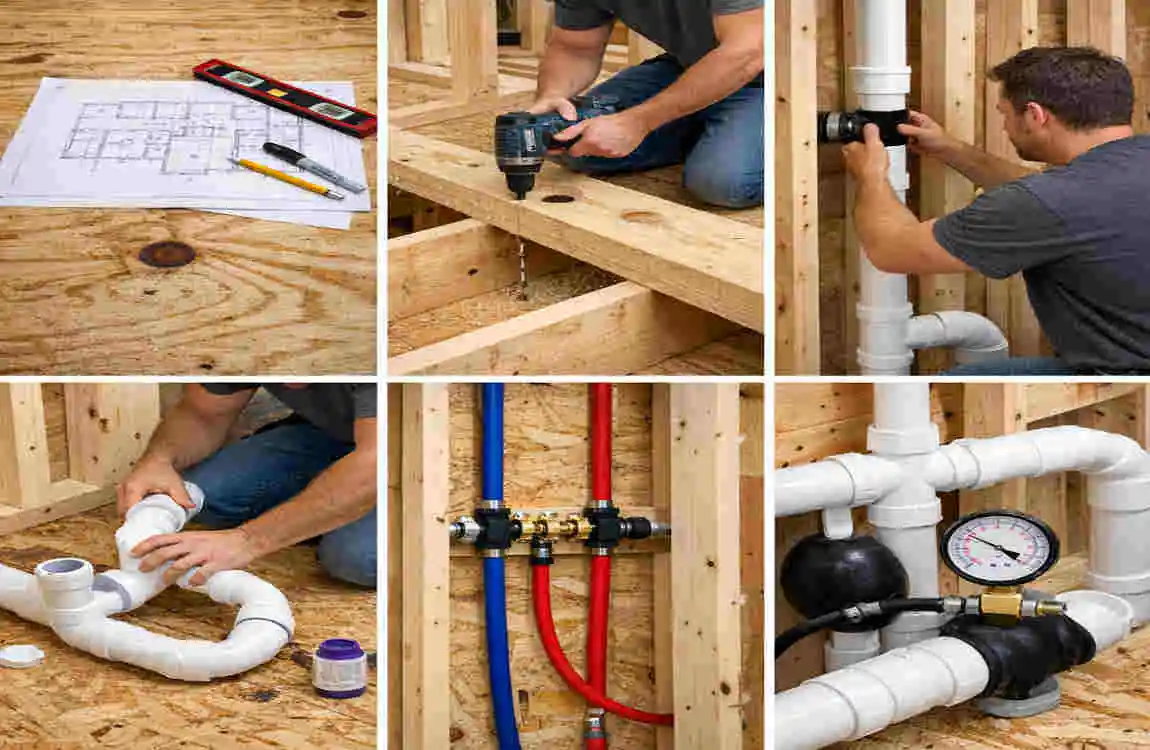
Step-by-Step DIY Guide: How to Do Rough-In Home Plumbing

Mark and Cut Openings

This is where your plan turns into physical work. Start by marking the locations for your drains, vent pipes, and water supply lines on the framing.

Use a tape measure, level, and marker to place each hole and pipe path exactly where it belongs. Be precise here. If you are off by even an inch in some cases, you may create a problem for the finish stage later.

Mark:

  • Fixture centerlines
  • Drain entry points
  • Supply stub-out locations
  • Vent routes
  • Pipe penetrations through studs or joists

When drilling holes through studs or joists, match the hole size to the pipe you are installing while respecting structural rules. The hole needs enough room for the pipe to pass cleanly, but it should not weaken the framing or violate building code.

Try to keep your holes aligned. A clean line of pipe runs is easier to secure and looks more professional during inspection. If you need to notch framing, do so only where allowed, and install protection plates where required.

This is also the time to plan wall finishes. A pipe that barely clears the framing can become a drywall headache later. Give yourself enough working room.

install Drainage and Vent Pipes

If you want to understand how to do rough-in home plumbing the right way, focus on this step. Drain and vent work is where many beginners struggle, because gravity, sizing, and layout all matter at the same time.

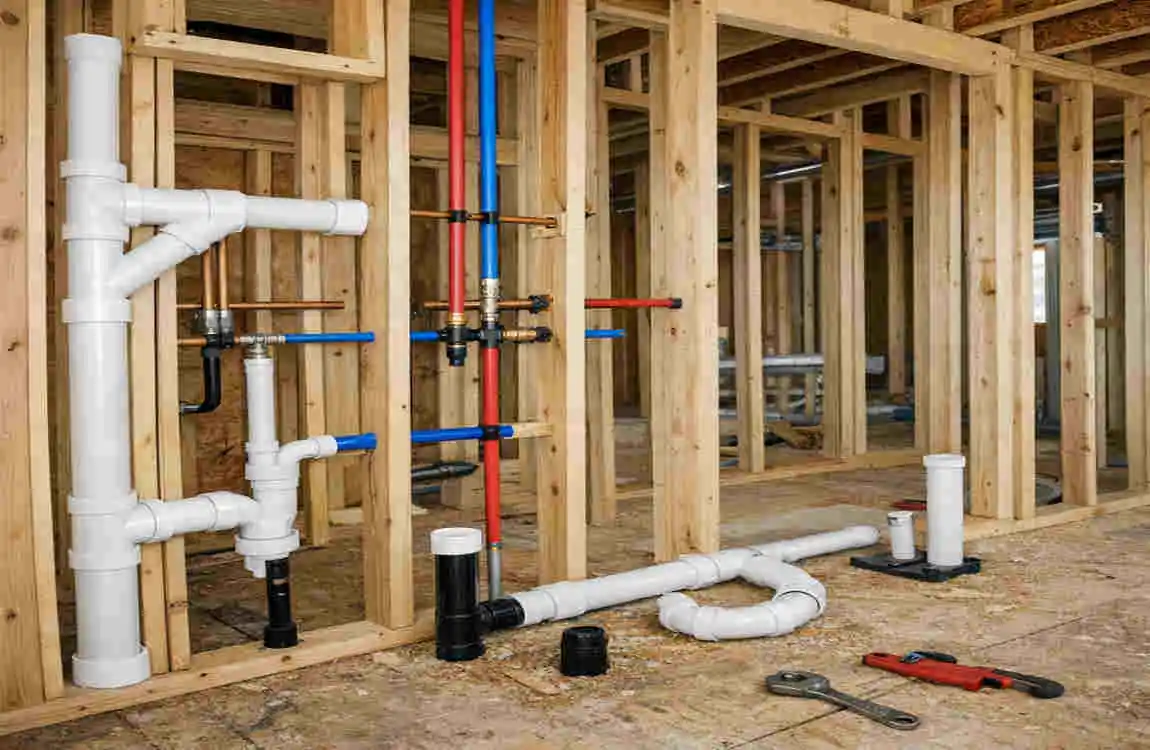
Start with the main drain connection for the space. In a bathroom, that often means running the toilet drain first, then tying in the sink and tub or shower branches. Fixture drain sizes vary by fixture and local code, so confirm your requirements before installation.

As you run the drain pipes:

  • Maintain a consistent slope toward the main drain
  • Dry-fit your pieces before gluing
  • Use the right fittings for directional changes
  • Avoid sharp turns where long-sweep fittings are preferred
  • Keep vent takeoffs where required

PVC drain installation is usually beginner-friendly. Cut the pipe square, deburr the edge, test-fit the pipe and fitting, then use primer and cement according to the product instructions. Work carefully but steadily, because solvent-welded joints set fast.

Vents are just as important as drains. Every fixture needs proper venting so wastewater can flow smoothly and trap seals stay intact. Without proper venting, you may hear gurgling, smell sewer gas, or experience slow drainage.

Some projects use a vent stack through the roof. Others may allow specific venting methods depending on local rules. Do not assume one method is acceptable everywhere. This is one area where local code matters a lot.

A few practical tips while installing drain and vent pipes:

  • Keep fittings oriented in the correct direction
  • Double-check pitch with a level
  • Label branches if the layout is complex
  • Support longer pipe runs so they do not sag
  • Test-fit fixture positions against the drain centers before final glue-up

This part of the plumbing rough-in guide sets the tone for the rest of the guide. If your drain and vent layout is clean, the supply lines will run more easily.

Run Water Supply Lines

Once your drain and vent system is in place, the next major stage in how to do rough in home plumbing is the water supply rough-in.

For beginners, PEX is usually the easiest material to work with. It bends around obstacles more easily than rigid pipe, needs fewer fittings, and installs faster in most residential projects. You can run separate hot and cold lines from a main trunk or from a manifold system depending on the design.

Start by identifying the supply source and the direction your lines will travel. Then route hot and cold lines to each fixture location.

A typical bathroom setup may require:

  • Cold supply to the toilet
  • Hot and cold supply to the sink
  • Hot and cold supply to the shower or tub valve

As you run the lines:

  • Keep hot and cold organized and easy to identify
  • Avoid unnecessary bends and sharp kinks
  • Protect pipes where they pass through framing
  • Leave stub-outs in the correct location for finish connections
  • Secure the tubing so it does not shift or rub

Spacing matters at fixture connections. A sink usually needs the hot and cold water supplies neatly separated on either side of the drain. A shower valve needs its hot and cold inlets aligned properly so the trim can be installed later.

This is where many DIYers benefit from dry-fitting valve bodies and fixture templates before final attachment. It is much easier to move a rough-in valve before walls close than after tile is installed.

If you are using PEX:

  1. Cut the tubing cleanly
  2. Slide on the crimp ring
  3. Insert the fitting fully
  4. Position the ring correctly
  5. Crimp with the proper tool
  6. Check the crimp with a gauge if required

Take your time. Water lines operate under pressure so that a sloppy connection can create a hidden leak inside the wall. That is the last thing you want after drywall goes up.

Secure and Connect Everything Properly

At this point, your system may look complete, but this step is what separates a rough layout from a reliable rough-in.

You need to secure the pipes so they stay in place over time. Unsupported drain lines can sag. Loose water lines can move and create noise. Pipes rubbing against framing can wear down or produce annoying sounds later.

Use proper supports, hangers, and brackets based on the pipe type and local code. Make sure:

  • Horizontal runs are supported at proper intervals
  • Vertical pipes are anchored where needed
  • Stub-outs are braced firmly
  • Valve bodies are mounted solidly
  • Toilet and sink locations are centered and stable

Also review each joint before moving on. Look for:

  • Missed glue joints
  • Poorly seated fittings
  • Incorrect pipe slope
  • Lines too close to screw or nail zones
  • Misaligned supply or drain openings

This is the perfect time to install nail plates over studs where pipes run close to the face of the framing. These little metal protectors are easy to overlook, but they can prevent a future drywall screw or trim nail from puncturing a hidden pipe.

If you are serious about learning how to do rough in home plumbing, get into the habit of stepping back and reviewing your work from across the room. A quick visual inspection often reveals alignment problems you missed up close.

Pressure Test and Get Ready for Inspection

You are not done just because the pipes are in place. Every rough-in plumbing DIY project should be tested before the walls are closed.

For water supply lines, you typically cap the system and perform a pressure test based on your local requirements and the materials used. The goal is to confirm there are no leaks and that the system can hold pressure properly.

For drain and vent lines, your local jurisdiction may require a specific test method before inspection. That may involve plugging openings and filling the system or using another approved test procedure. Always follow local rules here rather than guessing.

During your test, inspect carefully for:

  • Moisture at joints
  • Dripping fittings
  • Pressure loss
  • Misaligned caps or plugs
  • Movement at unsupported sections

Do not rush this step. A slow leak hidden in a wall can cause expensive damage later.

Once the system passes your test, schedule the rough plumbing inspection if required in your area. The inspector will usually want to see:

  • Correct pipe sizes
  • Proper venting
  • Proper drain slope
  • Secure supports
  • Protection plates
  • Correct fixture placement
  • Approved materials and fittings

If something needs adjustment, fix it before insulation and drywall begin.

That final inspection may feel stressful, but it is actually helpful. It gives you another set of trained eyes on the system before the house closes up.

Safety and Common Mistakes

How to Rough-In Home Plumbing Like a Pro

Safety Comes First

Plumbing may not look as dangerous as roofing or electrical work, but it still deserves respect. A safe work process protects both you and the house.

Always:

  • Shut off the main water before starting
  • Wear gloves and eye protection
  • Use proper ventilation when working with primer or solvent cement
  • Keep your work area dry and clear
  • Use ladders carefully when venting upward
  • Protect yourself from sharp pipe edges and drill debris

If you are sweating copper or using any open flame, be extra cautious around framing, insulation, and nearby materials. Many beginners choose PEX and PVC partly because the installation process is simpler and often safer.

The Most Common Rough-In Plumbing Mistakes

Here are the mistakes that cause the most trouble in beginner projects:

 Bad Planning

This is the root problem behind most failed DIY jobs. If the fixture layout is not right, everything after it becomes harder.

Incorrect Drain Slope

A drain that is too flat may not move waste properly. A drain that drops too aggressively can also cause performance problems. Measure your fall carefully instead of eyeballing it.

Poor Venting

Many people focus only on getting water out. But without good venting, the system will not perform well. Slow drains and sewer odors often stem from vent issues.

Weak Pipe Support

Loose pipes do not stay neat for long. Sagging drain lines and wobbly stub-outs create problems later.

Skipping the Test

This is one of the worst shortcuts in any DIY rough-in plumbing steps project. Even if everything looks fine, you still need to test the system before closing the walls.

Ignoring Local Code

Even a physically functional system can fail inspection if it does not follow local code. That means delays, rework, and extra cost.

Guessing on Fixture Heights

Measure carefully. A stub-out that is too high, too low, or off-center can turn the finish stage into a frustrating fix-up job.

When to Call a Pro

DIY can be a great choice for simple projects, but it is okay to call a professional if:

  • The layout is complicated
  • You are moving major plumbing stacks
  • The system ties into older plumbing you do not understand
  • You are unsure about venting
  • Your permit office requires licensed work for certain stages
  • The job includes gas piping or major code complexity

A smart homeowner knows when to learn and when to hand off the hard part.

Local Codes and Permits

Why Permits Matter

If you are learning how to do rough-in home plumbing, do not treat permits as a technicality. They are there to protect health, safety, and long-term building quality.

Most areas require a permit when you install new plumbing, move fixture locations, or alter drainage and venting systems. The exact rules vary by city, county, and state.

Common Code Areas to Check

While rules vary, inspectors often look closely at these items:

Requirement Common Standard to Verify Locally

Drain slope Often around 1/4 inch per foot for smaller drain lines

Vent distance Limited by fixture and pipe size

Pipe support Required at set intervals depending on material

Supply pressure Must stay within acceptable residential range

Pipe sizing Based on fixture load and code tables

Your Best Approach

Before you begin:

  1. Call the local building department
  2. Ask whether a permit is needed
  3. Ask what inspection stages apply
  4. Confirm accepted pipe materials
  5. Ask for any local amendments to national code standards

This step may feel boring, but it can save you from having to tear out work later.

Cost Breakdown

How to Rough-In Home Plumbing Like a Pro

If you are wondering whether learning how to do rough-in home plumbing is worth it, the cost is a big part of the answer.

A small DIY rough-in project can often fall in the $500 to $1,500 range depending on the room, pipe materials, tools you already own, and permit fees. Hiring a professional for the same work may cost several thousand dollars more.

Here is a simple example:

Component DIY Cost Range

Materials $300–$800

Tool rental or purchase $100–$200

Permit and inspection $100–$300

Total $500–$1,500

A professional rough-in for a bathroom or similar space can often land in the $3,000 to $7,000 range depending on complexity and local labor rates.

That does not mean DIY is always the cheaper choice in the long run. If you make serious mistakes, the repair bill can quickly wipe out your savings. The real value of DIY comes from doing manageable work carefully and correctly.

FAQs About Rough-In Home Plumbing

What does rough-in mean in plumbing?

It means installing the hidden plumbing system before walls and floors are finished. This usually includes supply lines, drain lines, vent pipes, and fixture connection points.

Can a beginner handle rough-in plumbing DIY?

Yes, many beginners can handle a simple project if they plan carefully, use the right materials, and follow local code. A basic bathroom or laundry layout is much more beginner-friendly than a whole-house system.

How long does rough-in plumbing take?

For a simple bathroom, it may take 1 to 3 days, depending on skill level, access, permit requirements, and whether you are working alone.

What is the easiest pipe material for beginners?

PEX is often the easiest choice for water supply lines because it is flexible and simple to install. PVC is also beginner-friendly for many drain and vent applications.

Do I need a permit for rough-in plumbing?

In many areas, yes. If you are adding, moving, or significantly changing plumbing, permits and inspections are often required.

What is the biggest mistake beginners make?

Poor planning is the biggest one. If the fixture layout, slope, venting, or measurements are wrong, the whole system becomes harder to fix later.

Should I rough in drains or supply lines first?

Most people start with drains and vents because they are less flexible and depend heavily on slope and layout. Supply lines usually come after that.

You may also like...

Leave a Reply

Your email address will not be published. Required fields are marked *