If you live near a lake, pond, canal, river, or even a damp drainage area, you may already know the feeling. One evening, your porch looks clean, and the next, it feels like a wave of tiny, winged insects has taken over your lights, walls, and windows. That sudden swarm can be frustrating, messy, and honestly a little alarming.
The good news is that mayflies are harmless. They do not bite, sting, or spread disease. But even though they are not dangerous, they can still create a real nuisance when they gather around your home in large numbers. They can pile up on outdoor surfaces, slip into open doors, and end up on floors, window sills, and carpets. If you have ever wondered how to get rid of mayflies in your house, you are not alone.
Mayflies are short-lived insects, but while they are alive, they can be overwhelming. They are strongly attracted to light, moisture, and water sources, which is why homes near water often see the worst swarms. A few mayflies in the yard may not seem like a big deal. Still, a full mayfly infestation house situation can turn everyday cleaning into a headache.
| Step | Action | Why It Works | Tips |
|---|---|---|---|
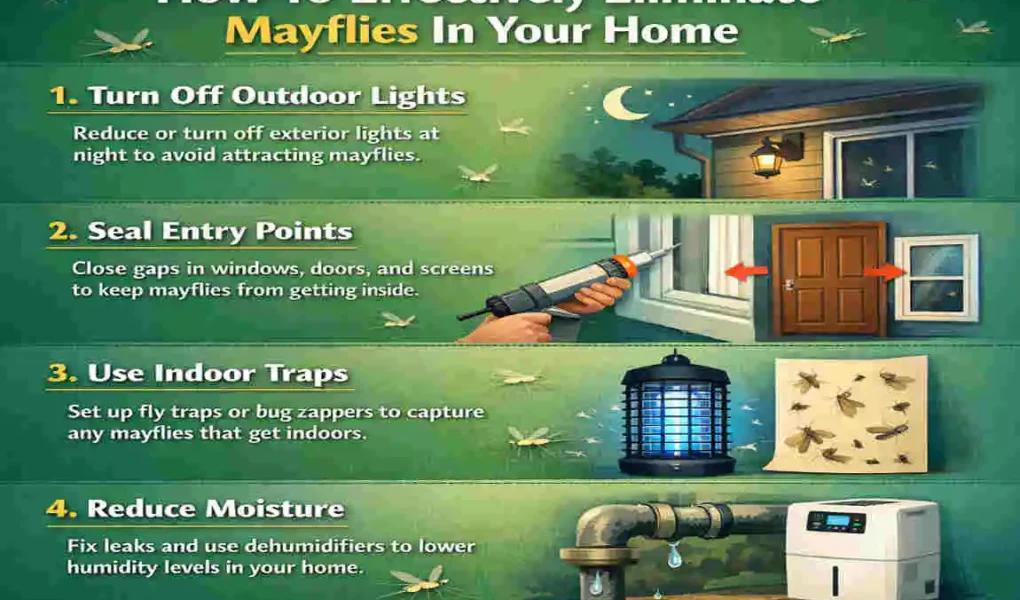
| Prevent Entry | Seal cracks, repair screens, ensure doors close tightly | Blocks access points | Inspect exterior monthly; use weatherstripping |
| Reduce Attraction | Switch to yellow/LED bulbs; minimize outdoor lights at night; close curtains | Mayflies target white light | Turn off unnecessary lights during peak season (April-May) |
| Eliminate Breeding | Remove standing water (puddles, birdbaths, pools); clear yard debris | Stops egg-laying in moist areas | Drain weekly; cover water features |
| Indoor Cleanup | Vacuum with HEPA filter or sweep daily | Quickly removes intruders | Empty vacuum outside immediately |
What Are Mayflies?

A quick look at these insects
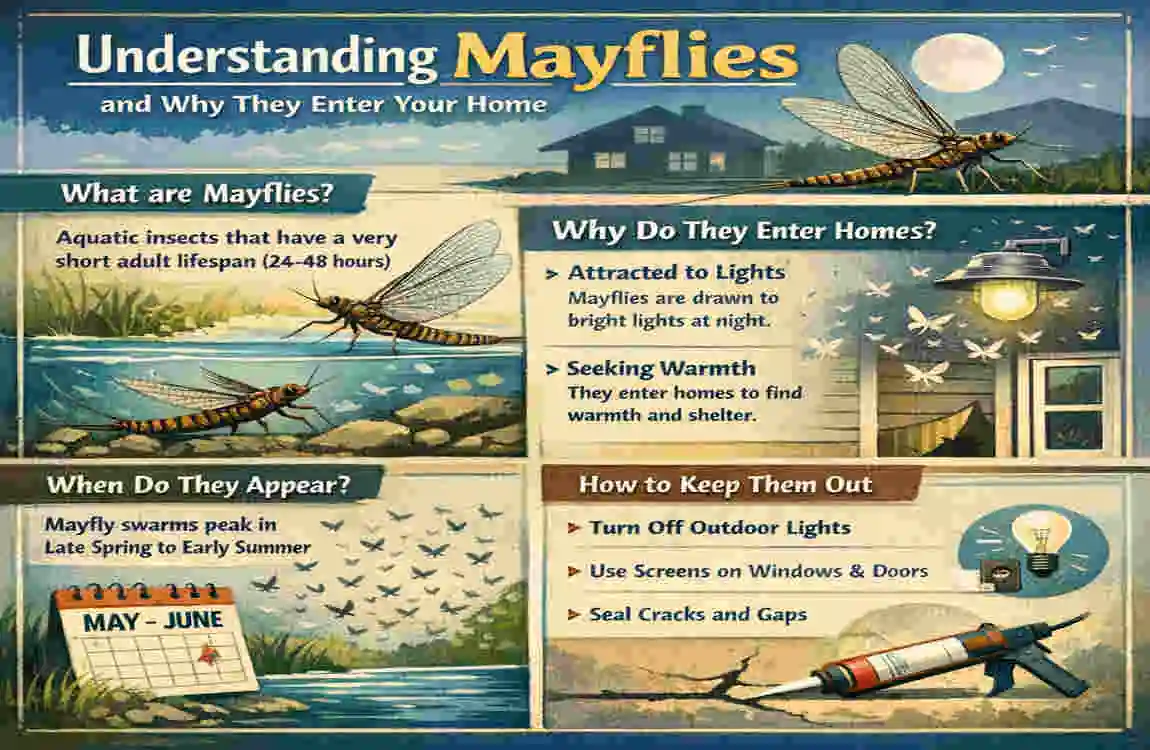
Mayflies belong to the insect order Ephemeroptera. They are easy to spot once you know what to look for. Most adults have delicate, translucent wings and long, often two or three, tails at the back of the body. They look fragile because they are fragile. In fact, adult mayflies have some of the shortest lives in the insect world.
Even though they are annoying in swarms, they are not the kind of pest that bites, stings, or chews through your clean home. That is one reason many people are surprised when they search for how to get rid of mayflies in your house. They are not invading to harm you. They are usually just following light, moisture, and their instincts.
Their life cycle is tied to water
Mayflies begin their lives in water. The eggs hatch into nymphs that live underwater for a long time, often around a year or more, depending on the species and environment. When the adults emerge, they do so in large numbers, often during warm months such as late spring and early summer.
That is why a mayfly problem often appears suddenly. One day the area is quiet, and the next day the air can feel full of movement. Since adults live only a short time, the problem may pass quickly, but the swarms can still make your home feel under attack.
Why they enter houses
Mayflies are drawn to white lights, porch lights, windows, and other bright outdoor lighting. They also love moisture and are often found near standing water, damp soil, or nearby waterways. If a door is open, a screen is torn, or a window is not sealed well, they can easily come inside.
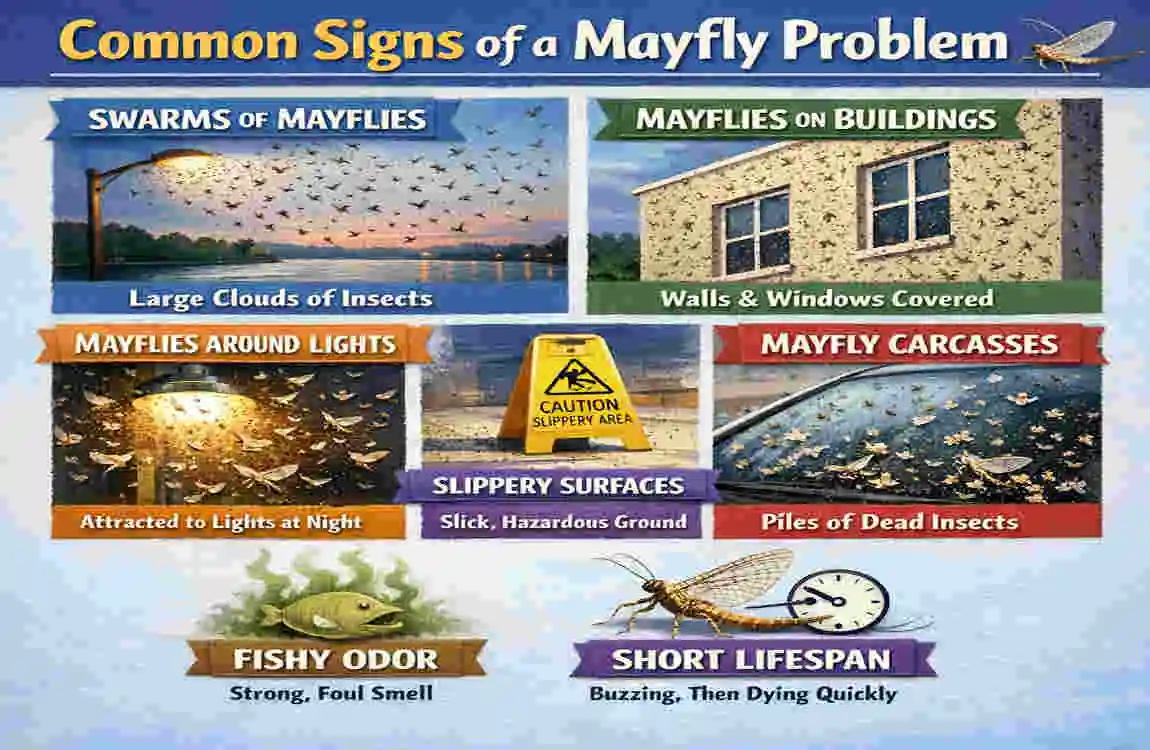
A few common signs of a mayfly infestation house situation include:
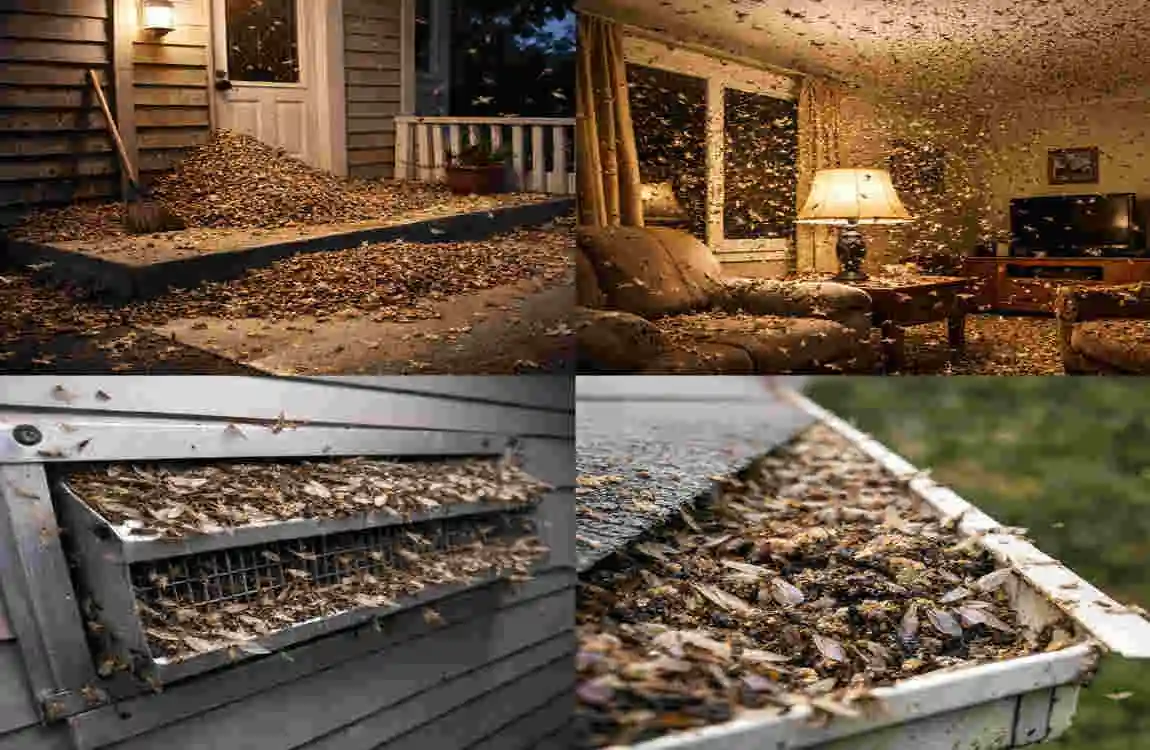
- Tiny piles of dead insects near windows and doors
- Swarms around outdoor lighting
- Mayflies on screens, walls, and floors
- Slippery walkways caused by insect buildup outside
In places with canals, rivers, and wet seasonal conditions, including areas around Lahore and similar water-rich regions, mayfly activity can become more noticeable during warm and humid periods. If your home sits near water, learning how to get rid of mayflies in your house becomes even more useful.
Why Mayflies Swarm Your House
Water, light, and shelter pull them in
Mayflies do not show up by accident. They are usually responding to a few strong triggers at once. The biggest one is proximity to freshwater. If there is a pond, canal, drain, stream, or even a soggy patch of ground nearby, that can support the life cycle of mayflies and create a breeding area close to your home.
Lighting is another huge factor. Outdoor lights act like a magnet for many flying insects, and mayflies are no exception. Bright white bulbs can make the problem worse by creating a stronger visual signal at night.
Cluttered yards also contribute to the problem. Overgrown shrubs, damp piles of leaves, and debris near walls can give insects places to rest. While mayflies do not build nests in your house, they can still gather heavily around the outside of the home and slip in when they get the chance.
Seasonal spikes are common
Mayflies are most active in late spring and early summer. In many places, they appear in huge numbers during a short seasonal window. Since they often emerge all at once, it can feel like the swarm came out of nowhere.
That is what makes mayfly control feel urgent. You are not dealing with a slow, hidden pest issue. You are dealing with a sudden influx. And when the swarm happens, the best response is to act quickly and then put in place prevention steps so you can keep mayflies indoors before the next wave arrives.
They are not dangerous, but they are a nuisance
It helps to be clean: mayflies are not a major health threat. They do not bite or sting people or pets. But that does not mean you should ignore them.
The real problems are:
- Mess on floors, walls, and windows
- Dead insects collecting indoors
- Slippery outdoor surfaces
- General frustration and discomfort
So if you are asking how to get rid of mayflies in your house, the goal is not just removal. The goal is to make your home less inviting in the first place.
Immediate Removal: Quick Fixes That Work Fast
Start with the simplest cleanup first
When mayflies get inside, do not panic. You usually do not need a complicated solution right away. A calm, direct cleanup can go a long way.
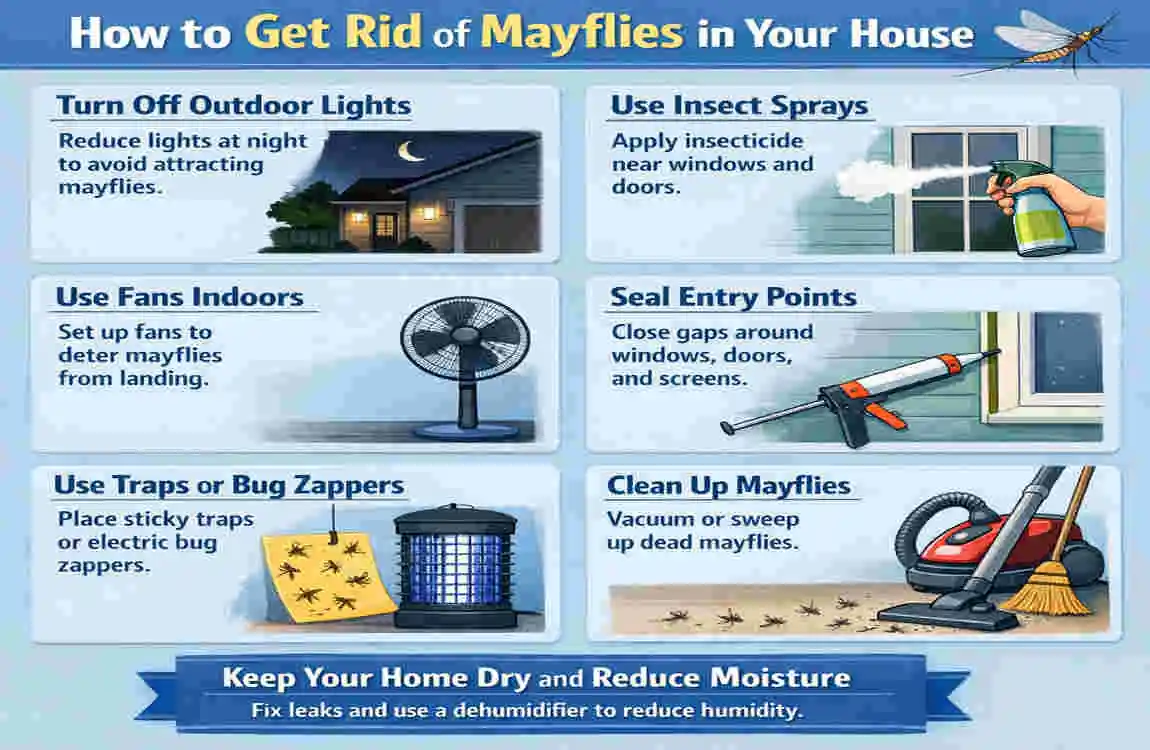
The first step is to remove the insects that are already there. Since mayflies are delicate, they are easy to sweep up or vacuum. If you have a large number indoors, a shop vacuum can make the job faster and cleaner. A regular broom and dustpan also work well for small clusters.
Here is the simple approach:
- Turn off unnecessary lights indoors.
- Open only a few windows, if at all, so as not to invite more insects inside.
- Sweep or vacuum the dead and weak insects gently.
- Empty the vacuum bag or canister outside right away.
- Wipe down surfaces where they collected.
This basic cleanup is often the fastest first step for getting rid of mayflies in your house.
Clean the outside too
If the insects are clustering around your exterior, do not only focus on the inside. Hose down patios, porch railings, window frames, and exterior walls if needed. This can remove dead insects and break up the buildup that makes the problem look worse.
Just be careful not to use too much water inside your home. Hosing should be an outdoor job. If you introduce too much moisture indoors, you may create a different problem.
Seal the easy entry points
Mayflies often enter through the simplest openings. Check:
- Doors
- Window gaps
- Torn screens
- Vent openings
- Small cracks near frames
If you need a quick temporary fix, use tape or weather stripping to seal obvious gaps until a more permanent repair can be made. That one step can make a noticeable difference when you are trying to eliminate mayflies home quickly.
Quick removal tools comparison
Method Tools Needed Time Effectiveness
Sweeping Broom, dustpan 10 min High for clusters
Vacuuming Shop vac or vacuum cleaner 15 min Best indoors
Hosing Garden hose 5 min Best outdoors only
Temporary sealing Tape, weather stripping 10–20 min Good for blocking entry
Best timing for cleanup
Try to handle cleanup in the evening or at night, especially if the swarm is active around your lights. If you wait until morning, you may find that more insects have died, but the mess can spread. A quick nighttime cleanup can reduce buildup and make the clean home feel livable again.
If you want to know how to get rid of mayflies in your house without making things harder, start with the basics: remove, seal, and reduce light.
Natural Remedies for Mayflies

Why natural methods are a great starting point
Many homeowners want a natural mayfly repellent because it is simple, budget-friendly, and easy to use around the house. If you prefer to avoid harsh sprays, natural options can still help reduce the swarm and make the area less appealing to them.
These methods are especially useful when:
- You only have a moderate swarm
- You want a low-cost solution
- You have kids or pets and want to stay cautious
- You prefer a DIY approach to pest control
Natural methods may not solve a severe infestation overnight, but they are a strong part of a long-term plan for how to get rid of mayflies in your house.
Garlic spray: a simple DIY repellent
Garlic is one of the most popular home remedies for many flying pests. Its strong smell can help keep insects away from treated areas.
Basic garlic spray recipe
- 2 whole bulbs of garlic
- 4 cups of water
- A spray bottle
- Optional: a few drops of mild liquid soap
How to make it
- Peel the garlic cloves.
- Blend the garlic with water.
- Strain the mixture if needed.
- Pour it into a spray bottle.
- Spray around doors, window frames, porch edges, and other entry points.
Use this as a natural mayfly repellent around the perimeter of your home. It is best for outdoor surfaces, not for spraying directly on indoor furniture or delicate finishes.
Essential oils can help too
Some essential oils are often used as part of a natural mayfly repellent plan. Common options include:
- Citronella
- Lavender
- Peppermint
These oils may help make entry points less attractive to flying insects.
Simple oil spray
- 10 to 15 drops of essential oil
- 2 cups of water
- 1 teaspoon of mild soap
- Spray bottle
Shake well before use and spray around windows, door frames, porch posts, and patio edges. Reapply as needed, especially after rain.
Lemon and garlic mixture
If you want another natural option, a lemon-and-garlic mix can create a strong scent barrier. This does not work like a heavy chemical insecticide. Still, it can be useful for discouraging insects from gathering near entrances.
You can combine:
- Fresh lemon juice
- Garlic water
- A small amount of soap
- Water
Spray this around the outside of the house where mayflies tend to gather. It is another useful tool if you are trying to eliminate mayflies home without using synthetic chemicals first.
Plants that may help
Some homeowners like to add pest-fighting plants around the yard. These include:
- Basil
- Mint
- Rosemary
You can place them in pots near patios or grow them near entryways. They will not solve everything, but they can support your overall plan to prevent mayflies indoors.
Safety tips for natural sprays
Natural does not always mean risk-free. Keep these points in mind:
- Test on a small area first
- Avoid spraying directly on pets
- Keep strong mixtures away from sensitive plants
- Reapply after rain or heavy watering
- Store clean homemade sprays safely out of children’s reach
Natural remedy recipe table
Remedy Ingredients Where to Use Notes
Garlic spray Garlic, water Doors, windows, exterior walls Strong smell, reapply often
Essential oil spray Citronella, lavender, peppermint, water, soap Entry points and porch areas Avoid overusing on delicate surfaces
Lemon-garlic mix Lemon juice, garlic water, soap Exterior perimeter Best for short-term control
Herb pots Basil, mint, rosemary Yards, patios, entryways Supports prevention, not a full fix
A good natural mayfly repellent strategy is simple: apply a few methods together, not just one. That layered approach makes your home less attractive to swarming insects and helps you stay ahead of the problem.
Chemical and Professional Solutions
When DIY methods are not enough
Sometimes the swarm is larger than expected. If your house is close to water, or if the mayflies keep returning in huge numbers, you may need a stronger answer. That is when chemical treatments or professional help can make sense.
If you are still wondering how to get rid of mayflies in your house after trying natural methods, it may be time to step up to a perimeter treatment or pest control service.
Perimeter sprays for outdoor control
A perimeter spray can be used around the foundation, doors, and common entry areas. These products are often designed to create a barrier that keeps insects from gathering close to the house.
The key is to follow the label directions exactly. Apply only where allowed, and avoid spraying near water sources or sensitive plants.
This type of treatment is especially useful when:
- The swarm is repeated and heavy
- You live close to a pond, canal, or drainage area
- The insects gather heavily around the exterior at night
Foggers and broad-area treatments
Foggers may be used for larger open areas, but they are not always the best answer for every home. They can help in specific situations, but they also require more caution and may not give you long-term control.
If you use a chemical treatment, remember:
- Keep people and pets away during application
- Follow drying times carefully
- Do not overuse the product
- Check local rules before using foggers
When to call a professional
If the swarm is relentless, a pest control professional may be able to help identify the source and recommend a better treatment plan. This is especially useful if you suspect a nearby breeding area, such as a pond or drainage system, that you cannot control on your own.
Professionals may also suggest:
- Exterior treatments
- Advice on lighting changes
- Entry point sealing
- Area-specific prevention strategies
Natural vs. chemical control
Feature Natural Methods Chemical Treatments
Cost Low Moderate
Speed Slower Faster
Safety Often gentler Requires more caution
Duration Shorter-term Longer-lasting
Best for Light to moderate swarms Heavy or repeated infestations
For many people, the best answer is a mix of both. Start with a natural mayfly repellent approach, then add a chemical barrier only if the problem stays severe. That balance can help you eliminate mayflies clean home without overdoing it.
Prevention: Long-Term Home Defense
Make your home less attractive to mayflies
The best way to handle a swarm is to stop it from building in the first place. If you want to prevent mayflies indoors, you need to think about what attracts them. That means light, water, and easy access.
This part matters most if you live near water or in a humid area. A few simple changes can make a big difference over time.
Rethink your outdoor lighting
One of the easiest prevention changes is switching to yellow bug lights or warmer outdoor bulbs. Bright white lighting tends to attract more flying insects, especially at night.
Try these steps:
- Use fewer outdoor lights when possible
- Turn off unnecessary lights after dark
- Choose warm-toned bulbs instead of bright white ones
- Place lights farther from doors and windows when possible
This is one of the simplest ways to prevent mayflies indoors because it reduces the number of insects that gather at the entrance in the first place.
Control moisture around the home
Mayflies are strongly tied to water. That means reducing moisture can help reduce the attraction.
Look for:
- Leaky faucets
- Standing water near foundations
- Birdbaths that are not cleaned
- Poorly drained areas in the yard
- Dripping outdoor hoses
- Water collecting in flowerpots, gutters, or low spots
If you fix leaks and remove standing water, you make your yard less friendly to insects. This is a major part of how to get rid of mayflies in your house in the long run.
Keep the yard clean and open
Yard maintenance may seem small, but it matters more than people think. When shrubs grow too close to the house, and when leaves and debris collect near walls, insects have more places to rest.
A cleaner yard helps by:
- Reducing hiding spots
- Improving airflow
- Making the area easier to inspect
- Lowering moisture buildup
Trim bushes, rake away debris, and, when possible, clear algae or gunk from outdoor surfaces. These actions support your effort to eliminate mayflies home before they become a visible problem.
Repair screens and seals
A torn screen can turn a minor issue into a major one. Check windows, doors, vents, and attic openings for gaps. Replace damaged screens and add door sweeps if needed.
You should also look for:
- Cracks around window frames
- Loose weather stripping
- Open gaps around utility entry points
- Poorly sealed garage doors
These are the kinds of openings that let insects slip inside even when the swarm outside is heavy. If your goal is to prevent mayflies indoors, sealing the home is one of the best investments you can make.
Seasonal checklist for spring
If you want to stay ahead of the problem in 2026, use a spring checklist before peak season arrives.
Your spring mayfly checklist
- Replace or repair damaged screens
- Switch outdoor lights to warm bulbs
- Drain standing water around the yard
- Clean gutters and drainage areas
- Trim shrubs and remove yard debris
- Check seals around doors and windows
- Prepare a natural spray in advance
This kind of prep can save you time later. It also makes your home feel more protected before the first big swarm shows up.
Common Mistakes to Avoid

Don’t make the problem worse
When people look up how to get rid of mayflies in your house, they sometimes make simple mistakes that feed the problem instead of solving it.
Using bright white lights at night
This is one of the biggest mistakes. White lights attract more insects, and mayflies are especially drawn to them. If your porch is lit up like a stadium, you may be inviting the swarm right to your door.
Ignoring nearby water sources
If there is standing water, a pond, a canal, or a drainage area nearby, you cannot ignore it. The source matters. If the breeding area stays active, the insects will keep coming back.
Sweeping too aggressively indoors
Sweeping is helpful, but over-sweeping can scatter the insects and push them into other parts of the house. Gentle sweeping or vacuuming is better when dealing with a mayfly infestation in a house.
Skipping reapplication
Natural sprays and some chemical treatments do not last forever. Rain, heat, and time can weaken them. To prevent mayflies indoors, you need to reapply products as needed.
Leaving entry points open
A screen door that stays open, a window with a gap, or a damaged vent can undo all your work. Even a small opening can become a path inside.
Avoiding these mistakes will make your control plan much stronger and help you stay consistent.
FAQs
How long do mayflies live indoors?
Usually only 1 to 3 days. They are short-lived insects, which is one reason swarms often seem intense but temporary.
Are mayflies harmful?
No, mayflies do not bite or sting. They are mostly a nuisance because of the mess and the number of insects that can gather around the home.
Can I use only natural methods?
Yes, in many cases. A good natural mayfly repellent plan using garlic, oils, and lighting changes can work well for mild to moderate issues.
What should I do if I live near water?
If your home is close to water, focus on drains, standing water, lighting, and screen repairs. These steps are especially important when you want to prevent mayflies indoors during peak season.
Do mayflies mean my house is dirty?
No. A mayfly infestation in a house usually has more to do with location, weather, moisture, and light than with cleanliness alone.