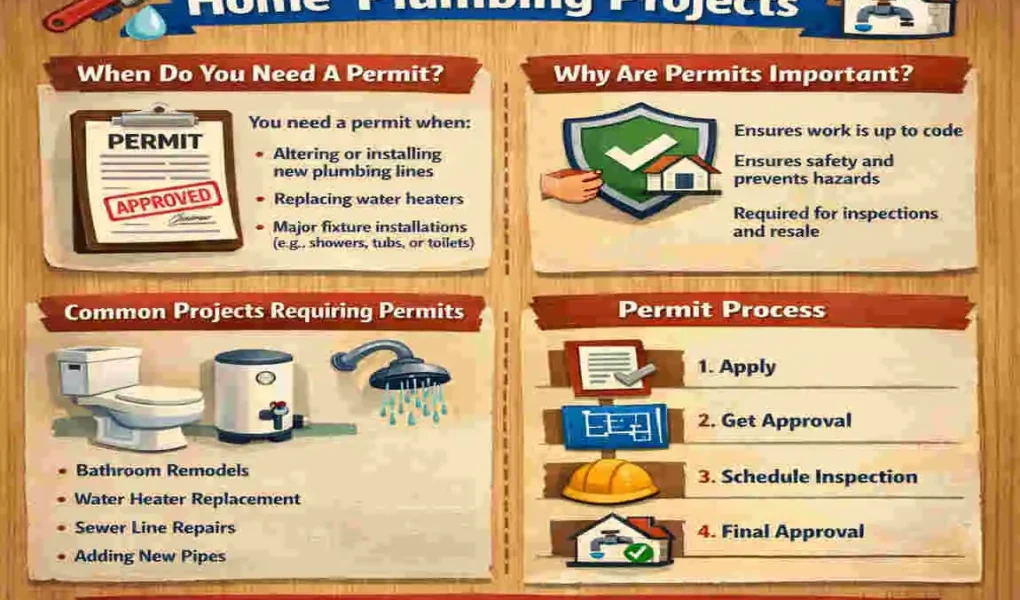
If you are planning a repair or upgrade, you may be wondering: does home plumbing require a permit? The short answer is: sometimes it does, and sometimes it doesn’t. It depends on the type of work, your local building codes, and where you live.
| Plumbing Project | Permit Often Needed? | Key Consideration |
|---|---|---|
| Replace a faucet | Usually No | Basic fixture replacement |
| Replace a toilet | Often No | Local rules may vary |
| Repair a leaking pipe | Usually No | Major repairs may require approval |
| Install a new bathroom | Usually Yes | New water, drain, and vent lines |
| Move plumbing lines | Often Yes | Changes to existing systems may require permits |
| Install new sewer lines | Usually Yes | Requires code compliance and inspection |
| Whole-house repiping | Often Yes | Major plumbing system work |
| Water heater replacement | Varies | Check local permit requirements |
A small fix may be simple enough to handle without paperwork. But bigger changes, like moving pipes or adding a bathroom, often need approval first. That is why it helps to understand the rules before you begin. A little planning now can save you time, money, and stress later.
Understanding Plumbing Permits for Home Projects
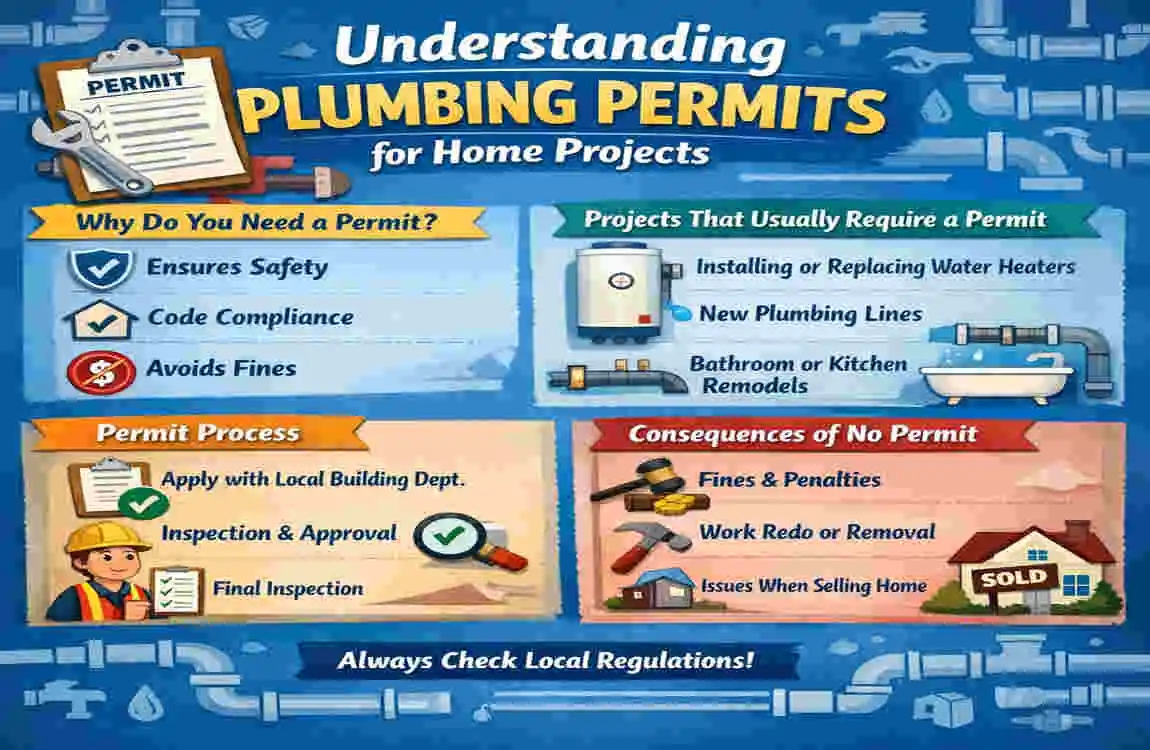
A plumbing permit is official permission from your local building department to do certain plumbing work. It ensures the job follows local plumbing codes and is done safely.
What a plumbing permit covers
A permit usually covers work such as:
- New pipe installations
- Moving water lines or drain lines
- Adding fixtures in new spaces
- Major repairs to plumbing systems
Why permits help protect homeowners and properties
Permits are not just red tape. They help make sure plumbing work is safe, up to code, and less likely to cause leaks, water damage, or health problems later.
Difference between plumbing permits, building permits, and inspections
A plumbing permit is for plumbing work. A building permit is usually for structural changes, like walls or room additions. An inspection is the check that happens after or during the work to confirm everything was done correctly.
Why local rules should always be checked
Permit rules are not the same everywhere. One city may allow a simple repair without a permit, while another may require one for the same job. Always check with your local building department before starting.
Does Home Plumbing Require a Permit?
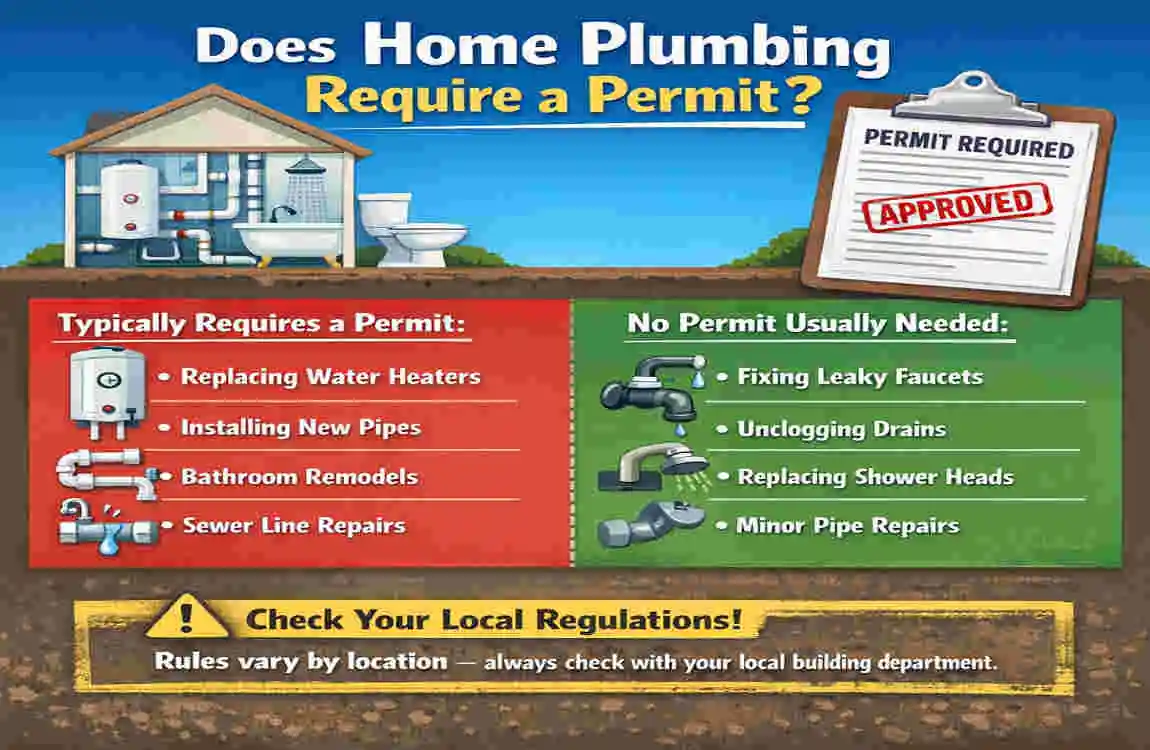
The answer isn’t always yes, but many home plumbing projects do require one. The size of the job matters, and so does the risk involved.
Common small jobs that may not need a permit
Some routine repairs are often exempt, such as:
- Replacing a faucet
- Swapping out a toilet
- Changing a showerhead
- Replacing supply lines in the same location
Common jobs that often need a permit
Larger changes often require approval, especially if they affect pipes behind walls or under floors:
- Installing a new bathroom
- Relocating a sink or tub
- Moving drain lines
- Replacing sewer or water service lines
Emergency work may be different.
If a pipe bursts or a sewer line fails, emergency repairs may be allowed before the permit is approved. Even then, you may still need to notify the local office afterward.
Plumbing Projects That Commonly Need Permits
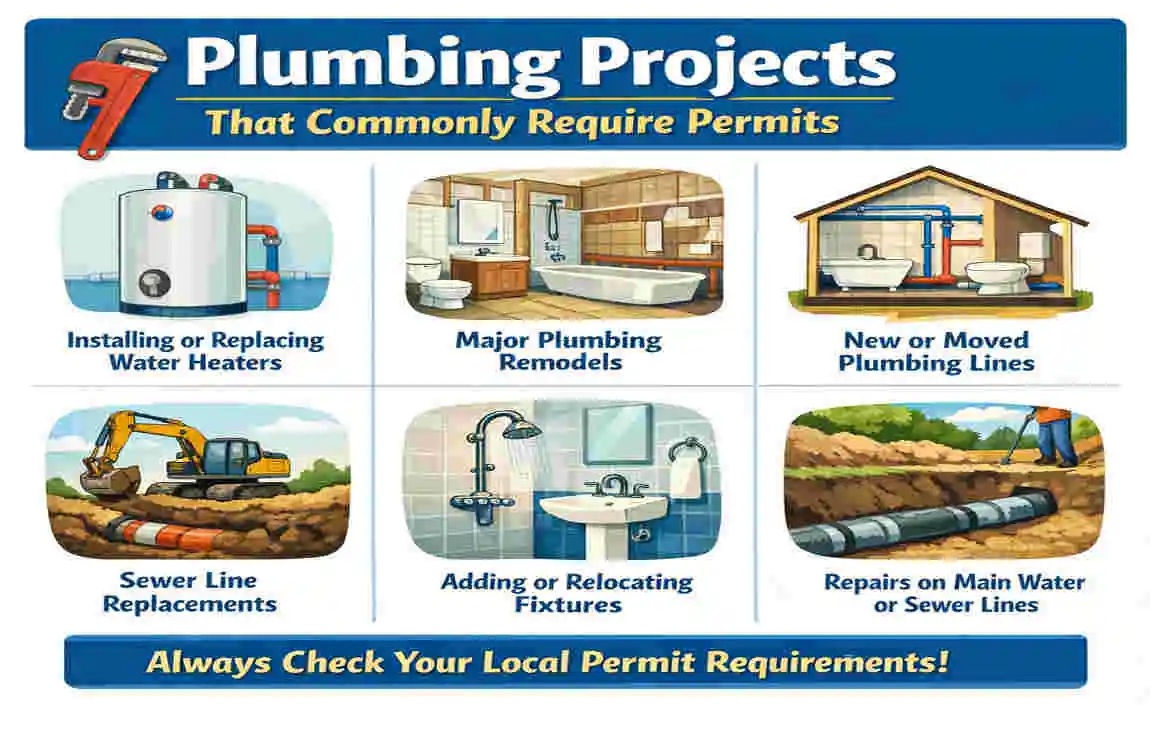
Bigger projects are usually treated differently because they affect the home’s main plumbing system.
New bathroom plumbing
Adding a bathroom is one of the most common permit-required projects. It usually involves new water lines, drain lines, venting, and fixture hookups.
Kitchen remodeling with relocated plumbing
If you move the sink, dishwasher, or water lines, the work may need approval because the plumbing layout changes.
Installing new water or sewer lines
Any work that connects to or replaces major utility lines is usually closely regulated because mistakes can cause serious damage.
Moving drain and vent pipes
Drain and vent pipes are part of the system that keeps wastewater moving properly. Changing them often needs a permit and inspection.
Adding plumbing to a garage or basement
Turning an unfinished space into a bathroom, laundry room, or wet bar usually requires permits.
Major repiping projects
If your home has old or failing pipes and you replace a large part of the system, that work often needs review.
New construction and home additions
Any new build or room addition that includes plumbing almost always requires permits.
How to Find Out If Your Plumbing Project Needs a Permit
The best way to avoid mistakes is to check before you start.
Identify your local permitting authority.
This is usually your city, county, or local building department. They issue permits and explain the rules.
Describe the project accurately.
Be clear about what you want to do. Say whether you are replacing, moving, or adding plumbing. Small wording changes can affect the answer.
Check permit requirements and fees.
Ask if your project needs a permit and how much it costs. Some simple jobs may be low-cost, while larger projects cost more.
Ask whether you need a licensed plumber.
Some places allow homeowners to do their own plumbing. Others require a licensed plumber for certain work.
Understand inspection requirements
Ask if the job needs one inspection or more than one. Some work must be checked before you close the walls.
Keep copies of permits and approvals.
Save everything. You may need those records later when selling the home or making future repairs.
Plumbing Permit Costs, Inspections, and DIY Considerations
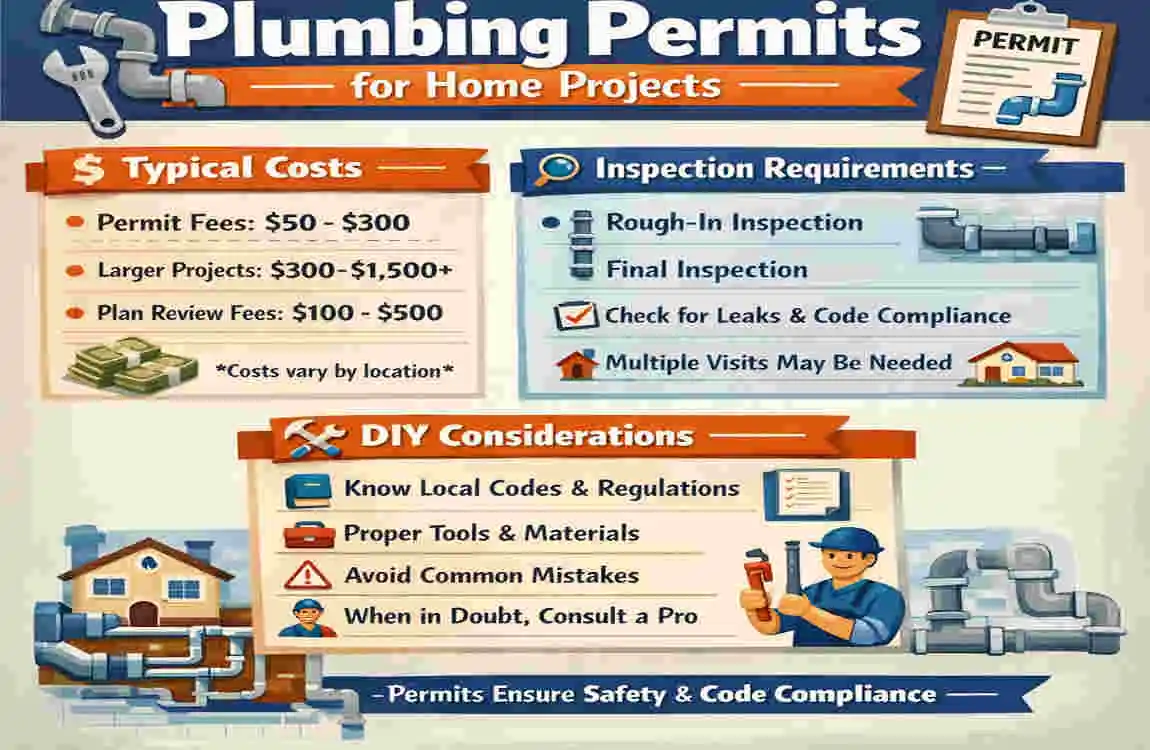
Permit costs often depend on project size, the type of work, and local rules. Some permits are inexpensive, while larger projects cost more.
Typical factors that affect permit costs
- Scope of the project
- Number of fixtures involved
- Type of plumbing work
- Local fee schedule
Application and inspection process
In many cases, you apply first, pay the fee, do the work, and then schedule an inspection. If the inspector finds an issue, you may need to fix it and ask for another visit.
When homeowners may be allowed to do their own plumbing
Some areas allow DIY plumbing on a homeowner-occupied house, especially for smaller jobs. But the rules can be strict, so never assume.
Licensed plumber requirements
For bigger or more complex work, you may need a licensed plumber. This helps ensure the work meets code and passes inspection.
Possible consequences of unpermitted work
Unpermitted work can cause problems during a home sale, insurance claim, or future remodel. You may also have to open walls or redo the work.
Why keeping documentation matters
Good records make life easier. They prove the work was approved and inspected, which can save time later.
Common Plumbing Permit Mistakes Homeowners Should Avoid
A few simple mistakes can cause delays and extra cost.
Common mistakes to watch for
- Starting work before getting approval
- Assuming small jobs never need permits
- Using outdated advice from old websites
- Forgetting about required inspections
- Hiring a contractor without checking permit rules
- Covering pipes before inspection
- Not closing out the permit when work is finished
How to avoid these problems
The safest move is to check with the local office first, follow the steps carefully, and keep communication clear from the beginning.
FAQs About Home Plumbing Permits
Does home plumbing require a permit?
Sometimes, yes. It depends on the type of work and your local rules. Simple repairs may not need one, but larger changes often do.
Do I need a permit to replace a toilet?
Usually, you don’t need a permit to replace a toilet if you are swapping it in the same location with no pipe changes. Local rules can still vary.
Do you need a permit to install a new bathroom?
Yes, in most cases. A new bathroom usually needs plumbing permits because it involves new fixtures, pipes, and drainage.
Can I do plumbing work myself without a permit?
For some small jobs, maybe. But if the work needs a permit, you must get one first, even if you do the work yourself.
What happens if plumbing work is done without a permit?
You may face fines, inspection problems, resale issues, or the cost of redoing the work.
How much does a plumbing permit cost?
It varies by location and project size. Small permits may be affordable, while larger projects cost more.
Who issues plumbing permits?
Usually, your local building department or plumbing authority handles permits.
Does replacing a water heater require a plumbing permit?
Often, yes. Many places require a permit because water heaters involve plumbing, safety, and sometimes gas or electrical work too.
Do plumbing repairs require an inspection?
Some do, especially if a permit is involved. Inspections help confirm the work meets code.