Handrails are more than just practical additions to your home—they are essential for safety, accessibility, and even enhancing your interior or exterior design. Whether you’re walking up the stairs, navigating a deck, or helping someone with limited mobility, house handrails provide the stability and support needed to prevent slips and falls.
There are many types of house handrails, each designed for specific purposes, materials, and styles. Some are better suited for sleek, modern interiors, while others prioritize durability for outdoor use. Choosing the right handrail isn’t just about aesthetics; it also involves meeting building codes and ensuring a safe, sturdy installation.
What Are House Handrails and Why Do They Matter?

Handrails are supportive structures designed to provide a secure grip along staircases, ramps, walkways, or decks. They serve multiple purposes, making them integral to home design and functionality.
Key Functions of House Handrails
- Safety: They help reduce the risk of falls, especially on stairs or uneven surfaces.
- Accessibility: Handrails assist children, seniors, and individuals with mobility challenges by offering support.
- Design Enhancement: Beyond practicality, handrails can complement your home’s style, adding elegance or a modern touch.
Common Placement Areas for Handrails
- Staircases (indoor and outdoor)
- Porches and decks
- Ramps for accessibility
- Lofts and balconies
- Basement stairs
Important Note: Always consider your local building codes when installing handrails. These codes dictate critical aspects like height, spacing, and structural support to ensure safety.
Understanding the Main Types of House Handrails
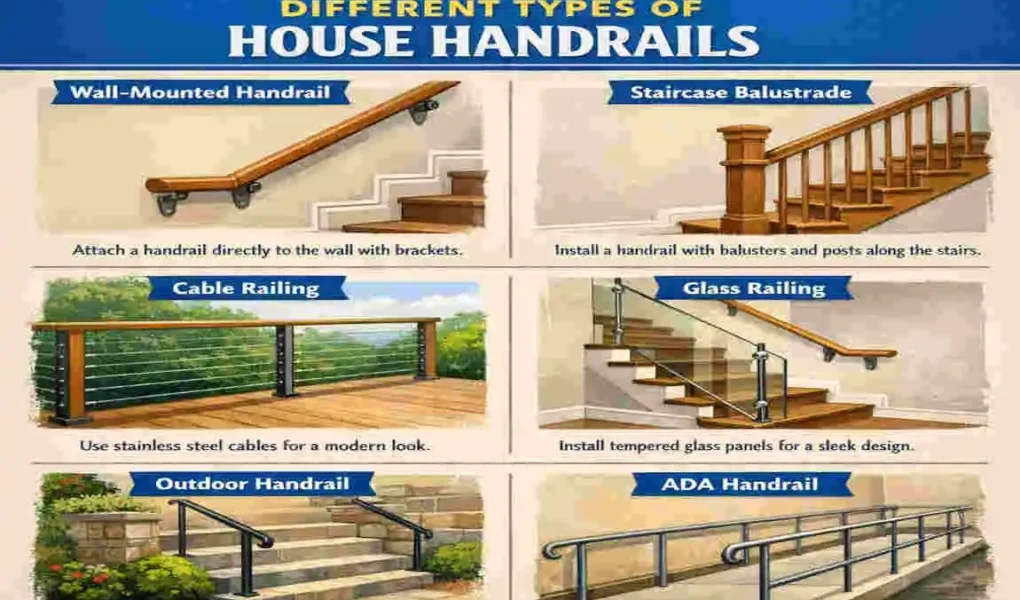
Not all handrails are created equal. Below, we break down the most common types of house handrails, their materials, benefits, and installation tips.
Wooden Handrails
Wooden handrails are a timeless classic, offering warmth and a natural aesthetic appeal.
- Best for: Staircases in traditional, rustic, or transitional homes.
- Customization: Easily stained or painted to match flooring or trim.
- Installation Tips: Carefully measure the space and use sturdy brackets.
- Sand, seal, or stain the wood to protect it from wear.
- Secure the handrail to studs or strong anchors for stability.
Pros:
- Warm, inviting appearance
- Comfortable grip
- Customizable finishes
Cons:
- Requires maintenance (staining/sealing)
- Susceptible to warping or scratches
Metal Handrails
Metal handrails are known for their durability and sleek, modern appeal.
- Materials: Steel, aluminum, or wrought iron.
- Best for: Industrial, minimalist, or contemporary designs.
- Installation Tips: Use pre-drilled holes and heavy-duty fasteners.
- Apply a protective coating (such as powder coating) to prevent rust.
Pros:
- Strong and long-lasting
- Low maintenance
- Suitable for both indoor and outdoor use
Cons:
- Can feel cold or less decorative in some settings
Stainless Steel Handrails
Stainless steel is a premium option for its clean finish and corrosion resistance.
- Best for: Modern interiors, humid environments, or areas requiring a polished look.
- Installation Tips: Align components precisely for a professional finish.
- Often paired with glass or cable systems for a sleek appearance.
Pros:
- Easy to clean and maintain
- Highly durable
- Matches modern aesthetics
Cons:
- Higher cost compared to other metals
Glass Handrails
Glass handrails are perfect for creating a bright, open space in contemporary homes.
- Best for: High-end staircases and modern interiors.
- Installation Tips: Use tempered glass and secure with metal clamps or posts.
- Precise measurements are crucial for safety and alignment.
Pros:
- Creates a visually open space
- Adds a luxurious touch
- Allows natural light to pass through
Cons:
- Expensive and requires frequent cleaning
Cable Handrails
Cable handrails feature tensioned stainless-steel cables for a minimal, modern look.
- Best for: Decks, staircases, and modern homes.
- Installation Tips: Use sturdy posts and tensioning hardware.
- Ensure cables are spaced in accordance with safety regulations.
Pros:
- Minimalist design
- Durable and weather-resistant
- Unobtrusive, providing clear views outdoors
Cons:
- Requires precise installation
- Not ideal for small children (as they may climb the cables)
Wall-Mounted Handrails
Wall-mounted handrails are simple yet effective for narrow spaces and accessibility.
- Best for: Hallways, narrow staircases, or areas with limited space.
- Installation Tips: Anchor brackets into studs or solid blocking.
- Keep bracket spacing consistent and follow height codes.
Pros:
- Practical and space-saving
- DIY-friendly installation
- Affordable option
Cons:
- Limited decorative appeal
Outdoor Handrails
Outdoor handrails are built to endure weather and heavy use.
- Materials: Treated wood, galvanized steel, aluminum, or coated metal.
- Installation Tips: Use weather-resistant fasteners and sealants.
- Secure posts firmly into concrete or decking.
Pros:
- Designed for durability
- Enhances curb appeal
- Suitable for porches, decks, and steps
Cons:
- May require seasonal maintenance
How to Choose the Right Handrail for Your Home
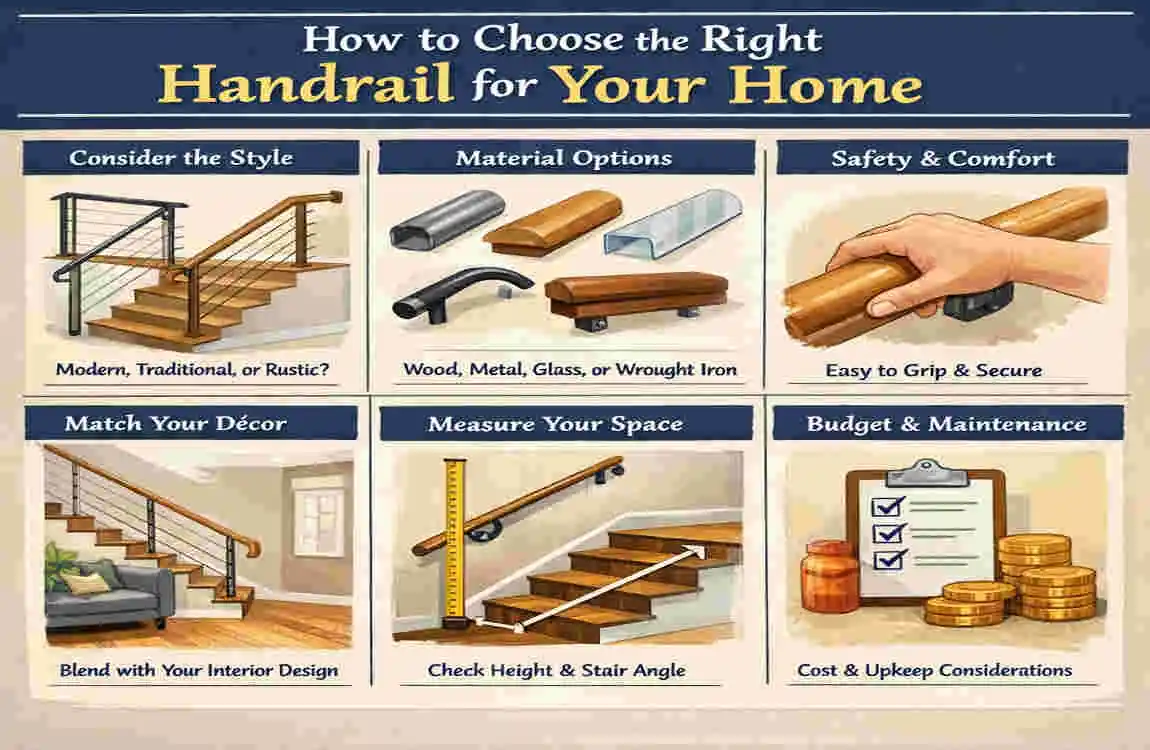
Selecting the perfect handrail involves balancing safety, style, and practicality. Here’s a quick guide to help you decide:
Factor Considerations
Location: Indoor vs. outdoor use.
Purpose: Focus on safety, accessibility, or aesthetics—or all three.
Material Durability: Choose materials resistant to wear, moisture, and weather.
Style : Match the handrail to your home’s overall design.
Budget: Consider both the upfront cost and long-term maintenance expenses.
Building Codes Ensure compliance with height, spacing, and safety regulations.
Helpful Tip: For a classic look, go with wood. For modern appeal, choose metal, glass, or cable systems.
Tools and Materials Needed for Handrail Installation
Before beginning your house handrail installation, gather these tools and materials:
Tools
- Tape measure
- Pencil or marker
- Level
- Stud finder
- Drill and drill bits
- Wall brackets or rail brackets
- Safety glasses and gloves
Materials
- Wood, metal, glass, or cable handrail components
- Screws and anchors suitable for your material
- Optional: Paint, stain, or sealant for finishing
Pro Tip: Always follow manufacturer instructions for your chosen handrail system.
Step-by-Step Guide to Installing a House Handrail
Here’s a general guide to installing most types of house handrails:
Measure the Space
- Measure the total length and mark the intended height.
- Identify starting and ending points.
Check Building Codes
- Verify rail height, spacing, and bracket requirements.
Locate Studs
- Use a stud finder to find structural support.
Prepare the Rail
- Cut and sand the rail as needed.
Install Brackets or Posts
- Space brackets evenly and drill pilot holes.
Attach the Handrail
- Secure the rail to the brackets or posts.
Test Stability
- Check for wobbling or loose components.
Finish and Clean
- Stain, seal, or clean the handrail as needed.
Installation Tips for Each Handrail Type
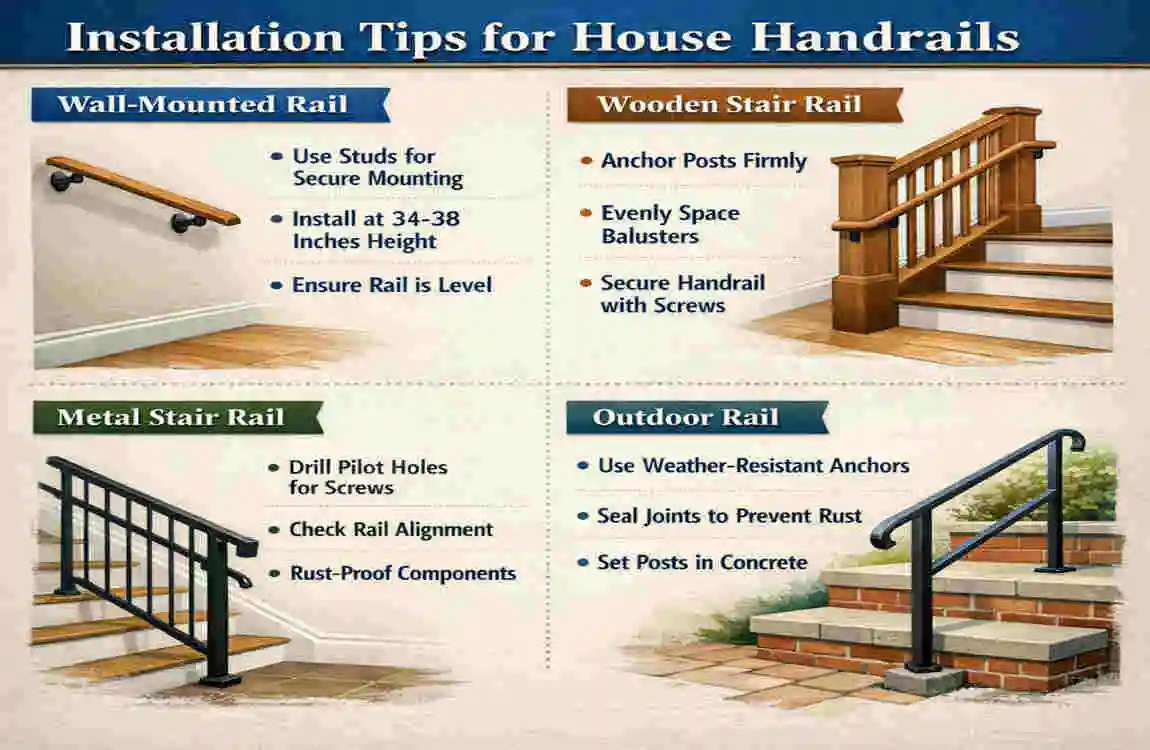
- Ignoring building codes.
- Measuring inaccurately.
- Using weak fasteners.
- Installing the rail too high or too low.
FAQ: Types of House Handrails
What are the common types of house handrails?
The most common types include wood, metal, stainless steel, glass, cable, wall-mounted, and outdoor handrails.
Which handrail type is best for indoor stairs?
Wood and metal handrails are popular for indoor stairs due to their durability and style versatility.
Can I install a house handrail myself?
Yes, wall-mounted and wooden handrails are often DIY-friendly, but glass and cable systems usually require professional installation.
What is the standard height for house handrails?
Typically, handrails should be installed between 34 to 38 inches above the stair tread or floor, but local building codes may vary.
Are outdoor handrails different from indoor ones?
Yes, outdoor handrails must be made from weather-resistant materials like treated wood, aluminum, or powder-coated metal to withstand the elements.
How do I maintain different types of handrails?
Wood needs periodic sealing or painting; metal requires rust prevention; glass should be cleaned with non-abrasive cleaners; cables need tension checks.
Do building codes regulate types of house handrails?
Building codes typically regulate handrail height, strength, and spacing but usually do not restrict material types as long as safety standards are met.
| Handrail Type | Best For | Installation Notes | Difficulty |
|---|---|---|---|
| Wood | Indoor stairs, classic homes | Measure carefully, secure into studs, sand and finish after cutting | Medium |
| Metal | Modern interiors, outdoor use | Use strong fasteners and corrosion-resistant hardware | Medium |
| Stainless Steel | Sleek, low-maintenance spaces | Requires precise alignment and sturdy mounting | Medium |
| Glass | Contemporary homes, open designs | Needs exact measurements and careful handling; often professional install | High |
| Cable | Decks, modern staircases | Install solid posts first, then tension cables correctly | High |
| Wall-Mounted | Narrow stairs, accessibility support | Fasten into studs and keep consistent height | Easy |
| Outdoor Handrails | Porches, entry steps, decks | Use weatherproof materials and rust-resistant hardware | Medium |