The world of interior design is embracing a return to nature, with biophilic design trends taking center stage. Among these, Adobe house interior design stands out as a timeless and authentic style that blends earthy materials, neutral palettes, and organic textures. This design approach not only connects us to the natural world but also creates a serene, inviting atmosphere for modern living.
Adobe homes, with their roots in sun-dried clay construction, have been cherished for centuries. Their thick walls, crafted from natural materials, provide excellent thermal efficiency, keeping interiors cool in summer and warm in winter. Beyond functionality, Adobe interiors exude a rustic charm that resonates with the Southwestern aesthetic. In 2026, this style is being reimagined with contemporary touches like terracotta accents, artisanal textiles, and eco-friendly materials.
Adobe Basics
History and Characteristics
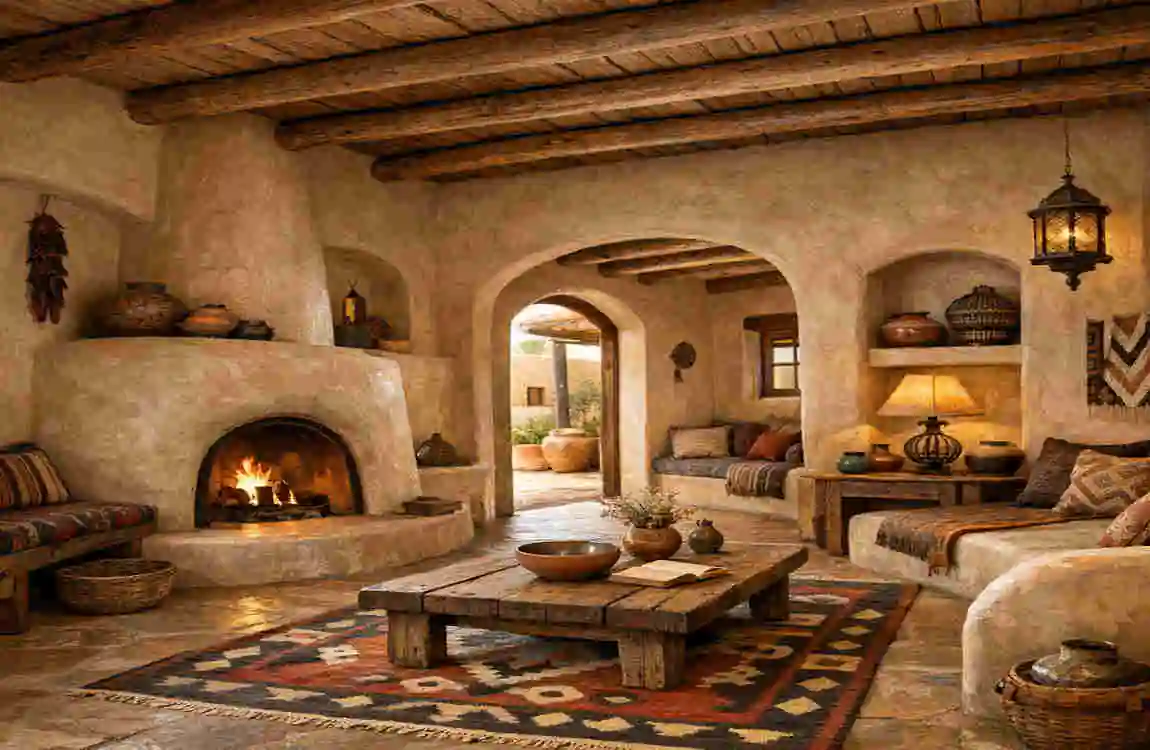
Adobe architecture has a rich history, deeply rooted in Native American and Spanish Colonial traditions. Originating in arid regions, adobe homes were built with sun-dried clay bricks, a sustainable, readily available material. These homes are characterized by their thick walls, which provide insulation, and vigas, or exposed wooden beams, that add structural and aesthetic appeal. Floors are often adorned with Saltillo tiles, a hallmark of Southwestern design.
One of the key benefits of Adobe construction is its sustainability. The use of natural materials reduces environmental impact, while adobe’s thermal properties keep interiors comfortable in extreme climates. This makes Adobe homes not only beautiful but also practical for modern living.
Modern Adaptations
In 2026, Adobe house interior design has evolved to blend traditional elements with contemporary sensibilities. Modern adobe homes often feature open layouts, allowing for better flow and natural light. Eco-friendly bricks and materials are being used to maintain sustainability while meeting the demands of urban living. Minimalist design principles are also being incorporated, creating spaces that feel both grounded and modern.
Color Palettes
In Adobe house interior design, the color palette plays a crucial role in setting the tone. Neutral earth tones dominate, reflecting the desert landscape’s natural beauty.
- Soft taupes, warm sands, and terracotta reds evoke the hues of desert sunsets.
- Muted greens and dusty blues add depth and contrast, reminiscent of cacti and open skies.
- Off-whites are often used to highlight textured plaster walls, creating a clean and airy feel.
For those looking to replicate this aesthetic, consider paint colors like Sherwin-Williams’ “Clay Bake” or Benjamin Moore’s “Revere Pewter.” These shades perfectly capture the essence of Adobe interiors.
Tips for Adding Vibrancy:
- Incorporate terracotta accents through pottery, rugs, or decorative tiles.
- Use wood stains in honey or ebony tones to add warmth and contrast.
- Layer in textiles with Southwestern patterns for a pop of color and texture.
Key Materials
Walls and Floors
The walls and floors in adobe homes are a canvas for showcasing natural materials. Adobe plaster walls, whether smooth or textured, are a defining feature. These walls can be left in their natural earthy tones or painted in soft neutrals to enhance the space’s brightness.
For flooring, herringbone brick patterns or terracotta tiles are popular choices. These materials not only add visual interest but also contribute to the overall warmth and authenticity of the design.
Furniture and Textiles
Furniture in Adobe interiors often leans toward handcrafted, rustic styles. Think wooden tables with natural finishes, linen-upholstered sofas, and woven jute or wool rugs. These elements create a cozy and inviting atmosphere.
To complete the look, incorporate potted plants and wooden beams. These details bring a sense of harmony and connection to nature, which is at the heart of adobe house interior design.
Top Trends
Biophilic Integration
Biophilic design is all about connecting indoor spaces with the natural world. In Adobe homes, this can be achieved through:
- Large windows that frame outdoor landscapes.
- Indoor cacti and succulents that thrive in arid conditions.
- Living walls that add greenery and texture.
Textural Layers
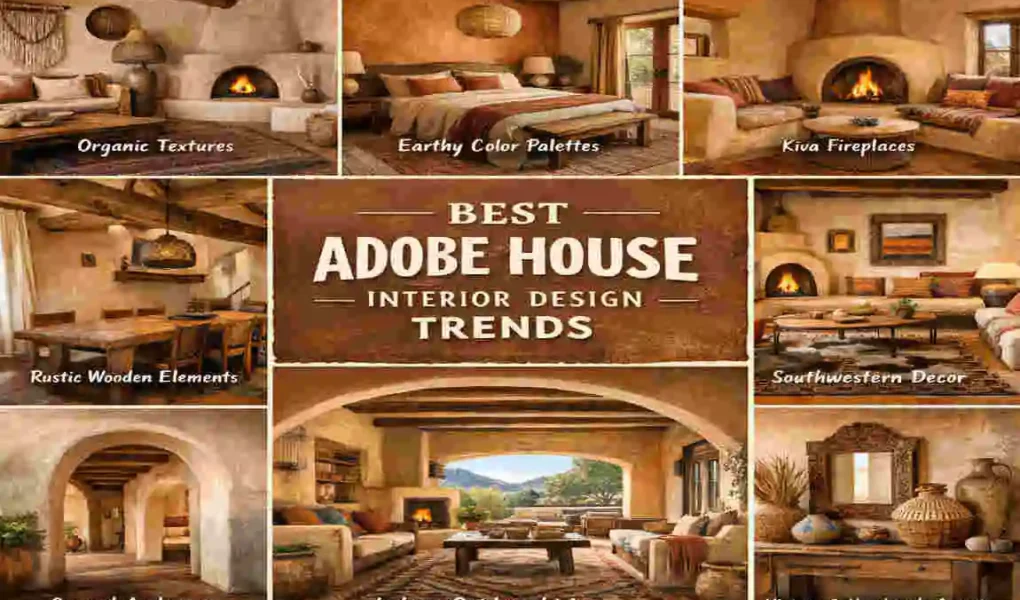
One of the hallmarks of Adobe interiors is the use of textural layers. Combine smooth plaster walls with rough-hewn vigas, cowhide rugs, and macramé wall hangings to create a tactile, visually interesting space.
Artisanal Accents
Handcrafted elements are making a big comeback in 2026. Look for:
- Hand-hammered iron lighting fixtures.
- Vintage kilims and Southwestern-patterned textiles.
- Locally sourced pottery and decor items.
TrendKey Elements: Why It Works
Earthy Minimalism Bare plaster, sparse furniture Enhances calm, modern vibe
Rustic Luxe Leather sofas, antler chandeliers , balance warmth and elegance
Desert Boho Fringe pillows, geometric patterns , add playful Southwest flair
Lighting Innovations
Lighting is an essential aspect of Adobe interiors. In 2026, trends include:
- Saltillo lamps that cast warm, ambient light.
- Recessed skylights that mimic natural sunlight filtering through adobe walls.
Room-by-Room Guide
Living Rooms
The living room is often the heart of an adobe home. Key features include:
- Built-in bancos (benches) for seating.
- Low-profile sofas that keep the space grounded.
- Fireplaces as focal points, often adorned with decorative tiles.
Kitchens
Adobe-style kitchens are both functional and beautiful. Consider:
- Exposed beams over kitchen islands.
- Open shelving to display ceramic dishware and pottery.
- Saltillo tile backsplashes for a touch of color and texture.
Bedrooms
For a serene adobe-style bedroom:
- Opt for canopy beds with linen drapes.
- Use Saltillo floors, softened by vintage kilims or woven rugs.
- Add earthy tones and natural materials for a calming retreat.
Implementation Tips
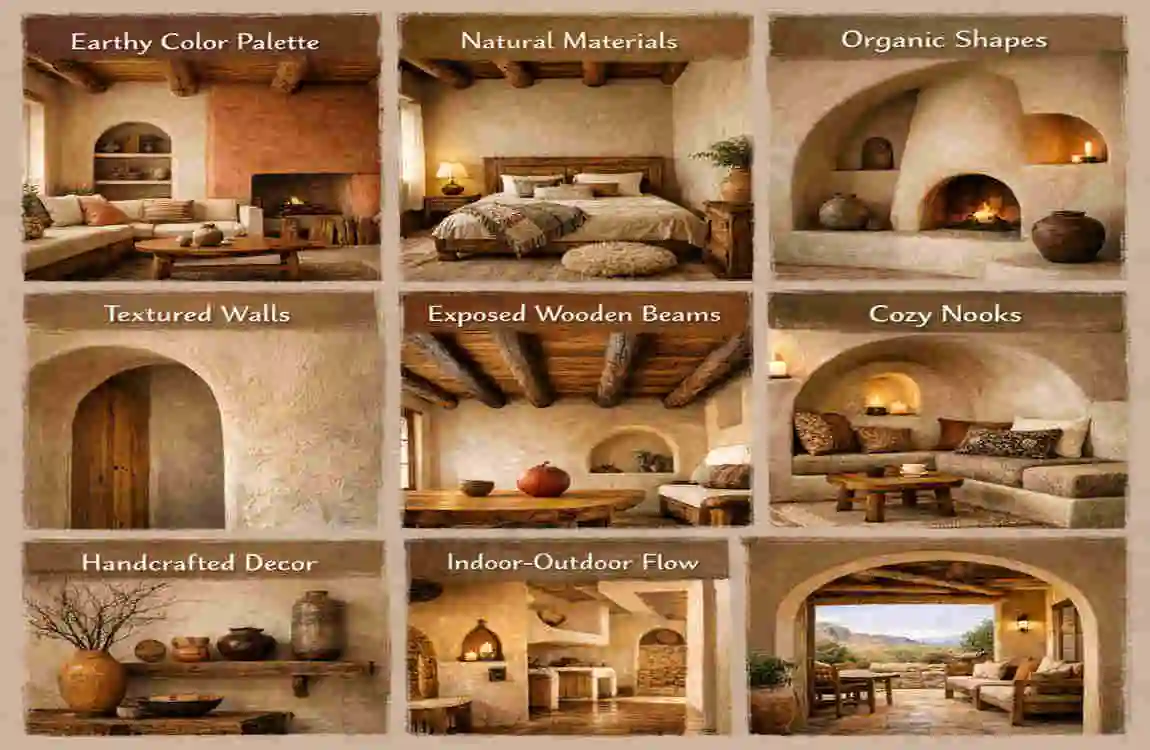
Transforming your home into an adobe-inspired haven doesn’t have to break the bank. Here are some practical tips:
- DIY plaster finishes can cost as little as $5 per square foot, making it an affordable way to achieve the look.
- Source authentic decor items from platforms like Etsy or Houzz.
- Stick to the 60-30-10 rule for color: 60% neutral base, 30% complementary tones, and 10% accent colors.
Avoid common pitfalls like over-saturating colors or overcrowding the space. Simplicity is key to maintaining the serene and timeless appeal of adobe interiors.
Adobe House Interior Design – FAQ
What is an adobe house interior?
An adobe house interior features natural, earthy materials like clay, mud, and wood. It often has thick walls, warm colors, and a cozy, rustic feel.
What colors are used in adobe interiors?
Common colors include earthy tones like beige, terracotta, brown, cream, and soft orange. These shades reflect natural desert landscapes.
What type of flooring is best for adobe homes?
Popular options are clay tiles, stone, brick, or polished concrete. These materials stay cool and match the natural style.
What furniture suits adobe interiors?
Wooden furniture, handcrafted pieces, and simple designs work best. Rustic or Southwestern-style furniture is very popular.
Are adobe interiors energy efficient?
Yes, adobe walls are thick and provide natural insulation, keeping homes cool in summer and warm in winter.
What kind of lighting is used?
Soft, warm lighting such as lanterns, wall sconces, and natural light from small windows enhances the cozy feel.
| Trend | Key Features | Why It Works |
|---|---|---|
| Earthy Neutrals | Terracotta, sand, warm taupes on walls and textiles | Creates calming, desert-inspired serenity |
| Textural Layers | Adobe plaster, vigas (wood beams), woven rugs, leather | Adds depth and tactile coziness |
| Biophilic Accents | Cacti, large windows, indoor plants framing views | Blends indoors with nature for wellness |
| Rustic Luxe | Handcrafted wood furniture, cowhide rugs, iron lighting | Balances authenticity with modern elegance |
| Geometric Patterns | Aztec motifs on pillows, kilims, wall hangings | Injects bold energy without overwhelming |