Spanish houses are known for their warm, charming, and timeless look. One of the first things people notice is the door. Spanish doors often look heavier, more detailed, and more artistic than standard modern doors.
If you have ever wondered why Spanish houses and doors look so distinctive, the answer lies in a mix of history, climate, craftsmanship, and culture. These doors were not made only to look beautiful. They were also built to last, protect the home, and help manage heat.
What Makes Spanish House Doors Unique?
Traditional Spanish Door Design
Spanish doors usually have a sturdy wooden construction and a bold, front-facing look. Many of them are made from thick hardwood, which gives them a solid and welcoming feel.
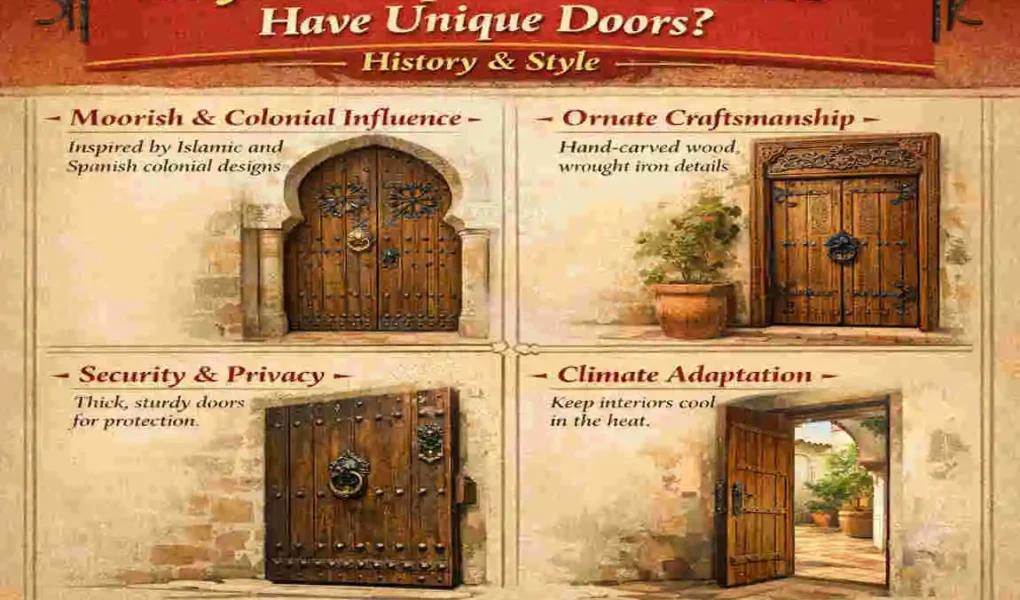
They often include handcrafted details, such as carved patterns, iron studs, or decorative handles. This gives them a more personal and historic touch than plain factory-made doors.
Distinctive Architectural Features
Spanish doors are usually paired with other classic design features such as rounded arches, rustic textures, and earth-toned colors. These details work together to create a warm, old-world style.
You will often see wrought-iron hardware, too. This adds both beauty and strength. The result is a door that feels decorative but still practical.
Why They’re Different From Modern Doors
Modern doors often focus on simplicity, speed, and low cost. Spanish doors, on the other hand, focus on character, strength, and tradition.
They are usually thicker, more detailed, and built to last. That is a big reason they stand out so much.
The History Behind Spanish House Doors
Roman Influence
The Romans influenced early Spanish architecture. Roman buildings often used strong stone walls, stable entrances, and symmetrical designs.
This influence helped shape the idea that a home entrance should feel secure and impressive. That old sense of strength still shows up in Spanish-style doors today.
Moorish Architectural Impact
The Moors also had a major effect on Spanish design. Their style incorporated geometric patterns, carved details, and elegant arches.
One of the best-known features from this period is the horseshoe arch. This shape is still seen in many Spanish-style homes and helps create that classic Mediterranean look.
Mediterranean Heritage
The Mediterranean climate also shaped Spanish homes. Builders needed doors that could help with heat, airflow, and privacy.
Many homes were built around courtyards and shaded spaces. Doors played a big role in keeping the interior cool while still allowing beauty and function.
Why Were Spanish Doors Built So Thick?
Protection and Security
Thick doors were first used for protection. A solid wooden door made it harder for intruders to break in and gave families a stronger sense of safety.
Because of that, Spanish doors were often made from dense hardwood and fitted with strong iron hardware.
Temperature Control
Thick doors also helped keep homes cooler. In hot climates, a heavy door can block heat better than a thin one.
This made Spanish doors useful in everyday life, not just attractive. They helped support indoor comfort in warm weather.
Long-Term Durability
A thicker door lasts longer. It resists wear better, handles weather changes more easily, and does not feel flimsy.
That is why many Spanish-style doors have stayed popular for generations. They are built with lasting quality in mind.
Common Materials Used in Spanish Doors
Solid Hardwood
The main material in many Spanish doors is solid hardwood. Common choices include:
- Oak
- Walnut
- Cedar
These woods are strong, reliable, and visually rich. They also age well, which adds even more charm.
Wrought Iron
Iron is another key part of the design. It is often used for:
- Hinges
- Knockers
- Decorative studs
- Grilles
Iron gives the door a handcrafted look while also adding strength.
Stone and Stucco Surroundings
Stucco walls or stone details often frame Spanish doors. This makes the door stand out and helps the whole entrance feel more traditional.
The door, frame, and wall all work together to create a balanced design.
Decorative Elements Found on Spanish Doors
Spanish doors are famous for their small details. These details may seem simple, but they make a big visual impact.
Iron Studs
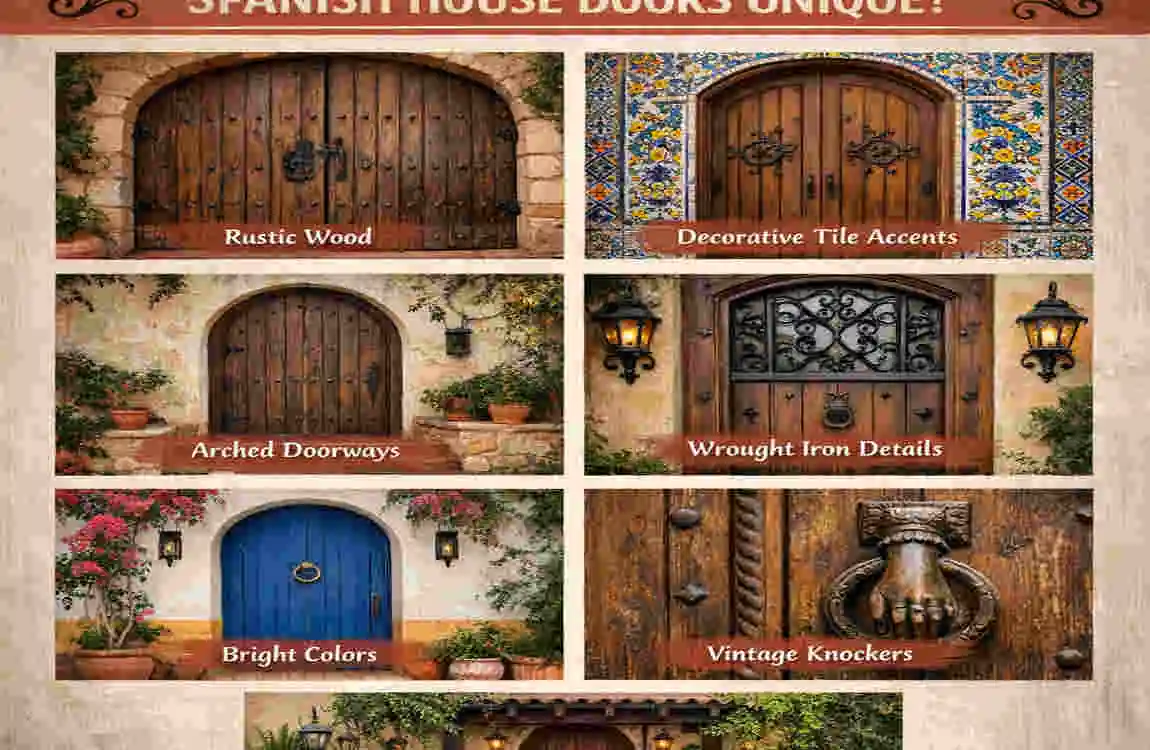
Iron studs were originally practical, but today they are often decorative. They give the door a strong, old-world appearance.
Hand-Carved Wood
Many Spanish doors feature carved patterns or panels. This adds craftsmanship and makes each door feel more unique.
Rustic Door Knockers
Large metal knockers are another classic feature. They create a bold entrance and match the historic style.
Colorful Painted Doors
Some Spanish homes use rich colors like deep brown, red, black, or blue. These shades add warmth and personality.
Arched Door Frames
Arched frames are one of the most recognizable Spanish design features. They soften the look of the house and add elegance.
Different Types of Spanish House Doors
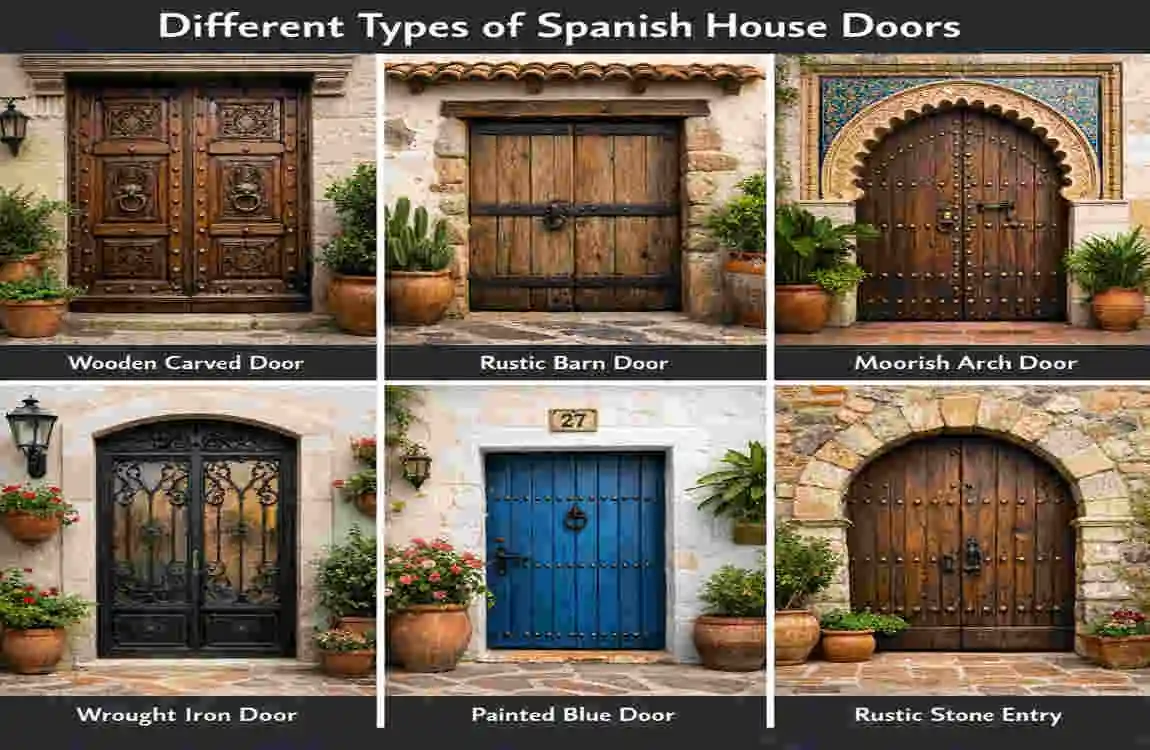
Courtyard Doors
These doors open onto a private courtyard or garden. They are often elegant and help create a peaceful entry.
Double Entry Doors
Double doors are common in larger Spanish-style homes. They make the entrance feel grand and inviting.
Arched Wooden Doors
These doors use the classic arch shape and often become the main focal point of the home.
Mission-Style Doors
Mission-style doors are simpler but still strong and attractive. They usually have clean lines and a solid wood look.
Mediterranean Villa Doors
These doors often mix wood, iron, and stone details. They are designed to feel luxurious, warm, and timeless.
How Spanish Doors Improve Home Design
Better Curb Appeal
A Spanish door can instantly improve the look of a home. It makes the entrance feel more welcoming and stylish.
Increased Property Value
Because they look high-quality and unique, Spanish doors can add appeal to a home. Buyers often notice them right away.
Timeless Beauty
Unlike trendy designs that go out of style, Spanish doors have a classic look that stays attractive for years.
Natural Warmth
Wood, iron, and earthy colors create a warm feeling. That is one reason people love this style so much.
Modern Spanish Doors vs Traditional Spanish Doors
Feature Traditional Spanish Doors Modern Entry Doors
Material Solid hardwood Steel, fiberglass, wood
Thickness Thick Standard
Design Handcrafted Minimalist
Hardware Wrought iron Modern metal
Security Excellent Excellent
Style Rustic & Mediterranean Contemporary
Lifespan Very long Moderate to long
Traditional doors focus more on craftsmanship and heritage. Modern doors often focus on convenience, energy savings, and lower maintenance.
Still, many homeowners now blend both styles. They may choose a Spanish-style look with modern materials for better performance.
Can You Add Spanish Doors to a Modern Home?
Best Home Styles
Yes, you absolutely can. Spanish doors work well with many home types, not just traditional Spanish homes.
They look especially good on:
- Mediterranean homes
- Ranch-style homes
- Custom modern homes
- Homes with stucco exteriors
Choosing the Right Door
If you want this style, choose a door that matches your home’s shape and color. A heavy carved door may look perfect on one house and too dramatic on another.
Matching Exterior Colors
Earthy shades usually work best. Think tan, cream, brown, rust, and dark wood tones.
Decorative Accessories
You can also add matching details like iron lanterns, dark window frames, or clay roof tiles to complete the look.
Maintenance Tips for Spanish Wooden Doors
Spanish wooden doors are beautiful, but they do need care.
Cleaning
Wipe the door regularly with a soft cloth to remove dust and dirt. Avoid harsh cleaners that may damage the wood finish.
Sealing
Wood should be sealed or finished properly. This helps protect it from moisture and sun damage.
Protecting Iron Hardware
Check the iron parts for rust. A quick cleaning and protective coating can help keep them in good shape.
Preventing Moisture Damage
Make sure water does not sit near the bottom of the door. Moisture can slowly damage even the strongest wood.
Common Myths About Spanish House Doors
They Are Only Decorative
This is not true. Spanish doors are decorative but also strong, practical, and durable.
They’re Too Heavy for Modern Homes
While they are heavier than basic doors, many modern homes can support them with proper installation.
They Require Constant Maintenance
They do need care, but not endless work. With sealing and regular cleaning, they can last for many years.
They Only Fit Spanish-Style Houses
Not true. They can also work in modern, rustic, or mixed-style homes.
Benefits of Spanish House Doors
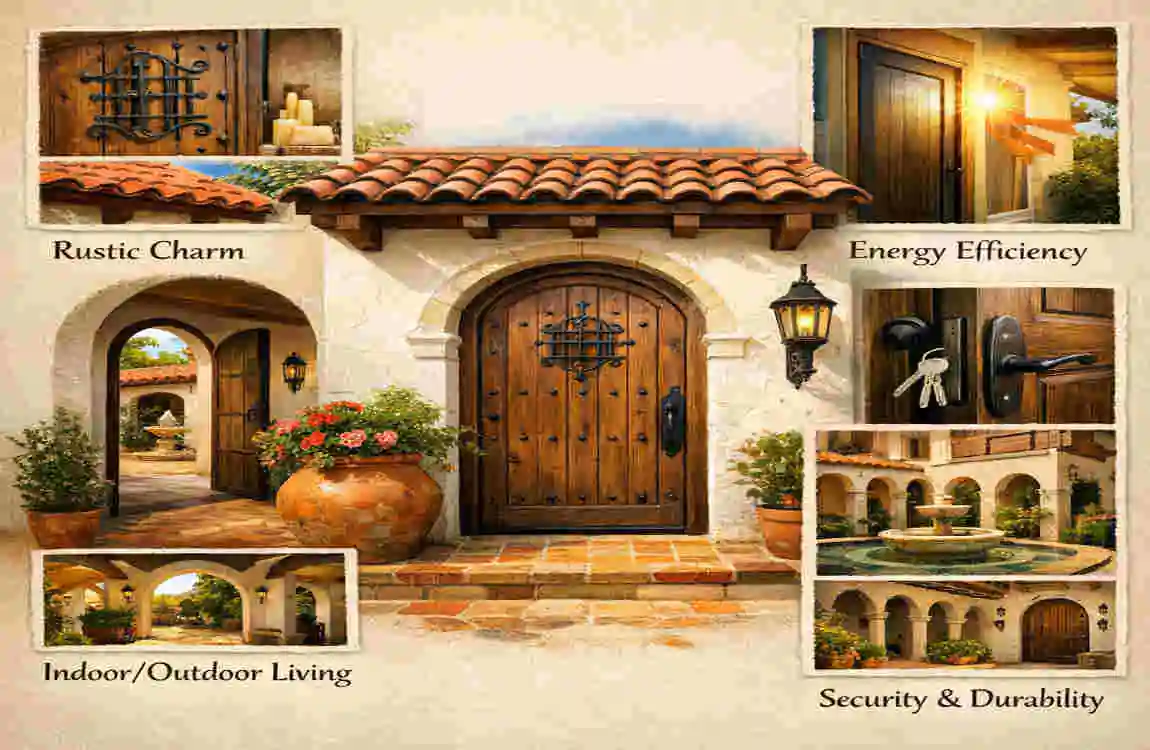
Here are the main advantages of choosing Spanish-style doors:
- Excellent durability
- Better insulation
- Improved security
- Strong visual character
- Higher curb appeal
- Long-lasting craftsmanship
These benefits help explain why the style remains popular even today.
Frequently Asked Questions
Why do Spanish houses have unique doors?
Spanish doors are designed for security, climate control, durability, and beauty, making them stand out.
Why are Spanish doors so thick?
They are thick for insulation, strength, and long-term use.
What wood is commonly used for Spanish doors?
Common woods include oak, walnut, and cedar.
Why do Spanish doors have iron studs?
Iron studs originally added strength, but now they also serve as decoration.
Are Spanish doors suitable for modern homes?
Yes, they can work very well in modern homes and add a timeless look.
| Aspect | Information |
|---|---|
| Topic | Why Do Spanish Houses Have Unique Doors? |
| Origin | Spanish doors reflect centuries of architectural influences from Roman, Moorish, and Mediterranean cultures. |
| Historical Purpose | Built for protection, privacy, and temperature control in warm climates. |
| Common Materials | Solid hardwoods such as oak, cedar, walnut, and chestnut are commonly used for durability. |
| Design Features | Thick wooden panels, arched tops, hand-forged iron studs, decorative knockers, and carved details. |
| Architectural Style | Found in Spanish Colonial, Mediterranean Revival, Andalusian, and Mission-style homes. |
| Iron Accents | Wrought iron hinges, grilles, and handles provide both security and decorative appeal. |
| Color Choices | Earthy shades such as dark brown, natural wood, deep red, black, and rustic finishes are most common. |