A 1-acre home gives you much more room than a typical city lot. One acre is large enough to hold a comfortable house, a wide yard, outdoor living spaces, and even extra features like a garden, pool, or guest house. That is why many families, investors, and homeowners love this kind of property.
For some people, a 1-acre home feels like a dream because it offers privacy, freedom, and flexibility. You are not squeezed close to neighbors. You have space to breathe, grow, and design a home that fits your lifestyle. For others, it is a smart investment because larger lots often retain their value over time.
Still, buying or building on a 1-acre home site is not just about having more land. You need to consider location, layout, budget, legal requirements, and long-term maintenance. A big lot can be a great advantage, but only if you plan it well.
Understanding the Size of a 1 Acre Home Property
How Big Is 1 Acre?
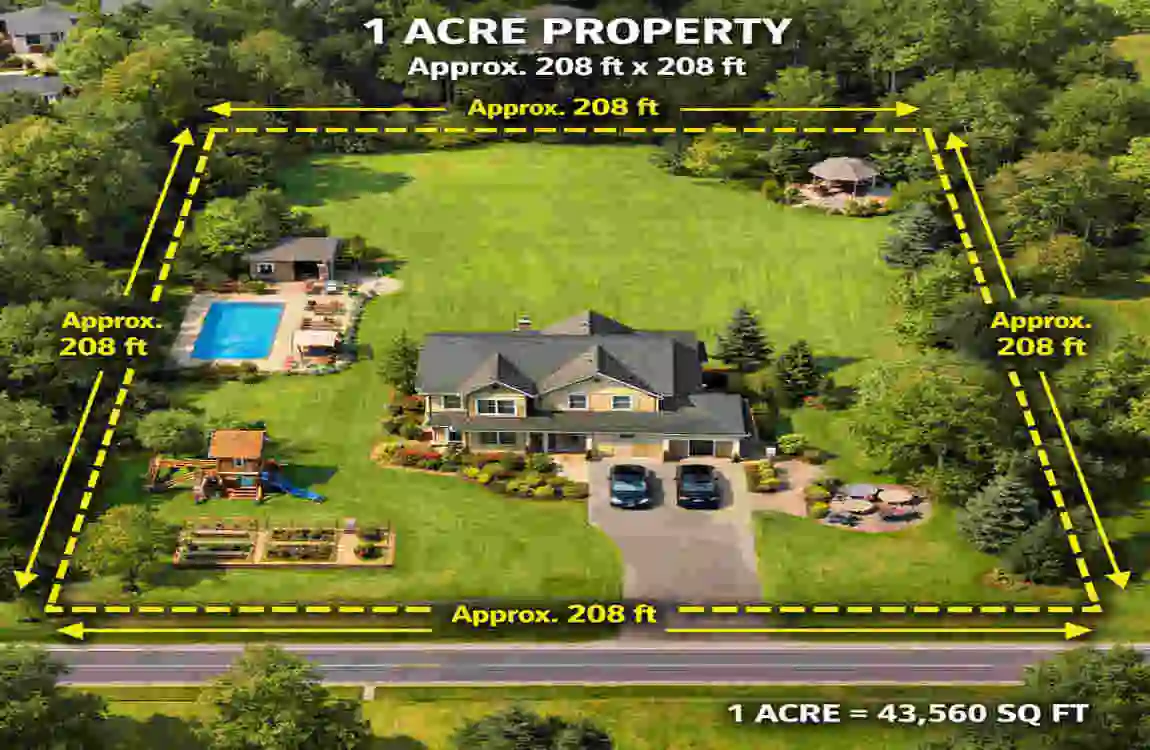
A single acre equals 43,560 square feet. That is a lot of room compared to a standard suburban lot. It is large enough for a spacious luxury house and still leaves space for outdoor features.
To picture it more easily, think of a square lot measuring about 208 feet on a side. Of course, not every acre is shaped like a square. Some are long and narrow, while others are wide and open. The shape matters because it affects how you can design your 1-acre home.
What Can Fit on a 1 Acre Home?
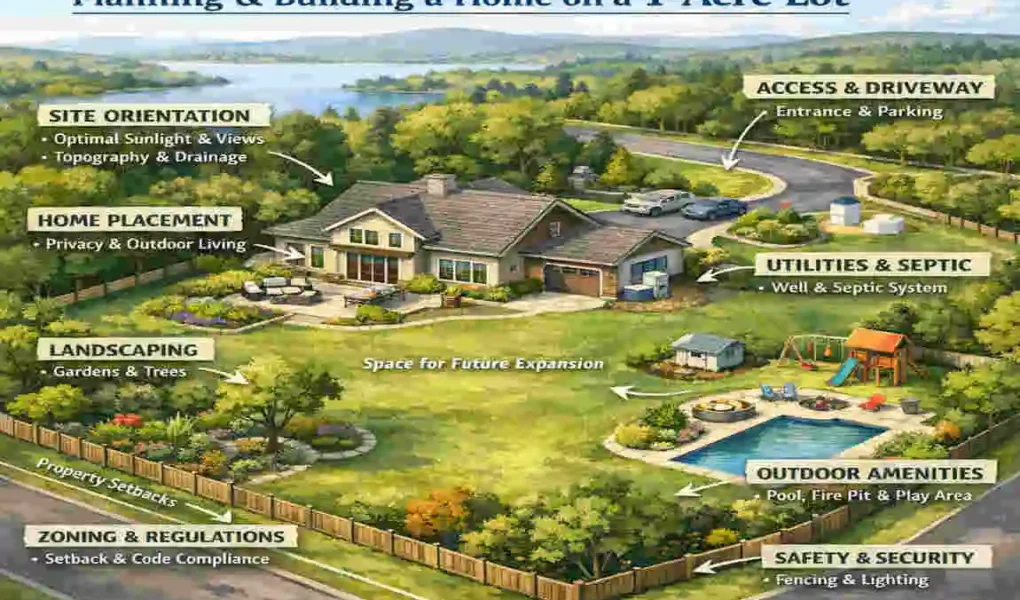
A 1-acre home property can accommodate many things, depending on zoning and design. You may have room for:
- A large family house
- A two- or three-car garage
- A pool
- A garden or small orchard
- A big backyard
- A guest house
- A long driveway
- Outdoor seating or play areas
This kind of space gives you freedom. You do not need to choose between comfort and outdoor living. You can often have both.
Urban vs Rural 1 Acre Home Possibilities
A 1-acre home in a city area is very different from one in the countryside. In urban or suburban areas, land-use rules may be stricter. You may have less freedom to add structures or change the land.
In rural areas, a 1-acre home often offers more design flexibility. You may be able to add a workshop, barn, or larger garden. The trade-off is that services and shops may be farther away. So the location changes not only the style of living, but also what you can do with the land.
Choosing the Right Location for a 1 Acre Home
Accessibility and Transportation
Before buying land, look at how easy it is to get around. A beautiful 1-acre home site is less useful if it takes too long to reach work, school, hospitals, or stores.
Ask yourself these simple questions:
- Are the main roads close by?
- Is public transport available?
- How far is the nearest school, clinic, or shopping center?
If you plan to live there full-time, daily convenience matters a lot. If it is a vacation home or investment property, access still affects value.
Climate and Terrain
The land itself plays a major role in planning a 1-acre home. Flat land is usually easier and cheaper to build on. Sloped land may offer better views, but it can raise construction costs.
You also need to think about drainage. If the property holds water after rain, you may face flooding, foundation issues, or muddy yards. Climate matters too. Strong winds, heavy snow, or long dry seasons can all affect your design choices.
Neighborhood Value
The neighborhood around your 1-acre home matters just as much as the land itself. Look at future development plans, nearby homes, and overall safety. A quiet area with strong property values may be a better long-term choice than a cheap lot in a weak market.
Privacy is another benefit to check. Some acre lots feel very open, while nearby homes surround others. If privacy matters to you, study the surroundings before making a decision.
Designing the Ideal 1 Acre Home Layout
House Placement
Where you place the house on the lot shapes the whole property. A front-centered design gives a balanced look and leaves room behind the house for a large backyard. A rear-positioned home creates more privacy in front and can feel more secluded. Side-positioned layouts may work well if the lot is narrow or if you want a long driveway.
The right choice depends on sunlight, views, privacy, and how you want to use the yard. A smart 1-acre home layout makes the land feel both practical and attractive.
Outdoor Living Spaces
One of the best parts of a 1-acre home is the opportunity to enjoy outdoor living. You can add a patio, deck, outdoor kitchen, or fire pit area. These spaces make the property more useful and enjoyable for family time and entertaining guests.
A covered outdoor area can also extend your living space. It gives you a place to relax, eat, or host people without having to stay indoors all the time.
Landscaping Opportunities
Landscaping can turn a plain lot into a beautiful 1-acre home setting. You might add trees for shade, flower beds for color, lawn areas for children or pets, and walking paths for easy movement around the property.
Good landscaping does more than look nice. It can also help with privacy, drainage, and property value. Even simple design choices can make a large lot feel organized and welcoming.
Space for Expansion
A major advantage of a 1-acre1-acre home is future growth. You may not need everything at once. You can leave room for later additions, such as a workshop, barn, hobby room, extra bedroom, or detached garage.
Planning for expansion now can save time and money later. It also keeps your lot flexible as your needs change.
Construction and Budget Considerations
Land Purchase Costs
The cost of a 1-acre home lot can vary widely. Land in a busy city or high-demand suburb may cost far more than land in a rural area. Even two properties with the same size can have very different prices.
Location, access, views, and utility availability all affect the price. Always compare several options before choosing.
Building Expenses
Building a home on a 1-acre lot involves more than just the house structure. You must pay for the foundation, materials, labor, permits, and possibly site preparation, such as clearing trees or leveling the ground.
A simple home may cost less to build, but a luxury design with custom finishes will raise expenses. It helps to make a clear budget before you begin.
Utility Installation
A larger lot may require additional utility work. You may need to connect or install:
- Water lines
- Electricity
- Sewer or septic systems
- Internet service
If the property is far from public infrastructure, these costs can rise quickly. This is an important part of planning a 1-acre home because utilities are easy to forget at first, but expensive to fix later.
Maintenance Costs
A bigger property means more upkeep. Lawn care, tree trimming, driveway repair, and general maintenance can take time and money. Security may also cost more if the property is spread out or private.
A 1-acre home offers freedom, but that freedom comes with responsibility. Make sure the ongoing cost fits your lifestyle.
Legal and Zoning Factors to Check
Zoning Regulations
Zoning rules decide how you can use your land. Some properties are strictly residential, while others may allow home businesses or accessory buildings. Before buying a 1-acre home lot, check what is allowed.
Do not assume you can build anything you want. Local rules may limit house size, number of structures, fence height, or even how much of the land can be covered by buildings.
Building Permits
Most 1-acre home projects require permits before construction begins. Permits help ensure the work complies with safety and legal standards. If you skip this step, you could face delays, fines, or orders to change the work later.
Always confirm what approvals you need before breaking ground.
Property Boundaries
You should know exactly where your land begins and ends. A proper survey can confirm the boundaries of your 1-acre home lot. This helps prevent disputes with neighbors and protects you from building in the wrong place.
HOA Rules
If your property is part of a homeowners’ association, there may be extra rules. These can control exterior colors, fencing, landscaping, and even driveway design. Some HOAs are strict, while others are more relaxed.
Always read the rules before planning your 1-acre1-acre home.
Best Home Styles for a 1 Acre Home
Ranch-Style Homes
Ranch homes work very well on a 1-acre home lot because they spread out on one level. This style is easy to move around in and often feels open and practical. It also pairs nicely with wide yards and simple landscaping.
Modern Luxury Homes
Modern homes often use clean lines, large windows, and open layouts. On a 1-acre home, this style can feel elegant and spacious. It works well if you want indoor and outdoor spaces to connect smoothly.
Farmhouse Homes
A farmhouse style gives a warm, rustic look that fits large properties beautifully. It often includes porches, natural materials, and open outdoor areas. A 1-acre home is a strong match for this style because it feels relaxed and welcoming.
Multi-Generational Homes
If more than one generation will live together, a 1-acre home can accommodate separate spaces for privacy and comfort. You may add extra bedrooms, separate suites, or even detached living areas.
Eco-Friendly Homes
A large lot gives you room for solar panels, rainwater systems, and energy-efficient design. Eco-friendly planning can lower bills and reduce waste. For a 1-acre home, this can be a smart long-term choice.
Outdoor Features to Maximize a 1 Acre Home
Recreational Spaces
A 1-acre home is perfect for fun outdoor features. You could add a pool, a sports court, a playground, or an open lawn for games and gatherings. This makes the property feel active and family-friendly.
Gardening and Farming
Many homeowners use part of their 1-acre home for vegetable gardens, fruit trees, or greenhouses. Even a small growing area can add beauty and usefulness. If you enjoy fresh food and outdoor work, this can be a rewarding option.
Privacy Enhancements
A larger lot still needs smart privacy planning. Fences, shrubs, trees, and gated entry points can help create a sense of privacy. These features also make the property look more finished and secure.
Guest and Storage Spaces
You may also want room for a guest house, storage shed, or RV parking. A 1-acre home gives you more flexibility for these extras, as long as local rules allow them.
Is a 1 Acre Home a Good Investment?

Long-Term Property Value
A 1-acre home can be a strong long-term investment because larger lots often remain desirable. Many buyers like the privacy and freedom that come with more land. That demand can support property value over time.
Rental Opportunities
If zoning allows, you may be able to add a guest cottage, studio, or other small unit. That can create rental income and improve return on investment.
Resale Benefits
When it comes time to sell, a 1-acre home often stands out from smaller lots. Buyers who want space, outdoor features, or room to grow may find it very attractive.
Challenges to Consider
The downside is that taxes, insurance, and maintenance may be higher. A larger property can also take longer to sell in some markets. So yes, it can be a good investment, but only if you buy wisely.
Common Mistakes to Avoid When Planning a 1 Acre Home
Here are some common mistakes people make:
- Ignoring zoning laws
- Underestimating maintenance
- Forgetting drainage planning
- Building too much too soon
- Skipping privacy design
- Not planning for future growth
A 1-acre home offers options, but poor planning can reduce its value. Think ahead from the start.
FAQ
How big is a 1-acre home lot?
A 1-acre home lot equals 43,560 square feet. That is enough space for a large house and several outdoor features.
Is a 1-acre home enough space for a large family?
Yes, a 1-acre home can easily support a large family. It gives you room for a spacious home, yard, and extra amenities.
What can I build on a 1-acre home property?
You may be able to build a house, a garage, a pool, a guest house, a garden, or a workshop. Local zoning rules will decide what is allowed.
Is maintaining a 1-acre home expensive?
It can be more expensive than maintaining a smaller property because of landscaping, repairs, utilities, and security needs.
Is a 1-acre home a good real estate investment?
In many areas, yes. A 1-acre home can attract buyers who want more space and may offer strong resale value over time.
| What to consider | Why it matters |
|---|---|
| House size | Leaves room for yard, garden, driveway, and outdoor features. |
| Zoning rules | Controls what you can build, where you can build it, and setbacks. |
| Access and utilities | Road access, water, sewer/septic, electricity, and internet can affect cost. |
| Drainage and soil | Important for foundation stability, landscaping, and septic planning. |
| Privacy and layout | Helps place the home, windows, trees, and outdoor spaces well. |
| Future use of land | Space for a garden, garage, pool, shed, animals, or expansion. |