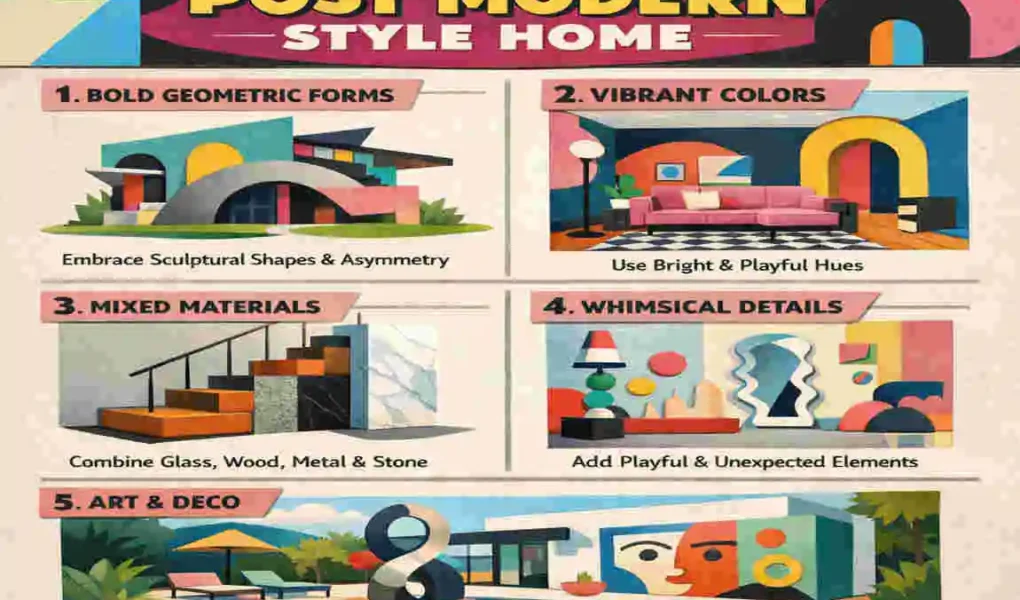
A postmodern-style home feels bold, playful, and a little unexpected. It mixes old and new ideas in a way that looks creative, personal, and full of character. Instead of keeping everything plain and minimal, this style welcomes color, contrast, texture, and decorative detail.
If you want a home that feels more interesting than standard modern design, this style is a great choice. It gives you room to experiment while still keeping the space functional and livable.
What Is a Post Modern Style Home?
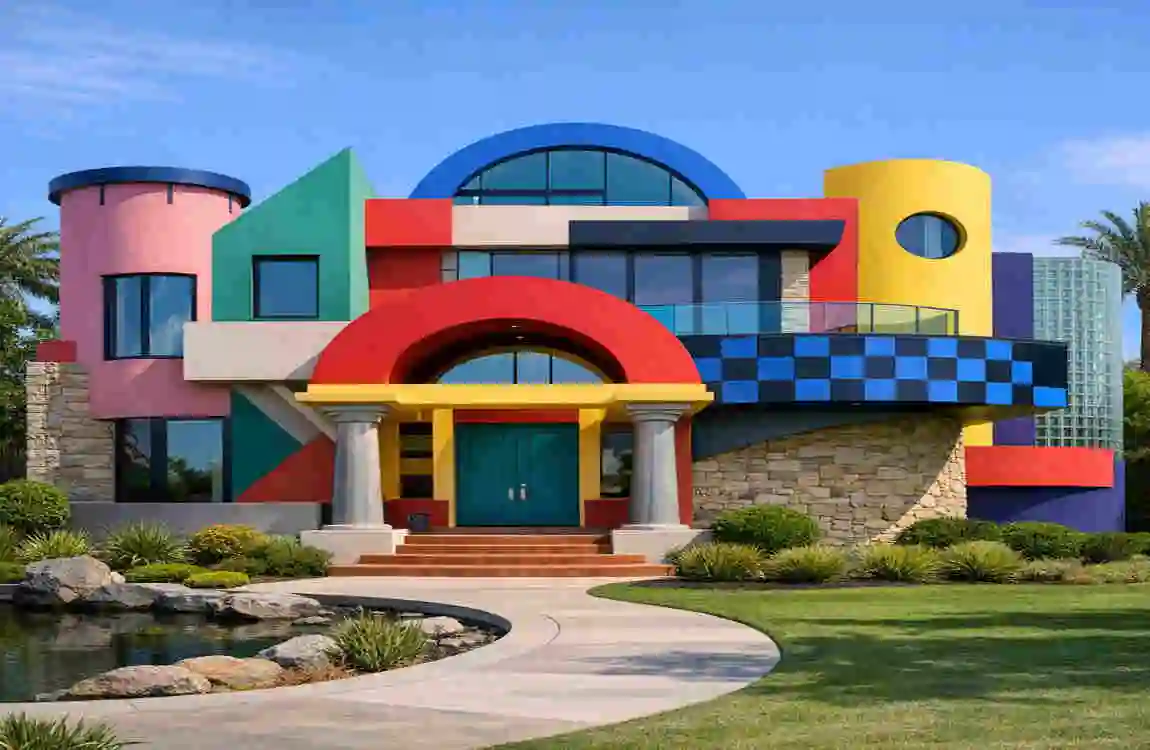
A postmodern style home is a design approach that emerged after strict modernism. Modern design often emphasizes clean lines, simple forms, and minimal decoration. Postmodern design does the opposite in many ways. It allows more personality, more ornament, and more visual surprise.
This style often borrows from history, art, pop culture, and even playful geometry. You may see arches, bold colors, mixed textures, and unusual shapes. The result is a space that feels layered and expressive.
Postmodern vs Modern and Mid-Century Modern
A lot of people confuse these styles, but they are not the same. Modern design is usually clean, simple, and minimal. Mid-century modern brings in warm wood, organic shapes, and practical furniture. Postmodern design is more dramatic, eclectic, and expressive.
StyleMain LookTypical Features
Modern , clean, and minimal Straight lines, neutral colors, simple furniture
Mid-Century Modern Warm and practical Tapered legs, wood tones, organic shapes
Postmodern Bold and playful Color, contrast, mixed materials, unusual forms
Key Principles of Post Modern Design
The heart of postmodern interior design is freedom. You do not need every piece to match perfectly. In fact, a little tension between styles is what makes the space feel exciting.
Embrace Contrast
Mix smooth and rough surfaces. Pair old-inspired shapes with modern furniture. Use soft textiles next to hard materials, such as stone or metal. This contrast creates energy and depth.
Add Ornament and Playful Forms
Postmodern spaces often include curved edges, decorative trim, arches, and sculptural pieces. These details make the home feel less flat and more memorable. Even one unusual chair or light fixture can change the mood of a room.
Use Color With Confidence
This style is not afraid of color. You can use a strong accent wall, a bright sofa, or patterned tiles. The key is balance. Too much bold color everywhere can feel messy, so choose a few strong moments and let them stand out.
Mix Materials
A postmodern-style home often looks rich because it uses a variety of materials. Think brass with wood, marble with lacquer, or glass with textured fabric. This mix makes the room feel layered and designed.
Planning Your Home Layout
Before choosing finishes or furniture, consider how the home will function. A postmodern home still needs to be practical. Good design always starts with function.
Think about where people will move, sit, gather, and rest. If you are working with a larger space, you can create zones for living, dining, reading, or working. If the space is smaller, use furniture and lighting to define each area.
Circulation and Focal Points
A postmodern layout often includes a clear focal point. This could be an archway, a fireplace, a bold sofa, or a strong piece of art. The idea is to guide the eye and create a sense of movement.
Scale and Proportion
One of the fun parts of this style is playing with scale. You might choose an oversized mirror, a dramatic pendant light, or a small patterned chair. The contrast in size helps the room feel lively.
Materials, Textures, and Finishes
The right materials are a big part of postmodern architecture and interior design. This look works best when finishes feel rich and layered.
Common choices include:
- Terrazzo
- Marble
- Brass
- Lacquer
- Plywood
- Colored concrete
- Bold textiles
A good rule is to mix hard and soft surfaces. For example, use a stone table with fabric chairs, or a glossy cabinet with a woven rug. This helps the room feel balanced instead of flat.
Flooring and Wall Treatments
Floors can be a design feature in themselves. Patterned tiles, terrazzo, or geometric flooring can add personality right away. For walls, you might use colored plaster, wallpaper, a mural, or painted paneling.
Built-Ins and Custom Millwork
Custom shelves, benches, and cabinetry can make a huge difference. These pieces help the home feel designed for the space, not just placed inside it. They also let you bring in shape, color, and storage at the same time.
Color Palette and Patterns
A postmodern-style home often uses color in a bold yet controlled way. You do not need to paint every wall bright pink or blue. Instead, think in layers.
A strong approach is to use a single neutral base and add accents. For example, warm white walls can work well with burgundy, teal, mustard, black, or soft peach. You can also use jewel tones for a richer look.
Pattern Pairing and Scale
Patterns are welcome in this style, but they should be used carefully. A striped rug, a geometric pillow, and a patterned chair can work together if the colors connect. Keep one pattern dominant and let the others support it.
Furniture and Lighting Choices
Furniture should feel stylish but comfortable. This is not just a showpiece style. You still want to live in the space every day.
Look for furniture with interesting shapes. Rounded sofas, blocky tables, and sculptural chairs all work well. You can mix vintage-inspired pieces with newer items to create an eclectic modern home feel.
Statement Lighting
Lighting is one of the best ways to bring in a postmodern style. Choose fixtures that feel sculptural or surprising. Oversized pendants, colored glass, and dramatic floor lamps can act like art in the room.
Comfort Matters Too
No matter how stylish a chair looks, it must still be useful. Choose durable fabrics, practical finishes, and pieces that fit your everyday routine. A good postmodern furniture setup should look bold but still feel easy to live with.
Decorative Elements and Art
This is where the home’s personality really comes alive. Add objects that feel collected, not copied. Vases, books, sculptures, framed prints, and textured rugs can all help build the look.
Art works especially well in this style. You can choose pieces that feel ironic, playful, historical, or pop-culture inspired. A large artwork can become the main focus of the room, while smaller pieces can be grouped into a gallery wall.
Indoor-Outdoor Connections
If your home has a garden, patio, or balcony, try to visually connect the indoor and outdoor areas. Use similar colors, repeated materials, or matching shapes. This helps the whole home feel more complete.
Plants also matter. Sculptural plants, clipped hedges, and ornamental grasses can support the strong shapes often found in postmodern home design.
Common Mistakes to Avoid
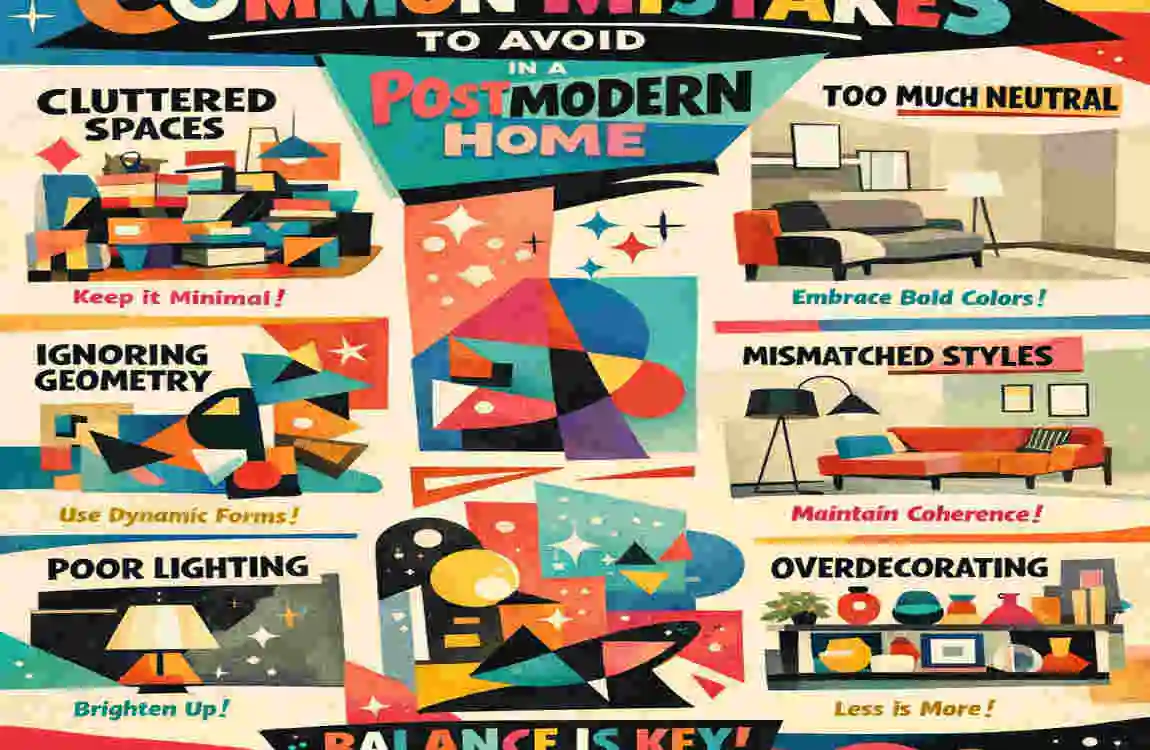
A postmodern home should feel bold, not chaotic. The biggest mistakes usually happen when too many ideas are used at once.
- Do not over-decorate. Too many objects can make the room feel crowded.
- Do not ignore the function. Style should never block comfort or usability.
- Do not copy one design image too closely. Add your own taste and lifestyle.
- Do not mix every pattern and color at once. Keep some parts calm so the bold pieces can shine.
Quick 7-Step Checklist
- Define your style references and mood board.
- Choose the main layout and focal points.
- Pick 2 to 3 core materials.
- Select a bold but balanced color palette.
- Add statement furniture and lighting.
- Layer textures, art, and accessories.
- Edit the space until it feels clear and comfortable.
FAQs
What is the difference between postmodern and modern design?
Modern design is usually simple and minimal, while postmodern design is more playful, layered, and decorative.
Can I mix postmodern and minimalist elements?
Yes. In fact, that can work very well. A clean base with a few bold postmodern pieces often looks stylish and balanced.
What colors work best in a postmodern-style home?
Bold accents like teal, mustard, burgundy, black, and soft pink often work well with warm neutrals.
Is this style good for small spaces?
Yes, if you keep the layout smart and avoid too much clutter. Use one or two strong focal points instead of filling every corner.
| Step | What to do | Examples / choices | Why it works |
|---|---|---|---|
| Define the mood | Pick a playful, expressive tone (bold, quirky, or moody) | Bright jewel tones or moody jewel + neutral backdrop | Anchors the scheme and guides color/material choices |
| Choose focal pieces | Add 1–3 sculptural or statement furniture items | Curved sofas, eccentric chairs, oversized art, sculptural lighting | Post‑Modern emphasizes form and surprising silhouettes |
| Mix materials | Combine glossy, plush, and raw finishes | Brass, colored glass, velvet, lacquer, concrete | Contrasting textures create visual drama typical of the style |
| Use pattern & color play | Layer geometric prints, bold wallpapers, or color blocks | Graphic tiles, striped rugs, bold wallpaper accent wall | Patterns and color pops make spaces lively and playful |
| Add historical twists | Reinterpret classical motifs in a modern, ironic way | Arches, columns, swan/burlwood details with bright finishes | Post‑Modern loves historical mashups with a twist |