Building a modern home in the woods sounds peaceful, stylish, and exciting. Many people love the idea of waking up to trees, fresh air, and quiet surroundings instead of traffic and noise. A woodland home can also feel private and close to nature, which is a big reason why this lifestyle is becoming more popular.
Building in a forested area can cost more than many people expect. Land, site prep, utilities, permits, labour, and finishing choices all affect the final price. If you want a modern home in the woods, smart planning matters from day one.
What Is a Modern Home in the Woods?
A modern home in the woods usually combines clean design with natural surroundings. It often has open rooms, simple lines, large windows, and materials that blend well with the landscape. The goal is to make the house feel bright, calm, and connected to the outdoors.
Defining a Modern Woodland Home
A modern woodland home often includes:
- Open floor plans
- Minimalist design
- Large glass windows
- Natural or sustainable materials
These features create a fresh look while still fitting the wooded setting.
Why People Choose Woodland Living
People choose this lifestyle for many reasons. Some want privacy. Others love the scenic views and the feeling of being away from crowded neighbourhoods. Many also like the opportunity to build a more energy-efficient, eco-friendly home.
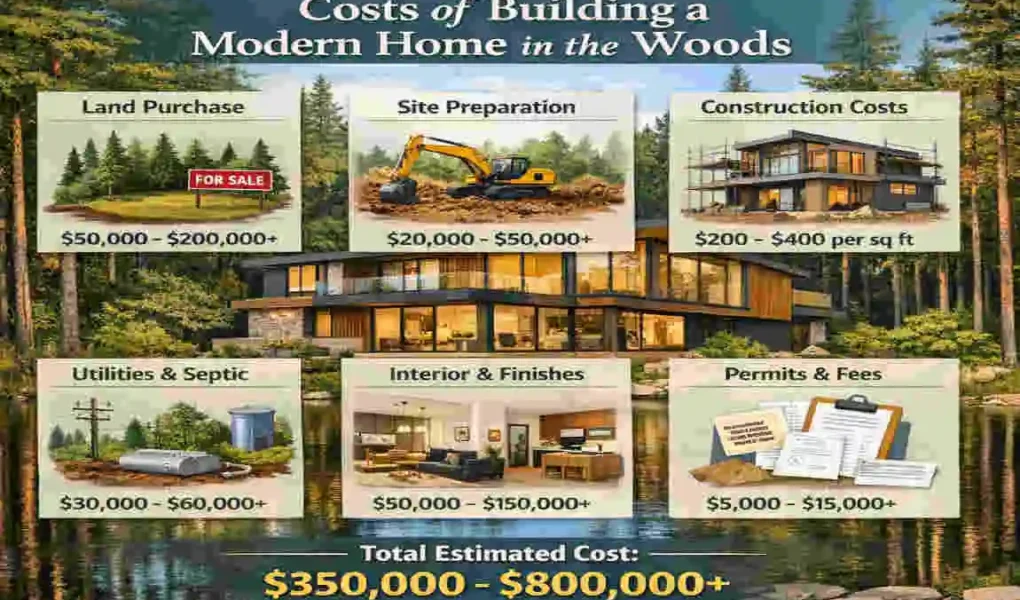
Cost of Buying Land in a Forested Area
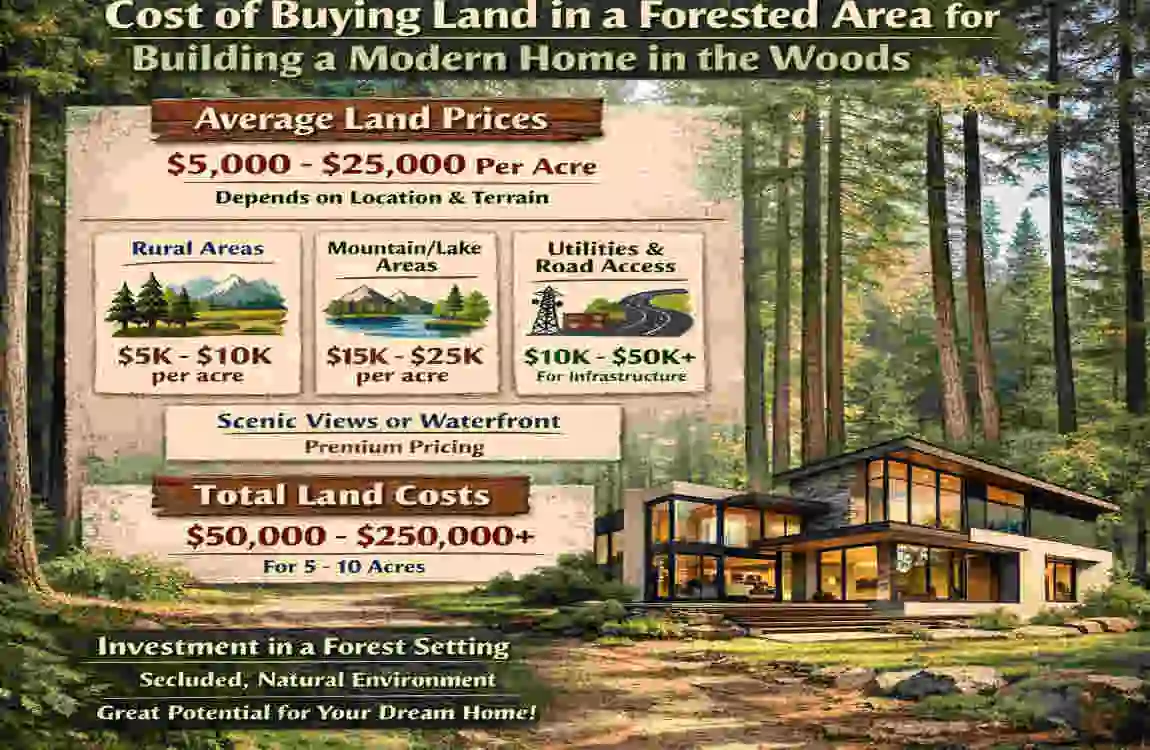
Land is often the first big expense. In some rural areas, land may be affordable. In more remote or desirable wooded locations, prices can rise fast.
Price Range of Woodland Land
A basic lot in a forested area may cost far less than land close to a city. But if the land is hard to reach or needs road access, the price can rise quickly.
Estimated land cost: $5,000–$100,000+
Factors That Affect Land Price
Several things shape the price of wooded land:
- Terrain and slope
- Soil quality
- Access to utilities
- Zoning rules
- Road access
If the land is steep, rocky, or difficult to build on, expect extra costs later.
Site Preparation Costs
Once you buy the land, you still need to make it ready for construction. This stage can be more expensive in the woods because the land may need clearing, grading, and access work.
Clearing Trees and Vegetation
You may need to remove trees, brush, and debris before building. This helps create a safe building area, but it can also raise costs, especially if large trees must be cut down.
Levelling and Excavation
The land must often be graded and stabilised. This makes the ground safer for the foundation and helps with drainage.
Driveway Installation
A remote lot may need a new driveway or access road. Gravel is usually cheaper than pavement, but both add to the budget.
Estimated site prep cost: $10,000–$50,000
Design and Architectural Costs
A custom woodland home usually needs thoughtful design. You want the home to fit the land, make the most of natural light, and stay practical for the setting.
Hiring an Architect
An architect can help create a design that works with the slope, trees, and views. If you want an eco-friendly layout or a custom style, this step becomes even more important.
Interior Design Features
Many people want features like:
- Big glass walls
- Open spaces
- Natural lighting
- Simple layouts
These details make the house feel modern and calm.
Estimated design cost: 8–15% of total construction cost
Construction Material Costs
Materials usually account for a large share of the total budget. The final number depends on the size of the home, the design, and the type of finishes you choose.
Foundation Costs
The foundation may be a:
- Concrete slab
- Crawl space
- Basement
A basement usually costs more, but it can add useful storage or living space.
Framing and Structural Materials
Most homes use wood framing, though some use steel or a mix of both. In wooded areas, builders often choose materials that handle weather well and fit the natural setting.
Roofing and Exterior Finishes
Popular choices include:
- Metal roofs
- Stone cladding
- Weather-resistant siding
These options look great and also help the house withstand rain, snow, and moisture.
Estimated material cost: $80–$250 per sq. ft.
Labor and Contractor Expenses
Labour is another major part of the budget. You’ll need skilled workers such as carpenters, electricians, plumbers, and HVAC installers.
Skilled Labor Costs
Modern homes need experienced tradespeople to make sure everything is safe and built properly. If the design is custom or complex, labour costs can increase.
Remote Area Construction Challenges
Building in the woods can also mean:
- Higher transport fees for workers
- Longer build timelines
- More difficult delivery access
These factors can push costs up, especially if the site is far from town.
Utility Installation Costs in Woodland Areas
Utilities can be one of the biggest surprises when building in the woods. If the land is not already connected, you may need to install everything from scratch.
Water Systems
You may need a well and a water filtration system. That can be a major cost, but it is often necessary in remote areas.
Power Supply
Power options may include:
- Extending the electric grid
- Installing solar panels
- Adding a backup generator
Solar can save money over time, but the upfront cost may be higher.
Sewage Solutions
A septic system is common for homes in the woods. It adds another important expense to your budget.
Internet and Connectivity
Remote homes may need satellite internet or another non-traditional service. That may not be cheap, but it can make everyday life easier.
Estimated utility cost: $15,000–$70,000
Sustainable Features and Smart Technology Costs
Many people building a modern home in the woods want the home to be efficient and easier to manage. That’s where eco-friendly features and smart tools come into play.
Eco-Friendly Features
Useful upgrades include:
- Solar roofing
- Rainwater harvesting
- Strong insulation systems
These features can lower utility bills over time.
Smart Home Upgrades
Smart devices can also improve comfort and safety. Common upgrades include:
- Security cameras
- Smart thermostats
- Remote lighting controls
These features are especially useful if you travel often or want to monitor the home from afar.
Interior Finishing Costs
Finishing the inside of the home can be one of the most enjoyable parts, but it also adds a lot to the total cost.
Flooring Choices
Popular choices include:
- Hardwood
- Polished concrete
- Natural stone
Each one gives a different look and cost level.
Kitchen and Bathrooms
These rooms often account for the largest share of finishing costs because they require cabinets, fixtures, countertops, and high-quality materials.
Luxury Woodland Aesthetic
Many homeowners want a warm, natural feel with:
- Fireplaces
- Wooden beams
- Floor-to-ceiling windows
These touches make the house feel both modern and cozy.
Estimated finishing cost: $30,000–$150,000+
Permits, Legal Fees, and Inspections
Before building begins, you’ll likely need approvals from local authorities. This step is easy to overlook, but it matters a lot.
Building Permits
Local building rules may require permits for the house, driveway, septic system, and more.
Environmental Approvals
If the land includes protected trees or wildlife areas, extra approval may be needed.
Safety Inspections
You may need inspections for:
- Structure
- Plumbing
- Electrical systems
Estimated permit and legal cost: $2,000–$20,000
Hidden Costs of Building a Modern Home in the Woods
Hidden costs often catch people by surprise. These are the extras that can appear after the project starts.
Wildlife Protection Measures
You may need fencing or pest control to protect the home from animals and insects.
Fire Safety Features
In wooded areas, fire safety is very important. You may need fire-resistant materials and emergency access routes.
Weather Risks
Snow, rain, flooding, and moisture can all lead to additional expenses.
Maintenance Costs
A woodland home also needs ongoing care, such as:
- Tree trimming
- Drainage upkeep
- Roof and siding checks
These costs continue long after the build is complete.
Average Total Cost Breakdown
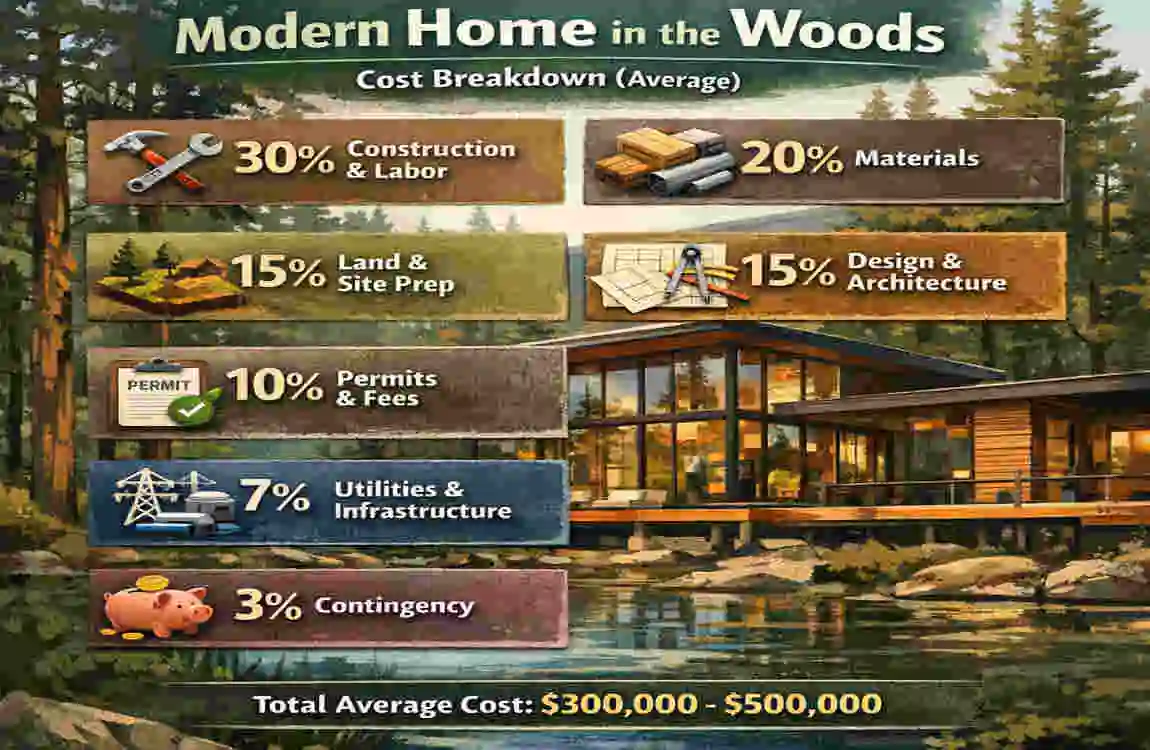
Here’s a simple look at what a modern home in the woods may cost based on size.
Home Size Estimated Total Cost Typical Inclusions
Small Home (1,200–1,800 sq. ft.) $180,000–$350,000 Land, basic build, utilities, permits
Mid-Size Home (2,000–3,000 sq. ft.) $350,000–$700,000 Better finishes, more utility work, custom design
Luxury Woodland Home (3,500+ sq. ft.) $700,000–$2M+ High-end materials, advanced features, larger site work
These numbers can vary based on location, design, and the property’s remoteness.
Ways to Reduce Building Costs
You can save money without giving up the look you want. A few smart choices can make a big difference.
Choose Simple Architecture
Simple rooflines and shapes usually cost less to build.
Use Local Materials
Local materials can reduce transport costs and often better suit the setting.
Build Smaller
A compact design is easier to manage and cheaper to finish.
Add Features Later
You do not need every upgrade on day one. You can phase in extras over time.
Is Building a Modern Home in the Woods Worth It?
For many people, the answer is yes. A woodland home offers peace, privacy, and a strong connection to nature. It can also be a smart long-term investment if you plan well and choose the right land.
That said, you should be ready for the responsibilities too. Remote luxury homes often require more maintenance and planning than townhomes. If you understand the costs early, you can make better choices and enjoy the lifestyle more fully.
FAQ
How much does it cost to build a modern home in the woods?
It usually costs between $180,000 and $2 million+, depending on land, size, materials, and utility access.
Is it cheaper to build in the woods?
Sometimes the land is cheaper, but site prep, utilities, and access roads can make the project more expensive.
What is the biggest expense when building a woodland home?
Usually, construction materials, labour, and utility installation are the highest costs.
Can a modern home in the woods be energy efficient?
Yes. With solar power, insulation, and sustainable materials, it can be very efficient.
| Cost category | Typical items included | Ballpark range (USD) |
|---|---|---|
| Land purchase | Raw wooded lot, taxes, title, closing | $10,000 – $300,000+ |
| Site work & access | Driveway/road, clearing, grading, tree removal, erosion control | $5,000 – $75,000 |
| Utilities & infrastructure | Well, septic or sewer hookup, electrical service extension, internet | $5,000 – $60,000 |
| Foundation & structure | Excavation, foundation (slab/basement/piers), framing | $25,000 – $200,000 |
| Exterior envelope | Roofing, siding, windows, doors (weatherproofing) | $20,000 – $150,000 |
| Interior finishes | Insulation, drywall, flooring, kitchens, bathrooms | $30,000 – $250,000 |
| Mechanical systems | HVAC, plumbing, electrical panel, water treatment | $10,000 – $60,000 |
| Permits & professional fees | Building permits, surveys, engineering, architect, site studies | $2,000 – $40,000 |
| Remote-site premiums | Higher labor/mobilization, material transport, specialty contractors | 5% – 30% of construction cost |
| Contingency & soft costs | Landscaping, driveway sealing, inspections, contingency (10–20%) | 10% – 20% of total budget |