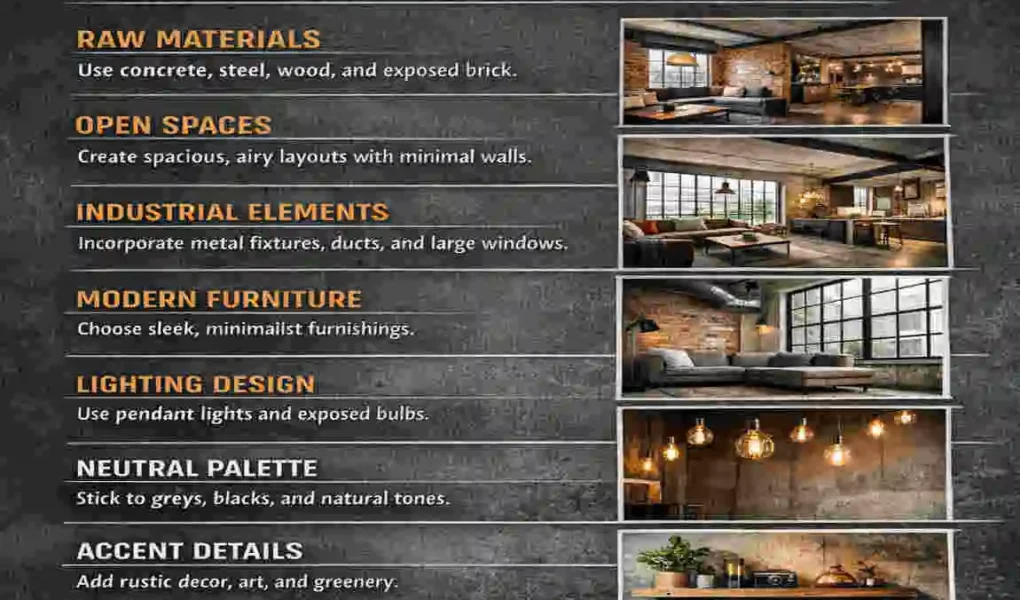
Industrial modern homes are loved for a simple reason: they feel strong, stylish, and practical at the same time. They blend raw materials such as metal, brick, and wood with clean lines and a calm, modern layout. That mix creates a home that looks current without feeling overdone.
If you want this style to work well, the key is balance. You want the space to feel edgy yet warm and livable.
What Industrial Modern Homes Mean
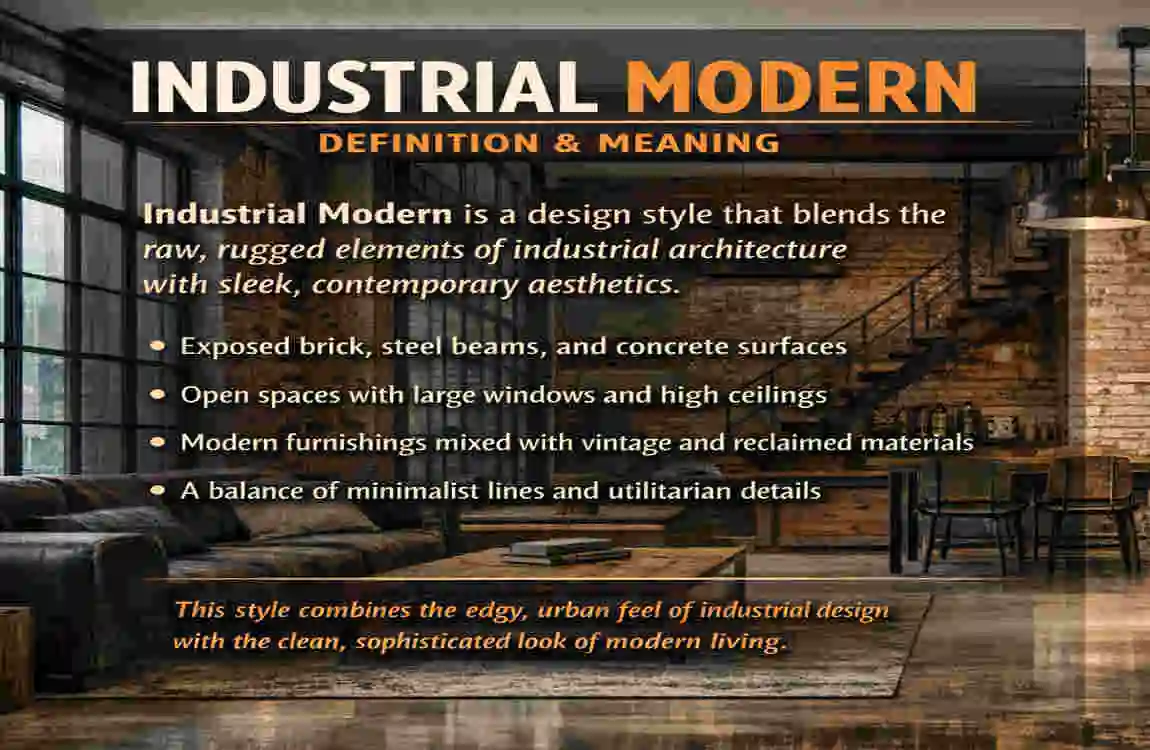
A simple style with two sides
Industrial modern homes combine industrial character with modern simplicity. The industrial side features exposed brick, metal frames, visible beams, and concrete textures. The modern side keeps the space clean, open, and uncluttered.
This style works because it does not try too hard. It lets the materials speak for themselves. Instead of hiding structure and texture, it highlights them. At the same time, it avoids looking messy by keeping the layout neat and the furniture streamlined.
Common features to notice
You will often see:
- Open floor plans
- Neutral colors
- Sleek furniture
- Raw finishes
- Large windows
- A mix of old and new pieces
Key Design Principles
Keep the space balanced.
The biggest rule in industrial modern design is balance. Too much metal and concrete can make a home feel cold. Too much softness can take away the style. The best spaces mix hard and soft, rough and smooth, dark and light.
Think function first
This style is not just about looks. It should also work well for everyday life. Choose useful furniture, storage that makes sense, and a layout that supports how you live. A beautiful room that feels awkward will never fully work.
Choose the Right Materials
Best materials for the look
Industrial modern homes often use concrete, steel, brick, reclaimed wood, glass, and matte finishes. Each one adds a different layer to the design.
Material Best Use Effect
Concrete Floors, counters, and feature walls create a bold, raw base
Metal Lighting, frames, and shelves add structure and edge
Brick Walls or fireplace areas bring warmth and texture
Reclaimed wood Tables, cabinets, and beams soften the harder surfaces
Glass Doors, windows, and partitions keep the space open and bright
Matte finishes Cabinets, fixtures, and hardware , giving a clean, modern feel
Where to use them
You do not need every material in every room. A better approach is to repeat a few finishes naturally. For example, you might use brick in the living room, wood in the dining area, and matte black details in the kitchen. That keeps the home connected.
Plan the Layout Wisely
Open, but not empty.
Industrial modern homes usually work best with open layouts. Open space helps the home feel airy and makes the design easier to enjoy. But open does not mean empty.
Create zones with rugs, lighting, furniture placement, or a kitchen island. That way, the space still feels defined without losing its flow.
Use height and light.
If your home has high ceilings or large windows, make the most of them. These features fit the style perfectly. They add drama and help the raw materials feel lighter and more elegant.
Use Color Strategically
Stick to a calm palette.
The safest colors for industrial modern homes are white, gray, black, beige, and charcoal. These shades help the materials stand out and keep the home feeling clean.
Add warmth with accents.
A home with only dark and cool colors can feel heavy. So add warmth through soft tan leather, wood tones, warm lighting, or a muted rug. Small color changes can make a big difference in comfort.
Lighting Matters
Mix natural and artificial light.
Lighting is one of the most important parts of this style. Natural light works beautifully with industrial modern design, softening concrete, metal, and brick.
For artificial light, use:
- Pendant lights
- Wall sconces
- Track lighting
- Statement fixtures
Choose finishes that fit the style.
Black, steel, brass, and glass fixtures usually work well. They add personality without making the room feel crowded. Good lighting should do two things: show off the texture and make the room feel warm.
Furniture and Decor
Keep furniture simple
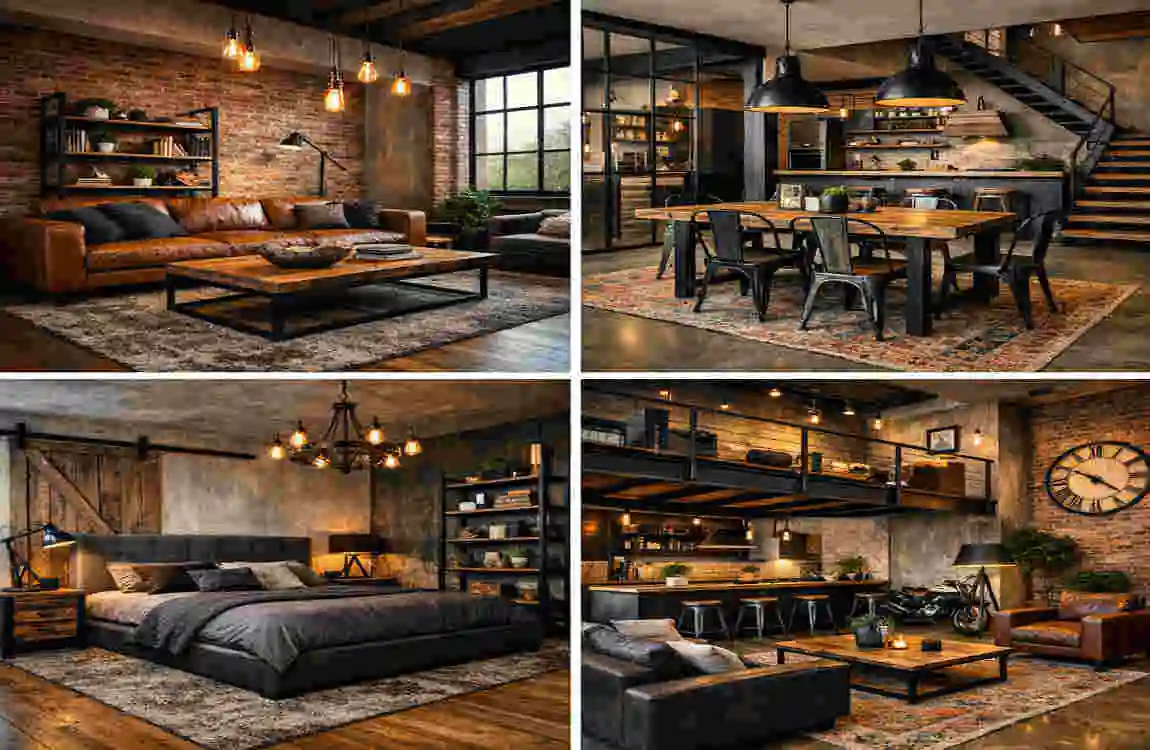
Furniture should have clean lines and a practical shape. Oversized, bulky, or overly decorative pieces can fight against the style. Look for items that feel sturdy but not heavy.
Decor that works well
A few great decor ideas include:
- Leather seating
- Metal shelving
- Simple wall art
- Wood coffee tables
- Vintage accents
Mixing newer pieces with older or more rugged items makes the room feel lived in, not staged.
Add Warmth and Comfort
Make it feel like home.
Industrial modern homes can sometimes lean too hard into the “industrial” side. That is why comfort matters so much. Add rugs, cushions, curtains, plants, and soft throws to bring balance.
Texture makes the difference.
Texture keeps the space from feeling flat. A smooth floor, a rough brick wall, a soft sofa, and a woven rug all work together to create depth. This is what turns a stylish room into a welcoming one.
Common Mistakes to Avoid
Don’t overdo the look.
A few common mistakes can make the style fall apart:
- Using too many dark colors
- Making the room feel cold or empty
- Mixing too many finishes
- Choosing style over daily function
The goal is not to create a warehouse. It is to create a home that feels clean, comfortable, and practical.
Room-by-Room Design Tips
Living room
Use a comfortable sofa, a strong coffee table, and one bold light fixture. This room should feel open but inviting.
Kitchen
A kitchen works well with matte cabinets, open shelves, metal hardware, and simple counters. Keep the look clean and useful.
Bedroom
Soften the look with warm bedding, curtains, and wood details. The bedroom should feel restful, not stark.
Bathroom
Use black fixtures, stone or concrete-style surfaces, and simple mirrors. A few raw materials can give the room a strong industrial edge without making it feel harsh.
FAQ
What makes industrial modern homes different from regular modern homes?
Industrial modern homes feature more raw, rugged materials such as brick, metal, and concrete. Regular modern homes usually look smoother and simpler overall.
Can industrial modern homes feel warm and cozy?
Yes. Add rugs, wood, soft fabrics, plants, and warm lighting to make the space feel more inviting.
What colors work best?
Neutral shades like white, gray, black, beige, and charcoal work best. Warm accents help soften the look.
Do industrial modern homes work in small spaces?
Yes. The open layout, clean furniture, and light color palette can actually make small spaces feel larger.
What are the best materials?
Concrete, brick, steel, reclaimed wood, glass, and matte finishes are some of the best choices.
| Design Element | Industrial Modern Style Tips | Benefits |
|---|---|---|
| Open Floor Plan | Use spacious layouts with fewer interior walls | Creates a clean, airy, modern feel |
| Exposed Materials | Highlight brick, concrete, steel, and wood | Adds authentic industrial character |
| Neutral Color Palette | Choose black, gray, white, and earthy tones | Keeps the home sleek and timeless |
| Large Windows | Install floor-to-ceiling or metal-frame windows | Maximizes natural light and openness |
| Minimal Furniture | Use simple, functional furniture with clean lines | Reduces clutter and enhances style |
| Metal Accents | Add iron stair rails, steel fixtures, and pipe details | Strengthens industrial aesthetics |
| Mixed Textures | Combine rough concrete with soft fabrics and wood | Creates balance and warmth |
| Smart Lighting | Use pendant lights, Edison bulbs, and track lighting | Enhances ambiance and modern appeal |
| Functional Storage | Include hidden cabinets and open shelving | Improves organization and usability |
| Sustainable Features | Add recycled wood, energy-efficient systems, and eco materials | Boosts sustainability and long-term value |