If you are thinking about buying property in West Africa, The Gambia may already be on your radar. It is a small country, but its real estate market has been gaining attention for good reasons. The country has a warm climate, beautiful coastal areas, a growing tourism sector, and a lifestyle that appeals to both locals and international buyers.
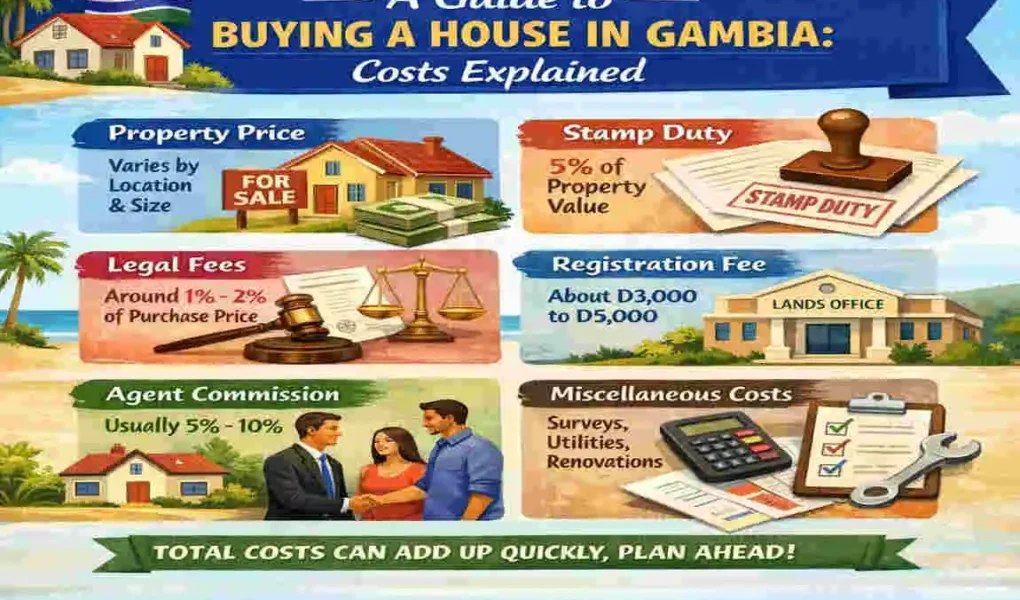
| Cost Category | What It Covers | Estimated Cost (USD) | Notes |
|---|---|---|---|
| Property Price | Cost of the house or land | $20,000 – $500,000+ | Depends on location, size, and quality |
| Legal Fees | Lawyer & documentation | $500 – $2,000 | Required for title verification |
| Stamp Duty & Taxes | Government charges | 5% – 10% of property value | Varies by transaction type |
| Agency Fees | Real estate agent commission | 5% – 10% | Often paid by buyer or seller |
| Registration Fees | Property registration | $200 – $1,000 | For official ownership records |
| Maintenance Costs | Repairs & upkeep | $100 – $500/month | Higher for luxury properties |
| Utility Setup | Water, electricity, internet | $200 – $800 | One-time setup costs |
| Miscellaneous Costs | Travel, inspections, admin | $300 – $1,500 | Depends on buyer situation |
That question sounds simple, but the answer is not always the same. The cost depends on where the property is located, the type of house you want, whether the land is fully titled, and whether the home is move-in ready or needs work. In addition to the asking price, buyers need to consider legal fees, taxes, agency costs, and other hidden expenses. If you only look at the listing price, you may end up underestimating the real budget needed.
Overview of the Real Estate Market in The Gambia
A market that is growing steadily
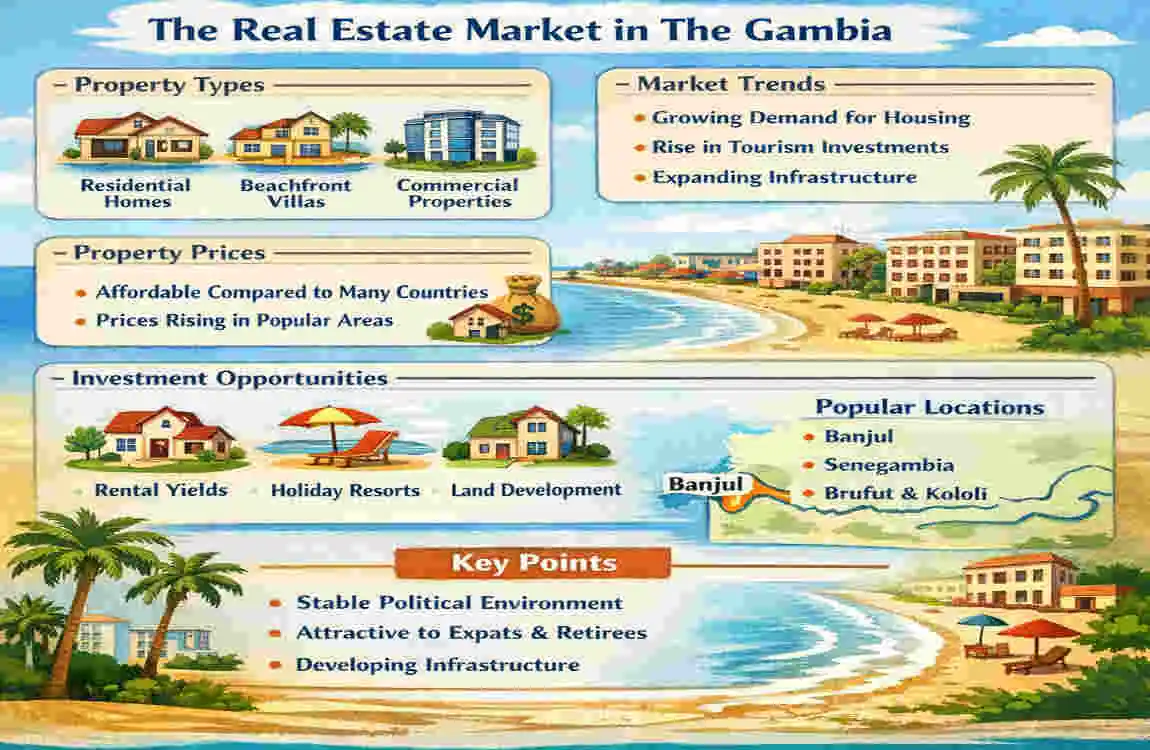
The Gambia’s real estate market has been developing at a steady pace over the past several years. While it is still smaller than property markets in larger African countries, it has become attractive due to relatively low entry prices in many areas and growing demand from both local and international buyers.
Many people see property in The Gambia as a long-term opportunity. The country’s tourism industry continues to drive demand for homes, guesthouses, apartments, and short-term rental properties. At the same time, the local middle class is expanding, creating more demand for affordable and mid-range housing.
Why buyers are paying attention
There are a few reasons why interest in property is increasing:
- Foreign investors are looking for affordable land and homes with future growth potential.
- Diaspora communities want a place to live, retire, or return to in the future.
- Tourism-related buyers are seeking homes and villas that can generate rental income.
- Local families are looking for stable housing options in growing urban areas.
Key market areas
Some of the most active real estate areas include Banjul, Serrekunda, Brufut, and Kololi. These places are popular for different reasons. Banjul is the capital and has government and business importance. Serrekunda is a busy urban center with more affordable housing. Kololi and Brufut attract buyers seeking coastal living and stronger rental potential.
Market trends to watch
A few trends are shaping the market right now. Land values are rising in several well-located areas. Gated communities are becoming more common. Beachfront property is also in high demand, especially among buyers seeking vacation homes or rental investments. However, the market still carries risks, especially regarding title disputes, unclear ownership, and land sold without proper documentation. That is why buyers need to do careful research before making any decision.
How Much Does It Cost to Buy a House in Gambia?
Average property prices in The Gambia
The biggest question for most buyers is, of course, the price. In simple terms, how much does it cost to buy a house in Gambia can range from very affordable to quite expensive, depending on the type of property and where it is located.
Here is a general guide to common price ranges:
- Entry-level homes: around $20,000 to $60,000
- Mid-range homes: around $60,000 to $150,000
- Luxury villas: around $150,000 to $500,000+
These figures are broad estimates. A small house in a rural or inland area may cost far less than a similar-sized home in a popular coastal neighborhood. In contrast, a modern villa near the beach can command a much higher price because of location alone.
Price differences by location
Location plays one of the biggest roles in house pricing.
Coastal areas such as Kololi and Senegambia tend to be more expensive. These neighborhoods are popular with tourists, expats, and investors, so demand stays high. Homes in these areas often offer stronger rental income potential, which pushes prices upward.
Urban areas such as Serrekunda usually have more moderate pricing. You can still find good homes here without paying premium coastal rates. These areas are attractive to families and buyers seeking access to shops, transport, and daily services.
Rural and inland areas are generally the most affordable. You may find land and simple homes at much lower prices, but the trade-off is usually less infrastructure, fewer services, and lower short-term rental demand.
Main factors that affect cost
Several details can change the price of a house in The Gambia. Some of the most important are:
- Property size: Bigger homes usually cost more.
- Location: Beachfront or city-center properties are priced higher.
- Construction quality: Well-built homes with modern finishes cost more than basic structures.
- Title deed status: A clear title can increase value and reduce risk.
- Furnished or unfurnished: A furnished home usually costs more because the buyer is paying for the interior setup as well.
A simple answer to the main question
So, if you are still asking how much does it cost to buy a house in Gambia, the most honest answer is this: the price depends on location, property type, and legal ownership status. A buyer looking in a quiet inland area may spend as little as $20,000, while someone seeking a luxury beachfront villa may need several hundred thousand dollars.
Price comparison table
Location / Property Type Typical Price Range Buyer Profile Common Use
Rural inland house $20,000–$40,000 Budget buyers Family home, long-term use
Serrekunda home $40,000–$100,000 Middle-income buyers Residential living
Kololi / Senegambia apartment $70,000–$180,000 Investors, expats Rental income, holidays
Brufut / Bijilo villa $120,000–$300,000+ Premium buyers Luxury living, tourism rentals
Beachfront luxury property $200,000–$500,000+ High-end investors Vacation rental, investment
Types of Properties Available in The Gambia
Apartments
Apartments are a good choice for buyers who want something compact, manageable, and easier to rent out. They are often found in urban or tourist-friendly areas. For investors, apartments can be useful because they can generate regular rental income, especially in places where short-term stays are common.
Detached houses
Detached houses are popular with families and long-term residents. They usually offer more privacy and space than apartments. These homes can be found in both city and suburban areas, and they often suit buyers who want to settle in The Gambia for a longer period.
Villas
Villas are usually larger and more luxurious. Many are located in coastal or upscale residential areas. They are ideal for high-end buyers or investors looking to enter the vacation rental market. If a villa is well located and well maintained, it can become a strong income-generating asset.
Beachfront properties
Beachfront homes are among the most desirable properties in the country. The view, lifestyle, and rental potential often make them attractive to investors. However, they also come with higher prices and more attention to legal details, especially because coastal land can sometimes have ownership complications.
Land for development
Buying land is another common option. Some buyers prefer to build their own homes from scratch rather than purchase a finished property. This can be a smart long-term strategy, especially if the land is in an area that is expected to grow. Land often offers strong appreciation potential, but only if the title and location are properly verified.
Additional Costs of Buying Property in Gambia
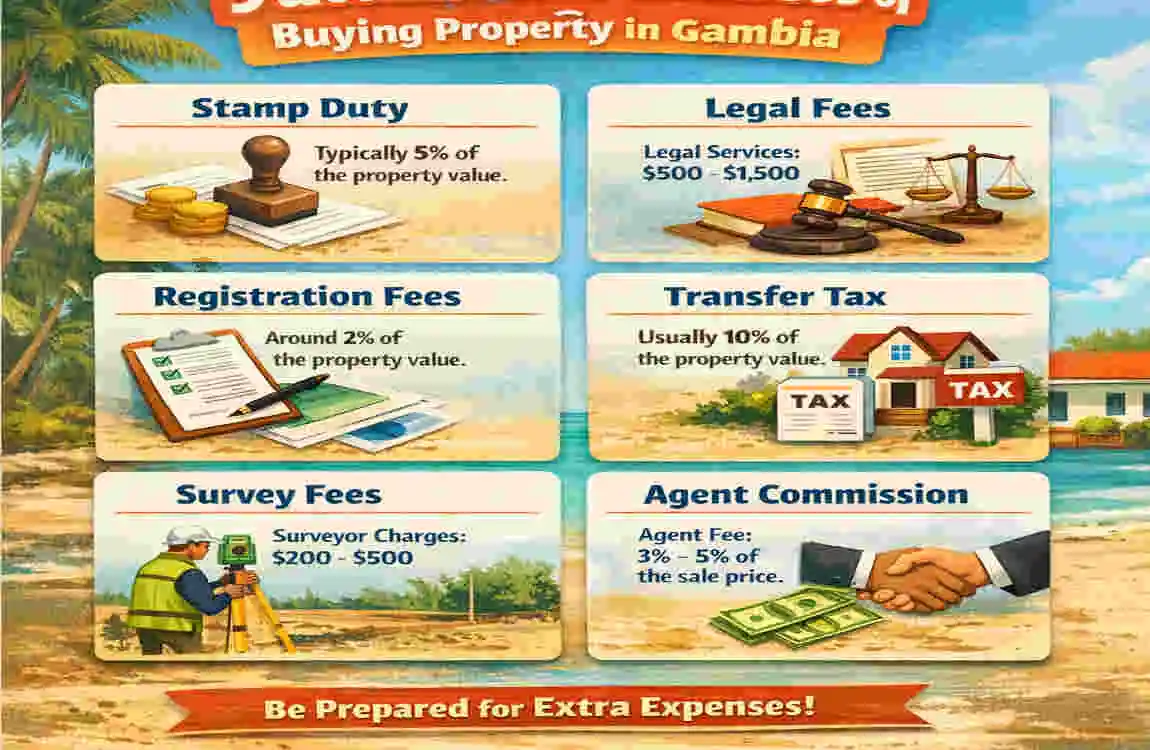
Why the purchase price is only part of the story
Many buyers focus only on the asking price, but that is not enough. When planning your budget, you need to include the extra costs that come with buying and owning property. These expenses can make a big difference in your final total.
Legal fees
A lawyer is usually one of the most important professionals you will need. Legal fees may cover title checks, contract review, and help with the ownership transfer process. This is not an area where you should try to save money by skipping professional help. A small legal fee now can protect you from a much larger loss later.
Taxes and government fees
There are often government-related costs, such as:
- Stamp duty
- Registration fees
- Transfer fees
These may vary depending on the property and transaction structure. Buyers should always ask for a clear breakdown before signing anything.
Agency fees
If you use a real estate agent, you may need to pay a commission. In many cases, agency fees are around 5% to 10%, although this can vary. Always confirm who is paying the commission before you make an offer.
Maintenance costs
Once you own the house, you will also need to think about ongoing costs. These may include:
- Security
- Property management
- Repairs
- Water and electricity
- General upkeep
If the property is meant for rentals, management costs can be even more important. A house that looks cheap at first may become costly if it needs regular repairs or extra security.
Currency exchange and transfer costs
If you are sending money from abroad, you should also consider bank transfer fees and exchange rate fluctuations. These may seem small at first, but they can add up, especially on larger property purchases.
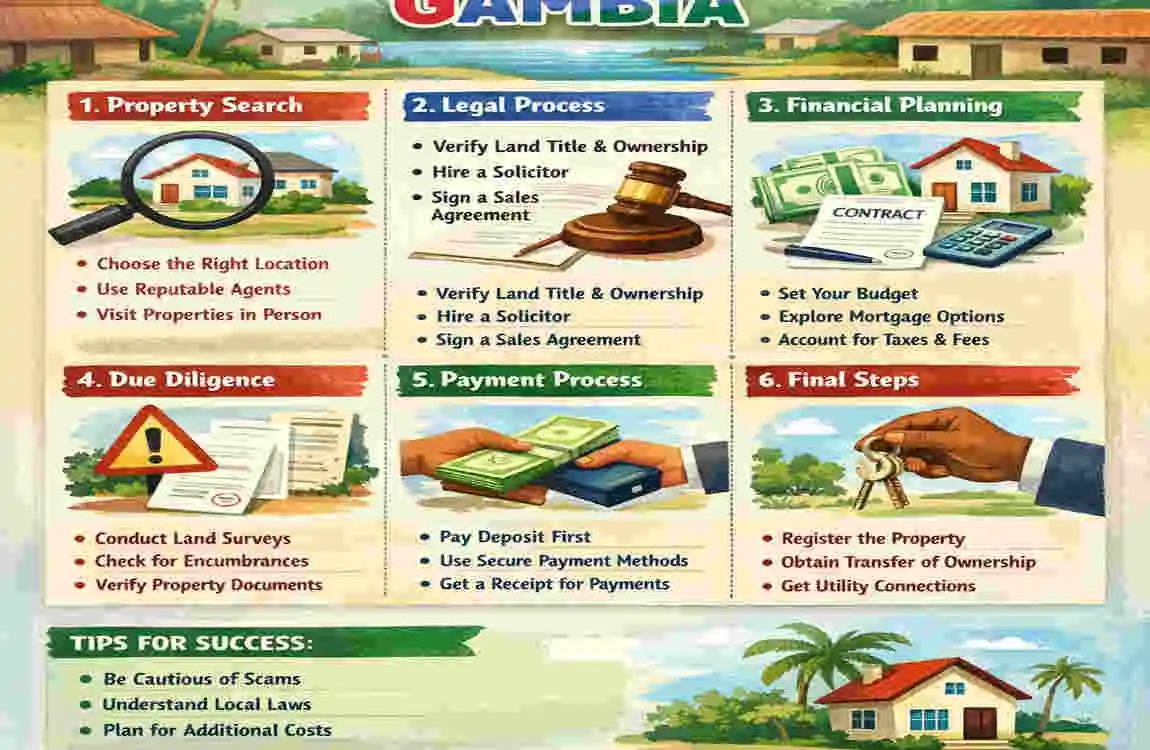
Step-by-Step Process of Buying a House in Gambia
Start your property search
Your first task is to look at available homes and compare your options. You can work with real estate agents, browse local listings, or visit neighborhoods directly. It helps to look at more than one property to understand what is normal in the market.
Verify the property
Never move forward without checking ownership. You need to confirm that the seller has the legal right to sell the property. This step should include a title deed check and confirmation of land ownership. It may feel slow, but it is one of the most important parts of the process.
Hire legal support
A local lawyer can help you review contracts and protect your interests. This is especially important if you are a foreign buyer or if the property has complicated ownership history. Legal support gives you confidence that the deal is being handled properly.
Negotiate the offer
In The Gambia, negotiation is common. The first asking price is not always final. Be polite, patient, and realistic. Cultural understanding matters here, so avoid rushing the process or making aggressive demands. Make payment
Once both sides agree, you will usually pay a deposit first. After that, the final settlement is completed in accordance with the terms of the agreement. Make sure every payment is documented properly.
Complete ownership transfer
The final stage is registration and documentation. This is where the property is officially transferred into your name. Keep copies of every record related to the purchase, including the sale agreement, receipts, and registration papers.
A simple buying checklist
- Confirm ownership
- Check the title
- Hire a lawyer
- Negotiate the price
- Review all fees
- Complete payment properly
- Register the property in your name
Legal Considerations for Foreign Buyers
Can foreigners buy property in The Gambia?
Yes, foreigners can buy property in The Gambia, but the structure may differ from what they are used to in their home country. In many cases, foreign ownership is handled through leasehold arrangements rather than absolute freehold ownership. That means the lease details and legal terms matter a lot.
Why due diligence matters
If you are buying from abroad or for the first time, you need to be extra careful. Some land and houses may have unclear records, family disputes, or overlapping claims. In property transactions, a mistake can be costly, and legal issues can take time to resolve.
Leasehold vs freehold
It is important to understand the difference between these two ideas. Freehold usually means you fully own the property and the land beneath it, subject to local laws. Leasehold means you have the right to use the property for a set period under agreed terms. Foreign buyers should always ask what kind of ownership applies before paying anything.
How to protect yourself
To reduce risk, work with:
- A registered local lawyer
- A trusted and verified agent
- Official property records
- Clear written agreements
This may sound basic, but it is the best way to avoid fraud and land disputes.
Best Locations to Buy Property in Gambia
Banjul
Banjul is the capital city and an important commercial and government center. It offers urban convenience and access to official institutions. While it may not be the first place everyone looks for residential property, it still offers value to buyers seeking a central, established location.
Serrekunda
Serrekunda is the largest urban center in The Gambia and one of the most active housing markets. It is often more affordable than high-end coastal areas and attractive to local families and buyers seeking practical access to shops, roads, and services.
Kololi and Senegambia
These areas are among the most attractive for investors. They are close to the tourism zone, restaurants, hotels, and entertainment areas. As a result, they often offer higher rental returns. If your goal is income generation, these neighborhoods deserve serious attention.
Brufut and Bijilo
These locations are known for their growing residential appeal. They have become popular among buyers seeking modern homes, villas, and coastal access. Many developments here are aimed at higher-income buyers and long-term investors.
Coastal villages
Some coastal villages offer lower prices than the more developed tourist zones. These areas can be attractive to buyers seeking land at a lower entry point and willing to wait for future growth. The value may rise over time as development spreads.
Comparing major locations
Area Price Level Best For Main Advantage
Banjul Moderate to high City buyers Government and business access
Serrekunda Moderate Families Everyday convenience
Kololi / Senegambia High Investors Rental income
Brufut / Bijilo High Luxury buyers Modern coastal living
Coastal villages Low to moderate Long-term investors Lower entry cost
Investment Potential and ROI in Gambia Real Estate
Tourism supports rental demand
One of the biggest reasons property investment is growing in The Gambia is tourism. When visitors arrive for holidays, short stays, or seasonal travel, they create demand for apartments, villas, and guest houses. This is especially true in areas near the coast and major tourist routes.
Holiday rentals and Airbnb-style income
Short-term rentals have become more attractive in many markets, and The Gambia is no exception. A well-located and well-managed property can generate steady income, especially during busy seasons. Buyers who focus on rental demand often look for homes that are furnished, secure, and close to attractions.
Land appreciation over time
Land in developing areas can gain value as infrastructure improves. If you buy in a growing neighborhood and hold the property for several years, the increase in land value may become one of your biggest returns. This is why many investors prefer to buy early in areas that are still developing.
Balancing risk and reward
Like any market, real estate in The Gambia has both opportunities and risks. You may find strong returns in the right area, but only if you choose carefully and verify every detail. Smart buyers focus on location, documentation, and long-term growth rather than rushing into a deal because the price looks low.
Common Mistakes to Avoid When Buying Property
Not checking ownership properly
This is one of the biggest mistakes buyers make. If ownership is unclear, you could face serious legal trouble later. Always verify who owns the property and whether the land can legally be sold.
Ignoring legal advice
Some buyers try to save money by skipping a lawyer. That often backfires. A lawyer helps you understand the risks and spot problems before they become expensive.
Paying too much because you lack market knowledge
If you are unfamiliar with the local market, it is easy to overpay. Compare several properties, ask questions, and take your time before making an offer.
Forgetting about infrastructure
A home may look perfect, but if the area lacks roads, water, electricity, or security, your daily life may become difficult. Infrastructure matters just as much as the house itself.
Trusting agents too quickly
Not every agent is dishonest, but not every agent is fully reliable either. Always check credentials and ask for proof before moving ahead.
Tips for First-Time Buyers in Gambia
Start with proper legal support
Your first step should always be hiring a local lawyer. This gives you a professional who understands the laws, the paperwork, and the local process.
Visit the property in person
If possible, never buy based only on photos or messages. A visit helps you understand the neighborhood, the building’s quality, and the property’s actual condition.
Compare several listings
Do not settle for the first option you see. By comparing different properties, you will get a better sense of pricing and value.
Learn the local market
Take the time to understand house prices in the area where you want to buy. This will help you avoid overpaying and make stronger decisions.
Focus on paperwork first
A property may look beautiful, but the documents are what truly protect your investment. Make sure the title, contract, and transfer process are all clear before paying.
Be patient
Good property deals are worth waiting for. Rushed buyers tend to make expensive mistakes, while patient buyers usually get better results.
FAQs
How much does it cost to buy a house in Gambia?
The price can range widely. Basic homes may cost $20,000 to $60,000, mid-range homes $60,000 to $150,000, and luxury villas $150,000 to $500,000+. The exact price depends on location, size, quality, and legal status.
Can foreigners buy property in Gambia?
Yes, foreigners can buy property in The Gambia, but ownership may be structured as a leasehold. Because of this, it is important to check the legal details carefully before buying.
Is real estate in Gambia safe?
It can be safe if you do proper legal checks and work with trusted professionals. The biggest risks usually come from poor due diligence, not from the market itself.
What is the cheapest area to buy property?
Rural and inland areas are generally the most affordable. These areas may offer lower prices but also have fewer services and slower growth.
Do I need a lawyer to buy property?
Yes, it is strongly recommended. A lawyer helps you verify ownership, review contracts, and protect yourself from legal problems.