Many homeowners hear the terms “real estate taxes” and “property taxes” and assume they mean the same thing. In many cases, they do overlap. But depending on where you live, the words may not always be used in the same way.
That is why this question comes up so often: are real estate taxes the same as property taxes?
The short answer is sometimes yes, sometimes not exactly. In everyday conversation, people often use them interchangeably. But in legal or tax settings, the meaning can be a little broader or more specific.
What Are Real Estate Taxes?
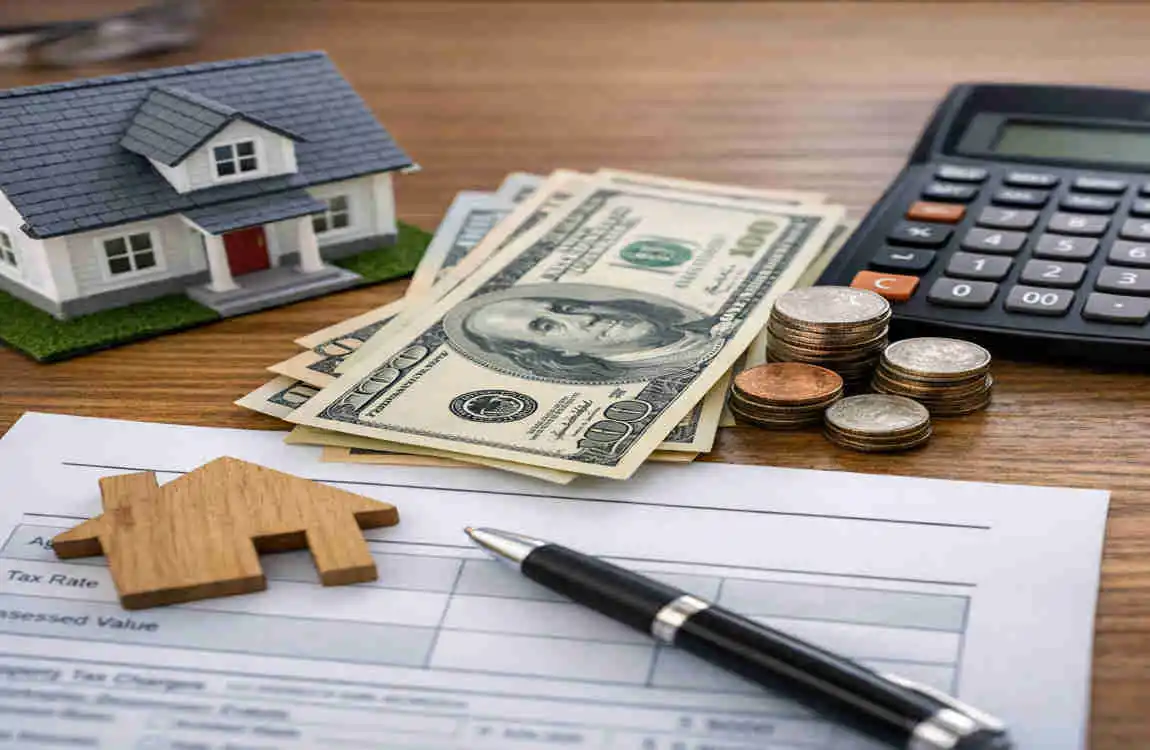
Real estate taxes are taxes charged by local governments on real property. Real property usually means land and anything permanently attached to it, such as a house or other building.
These taxes are based on the property’s value. They are usually collected once a year, although payment schedules can vary.
What Real Estate Taxes Cover
Real estate taxes usually apply to:
- Land
- Homes
- Buildings
- Commercial properties
If something is permanently attached to the land, it often counts as real estate for tax purposes.
Who Pays Real Estate Taxes?
Real estate taxes are usually paid by:
- Homeowners
- Landowners
- Commercial property owners
If you own the property, you are typically responsible for the tax bill. In some cases, the payment is collected through a mortgage escrow account, so it is included in your monthly mortgage payment.
What Are Property Taxes?
Definition
Property taxes are a broader term. It usually refers to taxes on property owned by a person or business.
In many areas, this includes real estate taxes. But in some places, property taxes can also include taxes on other kinds of owned property.
Types of Property That May Be Taxed
Depending on local rules, property tax may apply to:
- Real property
- Personal property
- Business property
- Vehicles, in some states or counties
This is why the term can sometimes feel wider than real estate tax.
Why Property Taxes Exist
Property taxes help local governments pay for important public services. They are one of the main ways cities, counties, and school districts raise money.
Without property taxes, many local services would be harder to fund.
Are Real Estate Taxes the Same as Property Taxes?
Similarities
There is a good reason people mix them up.
Both are:
- Government taxes
- Usually based on assessed value
- Often paid annually
- Used to support local public services
If you own a home, your tax bill may be labelled one way in one place and another way in a different place.
Key Differences
Here is a simple comparison:
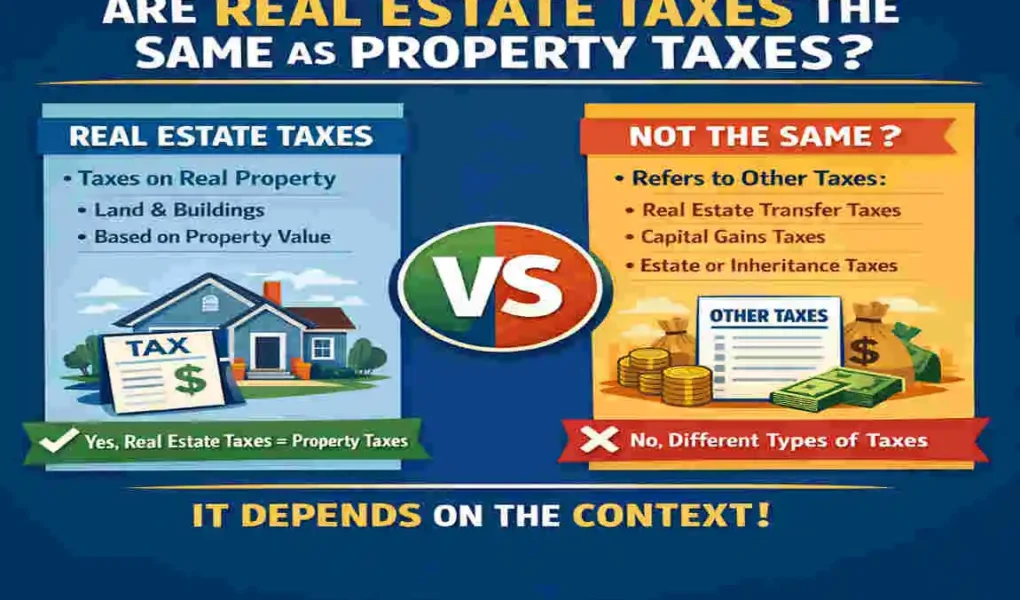
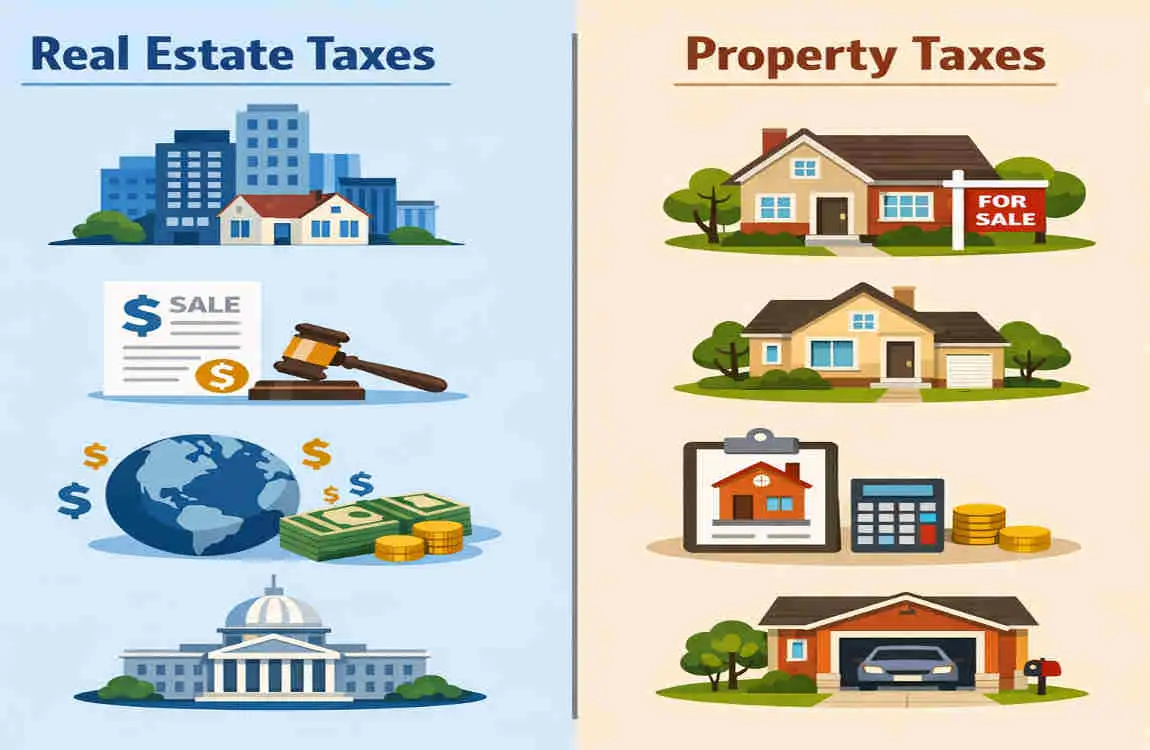
Real Estate Taxes Property Taxes
Apply to real property May include real and personal property
Focus on land and buildings Broader tax category
Common for homeowners May apply to businesses and personal assets
So the main point is this: real estate tax is often a type of property tax, but property tax may include more than just real estate.
How Are Real Estate Taxes Calculated?
Property Assessment
The first step is usually a property assessment. This is when the local tax office estimates the value of your property.
The assessment may look at:
- Size of the home
- Land size
- Condition of the property
- Location
- Recent sales of similar homes
Local Tax Rate
After the property value is assessed, the local government applies a tax rate. This rate is often called a mill rate or tax rate depending on where you live.
A higher rate usually means a higher tax bill.
Assessed Value
The assessed value is the value the tax authority uses for calculating your taxes. It may not always match your home’s market value.
Sometimes the assessed value is lower than market value. In other cases, it may be very close.
Tax Formula
A common formula looks like this:
Assessed Value x Tax Rate = Property Tax Bill
For example, if your property is assessed at $250,000 and the local tax rate is 1.2%, your annual tax bill would be about $3,000.
That simple formula helps explain why home value and tax rate matter so much.
Factors That Affect Property Taxes
Property Value
The most obvious factor is the value of your property. A more expensive home usually brings a higher tax bill.
If your home value rises, your tax bill may rise too.
Neighborhood
Your neighbourhood can affect your taxes because local tax rates and assessments vary by area.
A home in one part of town may be taxed differently from a similar home elsewhere.
Local Government Budget
Local governments need money to pay for services. If budgets rise, tax rates may also rise.
This can happen even if your home itself has not changed much.
School District Taxes
In many places, school districts receive part of property tax revenue.
That means school funding can affect your bill, depending on where you live.
Municipal Services
Property taxes often help pay for things like roads, police, fire protection, and other public services.
The more services a community funds through taxes, the more your tax bill may reflect that.
What Do Property Taxes Pay For?
Property taxes support many local services that people use every day.
They often help pay for:
- Public schools
- Roads
- Police
- Fire departments
- Parks
- Libraries
- Public health services
- Infrastructure
So even though property taxes can feel frustrating, they often support the places and services that keep communities running.
When Are Property Taxes Due?
Annual Payments
In some places, property taxes are paid once a year. The full bill may be due in a single payment.
Semiannual Payments
Other areas split the bill into two payments per year. This can make it easier to manage.
Monthly Mortgage Escrow
Many homeowners pay property taxes through a mortgage escrow account. That means a portion of the tax is included in the monthly mortgage payment.
The lender holds the money and pays the tax bill when it is due.
Can Property Taxes Increase?
Yes, property taxes can go up. That is one of the biggest concerns for homeowners.
Common reasons include:
- Rising home values
- Reassessments
- New tax levies
- Local budget changes
- Home improvements
If your home value increases or your local area votes for more funding, your tax bill may rise.
What Happens If You Don’t Pay Property Taxes?
Not paying property taxes can lead to serious trouble.
Possible consequences include:
- Penalties
- Interest charges
- Tax liens
- Tax foreclosure
- Credit problems
If you fall behind, the local government may place a lien on your home. In extreme cases, the property may even be sold to recover the unpaid taxes.
That is why it is important to stay current.
Tips to Lower Your Property Tax Bill
Review Assessment
Always check your assessment notice. Mistakes happen, and your home may be valued too high.
Appeal Incorrect Valuation
If the assessment seems wrong, you may be able to file an appeal. This can sometimes lower your bill.
Claim Exemptions
Many areas offer tax exemptions for certain homeowners.
Senior Citizen Programs
Some local governments provide tax relief for older adults.
Veteran Exemptions
Veterans may qualify for special tax breaks in some places.
Homestead Exemption
A homestead exemption can reduce the taxable value of a primary residence.
Keep Assessment Records
Save your records, notices, and previous bills. They can help if you need to compare values later.
Common Myths About Real Estate Taxes
Real estate taxes and property taxes are always different.
Not true. In many places, they mean the same thing.
Property taxes never increase.
Also not true. Property taxes can rise when values or tax rates change.
Only homeowners pay property taxes.
Businesses and landowners may also pay property taxes.
Property taxes are the same everywhere.
No. Tax rules vary by state, county, and city.
Real Estate Taxes vs Property Taxes at a Glance
Feature Real Estate Taxes Property Taxes
Definition Tax on real property Broader property tax category
Covers Land and buildings Real and sometimes personal property
Paid By Property owners Property owners/business owners
Based On Assessed value Assessed value
Purpose Fund local services Fund government services
This table makes the main idea easy to see. Real estate tax is usually a narrower term, while property tax can be broader.
Frequently Asked Questions
Are real estate taxes the same as property taxes?
In many places, yes. However, property taxes can also refer to taxes on personal property in some jurisdictions.
Why are property taxes important?
They fund essential local services like schools, roads, emergency services, and public infrastructure.
How are property taxes calculated?
They are usually based on the property’s assessed value multiplied by the local tax rate.
Can I reduce my property taxes?
Yes. You may qualify for exemptions or appeal an incorrect property assessment.
Who collects property taxes?
Usually local governments such as counties, municipalities, or taxing districts.
Are property taxes included in mortgage payments?
Often yes, through a mortgage escrow account. Some homeowners pay them directly instead.
Do all states calculate property taxes the same way?
No. Tax rates, assessment methods, exemptions, and payment schedules vary by state and local jurisdiction.
How often are properties reassessed?
It depends on local laws. Some areas are reassessed every year, while others are reassessed every few years.
| Feature | Real Estate Taxes | Property Taxes |
|---|---|---|
| Definition | Taxes charged on land and buildings (real property). | Taxes charged on property, including real estate and sometimes personal property. |
| What They Cover | Homes, land, condos, commercial buildings. | Real estate plus, in some areas, vehicles, boats, or business equipment. |
| Who Pays | Real estate owners. | Property owners, depending on local tax laws. |
| Assessment Basis | Based on the assessed value of the real estate. | Based on the assessed value of taxable property. |
| Used For | Funds schools, roads, police, fire services, and local government. | Supports the same local public services. |
| Are They the Same? | Yes, in most places the terms are used interchangeably. | Often refers to real estate taxes but may include personal property taxes in some jurisdictions. |
| Key Takeaway | A tax specifically on real estate. | A broader term that may include real estate and personal property taxes. |