Texas is one of the fastest-growing states in the U.S., and many homebuyers notice something interesting right away: houses often cost less here than in many other states. That can feel surprising, especially if you are comparing Texas with places like California, New York, or parts of Florida.
So, why are houses so cheap in Texas? The answer is not just one thing. It usually comes down to a mix of land availability, new construction, local demand, taxes, and city location. In some areas, homes are still very affordable. In other areas, prices have climbed quickly because more people want to move there.
If you are thinking about buying a home in Texas, it helps to understand the real reasons behind the prices. That way, you can decide whether a lower-priced house is truly a good deal for you.
Why Are Houses So Cheap in Texas?

Large Amount of Available Land
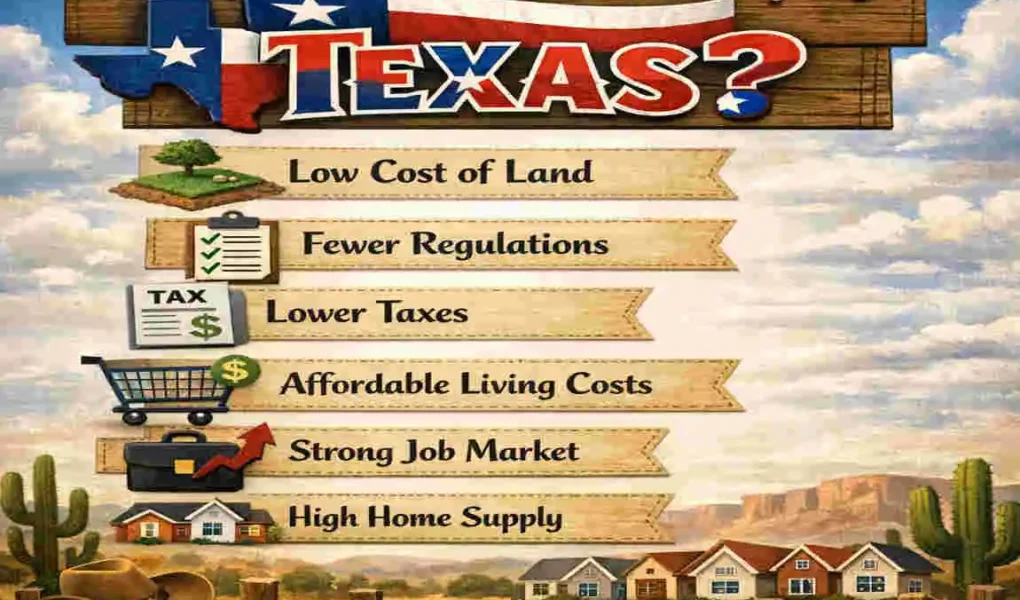
One of the biggest reasons Texas luxury homes can be cheaper is simple: Texas has a lot of land.
When a state has more open space, builders can create new neighbourhoods more easily. That usually helps keep land costs lower. And when land costs remain lower, home prices often remain more affordable, too.
This is a big difference from states where land is limited and heavily built up. In those places, homes often cost more because there is less room to grow.
High Housing Supply
Texas continues to build many homes. New neighbourhoods, subdivisions, and apartment communities continue to appear in many cities.
When supply is strong, prices do not rise as fast. That is basic market pressure. If buyers have more options, sellers cannot always charge as much.
This is one reason Texas feels more affordable in many areas. More homes on the market often means more competitive pricing.
Lower Construction Restrictions
In many parts of Texas, it is easier to build than in states with stricter zoning rules. That does not mean there are no rules at all. It just means development can move more quickly in many places.
When builders can move faster, they can add homes sooner. That helps reduce shortages and can keep prices from rising too sharply.
Factors That Affect Texas Home Prices
Property Taxes
Texas is known for higher property taxes than many other states. That matters because homebuyers often look at the full cost of owning a house, not just the sale price.
Sometimes a home looks cheap at first, but the property taxes can raise your monthly expenses quite a bit. So even if the purchase price is low, the long-term cost may still be significant.
This is why you should always check taxes before deciding a home is truly affordable.
Population Growth
Texas is growing fast, but not every city grows at the same pace.
In some areas, more people move in each year, pushing prices up. In smaller towns or less crowded cities, luxury homes may stay more affordable because demand is lower.
So the better question is not just why are houses so cheap in Texas, but also where in Texas are you looking?
Local Economy
Jobs matter a lot. If a city has strong job growth, more people move there. That increases housing demand and can raise home prices.
Texas has many strong industries, including energy, healthcare, manufacturing, logistics, and technology. But some cities have much stronger demand than others.
A home may be cheap in one part of Texas because the local economy is slower. In another part, prices may be high because the area is growing fast.
Texas Cities with Affordable Homes
Here is a simple look at some cities where homes are often more affordable:
CityAverage AffordabilityBest For
El Paso Very Affordable Families
Lubbock Affordable First-time buyers
Amarillo Affordable Retirees
Wichita Falls Budget-Friendly Small families
Corpus Christi Moderate Coastal living
These cities often give buyers more room to work with. Still, even in affordable cities, prices can vary by neighbourhood and luxury homes condition.
Where Homes Are Expensive in Texas
Austin
Austin is one of the most expensive housing markets in Texas. Why? Because demand is high, especially from tech workers, young professionals, and investors.
People want to live there for the jobs, energy, and lifestyle. That pushes prices up quickly.
Dallas
Dallas has a strong economy and many high-end neighbourhoods. You can still find affordable areas, but some parts of the city are very expensive.
Like Austin, Dallas has plenty of demand, which affects prices across the market.
Houston
Houston has a wide range of housing prices. Some areas are quite affordable, but others are expensive, especially in popular suburbs.
Because the city is so large, the answer depends heavily on the exact neighbourhood.
Pros of Buying a House in Texas
Buying a home in Texas has some strong advantages.
- Affordable housing compared to many states
- No state income tax
- Strong job market
- Plenty of new construction
- Large variety of home styles
For many buyers, that mix makes Texas very appealing. You may get more space for your money than you would in other states.
Cons of Buying a House in Texas
Of course, there are also downsides to think about.
- Higher property taxes
- Extreme summer weather
- Insurance costs in some areas
- Traffic in major cities
- Flood risks in certain regions
These costs do not make Texas a bad place to buy a luxury homes. They mean you should look beyond the sale price.
Is Buying a House in Texas a Good Investment?

Appreciation Potential
In growing areas, Texas homes may increase in value over time. That is especially true in cities with strong job markets and population growth.
If you buy in the right area, your home may build long-term value.
Rental Opportunities
Texas has a strong rental market in many places. That can make homeownership attractive if you later want to rent out the property.
Investors often look at Texas because people keep moving there and need places to live.
Future Development
Texas continues to grow, and that usually means more roads, schools, businesses, and housing.
When an area improves over time, home values can rise too. That is one reason many buyers see Texas as a smart long-term choice.
Tips Before Buying a Cheap House in Texas
Before you buy, take a careful look at the full picture.
- Compare neighborhoods
- Review flood zones
- Check property taxes
- Inspect the home carefully
- Research school districts
- Understand HOA fees
- Compare insurance costs
These steps matter because a low sale price does not always mean low ownership costs.
Common Myths About Cheap Texas Homes

Cheap Means Poor Quality
This is not always true.
Many affordable luxury homes in Texas are solid, well-built houses. Some are even newer homes in growing areas. A lower price does not automatically mean bad quality.
Every Texas City Is Affordable
That is another common myth. Texas has affordable places, but it also has expensive markets.
Austin, Dallas, and parts of Houston can be costly. So affordability depends a lot on the city and neighbourhood.
Low Prices Mean Weak Economy
Not true. Texas has a strong and diverse economy.
Cheap housing does not mean the state is struggling. In many cases, it simply means the market has more land, more supply, and different tax structures.
Frequently Asked Questions
Why are houses so cheap in Texas compared to California?
Texas has more available land, higher housing construction rates, and generally lower land costs, which help keep home prices lower than in California.
Are cheap houses in Texas good quality?
Many affordable homes are well built, especially newer ones. Buyers should still arrange a professional home inspection.
Does Texas have high property taxes?
Yes. Texas generally has higher property taxes than many states, which can affect the overall cost of homeownership.
Which Texas city has the cheapest houses?
Cities such as Lubbock, Amarillo, Wichita Falls, and El Paso are often among the more affordable housing markets.
Is Texas a good place for first-time homebuyers?
Yes. Many areas offer relatively affordable homes, a strong job market, and a wide selection of new and existing properties.
| Factor | Explanation |
|---|---|
| Abundant Land | Texas has a large supply of land, making it easier and cheaper to build new homes. |
| High Housing Supply | Builders construct homes quickly to meet demand, helping keep prices competitive. |
| Lower Construction Costs | Land and development costs are generally lower than in many coastal states. |
| No State Income Tax | While Texas has no state income tax, property taxes are higher, which can affect home values. |
| Affordable Living Costs | Many Texas cities have a lower overall cost of living compared to places like California or New York. |
| Flexible Zoning | Less restrictive land-use regulations in many areas allow for more housing development. |
| Growing Suburbs | Rapid suburban expansion increases the availability of affordable homes. |
| Regional Price Differences | Rural towns and smaller cities often have much lower home prices than major metro areas. |
| Economic Growth | A strong economy encourages continuous home construction, helping balance supply and demand. |
| Buyer Considerations | Lower purchase prices may be offset by higher property taxes, insurance costs, and HOA fees in some communities. |