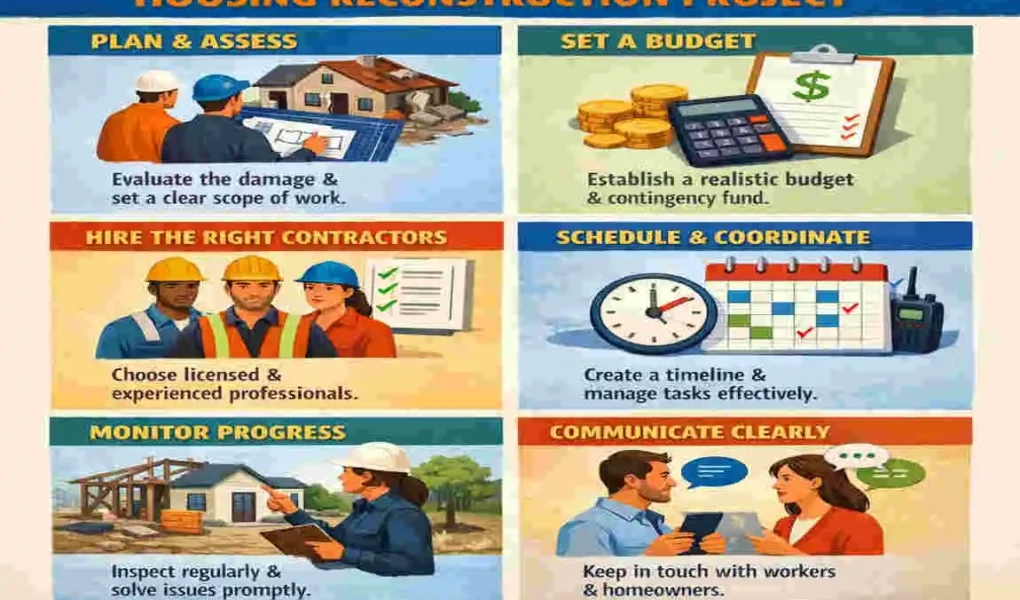
A housing reconstruction project is a big job, but it does not have to feel overwhelming. It usually begins when a home is damaged, weakened, or no longer meets the needs of the people living in it. In many cases, homeowners face reconstruction after a fire, flood, storm, or serious structural issue. In other cases, they choose to rebuild because the house is old, unsafe, or too small for the family.
| Step | How to do it well |
|---|---|
| Set goals | Define what the reconstruction must achieve, such as safety, space, or resale value. |
| Build a budget | Include materials, labor, permits, and a contingency fund for surprises. |
| Make a schedule | Break the work into phases with clear deadlines and milestones. |
| Hire the right team | Choose experienced contractors, designers, and inspectors with good references. |
| Track progress | Hold regular check-ins, inspect work often, and fix issues quickly. |
| Stay flexible | Be ready for delays, design changes, or unexpected repair needs. |
These projects are becoming more common. Disasters are happening more often, many homes are ageing, and more people want to improve the safety and comfort of where they live. But while the reason for rebuilding may be clear, the process itself can be stressful. Costs can rise fast, timelines can shift, and communication problems can create delays.
What Is a Housing Reconstruction Project?
Definition and Purpose
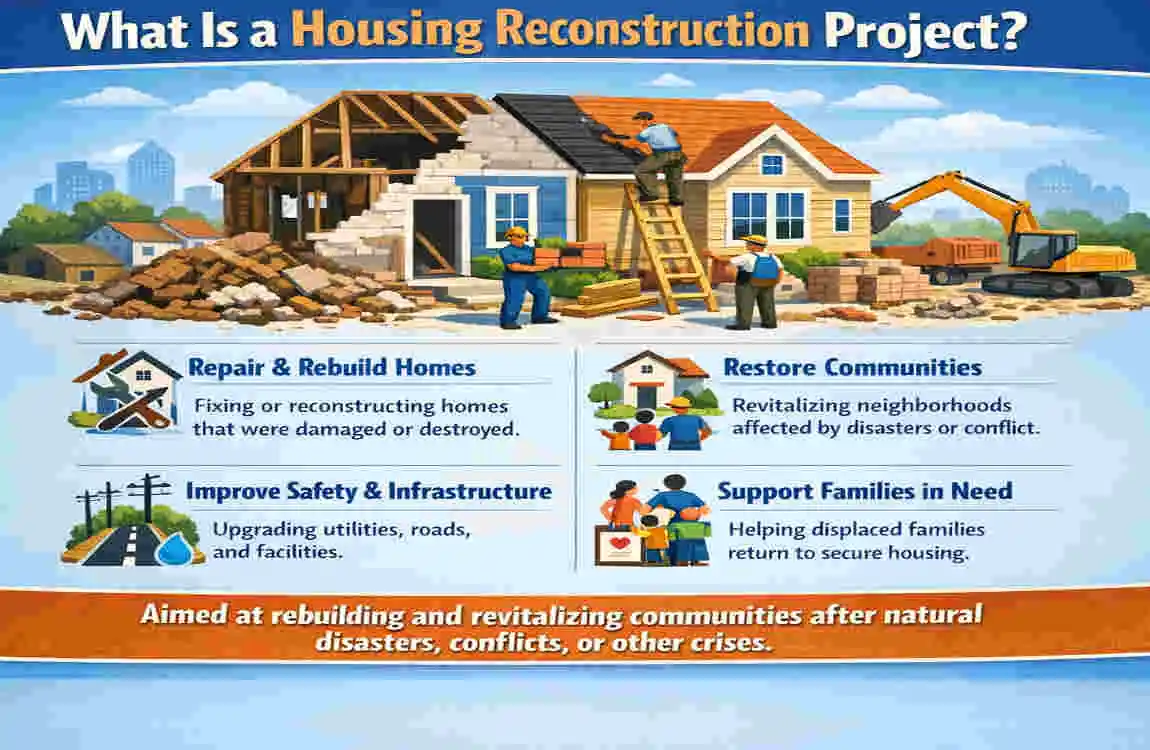
A housing reconstruction project is the process of rebuilding part or all of a home after damage, wear, or major design changes. It differs from renovation and remodelling.
- Renovation improves an existing space.
- Remodeling changes the layout or look.
- Reconstruction often means rebuilding damaged or unsafe parts from the ground up.
You need reconstruction when repairs are no longer enough. If the structure is unstable, the damage is severe, or important systems are beyond repair, rebuilding becomes the safer choice.
Common Reasons for Housing Reconstruction
People begin home reconstruction for many reasons:
- Natural disaster damage from storms, hurricanes, earthquakes, or fires
- Structural deterioration caused by age, moisture, or foundation problems
- Flood or fire restoration after serious emergencies
- Expanding family needs when a house becomes too small
- Modernization and safety upgrades for better comfort and code compliance
Types of Reconstruction Projects
Not every project looks the same. Some homes only need partial rebuilding, while others need a full reset.
Type of ProjectWhat It IncludesBest For
Partial reconstruction Rebuilding one damaged section Localized damage
Full home rebuilding Replacing most or all of the house Severe destruction
Historic property restoration Preserving original features while repairing structure Older homes with value
Multi-family reconstruction Rebuilding duplexes, apartments, or shared housing Residential complexes
Initial Planning for a Housing Reconstruction Project
Assessing the Property Condition
Before work begins, you need a clear picture of what is damaged and what is still usable. A structural engineer can check the foundation, walls, roof, and support system. Safety inspections also help uncover hidden problems such as mold, weak framing, or water damage.
This step matters because many serious issues are not easy to see. A home may look stable on the outside but still have major hidden damage inside.
Setting Reconstruction Goals
Once you know the condition of the property, define what you want from the project.
Ask yourself:
- What must be repaired right away?
- What can be improved later?
- Do I want to rebuild the same design or change it?
Clear goals help you avoid extra costs and stay focused on the most important work. They also help you make smarter choices about long-term value.
Creating a Project Timeline
Every home reconstruction project needs a timeline. Start with the planning phase, then move into construction milestones, and finally schedule the last inspection.
A simple timeline may include:
- Damage assessment
- Design and permit approval
- Demolition
- Structural work
- Interior finishing
- Final inspection
A clear timeline helps everyone stay organized and makes it easier to track progress.
Understanding Local Building Regulations
Before construction begins, check local rules. Most projects need permits, and some areas also have zoning laws, environmental rules, or HOA requirements.
Ignoring regulations can cause delays, fines, or even forced rework. It is always better to confirm the rules early than to fix problems later.
Budgeting for a Housing Reconstruction Project
Estimating Total Reconstruction Costs
A robust budget for housing reconstruction should cover all major expenses. Many homeowners focus only on materials and labour, but there are often additional costs beyond what’s expected.
Common expenses include:
- Materials
- Labor
- Permits and inspections
- Design or engineering fees
- Temporary housing
- Cleanup and waste removal
If you want a realistic reconstruction cost estimate, include both direct and indirect costs. That gives you a better picture of the full cost of rebuilding the home.
Building a Contingency Budget
Unexpected costs are very common in reconstruction. Once walls are opened, workers may find hidden damage, outdated wiring, or weak framing. Prices can also change during the project.
A good rule is to set aside 10% to 20% of the total budget as a contingency fund. This emergency amount helps protect the project when surprises happen.
Financing Options
There are several ways to pay for a reconstruction project:
- Reconstruction loans for major rebuilding work
- Home equity loans if you have value built up in the property
- Government assistance programs after disasters
- Insurance claim support when the damage is covered
Each option has pros and cons, so choose the one that fits your situation, timeline, and repayment comfort.
Cost-Saving Strategies
You do not always have to spend more to get better results. You can save money by:
- Reusing safe, salvageable materials
- Comparing contractor bids carefully
- Scheduling work efficiently to reduce delays
- Choosing durable materials that last longer
Budget Snapshot Table
Budget CategoryExample CostsNotes
Materials Lumber, drywall, roofing, flooring Often the largest expense
Labor Contractors, tradespeople, specialists Depends on project size
Permits/Inspections Local approval fees Required in most areas
Temporary Housing Rent or hotel stays Needed if the home is unsafe
Contingency Fund Extra reserve money Helps cover surprises
Hiring the Right Professionals
Choosing a Qualified Contractor
A strong contractor can make the entire project easier. Look for someone who is licensed, insured, and experienced with reconstruction work. Reviews and references matter too, because they show how the contractor handles real projects.
Do not choose based only on the lowest price. A very cheap bid may hide poor quality, delays, or missing insurance.
Working With Architects and Designers
If your project involves major changes, an architect or designer can help shape the plan. They can create better layouts, improve the structure, and make the home more energy efficient.
This is especially useful if you want to change the floor plan, open up rooms, or improve natural light.
Importance of Project Managers
A project manager keeps the work moving. They help coordinate teams, track deadlines, and watch the budget. In larger reconstruction management projects, this role can save significant time and stress.
Questions to Ask Before Hiring
Before signing anything, ask:
- How long will the project take?
- What is included in the contract?
- How will updates be shared?
- What warranty do you offer?
These questions help you understand how the team works and what you can expect.
Creating a Detailed Reconstruction plan
Developing Blueprints and Designs
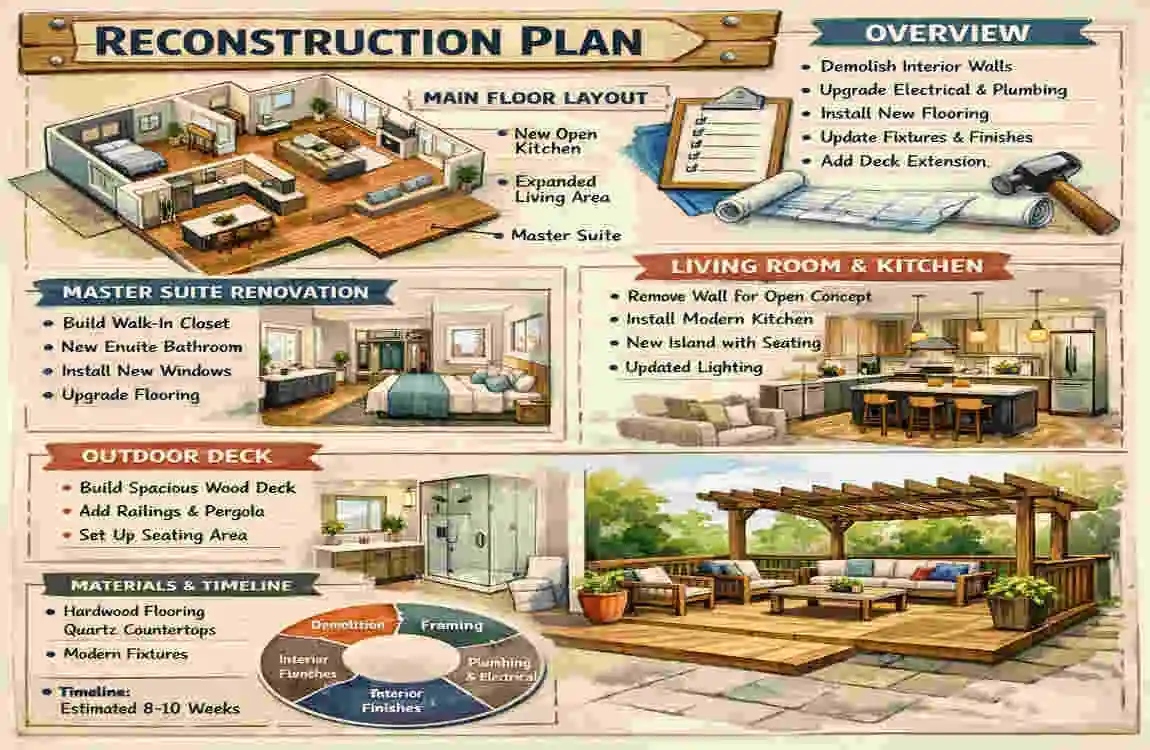
A good plan starts with clear drawings. Blueprints should show floor plans, structural changes, and utility layouts. These details help the team avoid confusion during construction.
Selecting Construction Materials
Choose materials that are strong, reliable, and suitable for your climate. Durable, weather-resistant products often cost more upfront, but they can save money in the long run.
You may also want to consider sustainable materials if you care about long-term efficiency and lower environmental impact.
Planning Utilities and Infrastructure
Do not forget the systems behind the walls. Electrical, plumbing, and HVAC work should be planned early to fit the new design.
Upgrading these systems during reconstruction is often easier and more cost-effective than doing it later.
Scheduling Construction Phases
Break the work into clear stages:
- Demolition
- Foundation and structural repair
- Framing
- Utility installation
- Interior finishing
This step-by-step plan helps everyone stay aligned and reduces delays.
Managing Construction During the Reconstruction Process
Monitoring Daily Progress
Once the rebuilding process starts, check progress often. Visit the site when possible, use tracking tools, and meet with the contractor regularly. Even short check-ins can prevent confusion.
Maintaining Communication
Clear communication is one of the most important parts of construction management. Make sure updates are shared weekly, not only when something goes wrong. If a decision changes, document it right away.
Good communication helps the team work faster and helps you stay in control of the project.
Handling Delays and Unexpected Issues
Delays happen. Weather may interrupt work, materials may be late, or permits may take longer than expected. The goal is not to avoid every problem. The goal is to respond quickly and keep the project moving.
When issues appear, ask:
- What happened?
- What is the new timeline?
- What are the cost effects?
- What action should happen next?
Ensuring Safety on Site
Safety should never be treated as an extra step. Workers should follow safety rules, wear protective gear, and properly manage hazards. Good safety practices protect both the crew and the property.
Legal and Insurance Considerations
Understanding Insurance Coverage
If your home was damaged by fire, flood, or another event, review your homeowners insurance carefully. Keep records, photos, and repair estimates to support your claim.
The more organized your documents are, the easier the process becomes.
Contracts and Legal Agreements
Always use written contracts. They should explain the scope of work, payment schedule, timeline, and liability terms. A clear contract protects both you and the contractor.
Inspection and Compliance Requirements
Most reconstruction projects need inspections during and after the work. These checks confirm that the job meets code, safety, and occupancy rules. Skipping this step can create legal and safety problems later.
Sustainable and Modern Reconstruction Practices
Energy-Efficient Home Design
A reconstruction project is a great time to make the home more efficient. Better insulation, solar panels, and smart home tools can lower energy use and improve comfort.
Eco-Friendly Construction Materials
Many homeowners now choose recycled materials, low-VOC products, and sustainable wood. These options can help improve indoor air quality and reduce waste.
Disaster-Resistant Construction Techniques
If your home is in a risky area, consider stronger design choices. Flood-resistant foundations, fire-resistant roofing, and earthquake reinforcement can help protect your investment.
Common Mistakes to Avoid in a Housing Reconstruction Project
Poor Budget Planning
One of the biggest mistakes is underestimating costs. If you forget emergency funds, small issues can quickly become major problems.
Hiring Unqualified Contractors
Low bids may look attractive, but they can lead to poor artistry, delays, and insurance issues. Always verify credentials before hiring.
Skipping Permits or Inspections
This can lead to fines, legal trouble, and unsafe work. It can also create problems when you try to sell the home later.
Lack of Communication
When people stop sharing updates, misunderstandings grow fast. Keep records, ask questions, and stay involved in the process.
Final Inspection and Project Completion
Conducting a Final Walkthrough
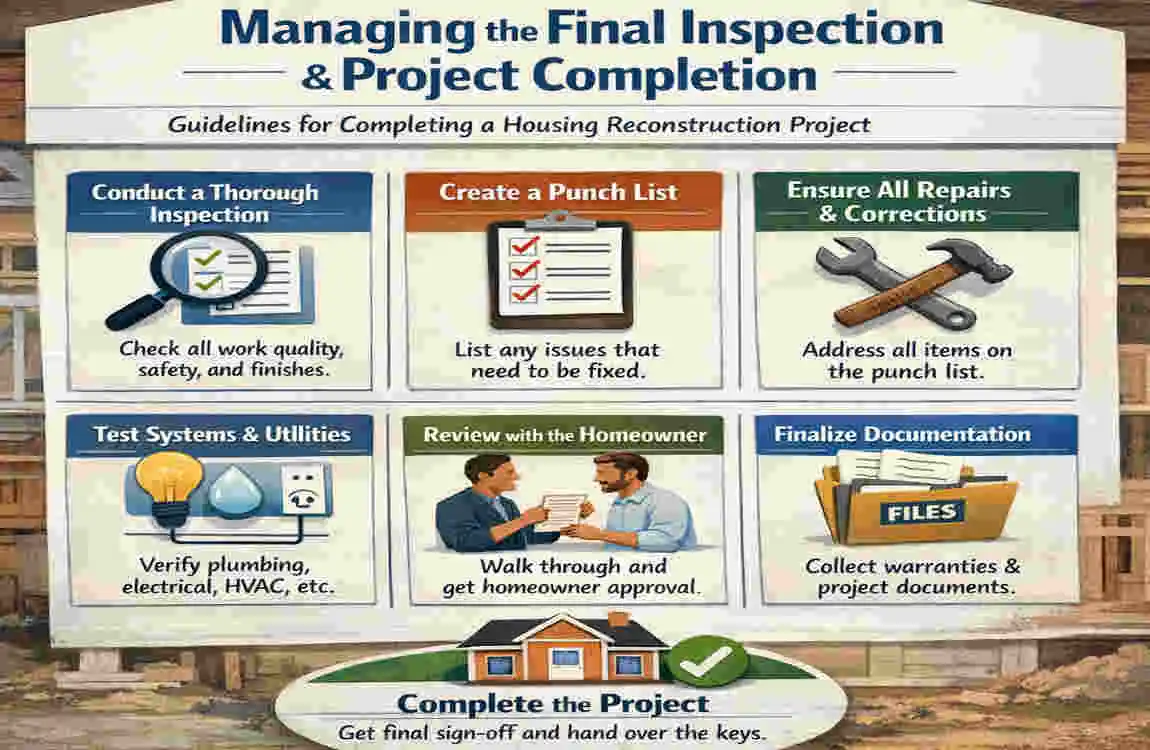
Before closing the project, walk through the property carefully. Check the finishes, test the utilities, and look for unfinished work or defects.
Obtaining Completion Certificates
Make sure you receive any needed occupancy approvals, warranty papers, and completion documents. These records matter for safety and future property value.
Post-Reconstruction Maintenance Tips
After the project ends, keep the home in good shape with regular inspections, seasonal maintenance, and quick repairs. This protects your investment and helps the property last longer.
Frequently Asked Questions About Housing Reconstruction Projects
How long does a housing reconstruction project take?
The timeline depends on the size of the damage, permit approval, weather, and material availability. A small project may take a few months, while a full rebuild can take much longer.
What is the average reconstruction cost per square foot?
Costs vary by location, design, and materials. Simple projects cost less, while full rebuilds with upgrades cost more. It is best to get local estimates for an accurate number.
Can I live in my home during reconstruction?
Sometimes yes, but not always. If the damage is serious or major systems are being replaced, temporary housing may be safer and more practical.
Do I need permits for reconstruction work?
In most cases, yes. Permits are usually required for structural work, electrical changes, plumbing updates, and major rebuilding.
How can I reduce reconstruction expenses?
You can reduce costs by comparing bids, reusing safe materials, planning early, and avoiding design changes once work has started.