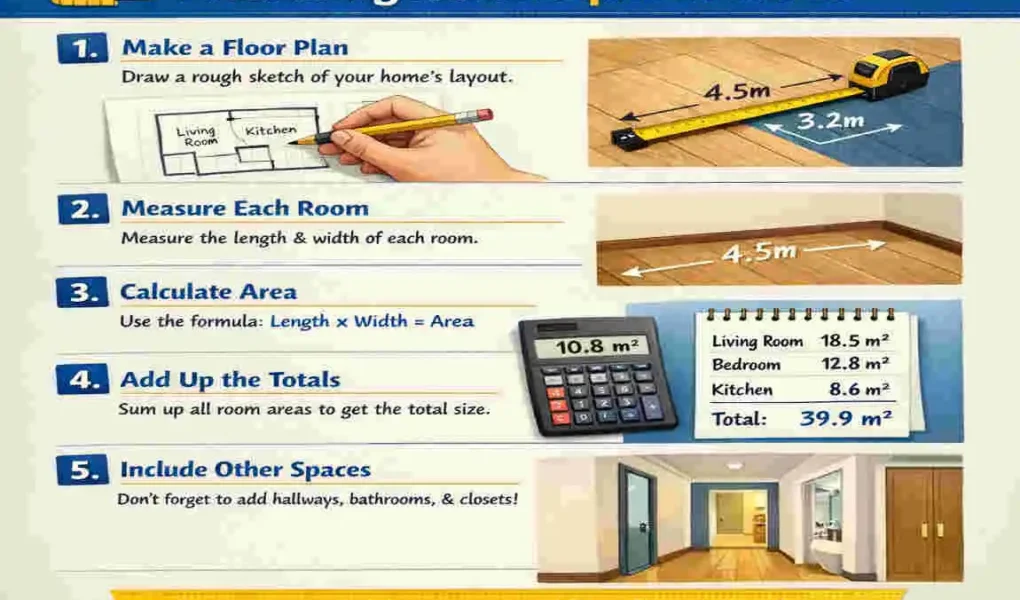
Knowing how to calculate sq metres of a house is useful for many reasons. It helps when you are buying or selling a home, planning a renovation, or checking property value. It also makes budgeting easier because you can estimate flooring, paint, furniture, and building costs with more confidence.
| Action | |
|---|---|
| 1 | Gather tools: Get a tape measure (or laser measure), paper, and pencil |
| 2 | Clear the room: Remove obstacles so you can measure all walls and corners accurately |
| 3 | Measure length: Place the tape at one corner of the longest wall and extend to the opposite corner; record in metres |
| 4 | Measure width: Repeat for the shorter wall, keeping the tape straight and flush to the floor |
| 5 | Convert units if needed: If measured in mm, divide by 1,000; if in cm, divide by 100 to get metres |
| 6 | Calculate area: Multiply length × width = area in m² (e.g., 5m × 4m = 20m²) |
| 7 | Handle irregular rooms: Split L-shaped/odd rooms into rectangles, measure each, then add all areas together |
| 8 | Add room totals: Repeat for every room and sum all areas to get the house’s total square metres |
| 9 | Add buffer: Order/estimate 5–10% extra material to account for cuts and errors |
Many homeowners make simple mistakes when measuring a house. They may measure the outside rather than the inside, forget hallways, or mix up square meters with square feet. These small errors can lead to wrong pricing, poor planning, and confusion later.
What Does Square Metres Mean in House Measurement?
Definition of Square Metres
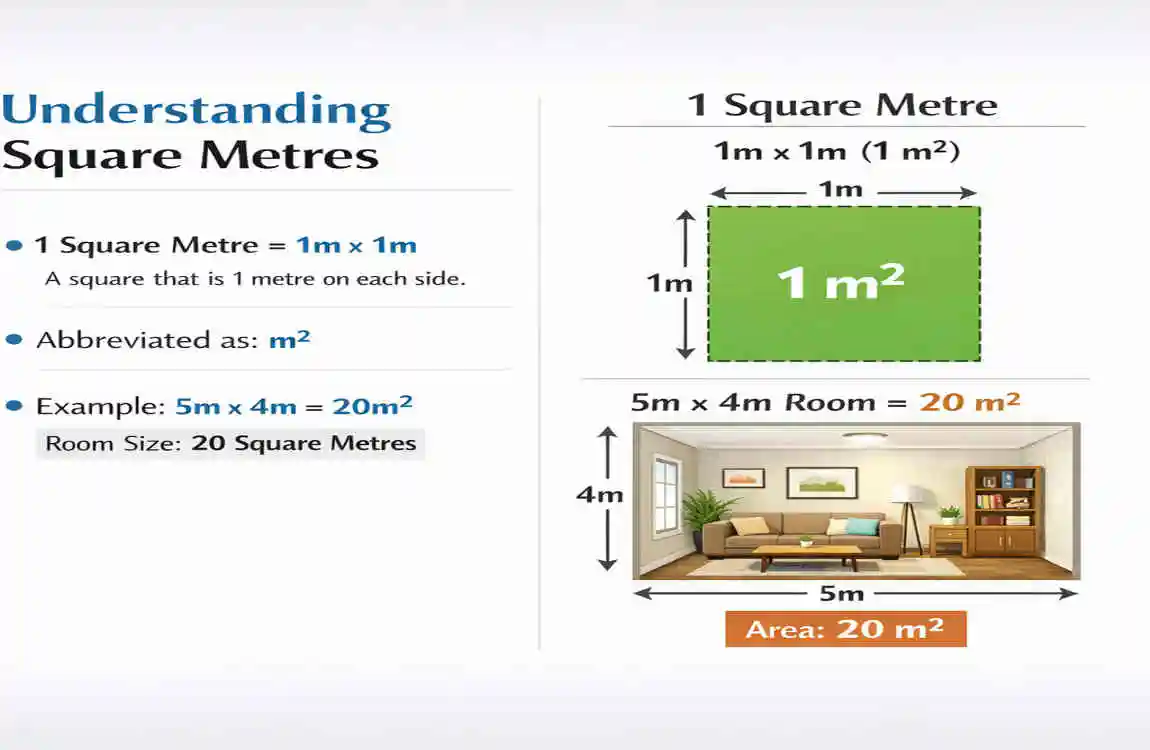
A square meter (m²) is a unit of area. It shows how much surface space a room or house covers. If a room is 5 metres long and 4 metres wide, its area is 20 square metres.
This is different from linear meters, which measure length in only one direction. For house measurement, you need area, not just length.
Why Builders and Realtors Use Square Metres
Builders, agents, and surveyors use square metres because it gives a clear picture of property size. It helps people compare homes fairly. A house with more square metres usually offers more usable space, which can affect value and comfort.
Gross Area vs Usable Area
It is also important to know that not all measurements mean the same thing.
- Gross floor area includes most of the house’s covered space.
- Usable area focuses on space you can actually live in.
- Built-up area may include walls and some shared parts.
- Carpet area usually refers to the space where carpet can be laid.
Because standards can vary, always check what is included before you compare homes.
Why You Need to Know How to Calculate Sq Metres of a House
For Buying or Selling Property
If you know the exact size of a home, you can price it more fairly. Buyers can compare similar homes more easily, and sellers can list the property with more confidence.
For Renovation and Interior Design
When you plan new flooring, paint, tiles, or furniture, the size of your house matters. Accurate measurements help you buy the right amount of materials and avoid waste.
For Construction Estimates
Builders use home area calculation to estimate costs. The total square meters can affect material requirements, labor, and the overall budget.
For Legal or Insurance Purposes
In some cases, house measurement is important for permits, tax records, and insurance coverage. An incorrect figure can cause problems later, especially for valuable or complex properties.
Tools Required to Measure House Square Metres
Basic Measuring Tools
You only need a few simple tools:
- Tape measure
- Laser distance measurer
- Calculator
- Notebook
- Pen or pencil
Optional Digital Tools
If you want faster results, you can use floor plan apps or smartphone measurement tools. These can help you create a rough layout before checking the details by hand.
Why Accuracy Matters
Even a small mistake can change the final total. That is why you should measure carefully and write everything down as you go. Good notes make the process much easier.
Step-by-Step Guide: How to Calculate Sq Metres of a House
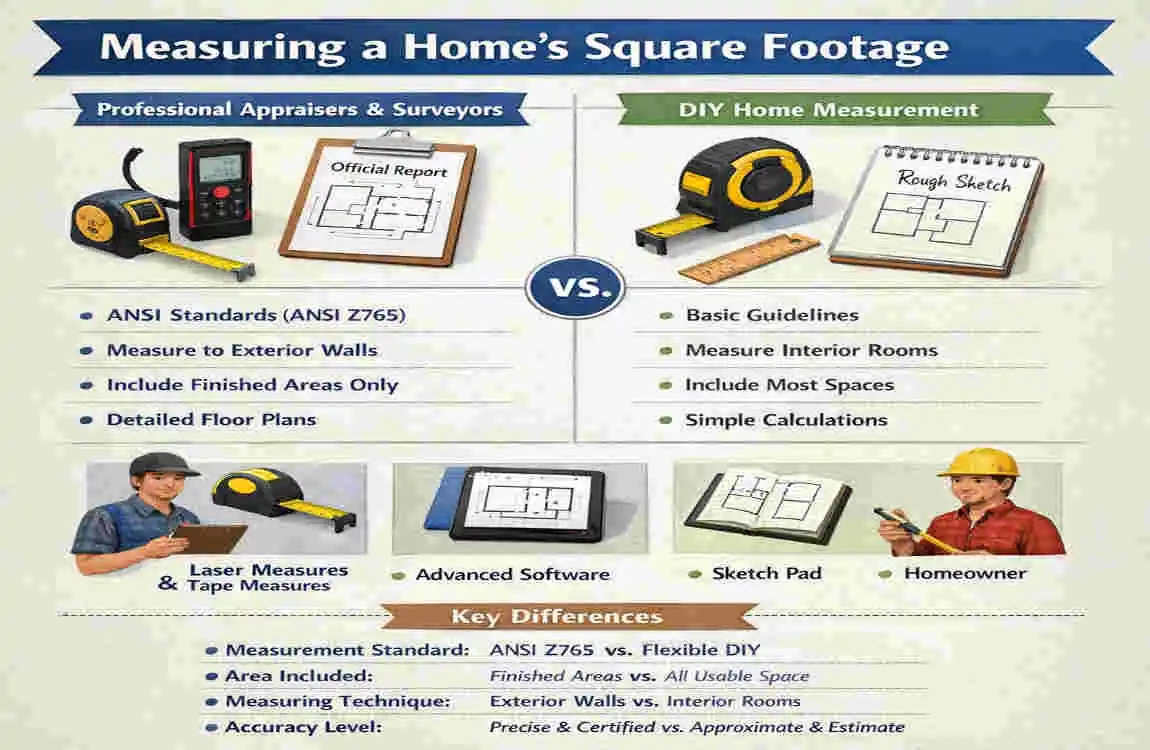
Sketch the House Layout
Start with a simple drawing of the house. It does not need to be perfect. Just include all rooms, hallways, stairs, bathrooms, kitchens, balconies, and any other spaces you want to measure.
A rough sketch helps you stay organized and avoid missing any areas.
Measure Length and Width of Each Room
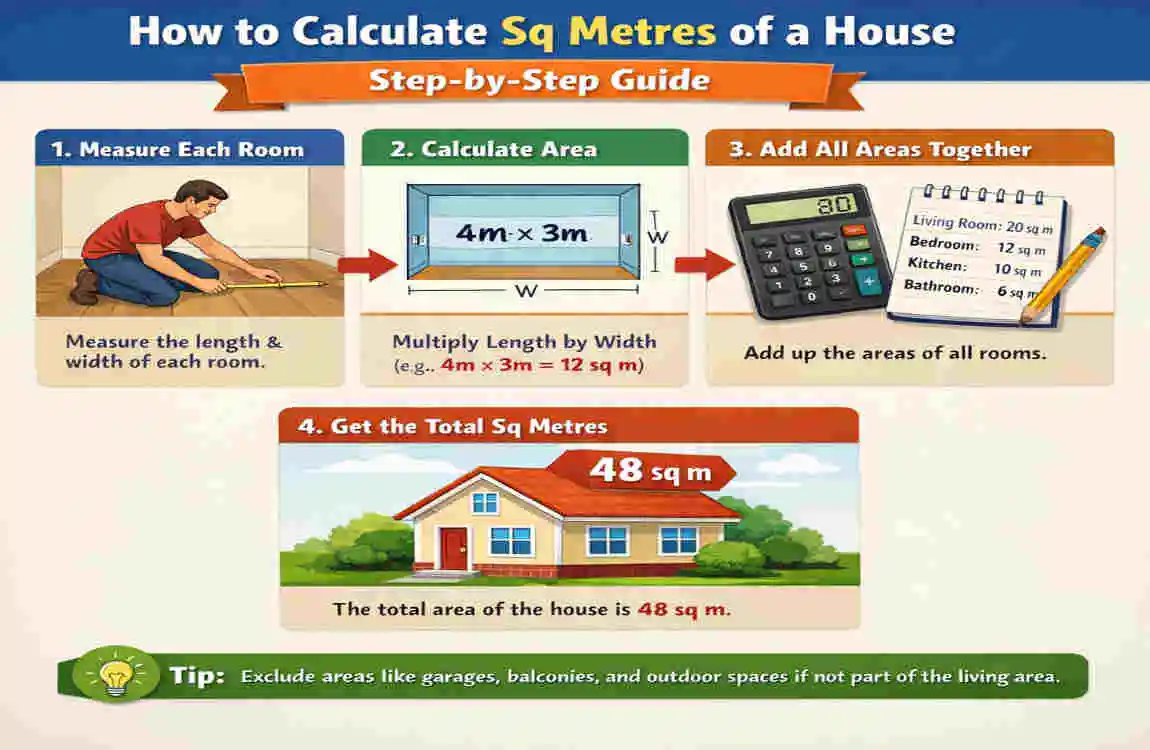
Measure each room from wall to wall. Use the inside measurements for a more practical result. Write down the length and width clearly.
If a room is not perfectly straight, measure the main sections individually.
Calculate Room Area
Use this simple formula:
Square metres = Length × Width
For example, if a room is 5 metres long and 4 metres wide:
5 × 4 = 20 m²
That room is 20 square metres.
Measure Irregular-Shaped Rooms
Some rooms are not simple rectangles. In that case, break the room into smaller shapes, such as rectangles or triangles. Measure each part, then add them together.
This is the easiest way to handle L-shaped rooms, attic areas, and spaces with corners or cutouts.
Include Hallways and Corridors
Hallways may seem small, but they still count as part of the home’s floor area. If you want a full house area calculation, do not forget them.
Calculate Multi-Storey Houses
If the house has more than one floor, measure each level separately. Then add the totals together.
This may include:
- Ground floor
- Upper floor
- Basement
- Loft or attic space, if it is usable
Exclude Non-Livable Areas If Needed
Some spaces are not included in every measurement standard. These may include:
- Open patios
- Unfinished basements
- External stairs
- Roof spaces
What counts can depend on local rules, so always check the standard you are using.
Add Everything Together
After measuring each part, add all the room areas together. This gives you the total square metres of the house.
If you are learning how to calculate the sq meters of a house, this final step gives you the complete answer.
How to Measure Different House Shapes Correctly
Not every home is a simple box. Here is a quick guide for different shapes:
Shape How to Measure
Rectangular room Length × Width
Square room Side × Side
L-shaped room Split into two rectangles, then add
Circular area Use radius-based area formula
Triangular space Measure base and height, then calculate triangle area
For most homes, the rectangle method works best. For unusual spaces, dividing the area into smaller parts is usually the easiest solution.
Common Mistakes When Calculating House Square Metres
Ignoring Wall Thickness
Some people measure only the outer shape and forget that wall thickness can affect total size. Be clear whether you are measuring internal space or total built area.
Measuring Uneven Floors Incorrectly
Old homes or renovated houses may have uneven walls or angled corners. If you rush, the final figure may be off.
Forgetting Storage Rooms or Hallways
Small spaces are easy to miss, but they still add to the total area. Always check closets, corridors, and utility spaces.
Confusing Square Feet with Square Metres
This is a very common mistake. The two units are not the same, so you should always check which one is being used.
Including Non-Usable Areas
Do not include areas that should be left out under your local measurement rules. Otherwise, your total may look bigger than it really is.
Square Metres vs Square Feet
Here is a simple comparison:
Unit Meaning Common Use
Square metre (m²) Metric area unit Many countries, especially in property listings
Square foot (sq ft) Imperial area unit Common in some markets, especially the US
Conversion formula:
1 square metre = 10.764 square feet
So if a room is 20 m², it is about 215.28 sq ft.
When dealing with house area conversion, always use the correct unit to avoid mistakes.
Practical Example: Calculating Total Sq Metres of a Small House
Let us say a small house has these rooms:
- Living room = 20 m²
- Bedroom 1 = 15 m²
- Bedroom 2 = 12 m²
- Kitchen = 10 m²
- Bathroom = 6 m²
- Hallway = 7 m²
Now add them together:
20 + 15 + 12 + 10 + 6 + 7 = 70 m²
The total area of the house is 70 square meters.
This simple example shows how easy it is to measure a home when you break it into smaller parts.
Benefits of Knowing Accurate House Square Metres
Accurate measurement brings several benefits:
- Better property pricing
- Clear renovation planning
- More accurate furniture choices
- Improved resale value
- Safer insurance estimates
When you know the exact size, you can make smarter decisions. That helps whether you are a buyer, seller, homeowner, or builder.
Frequently Asked Questions
How do I calculate sq metres of my house manually?
Measure each room’s length and width, multiply them, then add all room areas together.
Do I include the garage in square metres?
It depends on local rules and the purpose of the measurement. Some listings include it, while others do not.
Are walls included in house area?
That depends on whether you are measuring gross area or usable area. Different standards treat walls differently.
How accurate are smartphone apps?
They are useful for rough estimates, but they may not be as accurate as a tape measure or laser tool.
What is the easiest way to measure house square metres?
A laser measuring tool is usually the easiest and fastest option.
Can I calculate square metres from a floor plan?
Yes. If the floor plan shows measurements, you can calculate the area room by room.