If you are planning a home, one of the first questions you may ask is how many bricks it takes to build a house. That number matters more than most people think. If you order too few bricks, your project can slow down. If you order too many, you may waste money and storage space.
| House size (approx.) | Typical wall‑area method | Estimated bricks (standard brick wall) |
|---|---|---|
| 1,200–1,500 sq ft | ~12–15 bricks per sq ft wall area (with mortar) | ~8,000–12,000 bricks + 10% extra for waste/cuts |
| 2,000–2,500 sq ft | Same as above, larger perimeter and height | ~15,000–25,000 bricks + 10% extra |
| 3–4 bedroom house | ~1,200–1,800 sq ft wall area (excluding openings) | ~10,000–15,000 bricks before adding waste |
| Larger house (4,000+ sq ft) | High‑perimeter, multi‑story design | ~40,000–60,000 bricks, depending on elevation and bond pattern |
Brick needs can vary significantly depending on the house size, wall thickness, number of floors, window and door openings, and even the type of brick you use.
Understanding Brick Calculation Basics
Why Brick Estimation Is Important
Estimating bricks early helps you plan better and spend smarter. It keeps you from buying too little or too much. It also helps with labor planning, delivery timing, and your overall construction budget.
When you know your brick needs in advance, you can avoid on-site delays and reduce stress during construction.
Factors That Affect Brick Quantity
Several things change the final number of bricks needed:
- House dimensions
- Wall thickness
- Number of floors
- Doors and windows
- Brick size
- Mortar joint spacing
Even small design changes can create a big difference in the total count.
Standard Brick Sizes Used in Construction
Brick sizes vary from place to place. Some common types include:
- Modular bricks
- Standard clay bricks
- Concrete bricks
Different regions also use slightly different sizes, so that that brick counts can vary from place to place.
How Many Bricks Does It Take to Build a House?
The answer depends on the home’s size and shape. If you are asking how many bricks it takes to build a house, the best way is to estimate based on square footage and wall layout.
Average Brick Count by House Size
House Size, Approximate Brick Count
500 sq ft 7,000–10,000 bricks
1,000 sq ft 12,000–20,000 bricks
1,200 sq ft 15,000–25,000 bricks
1,500 sq ft 20,000–35,000 bricks
2,000 sq ft 35,000–60,000+ bricks
These are general ranges. Your real number may be higher if the house has thick walls, extra partitions, or decorative brickwork.
Why Estimates Vary
Two houses with the same floor size can use very different brick counts. Why? Because one may have:
- More interior walls
- Thicker exterior walls
- Higher ceiling height
- More architectural detail
So, the house plan matters as much as the square footage.
Formula to Calculate Bricks Needed for a House
If you want a more precise answer, use a simple brick wall calculation.
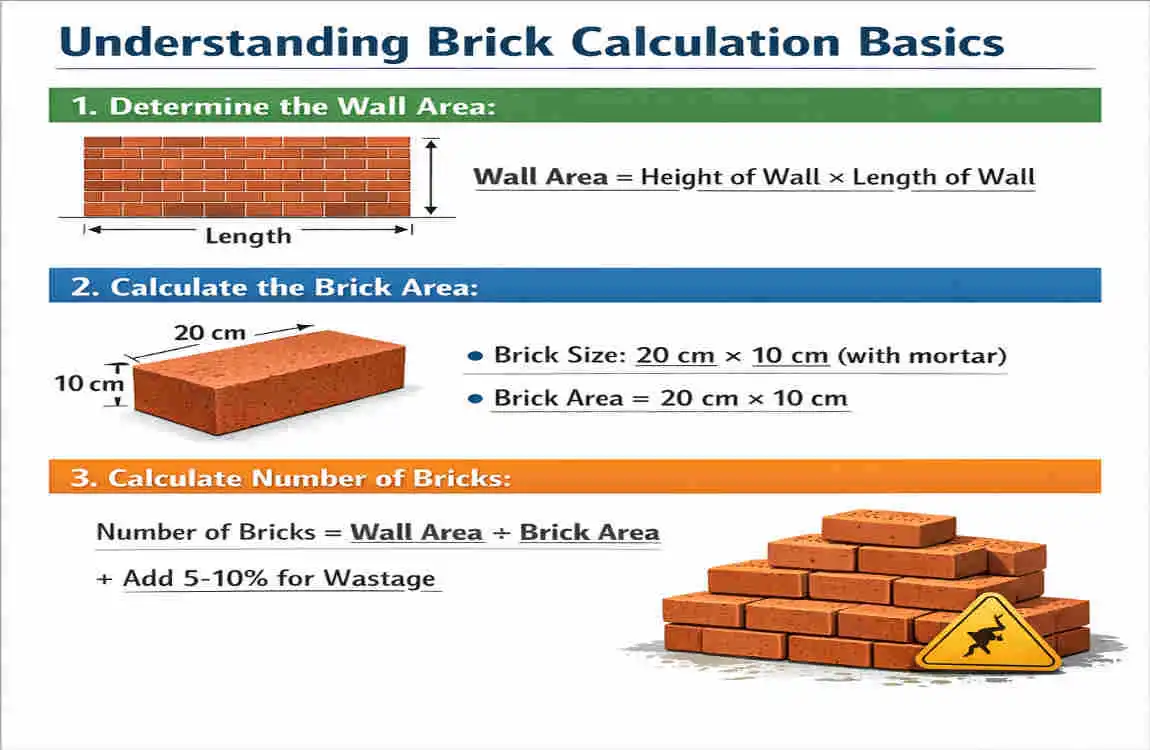
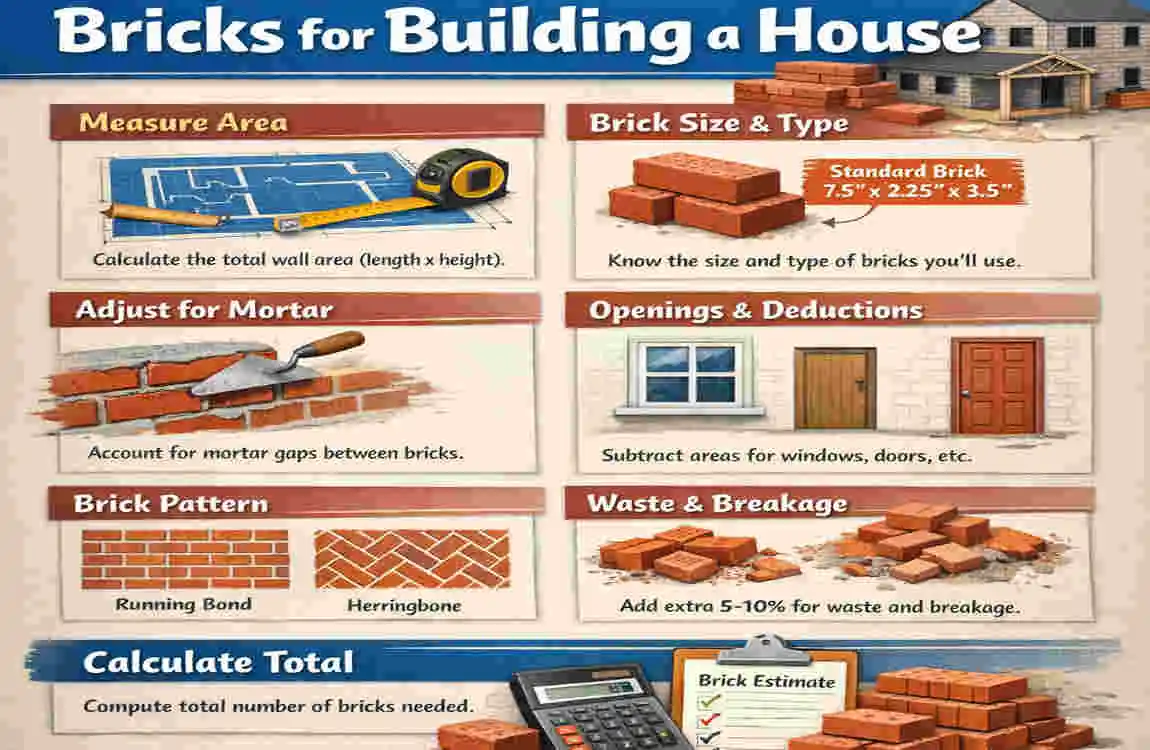
Measure Total Wall Area
Measure the height and length of all walls. Include both exterior and interior brick walls.
For each wall:
Wall Area = Length × Height
Subtract Openings
Do not count spaces for:
- Doors
- Windows
- Vent openings
These areas do not need full brick coverage, so subtract them from the wall area.
Calculate Brick Coverage
A common formula is:
Number of Bricks = Wall Area ÷ Brick Face Area
This gives you a base estimate before waste is added.
Add Mortar Thickness
Mortar is the material between bricks. It affects spacing and slightly changes the final count. Standard mortar joints are usually small, but they still matter in a brick quantity estimate.
Add Waste Percentage
Always include extra bricks for:
- Broken bricks
- Cutting waste
- Transport damage
- Site handling losses
A good rule is to add 5% to 10% extra.
Brick Quantity Estimation by House Size
Bedroom House
A small 1-bedroom house typically requires 7,000 to 12,000 bricks, depending on the wall type and design.
Bedroom House
A 2-bedroom home may require about 12,000 to 20,000 bricks. If the layout is simple, the count may stay on the lower side.
Bedroom House
A 3-bedroom house usually needs 18,000 to 30,000 bricks. This is one of the most common home sizes, so the range is wider.
Bedroom House
A 4-bedroom home often needs 25,000 to 45,000+ bricks, especially if it includes extra living spaces, garages, or decorative walls.
Multi-Story House
Multi-story homes require more bricks because they have more wall area and often require more structural support. In these homes, brick counts can rise quickly.
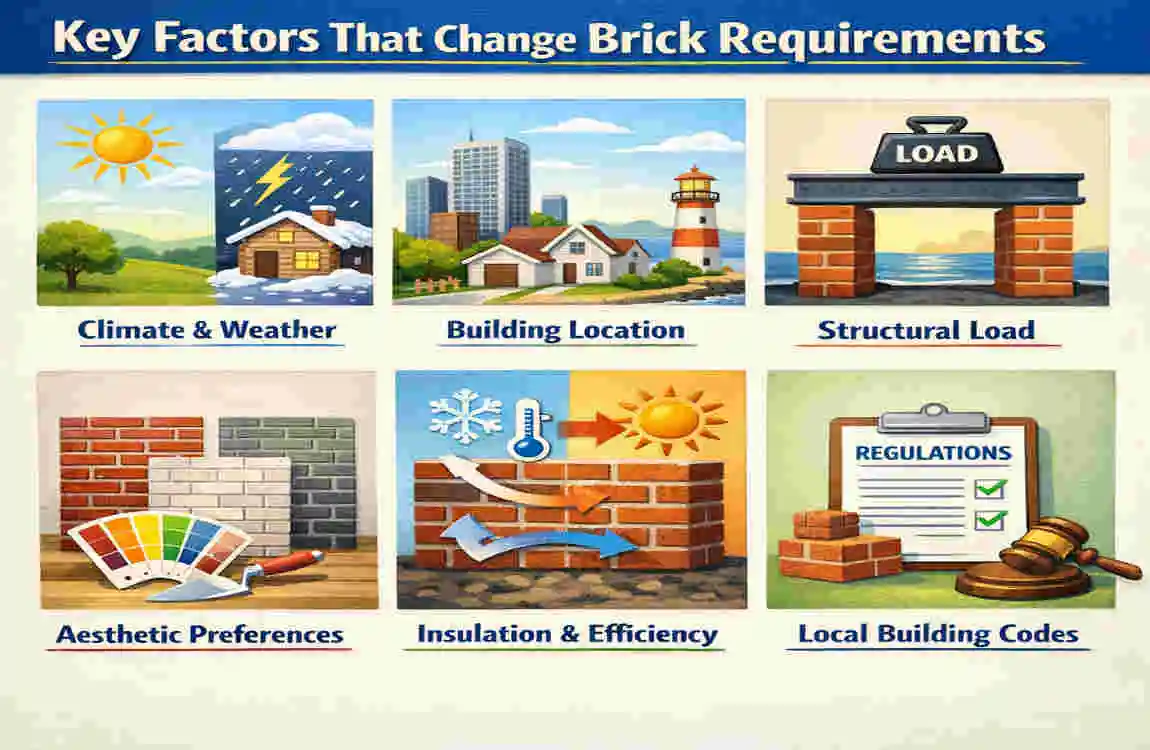
Key Factors That Change Brick Requirements
Wall Thickness
A single brick wall uses fewer bricks than a double brick wall. Thicker walls mean more material and more cost.
House Layout
An open floor plan usually needs fewer bricks than a house with many small rooms. More rooms often mean more partitions.
Ceiling Height
Higher walls need more bricks. Even a small increase in wall height can significantly raise the total.
Brick Type
Different bricks have different sizes and coverage:
- Hollow bricks
- Clay bricks
- Concrete bricks
Exterior Design Features
Extra features such as pillars, chimneys, garages, and decorative facades increase the use of brick.
How to Estimate Bricks for Exterior Walls Only
If you only want the brick count for outside walls, the process is simpler.
Measuring Perimeter Walls
Use this basic idea:
Perimeter × Wall Height = Exterior Wall Area
Then subtract doors and windows before estimating brick count.
Common Exterior Wall Thickness
Exterior walls may be built as:
- 4-inch wall
- 9-inch wall
Thicker walls use more bricks and offer more strength.
Example Calculation
If a house has a perimeter of 100 feet and a wall height of 10 feet, the total outside wall area is 1,000 square feet. After subtracting openings and adding waste, the final brick count will be lower than a simple raw estimate.
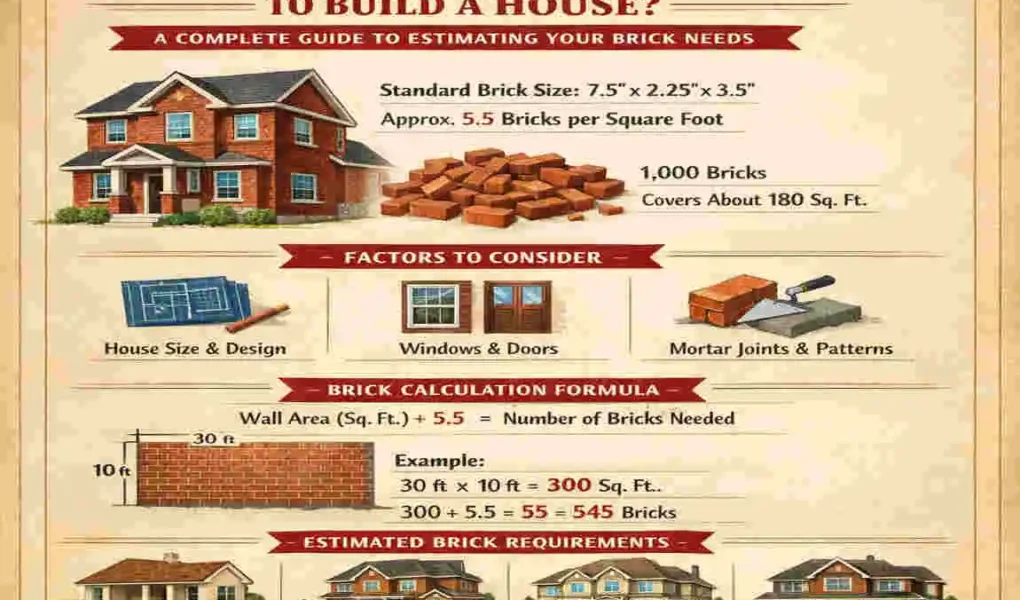
How Many Bricks Are Needed Per Square Foot?
If you are using a brick wall calculator or doing a quick brick quantity estimate, the square-foot method is useful.
Standard Estimates
A typical estimate is:
- Single-layer wall: about 4.5 to 5.5 bricks per square foot
- Double-layer wall: more than 9 bricks per square foot
Mortar Impact
Mortar joint spacing changes the count slightly. That is why two people can estimate the same wall differently when using different joint sizes.
Common Brick Estimation Mistakes to Avoid
Ignoring Door and Window Openings
This is one of the most common mistakes. Openings can significantly reduce the brick count.
Forgetting Waste Percentage
If you do not add extra bricks, small losses can create delays later.
Not Considering Interior Walls
Many people only count outside walls. But interior partitions can use a large number of bricks too.
Wrong Brick Size Assumptions
Always check the actual brick size before ordering. Never assume all bricks are the same.
Underestimating Future Design Changes
If you may add a room, a garage, or a wall later, plan for it now.
Cost Implications of Brick Quantity
Material Costs
The more bricks you need, the more you spend on the bricks themselves.
Transportation Costs
Heavy bulk orders may raise delivery charges, especially if the site is far away.
Labor Costs
More bricks usually mean more masonry work, which can raise labor charges.
Budgeting Tips
- Buy a little extra
- Compare supplier prices
- Check delivery costs
- Leave room for price changes
Bricks vs Concrete Blocks: Which Needs More Material?
Size Difference
Concrete blocks are usually larger than bricks, so that you may need fewer of them.
Cost Comparison
Bricks can cost more per unit, but the total cost depends on the full wall system, not just the unit price.
Durability
Both can last a long time when used properly.
Construction Speed
Blocks are often faster to lay because they are bigger.
Which Is Better for Residential Homes?
It depends on your design, budget, and local building method. For many homes, bricks give a more traditional finish, while blocks may speed up work.
Tips to Accurately Estimate Your Brick Needs
- Use architectural drawings
- Measure twice before ordering
- Include interior partitions
- Plan for future extensions
- Talk to a contractor
- Use a reliable house brick calculator
A careful estimate saves money and avoids stress.
Frequently Asked Questions
How many bricks does it take to build a 1000 sq ft house?
A 1,000 sq ft house may need around 12,000 to 20,000 bricks, depending on the wall design and thickness.
How many bricks are needed for a 1500 sq ft home?
A 1,500 sq ft home often needs about 20,000 to 35,000 bricks.
How do I calculate the number of bricks needed for a wall?
Measure the wall area, subtract openings, divide by brick face area, and then add waste allowance.
How many bricks are in one square foot?
It depends on brick size and mortar spacing, but a common range is about 4.5 to 5.5 bricks per square foot for a single wall.
Should I buy extra bricks for wastage?
Yes. It is smart to add 5% to 10% extra for breakage and cutting losses.
Do hollow bricks reduce the total quantity?
Yes, hollow bricks can change the count because they are often larger or cover space differently.