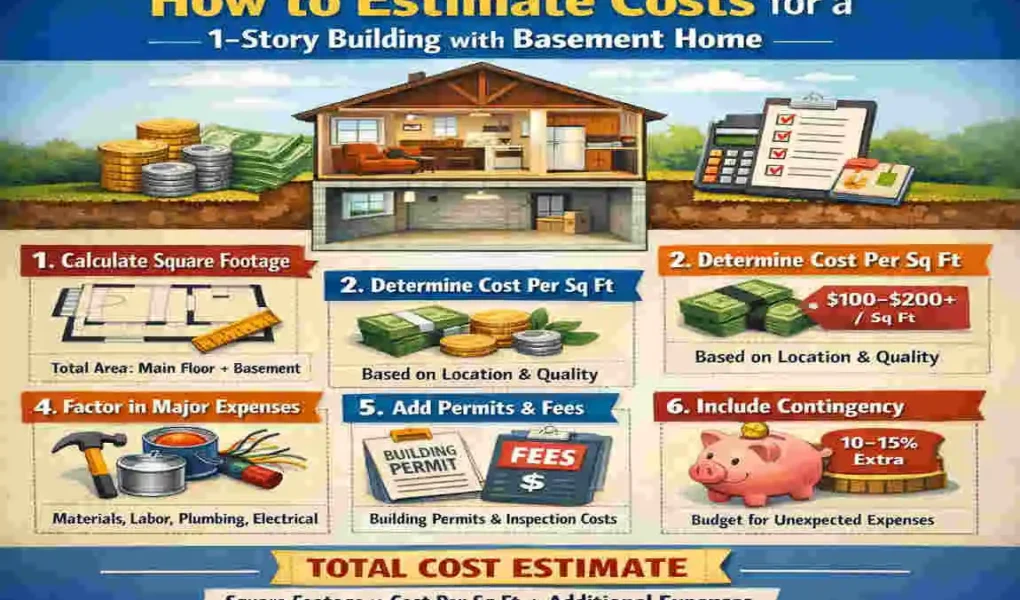
If you are asking how much it costs to build a 1-story building with a basement, the honest answer is that it depends on several big factors. The building size, the type of basement, the land conditions, the materials you choose, and the labor rates in your area all affect the final price.
A one-story building with a basement is popular for good reason. It gives you extra usable space without adding another full floor above ground. That can mean more storage, more living space, better storm protection, and even rental potential. But before you start building, you need a clear budget.
| Cost Category | Estimated Cost Range | What’s Included |
|---|---|---|
| Land Preparation | $3,000 – $10,000 | Clearing, grading, soil testing |
| Excavation & Basement Digging | $10,000 – $30,000 | Excavation equipment, soil removal |
| Foundation & Concrete Work | $20,000 – $50,000 | Footings, concrete walls, waterproofing |
| Framing & Structure | $40,000 – $90,000 | Lumber, wall framing, roof structure |
| Roofing & Exterior | $8,000 – $25,000 | Roofing materials, siding, insulation |
| Plumbing & Electrical | $15,000 – $40,000 | Pipes, wiring, fixtures, installation |
| HVAC System | $5,000 – $15,000 | Heating, cooling, ventilation |
| Interior Finishing | $20,000 – $60,000 | Flooring, paint, cabinets, drywall |
| Basement Finishing (Optional) | $15,000 – $50,000 | Bedrooms, bathroom, living space |
| Permits & Inspections | $2,000 – $8,000 | Building permits, inspection fees |
That matters because construction costs can rise fast. A project that starts with a simple plan can become expensive once excavation begins, permits are added, or the basement needs extra waterproofing. If you understand the main cost drivers early, you can make smarter choices and avoid surprise expenses.
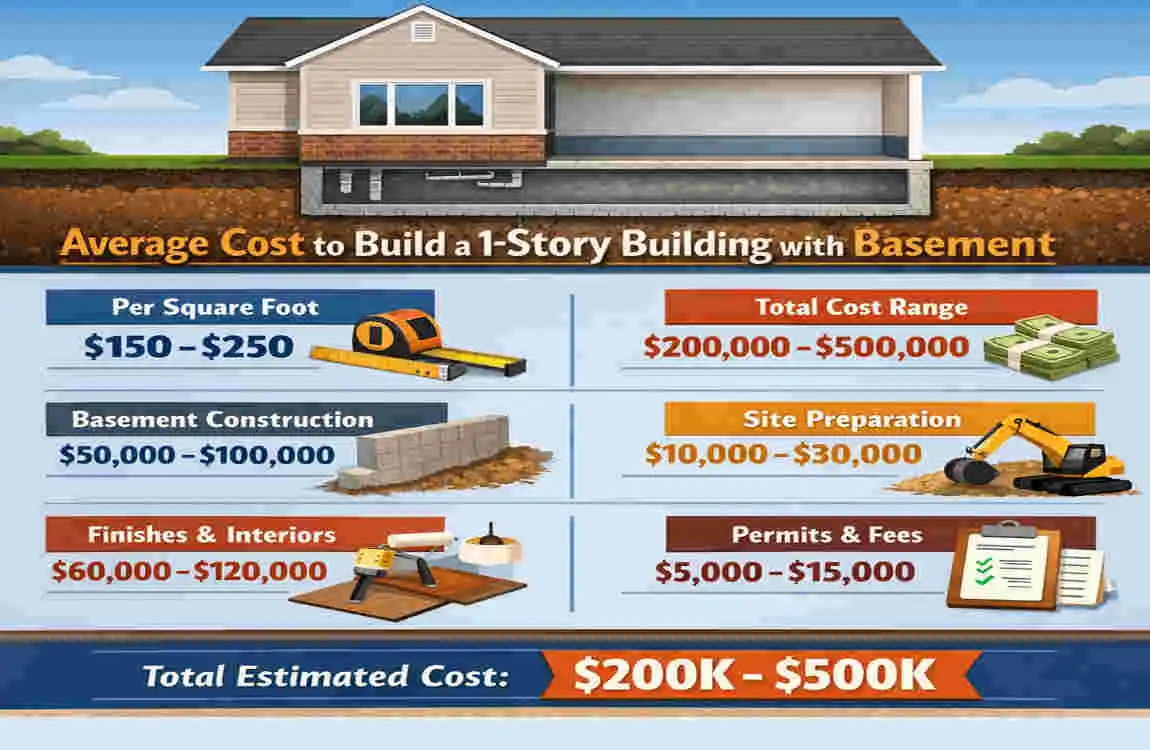
Average Cost to Build a 1-Story Building with Basement
National Average Construction Costs
The average basement construction cost varies widely by region. Still, a common range for a one-story building with a basement is about $180 to $350 per square foot for the full project. Basic builds can land on the lower end, while custom or luxury projects can move much higher.
For a simple budget build, you may see totals around $200,000 to $350,000. A mid-range project often falls between $350,000 and $650,000. Luxury finishes, difficult site conditions, and larger footprints can push the cost far above that.
The building cost per square foot also changes based on what is included. Some estimates cover only the shell and structure, while others include finishes, basement living space, and utility hookups. Always compare estimates carefully so you know what is included.
Cost Breakdown by Building Size
Here is a simple estimate table to help you see how size affects the budget.
Building Size Above-Ground Structure Cost Basement Excavation + Foundation Basement Finishing Cost Estimated Total
1,000 sq ft $150,000–$250,000 $35,000–$70,000 $25,000–$60,000 $210,000–$380,000
1,500 sq ft $225,000–$375,000 $52,500–$105,000 $37,500–$90,000 $315,000–$570,000
2,000 sq ft $300,000–$500,000 $70,000–$140,000 $50,000–$120,000 $420,000–$760,000
3,000 sq ft $450,000–$750,000 $105,000–$210,000 $75,000–$180,000 $630,000–$1,140,000
These are broad estimates, not exact bids. Still, they give you a useful starting point when planning a building estimate or using a construction cost calculator.
Basement vs No Basement Cost Comparison
A basement adds cost because you need excavation, deeper foundation work, drainage, and waterproofing. In many cases, it can add tens of thousands of dollars to the project.
At the same time, a basement adds value. You gain more usable square footage without expanding the building footprint. So even though the upfront cost is higher, the long-term return can be strong, especially if you finish the space well.
Factors That Affect the Cost of a 1-Story Building with Basement
Land Preparation and Site Conditions
Your land has a significant impact on the overall budget. If the soil is soft, wet, rocky, or uneven, the job becomes harder and more expensive. A sloping lot may also need more grading and drainage work.
Access matters too. If heavy machines cannot easily reach the site, labor and equipment costs can rise. Good site conditions can save you a lot of money before the first wall is even built.
Excavation and Foundation Costs
Excavation is one of the biggest basement expenses. The deeper the basement, the more soil must be removed. If rock is underground, the cost can rise quickly, as specialized equipment may be needed.
Foundation work also includes concrete, footings, and reinforcement. Waterproofing is another major budget item. If your area has a high water table, you may need stronger drainage and moisture protection.
Material Selection
Your material choices affect both the look and the price of the project. Wood framing is usually more affordable and common for residential builds. Concrete blocks and steel framing can cost more, but they may offer added strength or durability.
Insulation and roofing materials also matter. Better products may cost more upfront, but they can lower energy bills and reduce future repair needs. This is where affordable home construction and smart planning work together.
Labor Costs by Region
Labor is rarely priced the same across all areas. Urban locations often charge more because demand is high and the cost of living is higher. Rural areas may be cheaper, but contractor availability can be limited.
Skilled labor shortages can also drive up the price. If your area has high demand for builders, framers, electricians, or concrete crews, expect the bids to reflect that. This is one reason home construction budgeting should always leave room for regional price swings.
Utility and Permit Expenses
Utilities are easy to overlook, but they add up fast. Plumbing, electrical, HVAC, and sewer tie-ins all require careful work and skilled trades. Each one has its own cost.
Permits and inspections also matter. Your city or county may charge fees before work starts and during key stages of the build. These are not optional, so they should be part of every basement construction estimate.
Basement Finishing Options
You can save money by leaving the basement unfinished at first. That means the structure is built, but you do not add drywall, flooring, ceilings, or full interior rooms right away.
A partially finished basement gives you a middle option. You might complete one room, such as a office or bedroom, while leaving the rest open. A fully finished basement costs more, but it gives you the most usable space from day one.
Cost Per Square Foot for Different Types of 1-Story Buildings
Residential Buildings
For a single-family home or ranch-style home, the cost per square foot often falls between $150 and $300 for standard construction, with basement-related work adding more. Simple layouts usually cost less because they need fewer complicated details.
Commercial 1-Story Buildings
Commercial buildings such as offices, retail stores, and warehouses often have different needs. Their construction cost can range from $140 to $350+ per square foot, depending on finish level and utility requirements.
Custom Luxury Builds
Luxury projects are at the top of the range. Premium finishes, smart home features, custom fixtures, and energy-efficient upgrades can push the price to $300-$500+ per square foot, and sometimes more.
Build Type Low-End Cost/Sq Ft Average Cost/Sq Ft High-End Cost/Sq Ft
Residential $150 $220 $300+
Commercial $140 $220 $350+
Luxury Custom $300 $500 $800+
If you are comparing bids, make sure each contractor is pricing the same scope. That is the easiest way to get a fair construction estimate.
Basement Construction Costs Explained
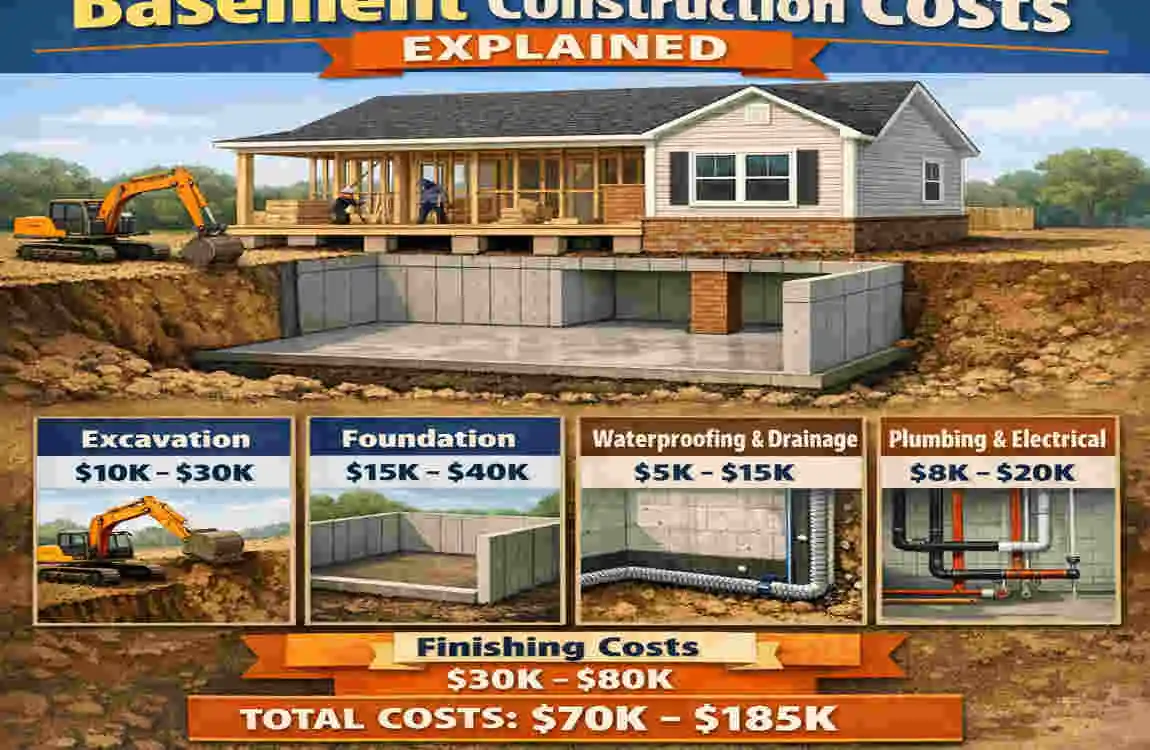
Excavation Costs
Excavation covers digging out the basement area and removing the soil. This usually includes machinery, labor, hauling, and disposal. If the site has rock or poor access, the cost can rise sharply.
Foundation and Structural Support
A basement needs strong support. That means footings, concrete walls, steel reinforcement, and careful engineering. These parts are not glamorous, but they are essential for safety and long-term durability.
Waterproofing and Drainage Systems
Waterproofing protects the basement from leaks and dampness. It may include moisture barriers, sump pumps, exterior drainage, and sealed walls. Skipping this step can lead to expensive repairs later.
Egress Windows and Safety Requirements
If you plan to use the basement as living space, code rules matter. Many areas require egress windows or safe exits for bedrooms and occupied rooms. Ventilation, lighting, and fire safety must also meet local standards.
Finishing the Basement
Finishing a basement can be one of the most flexible cost areas. A basic bedroom, office, or storage area costs less than a full rental unit with a bathroom and kitchen space. The more rooms you add, the more the budget climbs.
Hidden Costs Most Property Owners Forget
Permit Delays and Inspection Fees
Permits are not always expensive on their own, but delays can be costly. If a plan needs revisions or fails inspection, you may lose time and pay more labor costs.
Utility Connection Fees
Connecting to water, sewer, power, and internet can add hidden charges. These fees depend on your location and the distance to the utilities.
Landscaping and Exterior Work
Once the building is done, the outside still needs work. Driveways, sidewalks, retaining walls, and drainage systems can easily take a noticeable part of your budget.
Contingency Budget Recommendations
A smart rule is to set aside 10% to 20% of the total budget for surprises. That helps cover emergency repairs, material price changes, or small design updates that come up during construction.
Ways to Reduce Building Costs Without Sacrificing Quality
Choose a Simple Floor Plan
A rectangular layout usually costs less than a complex shape with many corners. Simpler plans reduce framing time and make the build easier for the crew.
Use Standard Materials
Standard sizes and common materials are usually cheaper and easier to source. They also create less waste, which helps with reducing construction costs.
Build an Unfinished Basement First
If your budget is tight, finish the basement later. This is one of the best budget-friendly basement ideas because it lowers your upfront cost while still giving you the option to expand later.
Compare Multiple Contractor Quotes
Never rely on a single bid. Different builders may include different items or use different material assumptions. Ask each contractor what is included, what is excluded, and whether allowances are fixed or flexible.
Invest in Energy Efficiency
Better insulation, good windows, and an efficient HVAC system can cost more upfront, but they often save money over time. That makes them a smart choice for owners focused on long-term value.
Sample Cost Estimate for a 1-Story Building with Basement
Example Scenario
Let’s use a simple example: a 2,000 sq ft one-story home with a full basement and mid-range finishes. This is a common size for homeowners who want comfort, storage, and future flexibility.
Itemized Cost Breakdown Table
Item Estimated Cost
Land prep $12,000
Excavation $38,000
Foundation $45,000
Framing $70,000
Roofing $28,000
Plumbing $24,000
HVAC $20,000
Electrical $18,000
Interior finishing $55,000
Basement finishing $50,000
Permits and fees $10,000
Estimated Total $370,000
Estimated Final Price Range
A project like this might land around $330,000 on the low end, $370,000 on average, and $450,000+ on the high end depending on your finish level and local market. That is why a detailed review of basement foundation pricing is so important before work begins.
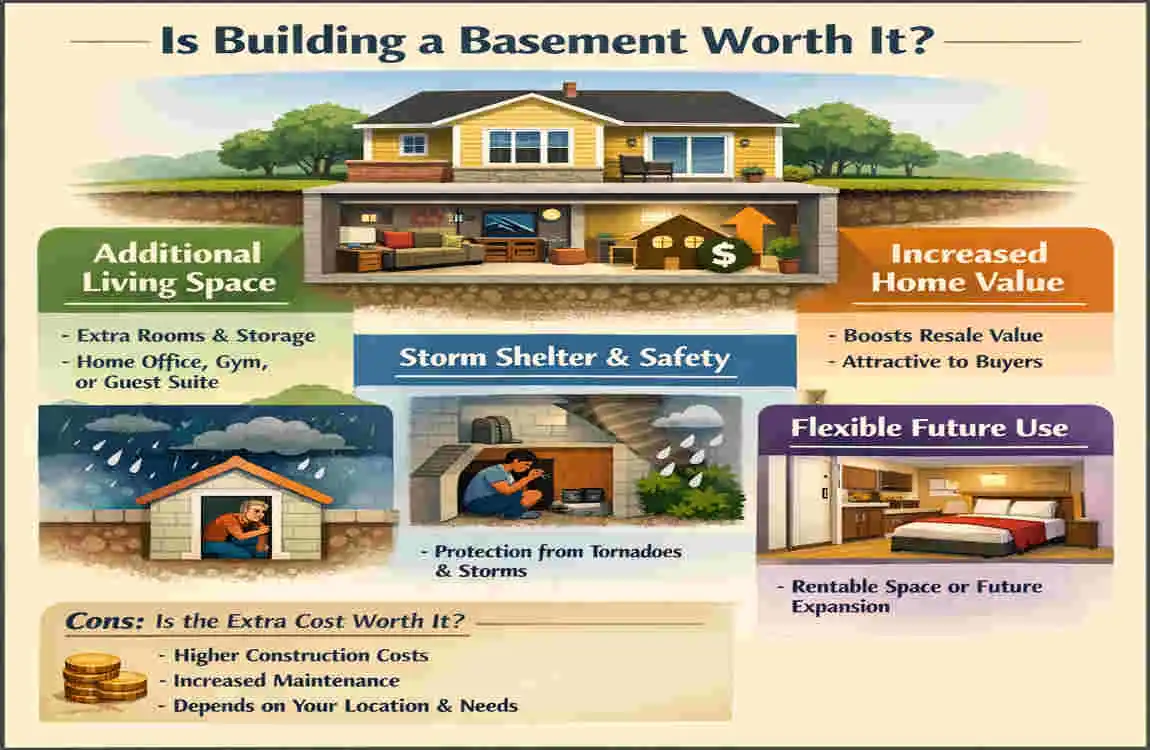
Is Building a Basement Worth the Extra Cost?
Added Property Value
In many markets, a basement adds real value. Buyers often appreciate the extra square footage, and appraisers may consider finished basement space a strong selling point.
Functional Benefits
A basement gives you more than value on paper. It can be used for storage, hobbies, a guest area, a home office, or even storm protection in some regions.
ROI Considerations
The return on investment depends on local demand. In areas where finished basements are popular, the upgrade may be worth it. In other markets, the cost may take longer to recover, so the decision should align with your market and long-term goals.
Frequently Asked Questions
How much does it cost to build a 1-story building with a basement?
For most projects, the cost ranges from $180 to $350 per square foot, depending on size, materials, labor, and basement finish level. Simple projects cost less, while custom builds cost more.
Is it cheaper to build up or build a basement?
A basement is often cheaper than adding a full second story in terms of usable space. However, it still adds major excavation and foundation costs. The best choice depends on your land, your goals, and local pricing.
What is the cheapest type of basement to build?
An unfinished basement is usually the cheapest option. It gives you the structure and usable storage space while allowing you to finish the rooms later.
How much does excavation cost for a basement?
Excavation often costs $20,000 to $60,000+, but that number can rise if the soil is rocky, the lot is sloped, or drainage is difficult.
Does a basement increase home value?
Yes, in many cases it does. A basement can add living space, storage, and resale appeal, especially if it is finished well and meets local code requirements.
How long does basement construction take?
Basement work can take several weeks on its own, and the full project may last several months. Weather, permits, inspections, and material delays can all affect the schedule.
Can I finish my basement later to save money?
Yes, and this is a smart way to lower initial costs. Many owners build the basement shell first and complete the interior later when the budget allows.