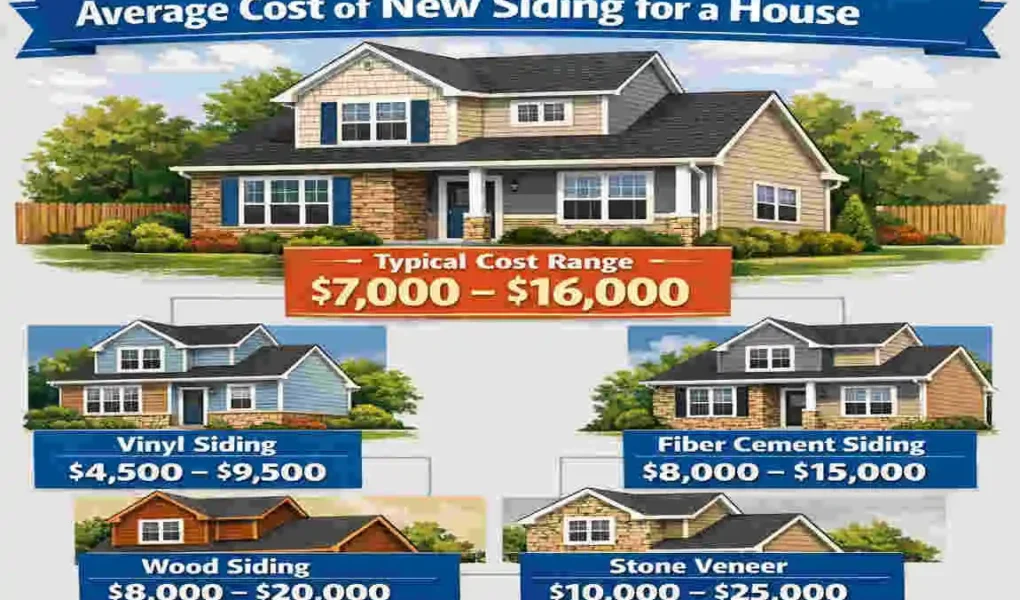
Siding is one of the most important parts of your home’s exterior. It helps protect your house from wind, rain, heat, and cold. It also improves curb appeal and can even support better energy efficiency.
| Siding type | Typical installed cost per sq ft | Approx. total for a 2,000 sq ft home |
|---|---|---|
| Vinyl | $3.50–$7.00 | $7,000–$14,000 |
| Fiber cement | $6.00–$13.00 | $12,000–$26,000 |
| Wood | $6.00–$14.00 | $12,000–$24,000 |
| Metal | $3.50–$12.00 | $7,000–$24,000 |
The answer depends on a few things. The biggest factors are the material you choose, the size of your home, labour costs, your location, and whether the old siding must be removed first. In some cases, hidden damage under the siding can also raise the final price.
How Much Does New Siding for a House Cost on Average?
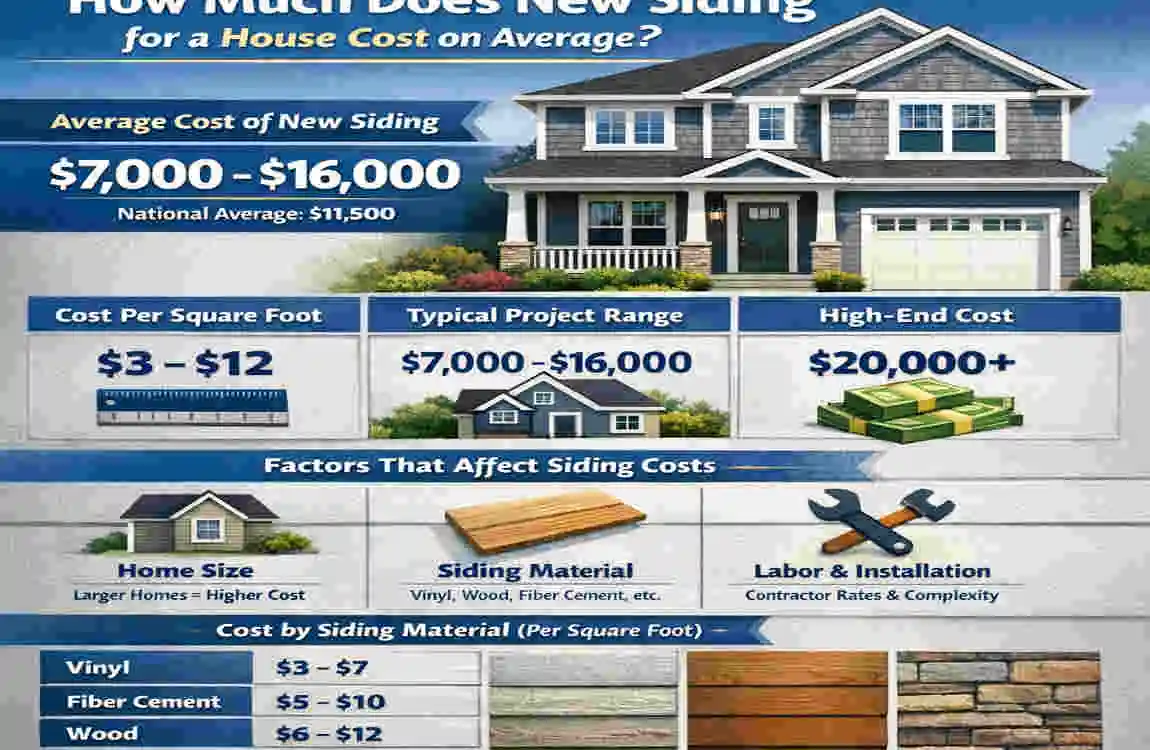
The average siding replacement cost in 2026 usually falls between $5,000 and $40,000, depending on the size of the house and the material you choose.
If you want a quick answer, most homeowners pay around $8 to $20 per square foot installed. That number includes both the siding material and the labor to put it on the home.
Here is a simple cost breakdown by home size:
Home Size Estimated Cost Range
1,000 sq ft $5,000–$12,000
1,500 sq ft $7,000–$18,000
2,000 sq ft $10,000–$25,000
3,000 sq ft $15,000–$40,000
A smaller home will usually cost less because it needs fewer materials and fewer labor hours. A larger home costs more because each wall adds to the total project cost.
It also helps to separate the price into three parts:
- Material cost: What you pay for the siding itself
- Installation cost: What you pay the crew to install it
- Total project cost: The full amount, including prep work, removal, and extra repairs
That is why two homes with the same square footage can still have very different final prices.
Factors That Affect New Siding Costs
The price of siding varies by home. Several things can raise or lower the total cost.
Size of the Home
This is the most obvious factor. A bigger house needs more siding, more trim, and more labor. Even a small increase in wall area can significantly increase the final bill.
Type of Siding Material
Different siding materials come with very different price tags. Vinyl is usually the cheapest. Brick veneer is usually the most expensive. The material you choose affects not only the upfront price but also long-term maintenance.
Labor and Installation Complexity
A simple one-story home is usually easier and cheaper to cover than a multi-story house. Homes with lots of corners, windows, dormers, or custom shapes take more time and more careful work.
Removing Old Siding
If old siding must come off first, you will likely pay more for demolition and disposal. This step can also reveal rot, mould, or water damage beneath.
Local Labor Rates
Labor prices change from place to place. In some areas, contractors charge more because wages, demand, and living costs are higher.
Insulation and Weatherproofing
Some homeowners add house wrap, foam board, or insulated siding. These upgrades increase the upfront cost, but they may improve comfort and lower energy bills later.
Average Cost by Siding Material Type
The material you choose will have the biggest impact on siding installation cost. Some materials are budget-friendly, while others are chosen for style, durability, or lower maintenance.
Siding Type Cost Per Sq Ft Installed Lifespan Maintenance
Vinyl $4–$12 20–40 years Low
Fiber Cement $6–$15 30–50 years Medium
Wood $8–$18 20–40 years High
Engineered Wood $5–$14 20–30 years Medium
Metal $7–$16 30–50 years Low
Brick Veneer $10–$30 50+ years Low
Vinyl Siding Cost
Vinyl is the most popular budget option. It is affordable, easy to install, and available in many colours and styles.
Pros: low cost, low maintenance, fast installation
Cons: may crack in very cold weather, can look less premium than other options
Fiber Cement Siding Cost
Fiber cement is a strong choice if you want durability and a more solid look. It stands up well to fire, pests, and weather.
Pros: long lifespan, sturdy, attractive finish
Cons: heavier material, higher labor cost, usually more expensive to install
Wood Siding Cost
Wood siding gives a classic, natural appearance that many homeowners love. It looks beautiful, but it needs more care than most other materials.
Pros: warm and attractive look, strong curb appeal
Cons: high maintenance, needs painting or staining, can rot or attract pests
Engineered Wood Siding Cost
Engineered wood is a lower-cost alternative to real wood. It offers a similar look but usually costs less and is easier to handle.
Pros: good balance of cost and appearance, lighter than real wood
Cons: still needs regular care, less durable than some premium options
Metal Siding Cost
Aluminum and steel siding are both known for weather resistance. They can last a long time and usually require little upkeep.
Pros: durable, low maintenance, good for harsh weather
Cons: can dent, may not suit every home style
Brick Veneer Siding Cost
Brick veneer gives a high-end look and strong durability. It is one of the most expensive options because installation takes longer and requires more skill.
Pros: long life, very attractive, low maintenance
Cons: high upfront cost, more expensive labor
Labor Costs for Installing New House Siding
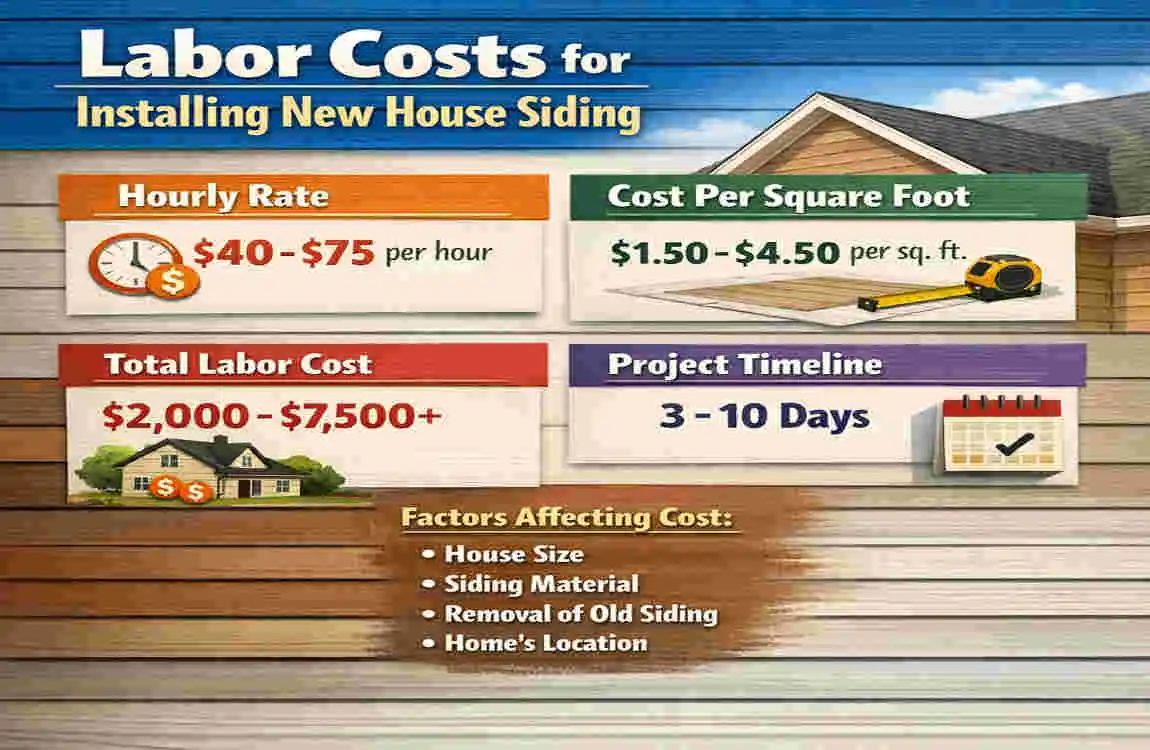
Labor is a major part of the total project. In many cases, installation accounts for 30% to 50% of the total price.
Some contractors charge by the square foot, while others charge by the hour. Either way, the final amount depends on the home’s shape and the material being installed.
Professional installation matters because siding must be sealed correctly. If the work is rushed or done poorly, water can get behind the siding and cause bigger problems later.
You may also need to pay for permits or inspection fees, depending on where you live. These are usually not the biggest expense, but they should still be part of your budget.
Cost to Remove Old Siding Before Replacement
If your home already has siding, removing it may increase the total cost. On average, demolition and disposal can add a few extra thousand dollars depending on the size of the home and the type of old siding.
This step can also uncover hidden problems like:
- Mold
- Rot
- Water damage
- Soft wood
- Structural issues
Older homes often cost more to prepare because they may require additional repairs before new siding goes on. That is one reason why the final price is sometimes higher than the first estimate.
New Siding Cost by House Style
The style of your home matters too. Some homes are easier to work on than others.
House Style Average Cost Range
Ranch $8,000–$18,000
Two-Story $12,000–$30,000
Colonial $15,000–$35,000
Modern Custom $20,000–$50,000
Ranch House
Ranch homes are often simpler and cheaper to side because they usually have fewer stories and easier roof lines.
Two-Story House
Two-story homes usually cost more because they require more labour, ladders, and, sometimes, scaffolding.
Colonial Homes
Colonial homes often have more trim, windows, and decorative details, which increase labour time.
Modern Homes
Modern homes can look simple, but they often include custom panels or special finishes that raise the price.
Signs Your House Needs New Siding
If you are not sure whether it is time to replace your siding, look for these warning signs:
- Cracks or warping
- Faded color
- Mold or mildew
- Water stains or damage
- Loose panels
- Peeling paint indoors
- Higher energy bills
If you keep delaying replacement, small issues can turn into costly repairs. Water damage, in particular, can spread quickly, so it is better to act early.
Does New Siding Increase Home Value?
Yes, new siding can improve a home’s value in several important ways.
First, it boosts curb appeal. A house with fresh siding looks cleaner, newer, and better cared for. That can make a strong first impression on buyers.
Second, new siding can improve energy efficiency, especially if you choose insulated materials or add weatherproofing. That can make the home more attractive to future buyers.
Third, it can improve resale value because buyers often prefer a home that does not need major exterior work right away.
Some siding types offer a better return than others. In general, durable, low-maintenance options tend to hold value well.
Energy Efficiency and Insulated Siding Costs
Insulated siding costs more upfront, but it can help reduce heat loss and improve comfort inside the home.
This type of siding often includes a foam backing that helps block outside temperatures. It can work well when combined with house wrap or other weather barriers.
If you live in a hot or cold climate, this upgrade may be worth it. Over time, lower heating and cooling bills can help offset the extra upfront cost.
DIY vs Professional Siding Installation
Some homeowners think about doing siding work themselves to save money. That can work in some cases, but it is not always the best choice.
DIY Advantages
- Lower labor costs
- More control over the schedule
- Possible savings on a small project
DIY Disadvantages
- Mistakes can lead to leaks and water damage
- It takes tools, skill, and time
- Large or tall homes are much harder to handle safely
Benefits of Hiring Professionals
- Faster installation
- Better sealing and weather protection
- Warranties on labor or materials
- Less risk of costly mistakes
For most homeowners, professional installation is the safer and smarter option, especially for full home replacement.
Tips to Save Money on New House Siding
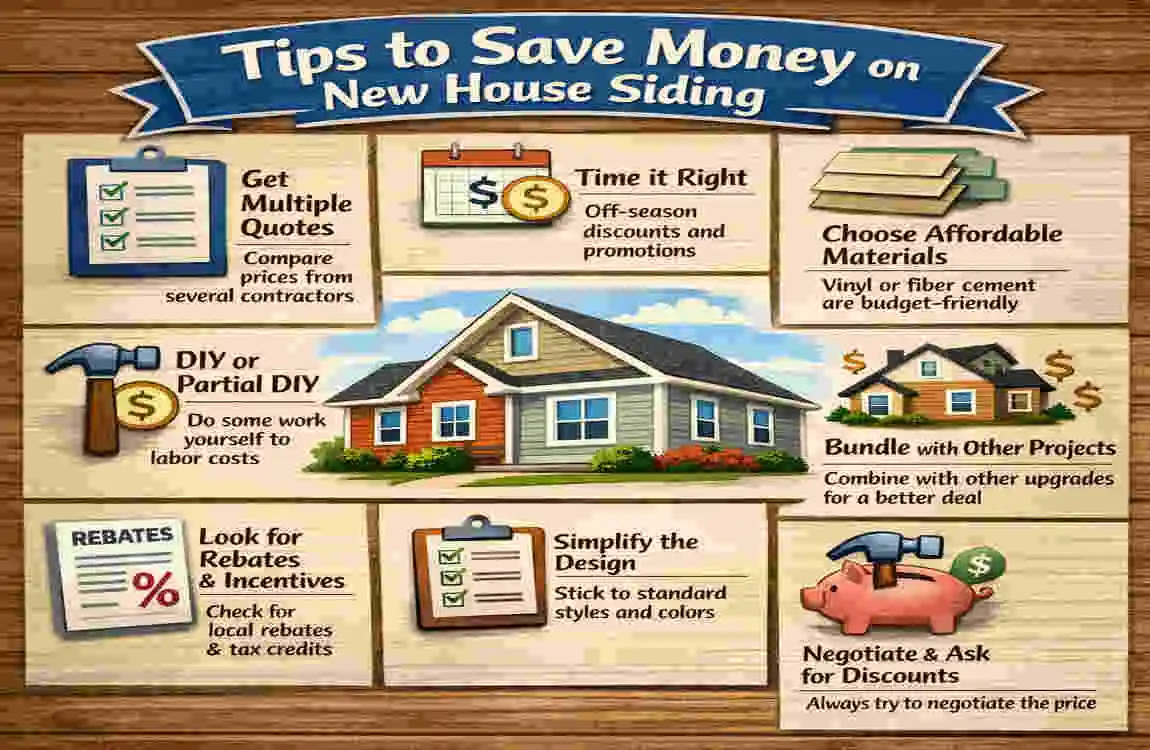
You do not always have to spend the top dollar amount to get good results. A few smart choices can help lower your total cost.
- Get quotes from several contractors
- Schedule the job during the off-season
- Choose a more affordable siding material
- Bundle siding with other exterior work
- Ask about financing or payment plans
- Consider partial replacement if only one side is damaged
Also, ask about manufacturer warranties and any available rebates. These extras can improve long-term value even if they do not immediately lower the upfront price.
Frequently Asked Questions
How much does new siding for a house cost per square foot?
Most homeowners pay around $8 to $20 per square foot installed, depending on material and labor.
What is the cheapest siding option?
Vinyl siding is usually the cheapest option for most homes.
Which siding lasts the longest?
Brick veneer and some fiber cement products often last the longest when properly installed and maintained.
How long does siding installation take?
Most siding projects take several days to a few weeks, depending on the size of the house and the job’s complexity.
Can new siding improve insulation?
Yes. Insulated siding and proper weather barriers can help reduce drafts and improve energy efficiency.
Is replacing siding worth the investment?
In many cases, yes. It can improve appearance, reduce maintenance, and add value to the home.
Does homeowners insurance cover siding replacement?
Sometimes, but usually only if the damage is caused by a covered event such as a storm, fire, or a falling tree. Normal wear and tear is usually not covered.