If you are learning how to build a mud house, the first thing to know is that it is simpler than many people expect. A mud house uses natural building materials such as clay, sand, straw, water, wood, and stone. With the right mix and a strong foundation, a mud home can be comfortable, beautiful, and long-lasting.
| Step | What to do | Key point |
|---|---|---|
| 1. Make bricks | Mix mud with fiber like rice husk, then mold into bricks. | Keep the mix firm, not too wet. |
| 2. Dry bricks | Let the bricks dry in the sun for several days. | Turn them so they dry evenly. |
| 3. Build foundation | Use a strong base, often concrete or stone in wet areas. | The foundation is critical for durability. |
| 4. Raise walls | Stack bricks so they interlock like a puzzle. | Use the same mud mix as mortar. |
| 5. Add roof and finish | Install a roof and protect the walls with plaster or weatherproofing. | Protect from rain and moisture. |
Mud houses are becoming popular again because people want homes that are low-cost, eco-friendly, and naturally cool. They also fit well with sustainable living.
Understanding Mud Houses and Their History

What Is a Mud House?
A mud house is a home built using earth-based materials. These homes may be made with adobe bricks, cob, rammed earth, or wattle and daub. Each method uses soil slightly differently, but the idea is the same: to create strong walls using natural earth.
Historical Significance of Mud Houses
Mud houses are not new. People have built them for thousands of years in Africa, Asia, the Middle East, and South America. These homes worked well because the materials were easy to find, inexpensive, and well-suited to the local climate.
Why People Still Build Mud Houses Today
People still choose mud houses because they are sustainable, affordable, and comfortable. They also provide natural insulation, so they stay cooler in hot weather and warmer in cold weather.
Why Choose a Mud House?
Environmental Benefits
Mud houses have a low carbon footprint because they use less processed material. They also create less waste and depend on renewable resources.
Financial Advantages
The main materials are often available locally, which helps reduce cost. A mud house can also lower energy bills because it keeps indoor temperatures more stable.
Comfort and Health Benefits
Mud walls help control heat and reduce noise. Many people also like the natural feel of earthen homes because they can support better indoor air quality.
Durability When Properly Built
A well-built mud house can last for many years. The key is good soil, a raised foundation, proper roof protection, and regular maintenance.
Essential Materials Needed to Build a Mud House
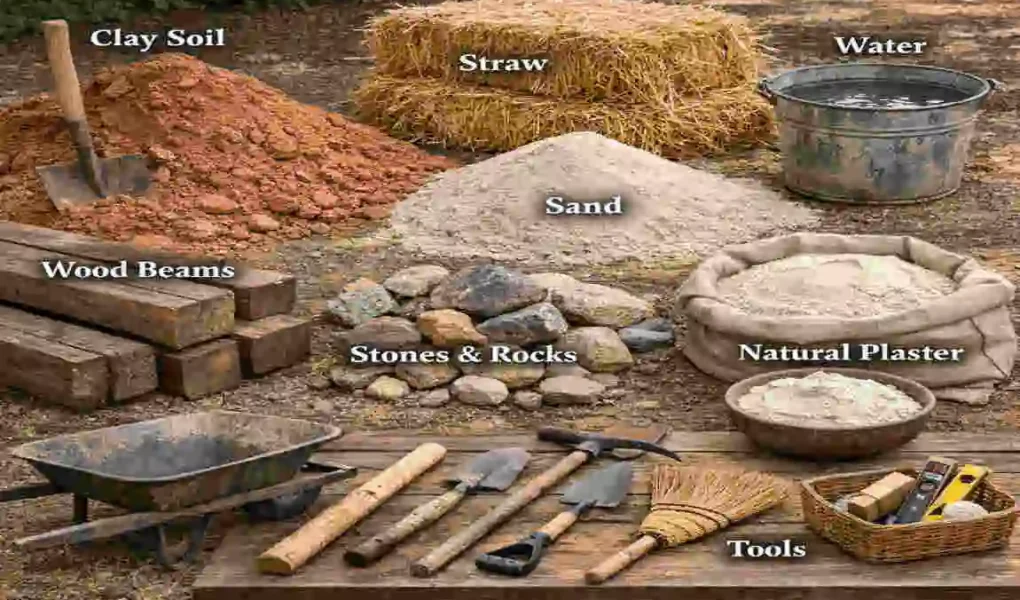
The materials you choose will affect the house’s strength and longevity. Here is a simple look at the most important ones.
MaterialMain PurposeWhy It Matters
Clay soil binds the mix together and gives strength and shape
Sand reduces cracking and balances the clay
Straw or natural fibres reinforce the walls and help prevent breaks
Water mixes everything and creates the right texture
Gravel and stones Foundation support Keeps moisture away
Wood Frames roof, doors, windows Adds structure
Bamboo Optional support Light and sustainable
Lime stabilises walls and improves durability
Clay or lime plaster Surface finish Protects the walls
Clay Soil
Clay is the main binding material. Too much clay can cause cracking, while too little will make the wall weak. A simple soil test can help you find the right balance.
Sand
Sand helps stop shrinkage and cracking. It works best when mixed properly with clay soil.
Straw or Natural Fibres
Straw gives the mud mix extra strength. Some builders also use grass, coconut fibre, or other natural materials.
Water
Water helps form the mud into a workable mix. Use clean water and add it slowly so the mixture does not become too wet.
Gravel and Stones
These are important for the foundation. They help keep water away from the base of the walls.
Wood and Bamboo
Wood is often used for roofs, doors, and windows. Bamboo is a useful option when you want a lighter and more sustainable support material.
Lime and Plaster
Lime improves resistance to water and weather. Clay or lime plaster is often used as the final outer layer to protect the mud walls.
Tools Required for Building a Mud House
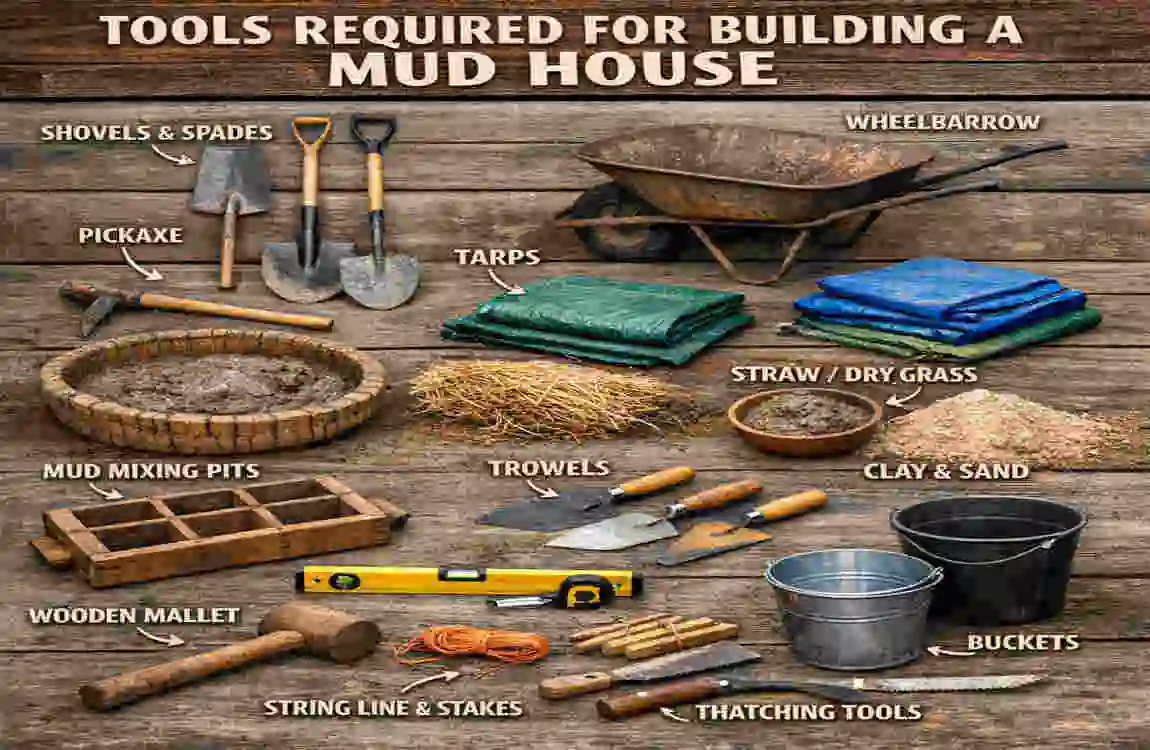
You do not need highly advanced tools to start.
Basic Hand Tools
- Shovels
- Spades
- Buckets
- Wheelbarrows
Measuring and Levelling Tools
- Tape measure
- String line
- Spirit level
Construction Tools
- Trowels
- Hammers
- Saws
- Masonry tools
These tools help with digging, mixing, shaping, and finishing the structure.
How to Build a Mud House Step by Step
Choose the Right Location
Pick a site with good drainage and stable soil. Avoid low places where water collects. This is one of the most important parts of building a mud house.
Prepare the Building Site
Clear the ground, remove plants, and level the area. A clean site makes construction easier and helps prevent foundation problems later.
Build a Strong Foundation
A mud house needs a raised foundation made from stone, gravel, or both. This protects the walls from rising moisture and helps the home last longer.
Prepare the Mud Mixture
Mix clay soil, sand, water, and straw until the texture feels firm but workable. The mix should hold shape without being too wet or too dry.
Construct the Walls
You can build the walls in different ways:
- Adobe brick method: Make bricks from mud, dry them in the sun, then stack them.
- Cob building method: Shape the wall by hand using a thick mud mix.
- Rammed earth method: Pack moist soil into forms in layers.
install Doors and Windows
Add frames carefully so the wall stays strong. Openings should be measured well to avoid weak spots.
Build the Roof
A good roof is very important. It should have wide overhangs to protect the walls from rain and sun.
Apply Protective Plaster
Finish the walls with clay plaster or lime plaster. This helps protect the surface and gives the house a cleaner look.
Best Types of Mud House Construction Methods
Adobe Construction
Adobe is one of the most common methods. It is strong, simple, and suitable for dry climates.
Cob Construction
Cob is easy to shape and good for people who want a hands-on, creative building style.
Rammed Earth Construction
Rammed earth gives a modern, solid look. It is very strong when done properly.
Wattle and Daub
This method uses a woven frame filled with mud. It is traditional home and works well in many rural areas.
Common Mistakes to Avoid When Building a Mud House
Poor Soil Selection
Not all soil works well. If the clay-to-sand balance is off, the walls may crack or weaken.
Weak Foundation Construction
A weak foundation can lead to moisture damage and wall failure.
Insufficient Roof Overhangs
Without adequate roof cover, rain can quickly erode the walls.
Ignoring Drainage
Water near the house is a serious problem. Always guide water away from the base.
Skipping Maintenance
Mud houses need care. Small cracks and damaged plaster should be fixed early.
How Much Does It Cost to Build a Mud House?
A mud house is often much cheaper than a conventional home because many materials are local and natural. The highest costs usually come from wood, labour, roofing, and foundation work.
If you build it yourself, the cost can be lower. If you hire skilled workers, the price rises, but the quality may improve. In many cases, mud houses remain a strong choice for low-cost housing.
Maintenance Tips for Long-Lasting Mud Houses
Annual Inspections
Check the walls, roof, and foundation once or twice a year.
Repair Cracks Early
Small cracks should be filled before rain makes them worse.
Maintain Exterior Plaster
A fresh plaster layer helps protect the walls from weather damage.
Keep the Roof in Good Shape
A leaking roof can damage the entire structure.
Control Moisture
Make sure water drains away from the home and does not sit near the walls.
Frequently Asked Questions About How to Build a Mud House
How long does a mud house last?
A mud house can last for many years if it is built well and maintained regularly.
Are mud houses waterproof?
Not fully on their own. They need good plaster, roof protection, and drainage.
Can mud houses withstand earthquakes?
Yes, some mud house styles can perform well if properly designed, reinforced, and built with good methods.
What is the best soil for mud house construction?
A mix of clay soil and sand usually works best.
Can I build a mud house myself?
Yes, some methods like cob are very DIY-friendly, but larger projects may need skilled help.