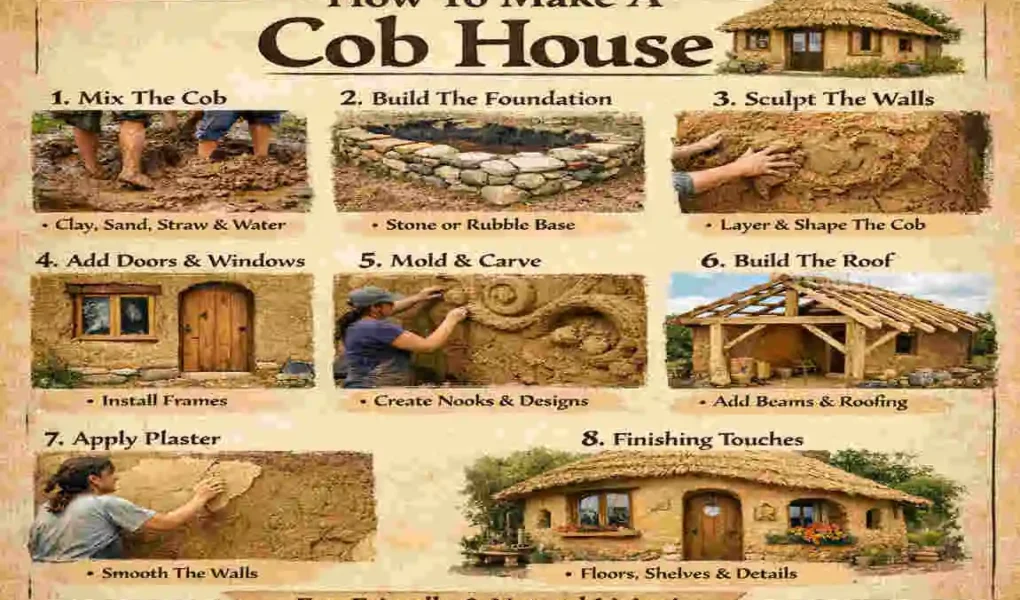
how to make a cob house
Architecture HOME DECOR

How to Make a Cob House: Step-by-Step Guide

It feels warm, natural, and handmade in a way that many modern buildings do not. Cob brings together local soil, sand, straw, and water to create walls that are strong, sculptural, and full of character. Instead of hiding the building process, cob celebrates it. You can see the hand of the builder in every curve, every wall, and every rounded corner.

If you are wondering how to make a cob house, the short answer is this: you build it slowly, layer by layer, with your own hands and a lot of patience. It is labor-intensive, yes, but it is also one of the most rewarding ways to create a home. Cob can be affordable, low-impact, and surprisingly beginner-friendly when you take the time to learn the basics.

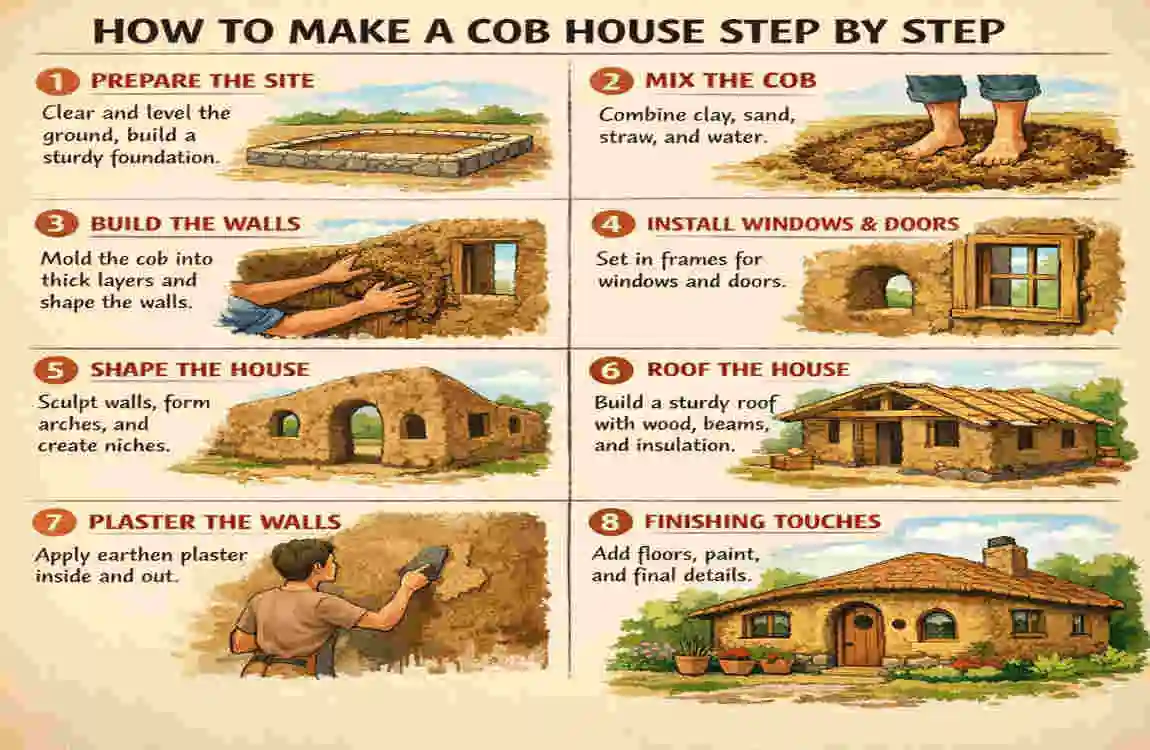
Step Description Key Tips
Site Prep & Foundation Clear and level the site, dig below frost line (2-3 ft), build stone or rubble foundation, ensure drainage with swales/French drains. Compress soil, add sand layer for flat base; aim for 1m deep trench.
Mix Cob Materials Combine subsoil/clay (20-30%), sharp sand (40-50%), straw (10-20%), water; test by dropping a ball—it should hold without crumbling. Use tarp method: roll/stomp until dough-like; add manure for strength if available.
Build Walls Form cob “logs” or balls, stack in 2-3 ft daily lifts (no more than 60cm/day), poke holes/key into prior layer for bonding. Taper walls (18-24″ thick at base, narrowing up); add rebar/bamboo for stability.
Install Openings Frame doors/windows with wood/wooden lintels before cob reaches; embed conduit for wiring/plumbing. Build arches or use pre-made frames; allow drying between layers.
 Roof & Finish Add wooden ring beam, roof framing, then plaster exterior with lime/cob slip; install floor (clay-sand-gravel mix). Limit height to 10-12 ft; finish with natural plaster for weatherproofing.

Understanding Cob Construction

What Is Cob?

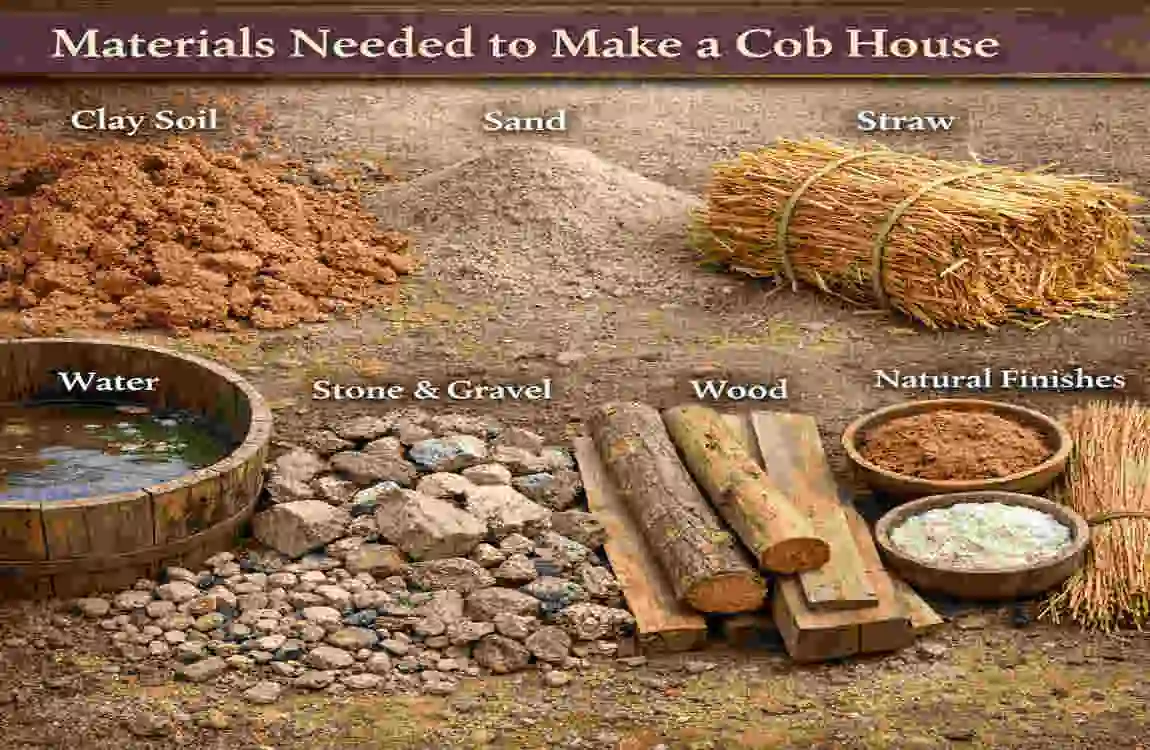
Cob is an old building material made from clay, sand, straw, and water.

That may sound simple, and that is part of its power. When these ingredients are mixed well, they form a dense, moldable material that can be shaped into walls, benches, niches, ovens, and even entire houses. Once dry, cob becomes strong and durable.

The clay acts like the glue. The sand gives the mix structure. The straw works like fiber reinforcement, helping the material hold together while it dries. Water ties everything together so you can shape and place the cob where you want it.

Cob is not poured like concrete. It is placed by hand. That means each wall can be adjusted as you go. You can curve it, thicken it, sculpt it, or soften it. This is why cob homes often look organic and inviting.

Why People Love Cob Homes

Cob homes have many qualities that make them appealing.

First, they have thermal mass. That means the walls can absorb heat during the day and release it slowly later. This can help stabilize indoor temperatures, especially in places with hot days and cooler nights.

Second, cob walls are breathable. They allow moisture to move through the material more naturally than many modern wall systems. This can help reduce trapped dampness inside the structure when the house is designed correctly.

Third, cob is often made from materials readily available at the building site. That reduces transport needs and can lower the project’s overall environmental impact.

Fourth, cob is durable when protected properly from water. Many older cob structures have lasted for generations, demonstrating how resilient this material can be when built and maintained with care.

And finally, cob homes feel personal. They are not just assembled. They are shaped. You do not simply own a cob house; you help create it.

A Note on Building Codes and Regulations

Before you start digging, mixing, or stacking walls, check your local building codes and zoning rules.

This is very important.

Some places welcome natural building methods. Others require extra approval, engineering review, or specific foundation details. In many areas, cob homes need professional plans or structural sign-off before construction can begin. Even if your project is small, it is better to understand the rules first than to face costly problems later.

If you want to build safely and legally, treat this as a serious planning step, not an optional one.

Pre-Construction Phase

Choosing the Right Site

A cob home needs the right location.

The most important thing is good drainage. Cob and standing water do not mix well. If your site stays soggy, your walls and foundation wall will be at greater risk. Choose land that slopes gently or drains naturally. Avoid low spots where water collects after rain.

You should also think about access to sunlight, wind, and the surrounding landscape. A south-facing orientation may help in cooler climates. Shade can matter in hotter regions. Trees, hills, and neighboring structures can all affect airflow and moisture.

Ask yourself a few practical questions:

  • Does rain run off the site easily?
  • Is the soil stable?
  • Can trucks or wheelbarrows reach the build area?
  • Will the house sit high enough above the surrounding ground?
  • Is there space to mix and store materials?

A little time spent choosing the right spot can save a lot of trouble later.

Planning and Permits

Cob is simple in form, but the planning process still matters.

You need a design that fits the site, the climate, and the local rules. In many cases, professional plans or architectural drawings help show that the building will be structurally sound. That matters for permits, insurance, and long-term safety.

This is especially true if your cob house will include large openings, a complex roof, or multiple rooms. A solid plan also helps you estimate materials, organize labor, and avoid surprise changes halfway through the build.

The more clearly you plan now, the smoother your project will be later.

Essential Tools and Materials

You do not need a huge workshop to get started, but you do need the right tools.

Here is a simple table to help you organize the basics.

Tool or Material Purpose

Shovels Moving soil, sand, and cob mix

Hoes Breaking up clumps and blending materials

Tarps Mixing cob on the ground

Wooden stakes Marking layout and corners

String Keeping walls straight and level

Wheelbarrows Moving materials around the site

Buckets Carrying water and smaller batches of mix

Measuring tape Checking dimensions

Level Making sure foundations and walls stay even

Gloves and boots Protecting hands and feet during work

You may also want:

  • A tarp-covered storage area for materials
  • A ladder or safe step platform
  • Formwork for openings or roof support
  • A spray bottle or hose for dampening dry sections

Cob building is simple, but that does not mean it is careless. Good tools make the process easier and safer.

Foundations for Cob Homes

how to make a cob house

Why the Foundation Matters So Much

Cob walls must stay dry.

That is one of the biggest rules in cob construction. If water repeatedly soaks into the lower part of the wall, the material can weaken over time. This is why the foundation is such a critical part of the building.

A cob home usually needs a raised base that keeps the wall above the soil line. The goal is to protect the cob from splashback, runoff, and rising moisture.

Think of the foundation as the shield between your home and the ground.

Clearing the Site

Before foundation work begins, clear the build area of topsoil, roots, grass, and vegetation.

You want to reach stable ground. Topsoil is rich in organic material, but it is not the best layer for structural support. It can shift, settle, or hold water. Removing it helps create a stronger base.

This is also a good time to mark the building’s footprint. Use stakes and string to outline the home’s shape. Check the corners, measure diagonals, and confirm your layout before digging deeper.

A clean, clearly marked site gives you a solid start.

Trenching and Drainage

Drainage is not a small detail. It is a major part of protecting the house.

Many cob builders use a rubble trench or a similar drainage system beneath the foundation. This often includes gravel or stone in the trench so water can flow away from the structure rather than collecting under it.

The purpose is simple:

  • Keep the base dry
  • Reduce settling
  • Improve long-term stability
  • Protect the walls from moisture

The trench should be designed with your site conditions in mind. If the ground holds water easily, drainage becomes even more important. Do not rush this part. A strong foundation is one of the best investments you can make in the whole project.

The Stone Plinth

A stone plinth is a raised base made of stone or rubble that raises the cob wall above ground level.

This is one of the best ways to protect the lower part of the wall from moisture. It also creates a clean transition between the foundation and the earthen wall above it. In many cob homes, the stone base gives the building a grounded, timeless look.

The plinth should be stable, level, and tall enough to keep the cob safely away from surface water and splash zones. In wet climates, extra height may be especially useful.

This is one of those details that feels small at first, but it can make a big difference over time.

Making the Cob Mixture

Sourcing the Right Materials

Cob usually starts with local clay and sand.

That is one of the most attractive parts of the process. In many places, you can source the ingredients nearby instead of ordering industrial products from far away. Some builders test their own soil to see how much clay it already contains. Others bring in extra clay or sand to balance the mix.

The ideal combination depends on your local earth. Too much clay can lead to cracking. Too much sand can make the mixture weak and crumbly. The goal is balance.

Straw should be clean and dry. It acts like a natural fiber, helping reduce cracking and adding tensile strength. Water should be added slowly so you can control the consistency.

If you have access to good local material, you are already ahead.

The Tarp Method

One of the easiest ways to mix cob is the tarp method.

Here is how it works in simple terms:

  1. Spread a large tarp on level ground.
  2. Measure out your sand and clay.
  3. Add straw in layers.
  4. Sprinkle water over the materials.
  5. Fold the tarp or stomp the mix with your feet.
  6. Repeat until everything is fully blended.

The tarp method is popular because it is easy, low-cost, and effective. You do not need fancy equipment. Many people enjoy the physical rhythm of the process. It feels a little like making giant bread dough, except it is for a house.

Some builders use small machinery or mixers for part of the process, especially on larger projects. That can save time, but the basic goal stays the same: make a homogenous, workable mix.

How to Know the Mix Is Ready

A cob mix should feel moist, shaped, and cohesive, but not sloppy.

If it is too wet, it may slump when you place it in the wall. If it is too dry, it may not bond well or hold together properly. A useful guide is the ball test. Form a ball of cob in your hands. If it holds its shape without flattening too quickly, the mix is usually close to right.

You are looking for a texture that feels dense and moldable. It should stick to itself better than it sticks to your boots. It should not ooze water. It should not fall apart in your hands.

This part takes practice. Do not worry if the first few batches need adjusting. That is normal.

A Simple Mix Adjustment Guide

Use this quick reference when testing your cob mix:

  • Too wet: Add more dry sand, clay-rich soil, or straw in small amounts
  • Too dry: Sprinkle in water slowly and mix again
  • Too crumbly: It may need more clay or better blending
  • Too sticky: It may need more sand to balance the clay

The best cob builders are patient observers. They test, adjust, and test again until the mix feels right.

Building the Walls

The Lift Method

Cob walls are usually built in lifts, which are layers placed one at a time.

You do not build the full wall all at once. Instead, you add a layer, let it firm up, and then add the next layer. This helps prevent slumping and gives the wall time to support its own weight.

A common approach is to keep each lift to a manageable height, then allow drying before continuing upward. The exact height depends on weather, wall shape, and the mix itself. Warm, dry conditions help the wall set faster. Cool or damp conditions slow the process down.

This is one reason cob building asks for patience. You are not racing the material. You are working with it.

How to Shape Each Layer

Each lift should be packed firmly onto the one below it.

The best cob walls do not look like rough piles of mud. They look fused. You want the new material to bond with the previous layer so the wall becomes one solid structure over time. To help that happen, builders often score or poke the surface of the previous layer before adding more cob.

This roughens the surface and creates better grip.

When placing each lift, press the cob firmly into corners and edges. Fill gaps well. Shape the wall as you go. If you want smooth curves, now is the time to form them. If you want wall niches or rounded corners, cob is a great material for that kind of creativity.

Knitting New Cob to Old

One of the most important techniques in cob building is knitting.

This means joining fresh cob to an existing dried or partially dried section so the materials bond strongly. It is not just stacking. It is merging. When you score the surface, moisten it lightly if needed, and press new material in firmly, the new and old layers can lock together more effectively.

This detail matters because cob walls are only as strong as their weakest joints.

When done well, the wall behaves as a single continuous body. That is the goal.

Keeping the Wall Plumb and Even

Even though cob is wonderfully flexible, you still need to keep the walls structurally sensible.

Use string lines, levels, and repeated measurements to stay on track. Check the wall thickness as you go. Make sure corners are square where they need to be. Pay attention to any bulges or dips that appear while the cob is still workable.

This does not mean the walls must look rigid or machine-made. Cob is celebrated for its soft, natural shapes. But it should still be balanced and stable.

A wall can be artistic and strong at the same time.

Integrating Utilities

If you plan to run electrical conduit or plumbing through the walls, you need to think ahead.

It is much easier to install pipes, lines, and sleeves during construction than to cut into a finished wall later. That said, every utility must be planned carefully. You do not want to weaken the structure or create moisture problems.

This is why many builders coordinate the natural building process with electricians and plumbers early in the project. Utility placement should fit the wall design, not fight against it.

Do not guess here. Plan it properly.

Structural Details

how to make a cob house

Openings for Doors and Windows

Doors and windows need careful support.

The top of each opening usually requires a lintel, a horizontal support beam that carries the load above it. Without this support, the wall above the opening could crack or sag. The lintel must be properly sized and installed before the wall is built around it.

Window and door placements also affect the home’s look and feel. Cob walls often allow deep openings, which can create cozy window seats and shaded edges. These details can make the house feel warm and inviting.

Plan the size, shape, and position of your openings early. That will help the wall layout and roof design work together more smoothly.

Roofing Options

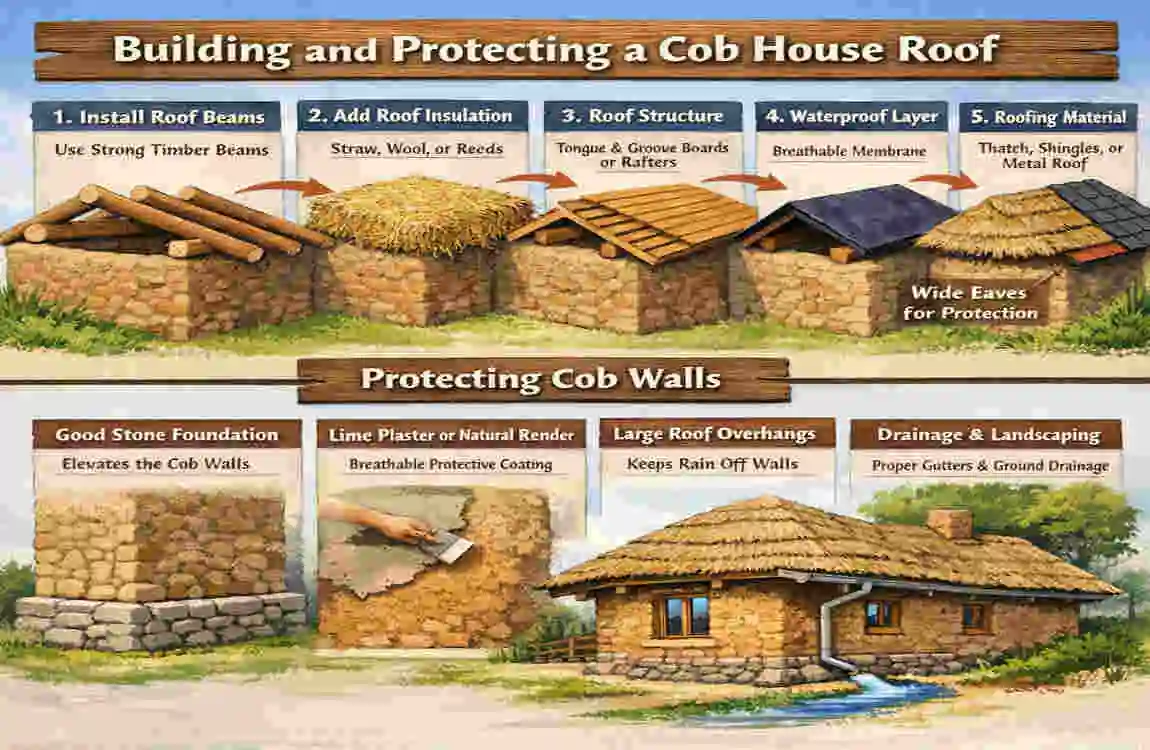
A cob house needs a roof that protects the walls from weather.

Because cob loves dryness, good roof overhangs are important. The farther the roof extends beyond the wall, the better the wall is protected from rain. In many cob designs, builders choose organic shapes that pair well with rounded walls.

A reciprocal roof is one interesting option for cob homes. It creates a visually beautiful structure and can suit circular or curved plans very well. Other roof designs can also work, as long as they are properly engineered and appropriate for the climate.

Your roof should do more than look nice. It should keep water away from the walls.

Finishing Touches

Once the walls are built and dry, you can move on to finishing.

Clay plaster is one of the most common finishes for cob homes. It helps smooth the surface, improve appearance, and add another layer of weather protection. Some builders use multiple plaster coats to refine the wall and seal smaller surface imperfections.

You may also add lime plaster or other compatible exterior finishes, depending on the climate and the house’s design. The key is to use a finish that works well with earthen walls instead of trapping moisture inside them.

Inside the home, finish work can be deeply creative. You can sculpt shelves, rounded transitions, arched openings, and built-in seating directly into the walls.

That is part of the magic of cob. It lets the house become art.

Expert Tips for Success

Build in the Right Season

Timing matters more than many first-time builders expect.

Avoid major cob work during heavy rain, freezing weather, or long periods of high humidity. Cob needs time to dry. If the weather stays too wet, the walls may not set well. If it is freezing, the moisture in the mix can create problems.

Warm, dry weather is usually more forgiving. That does not mean you need perfect conditions, but you do need a reasonable window for drying and progress.

If you can choose your build season, choose carefully.

Learn Before You Start

Cob is simple, but it still rewards training.

If possible, attend a local natural building workshop before starting your own project. Hands-on experience can teach you more than reading alone. You can see how the mix behaves, how the walls are stacked, and how builders solve common problems in real time.

That kind of experience builds confidence fast.

You may also want to help on another cob project before beginning your own. Even a few days of practice can teach you a lot about rhythm, timing, and material feel.

Maintain the Walls Over Time

A cob house is not a “build it and forget it” structure.

Like any home, it needs care. The good news is that cob maintenance is usually straightforward if the building was designed well. The most important job is to keep water away from the walls. Check roof edges, gutters, drainage, plaster surfaces, and any areas where splashback might occur.

Small cracks may appear over time, especially in plaster. These are often easy to patch with compatible earthen materials. The goal is to respond early, before minor issues turn into major ones.

Regular inspection helps protect your investment.

Common Mistakes to Avoid

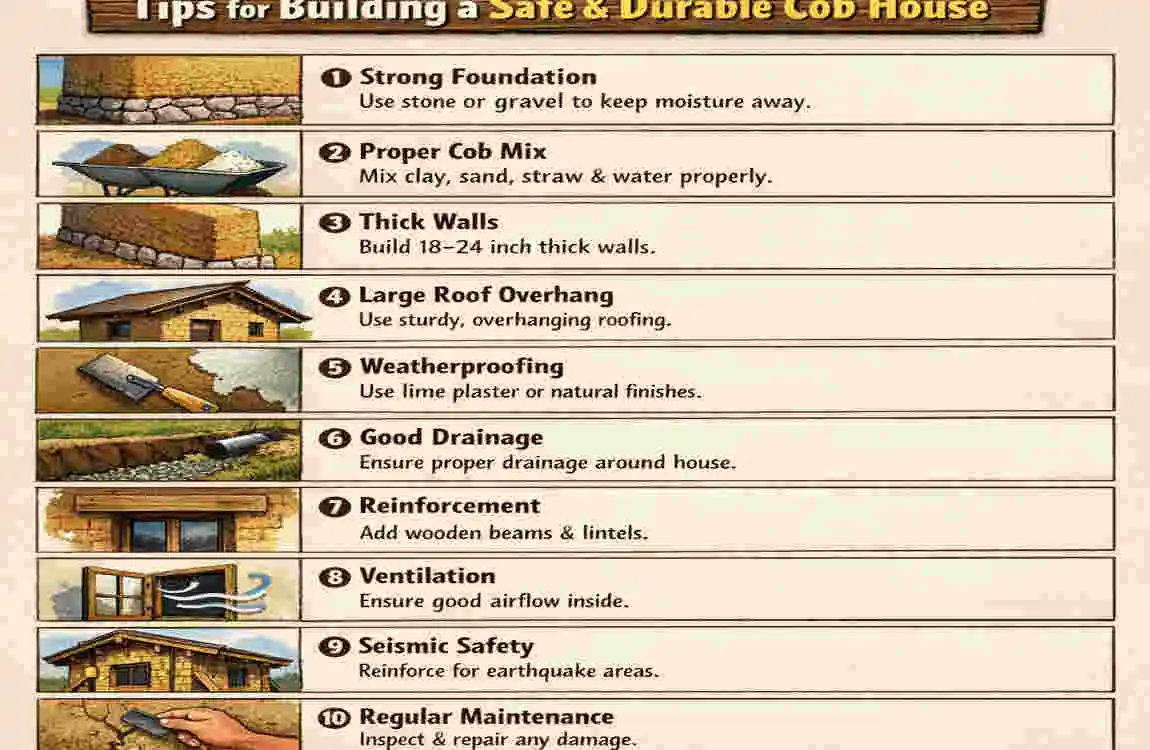
Here are a few mistakes that can cause trouble:

  • Building on a wet or poorly drained site
  • Skipping a proper foundation or plinth
  • Using the wrong soil balance
  • Adding too much water to the mix
  • Building too fast without enough drying time
  • Placing openings without proper support
  • Ignoring roof overhang and runoff protection

These mistakes are common, but they are avoidable. If you plan carefully and build patiently, you give your cob home a much better chance of lasting.

A Practical Step-by-Step Summary

If you want a simple overview of the entire process, here it is.

  1. Choose a dry, stable site
  2. Check codes, permits, and design requirements
  3. Clear the site and mark the building footprint
  4. Build a drained foundation with a raised stone plinth

This is the basic journey from earth to home.

Why Cob Still Matters Today

Cob is not just a charming old building technique. It is also a reminder that good houses do not always need industrial materials, high energy use, or overly complicated systems.

When you build with cob, you work with the land instead of against it.

You learn to observe soil, weather, moisture, and structure in a very practical way. You also create a home that feels alive with texture and warmth. For many people, that is worth far more than convenience alone.

Cob also invites people back into the building process. It slows things down. It asks for care. It rewards attention. In a world that often moves too quickly, that can feel refreshing.

How to Make a Cob House: FAQ

What is cob, in simple terms?

Cob is a sustainable building method that uses earth-based materials and can often be built with materials sourced locally, even from your own property.

What should I look for in a cob house site?

Choose a site with good sunlight for passive solar benefits and make sure trees or other obstacles are not blocking that light. It also helps to plan for fast drainage so water moves away from the house site quickly.

What materials do I need to make cob?

A cob mix is usually made from local earth materials, and many builders source the ingredients right from the land they already own.

How do you mix cob?

One common approach is to mix the material and then form lumps by hand, adding it in a handful at a time and smoothing it as you go. Cob should not be slapped onto the wall, because that can draw moisture out of the wall.

How do you build the walls?

After mixing, you form the wall layer by layer and keep shaping it as you build. Some guides describe cob building as a simple, step-by-step process, which is why it works well for DIY builders who want to learn as they go.

How do you protect a cob house from water?

Good water management is essential. Builders often use French drains and swales to move water away from the house site and help the ground drain quickly.

Is cob a good option for DIY builders?

Yes—cob is often seen as a natural, hands-on building method that can be a rewarding choice for people who want a more earth-friendly home.

What is one practical tip before I start?

Many builders recommend paying close attention to the site, drainage, and sunlight before you begin, because those details help the house perform better over time.

You may also like...

Leave a Reply

Your email address will not be published. Required fields are marked *