Trim plays a bigger role in your home than many people realise. It frames your walls, outlines your windows and doors, and gives each room a finished look. Baseboards, door casings, window trim, and crown moulding all help shape how a space feels.
| Trim Design Factor | Explanation |
|---|---|
| Trim Color | Matching colors create a consistent look, but different colors can add character. |
| Baseboards | Using the same baseboard style throughout helps connect rooms. |
| Door and Window Trim | These can match for a coordinated appearance or contrast intentionally. |
| Crown Molding | Different styles can work depending on ceiling height and room design. |
| Paint Finish | Consistent finishes create harmony and make maintenance easier. |
| Home Style | Traditional homes often favor consistent trim, while modern homes allow more variation. |
| Best Practice | Keep a common design element, such as color or finish, to maintain visual flow. |
Does trim have to match throughout the house? The simple answer is no. It does not have to be identical in every room. What matters most is that it feels intentional. A home can look beautiful with matching trim, but it can also look stylish with a few thoughtful differences.
Why Matching Trim Can Create a Cohesive Home

A unified look across rooms
When trim colours and styles stay consistent, the luxury home feels more connected. Your eye moves smoothly from one room to the next, creating a sense of flow. This is especially helpful in homes where rooms open into each other.
Visual harmony matters
Matching baseboards and door casings can make the interior feel more organised. If the trim in every room shares the same colour and profile, the design feels more complete. Consistency often creates comfort because nothing feels out of place.
Works well with many home styles
A matching trim style also helps if your home has one clear architectural look. For example, a traditional home may feel best with classic trim details, while a modern home may look cleaner with simple, smooth lines. When the trim supports the architecture, the whole house feels more natural.
When Different Trim Styles and Colours Work Well
Variety can add personality.
Not every room needs identical trim. In some homes, different trim colours or profiles can make each space feel more personal. A bedroom may need a softer look, while a kitchen or hallway may benefit from more contrast.
Accent spaces stand out more.
If you want one room to feel special, using a different trim style can help. A dining room, reading nook, or home office can have its own character without clashing with the rest of the house. The trick is to make sure the change still feels connected to the larger design.
Different rooms can serve different purposes.
Bathrooms, bedrooms, kitchens, and living rooms do not always need the same trim approach. A bathroom may need moisture-resistant materials, while a living room may focus more on style. Function matters as much as appearance.
How to Choose Trim Colours, Materials, and Finishes
Common trim colour choices
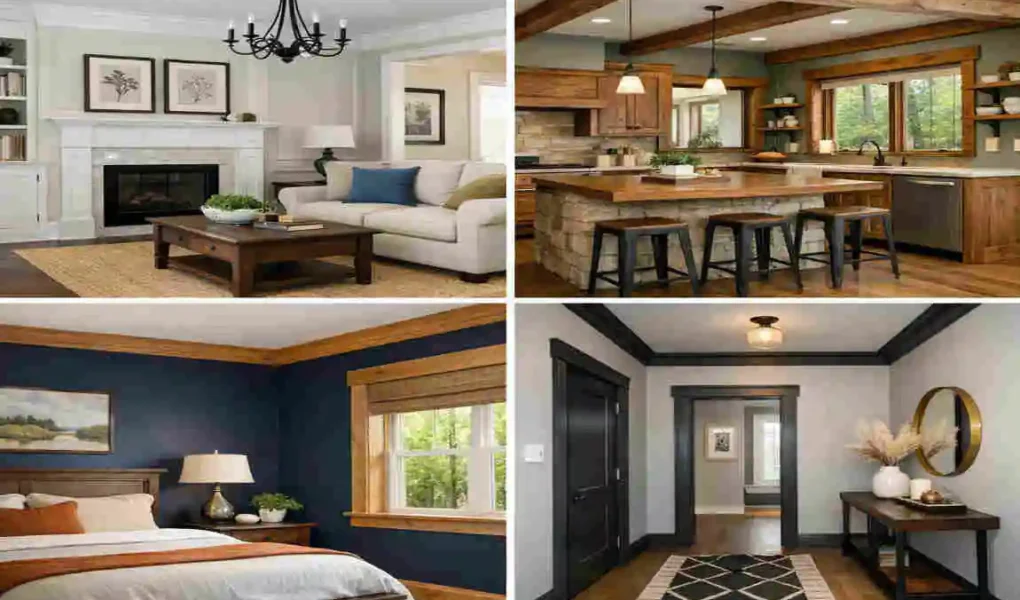
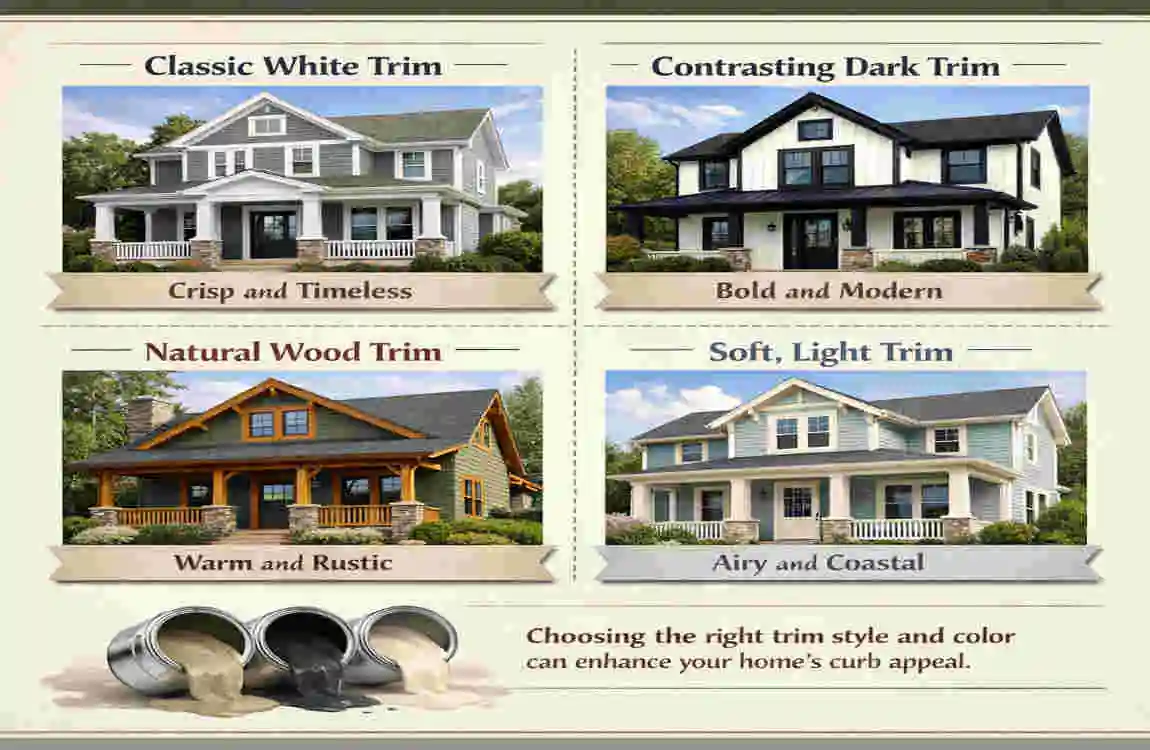
White remains a favourite because it pairs with many wall colours. Cream gives a softer look, black adds bold contrast, and natural wood brings warmth and texture. Each choice creates a different mood, so think about the feeling you want in your home.
Match trim with the rest of the room
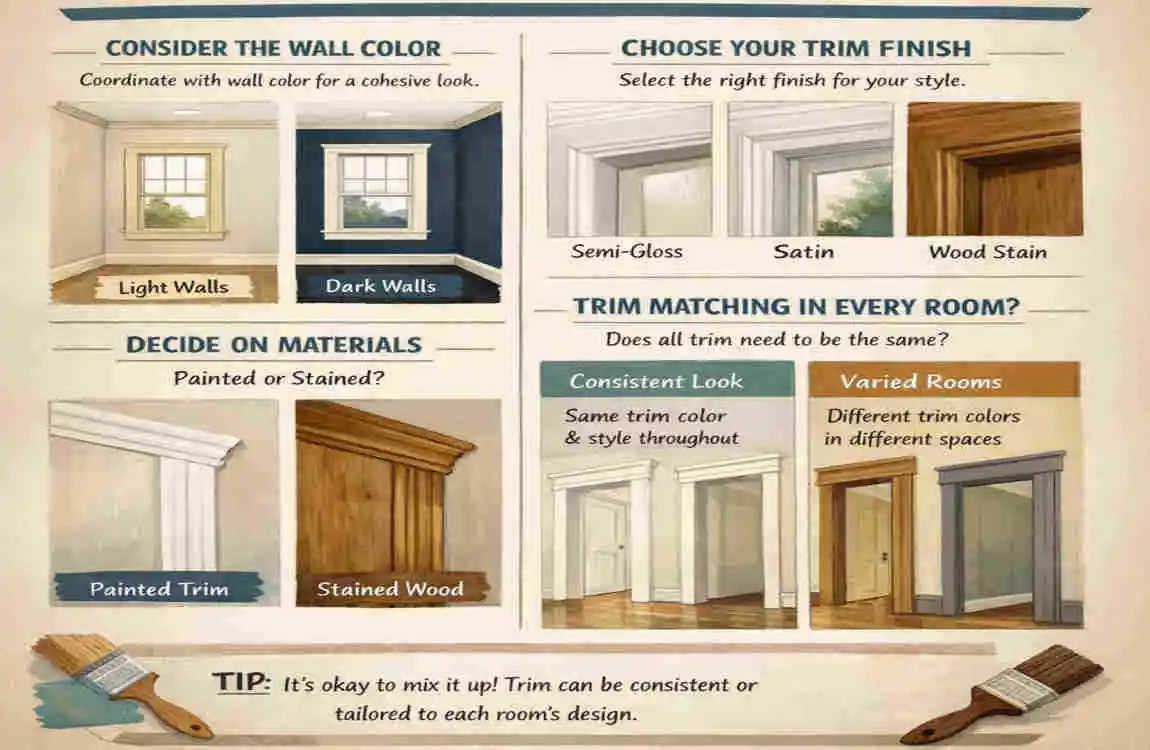
Trim should work with your walls, floors, and furniture. If your floor is dark, bright white trim can create a clean contrast. If your room already has strong features, a softer trim colour may work better.
Finish and material matter.
The finish changes how the trim looks under light. Matte feels subtle, satin gives a gentle shine, and semi-gloss is easier to clean. For materials, wood offers a classic look, MDF is budget-friendly, and other options may work better in damp spaces. Choose what fits both style and daily use.
Trim ChoiceBest ForDesign Effect
White trim Most interiors Clean and timeless
Black trim Modern or bold spaces Strong contrast
Natural wood trim Warm or classic homes Rich and natural feel
MDF trim Budget-conscious updates Smooth and practical
Common Trim Design Mistakes to Avoid
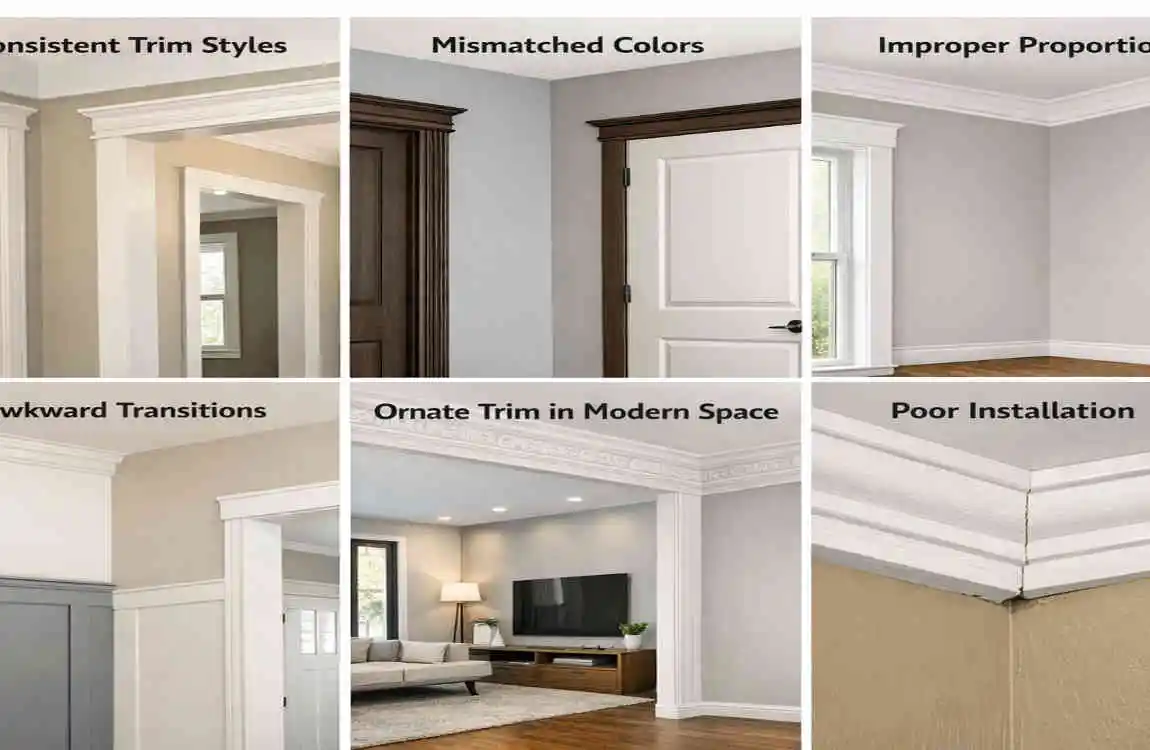
Too many changes can feel messy.
One of the most common mistakes is mixing too many trim colours or profiles at once. When every room looks different without a clear plan, the house can feel disconnected. A few changes are fine, but too many can distract the eye.
Transitions matter
If one room has very different trim from the next, the transition should feel intentional. Without that care, the change may seem accidental. Always think about how rooms connect before making a major trim decision.
Watch the finish
Using different paint finishes without a reason can also create problems. A glossy trim in one room and a flat finish in the next may look uneven unless the change is part of the design plan. Consistent finishes often help the whole house feel smoother.
Practical Tips for Creating a Balanced Trim Design
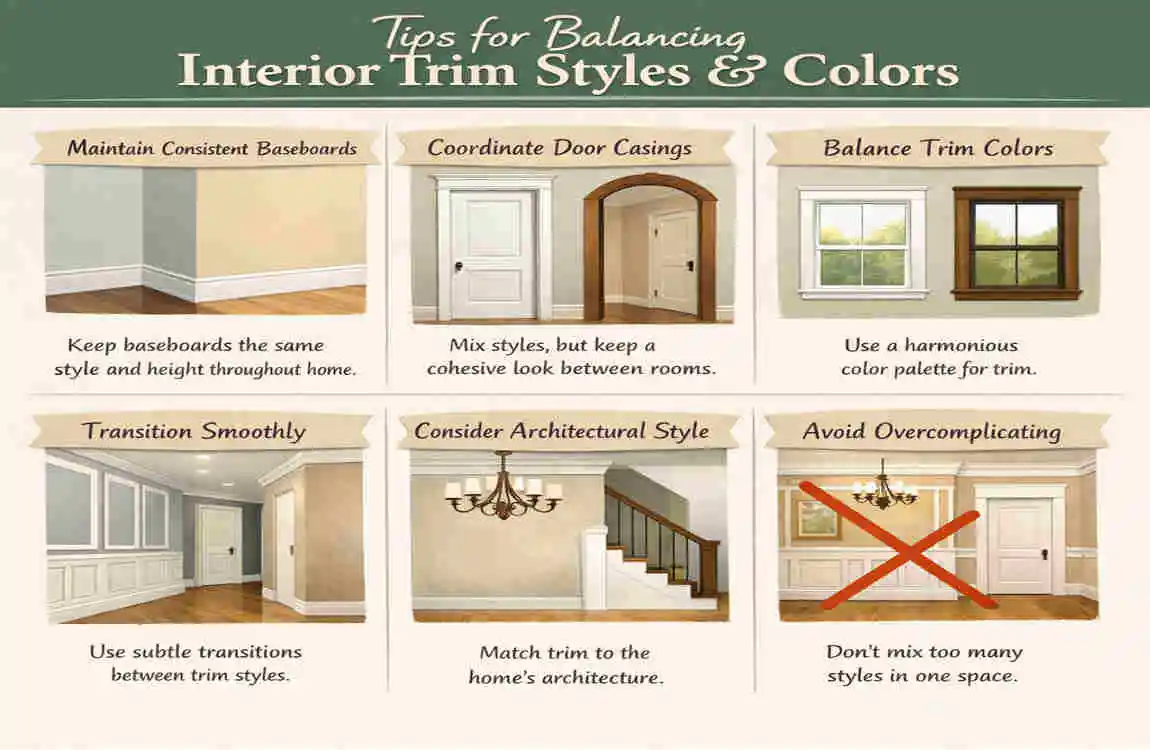
Start with the home’s style.
Look at the overall architecture first. A home with classic details may need more traditional trim, while a newer home may work better with simple shapes. Let the house guide the home design instead of forcing one idea into every room.
Choose a main trim look.
Pick one primary trim colour and profile as your base. From there, decide whether any room should differ. This makes it easier to keep the home connected while still allowing small changes where they matter most.
Test before you commit
Paint samples can look very different in natural light and evening light. Try them in more than one room before making a final choice. This small step can save time, money, and frustration later.
Update room by room if needed
If you are renovating on a budget, you do not have to change everything at once. You can update one room at a time and still keep the overall look coordinated. Just make sure each new choice supports the rest of the home.
Frequently Asked Questions (FAQ)
Does trim have to match throughout the house?
No. Trim can vary between rooms, but consistent colours or complementary styles often create a more connected appearance.
Should baseboards and door trim be the same colour?
They often look cohesive when they match, though contrasting colours can work if they fit the room’s design.
Can you use different trim colours in different rooms?
Yes. Different trim colours can help define spaces, especially when they coordinate with nearby rooms.
Should window trim match door trim?
Matching is common, but different finishes can work if they suit the home’s style and layout.
Should trim match the walls or the floor?
It can coordinate with either. White trim adds definition, while wall-colored trim creates a softer, more blended look.
Is white trim still a good choice for modern homes?
Yes. White trim remains a strong choice, but wood tones, dark trim, and colour-matched trim can also look great in modern spaces.