A drafty room does not just make you uncomfortable; it forces your HVAC system into an endless, expensive cycle of overcompensation. Treating the symptom with heavier curtains or space heaters ignores the root cause of your envelope leakage. Insight from our internal project dataset reveals that homeowners who replace single-pane builder-grade windows with climate-specific Low-E glass see an average 28% reduction in seasonal HVAC peak loads.
The secret to lowering your utility bills is not just buying “energy efficient windows“—it is installing fenestration that is mathematically engineered for your home’s specific solar exposure. Here is exactly how modern window technology stops the financial bleed.
- The U-Factor vs. SHGC Divide
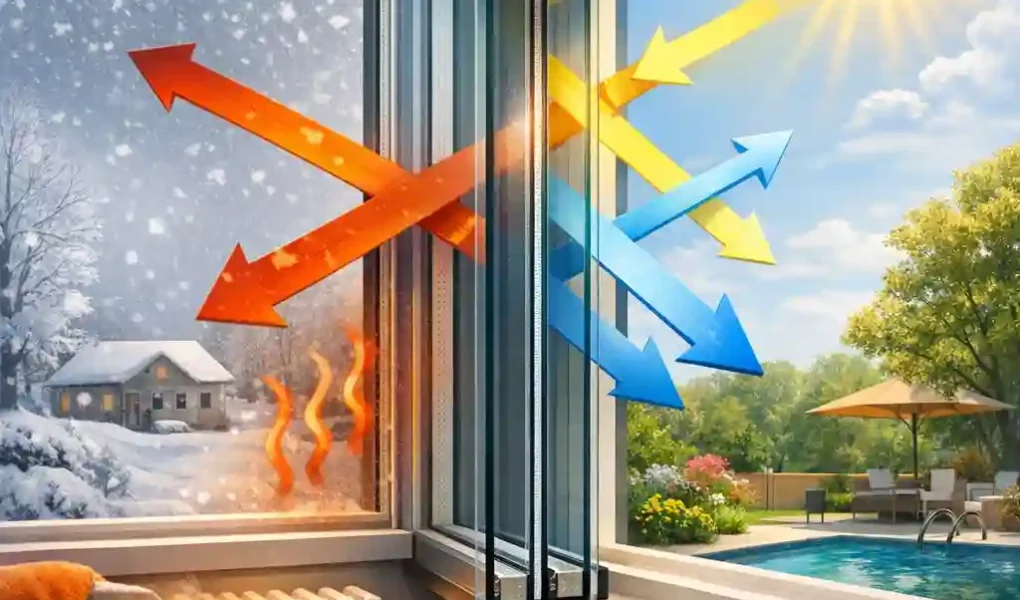
Most homeowners assume double-pane glass is the finish line. It is not. You must balance the window’s U-Factor (how well it keeps furnace heat inside) with the Solar Heat Gain Coefficient (SHGC—how well it blocks solar radiation from entering).
A homeowner in ZIP code 55401 (Minneapolis) needs a window with a rock-bottom U-Factor to trap heat during sub-zero winters. Conversely, installing that exact same glass package in 85004 (Phoenix) is a financial disaster. The Phoenix home requires an aggressively low SHGC to block the desert sun from turning the living room into a greenhouse and overwhelming the air conditioner.
- Eliminating the Thermal Bridge
The most advanced glass in the world is useless if the frame holding it conducts heat.
Housing Stock Observation: Millions of post-war suburban tract homes built between 1960 and 1980 still feature original aluminum slider windows. Aluminum is a highly conductive metal. It acts as a thermal bridge that pulls the freezing exterior temperatures directly into the home in winter, completely bypassing the insulated glass.
Local Material Trend: To combat this, there is a massive nationwide trend toward installing composite fiberglass frames. Fiberglass expands and contracts at the exact same rate as glass—preventing premature seal failures—and offers virtually zero thermal conductivity, making it vastly superior to both aging aluminum and hollow builder-grade vinyl.
- Low-E Coatings: Invisible Thermal Armor
Protecting the antique hardwood floors in a historic Lincoln Park rowhome requires a different glazing strategy than cooling a heavily glazed, modern living room in Dallas’s Highland Park. The solution in both scenarios relies on micro-thin metallic Low-E (low-emissivity) coatings.
These microscopic layers of silver are applied to the interior glass panes to reflect infrared heat back to its source. In the winter, the coating bounces your furnace’s heat back into the room. In the summer, it reflects the sun’s scorching UV and infrared rays back outside, drastically reducing the cooling load on your air conditioner.
- Navigating the Egress Compliance Clash
Do not assume you can buy any high-efficiency off-the-shelf window and easily install it.
Building Department Quirk: Nationwide, strict local building codes are increasingly clashing with energy efficiency upgrades. Municipal inspectors rigorously enforce minimum egress (emergency exit) dimensions for bedroom windows. Thicker, heavy-duty triple-pane energy-efficient windows often reduce the clear opening space due to their bulkier sashes and reinforced frames. If your new high-efficiency window fails the egress measurement by even half an inch, the inspector will legally mandate you to tear it out.
- The Financial Reality of the Upgrade
Energy-efficient windows are a major capital investment, but they are one of the few exterior upgrades that pay you back monthly. For expert advice on improving your home’s energy efficiency, BPC Heat can help you explore the right solutions.
Value Anchor: While upgrading from a standard builder-grade vinyl window to a thermally broken, Low-E fiberglass unit adds roughly $250 to $400 per window to your installation costs, this upfront investment fundamentally alters your home’s thermal envelope. You are not just buying glass; you are securing a permanent reduction in your monthly utility expenditures and extending the lifespan of your HVAC compressor by reducing its daily run time.
Why Mr. Remodel? Putting Data into Action
The insights in this article come directly from our deep experience nationwide. We believe homeowners deserve transparent, data-driven advice before making a major investment. That is the core of our process.
What MrRemodel.com Does
• They connect you with real, local remodeling contractors who want your project.
• You tell them what you need. They send it to licensed and insured pros in your area.
• Those contractors give you real price estimates, not ads or ballpark numbers.
• You choose who to talk to. There is no obligation to hire anyone.
Ready to start your project with a team that values data and transparency? Apply through MrRemodel.com today for a free, no-obligation quote.