Selling a home sounds straightforward until real life gets involved. In theory, you list the property, hold a few viewings, accept an offer, and move on. In practice, timing, finances, family changes, and the condition of the property can completely alter what “the best option” looks like.
That is why a good selling strategy starts with your circumstances, not with a blanket rule about always chasing the highest offer or always prioritising speed. For one seller, waiting a few extra months for a stronger price makes sense. For another, certainty and simplicity are far more valuable than holding out for a perfect buyer.
Start With the Real Reason You’re Selling
Before comparing routes to market, it helps to be honest about what is driving the sale. Are you relocating for work? Dealing with probate? Trying to avoid a chain? Managing a divorce or a change in finances? Each of these scenarios creates different priorities.
When speed matters more than maximising price
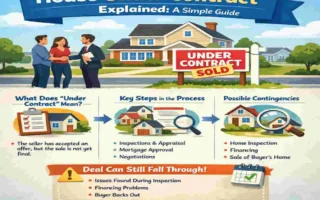
If you need to move quickly, the traditional route can feel frustrating. Even when a buyer is found, surveys, mortgage approvals, renegotiations, and chain delays can drag things out for months. A high offer is not always the same as a reliable outcome.
That does not mean you should abandon the open market automatically. It does mean you should look at speed as part of the value equation. A slightly lower but dependable offer can sometimes leave you better off than an ambitious offer that falls apart six weeks later.
Property condition changes your options
Condition is another major factor. Homes that are modern, well presented, and mortgageable tend to suit a conventional estate agent sale. Properties with structural issues, dated interiors, short leases, non-standard construction, or tenant complications may not.
This is where sellers often lose time. They assume every property should be marketed in the same way, then wonder why viewings stall or why buyers keep trying to chip away at the price. Some homes appeal to owner-occupiers. Others are more realistically suited to investors, developers, or specialist buyers.
Understanding the Main Selling Routes
There is no single “best” way to sell. There are several, and each serves a different need.
The traditional estate agent route
This remains the default for a reason. If your home is in good condition and you are not under immediate pressure, listing with a reputable local agent can expose the property to the widest pool of buyers. That competition may help you achieve a stronger price.
The trade-off is uncertainty. Offers can be withdrawn, buyers can fail to secure finance, and chains can collapse. If time is tight, that risk matters.
Direct sale and fast-sale options
For some sellers, a direct sale is the more practical route. If you need to sell your property right away because of relocation, inherited property, arrears, or a broken chain, it can be worth exploring options outside the standard estate-agent model. The appeal is usually speed, predictability, and fewer moving parts.
That said, convenience has a cost. Offers may come in below full open-market value, so the key is understanding what you are gaining in exchange: a faster timeline, less exposure to fall-through risk, and a simpler process. In some cases, that trade-off is sensible. In others, it is not.
Auctions and hybrid approaches
Auctions can work well for unusual, run-down, or highly sought-after properties where competitive bidding is likely. They can also bring structure and urgency to the process. But auctions are not automatically quick or profitable for every seller. Fees, reserve pricing, and the type of buyer attracted all need careful consideration.
There are also hybrid routes, such as listing conventionally for a limited period before moving to auction or considering direct offers. Flexibility can be useful if your first-choice route does not deliver.
Look Beyond the Headline Offer
One of the biggest mistakes sellers make is comparing options based only on advertised price.
A higher offer is not always a better outcome
If Buyer A offers £300,000 but depends on selling their own property, and Buyer B offers £287,000 with proof of funds and no chain, the second offer may be more secure. Once you factor in mortgage payments, council tax, utilities, insurance, and the cost of keeping the property on the market, the gap can narrow quickly.
This is especially true if the home is empty. Vacant properties often cost more than owners expect, and delays can eat into any price advantage.
Your own bandwidth matters too
Selling a property can be emotionally draining. That is not a soft factor; it is a practical one. If you are dealing with bereavement, separation, financial stress, or a long-distance move, a process that requires constant cleaning, viewings, negotiation, and uncertainty may be more difficult than it first appears.
The right solution should work not only on paper but in the context of your life. There is no prize for choosing the most stressful route if it is not the best fit.
How to Choose With Confidence
A sensible decision usually comes down to asking the right questions. What matters most: price, speed, certainty, or convenience? How saleable is the property in its current condition? How much risk can you tolerate if a buyer pulls out? And what will it cost you, financially and personally, if the process drags on?
It also helps to get more than one perspective. Speak to a local estate agent. If the property is unusual or the circumstances are urgent, explore auction and direct-sale routes as well. Compare realistic net outcomes, not just optimistic quotes. Ask for clear timescales, likely deductions, and evidence behind any valuation.
The Best Selling Route Is the One That Matches Reality
The property market often rewards nuance. A house in great condition, in a strong area, with a seller who can wait, should usually be marketed differently from a probate flat that needs refurbishment or a home sale tied to a looming relocation date.
In other words, the smartest selling solution is not the one people talk about most. It is the one that aligns with your timeline, your tolerance for risk, and the property itself. Once you frame the decision that way, the options become easier to assess, and the “right” path tends to reveal itself.