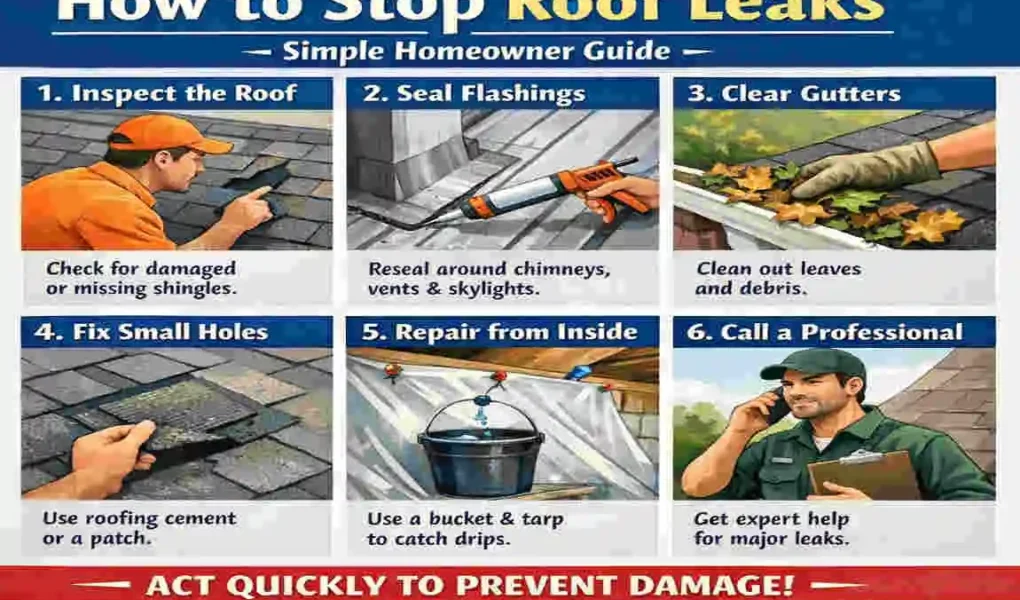
A leaking roof can quickly become a big and expensive problem. Even a small drip can damage drywall, insulation, wood, and paint. If you wait too long, the repair bill can grow fast.
That is why learning how to stop a leaking roof matters. The good news is that some leaks can be controlled right away with simple emergency steps. Then, once the weather is safe, you can make a more permanent repair.
What Causes Roof Leaks?
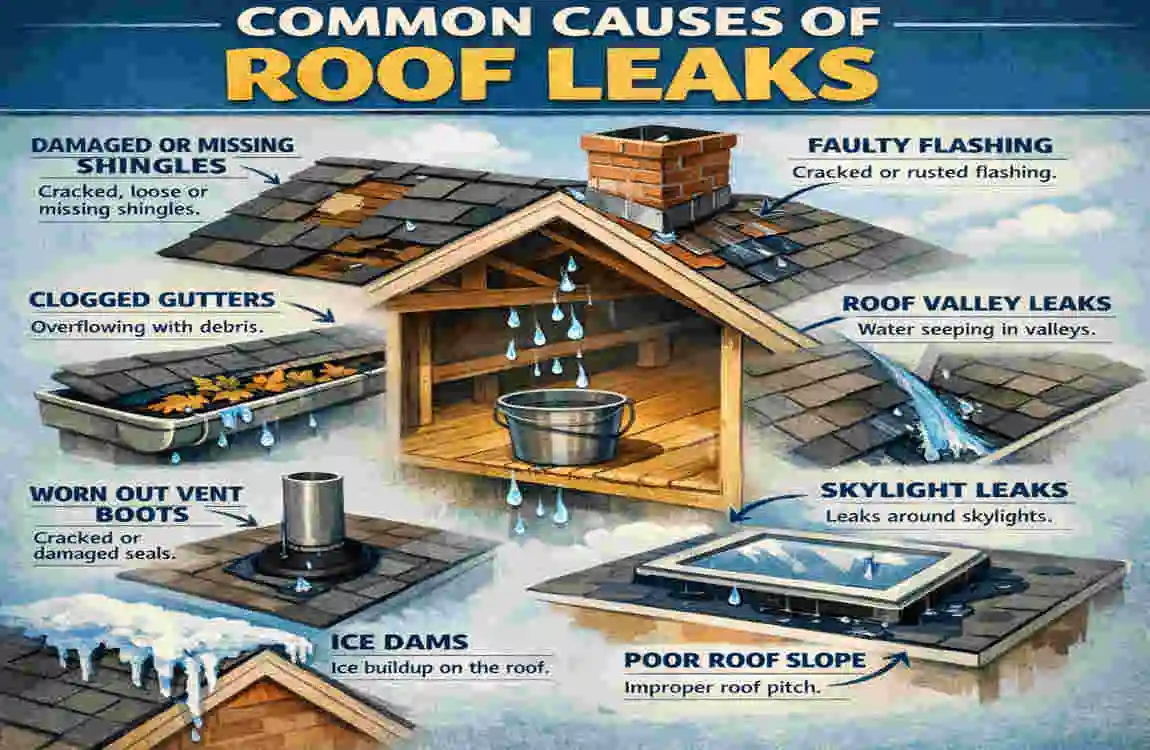
Damaged or Missing Shingles
Shingles can break, lift, or blow off in strong wind. Over time, old shingles also crack and wear out.
When this happens, water can move beneath the roof covering and leak inside.
Cracked Flashing
Flashing is the thin metal that seals weak spots on the roof. It is often found around:
- Chimneys
- Roof valleys
- Skylights
If flashing cracks or pulls loose, water can slip through the opening.
Clogged Gutters
When gutters fill with leaves and dirt, water cannot drain properly. It can overflow and back up toward the roof edge.
That can lead to leaks near the fascia, soffit, or attic area.
Worn Roof Sealants
Sealants around vents and pipe boots can dry out and split. Once that happens, water can enter through tiny gaps.
Ice Dams and Heavy Rain
Cold weather and heavy storms can both stress a roof. Ice dams trap water, while heavy rain can force water into weak areas.
How to Identify a Roof Leak
Indoor Warning Signs
Look for these signs inside your home:
- Water stains on ceilings
- Ceiling discoloration
- Mold growth
- Damp insulation
If you see any of these, the leak may already be active.
Outdoor Inspection
From the ground, look for:
- Broken shingles
- Damaged flashing
- Sagging roof sections
A roof often shows damage before a leak becomes visible indoors.
Safe Roof Inspection Tips
Do not rush onto a roof if it is wet or steep. Use binoculars from the ground if needed. Safety should always come first.
How to Stop a Leaking Roof Step by Step
Locate the Leak
Start by finding where the water is entering. Remember, the leak inside your home may be far from the actual source of the roof damage.
Check the attic, ceilings, and walls for the wettest spot.
Protect Your Home Interior
Place buckets under drips. Move furniture, rugs, and electronics away from the leak area.
If water is spreading, use towels or plastic sheets to protect the room.
Apply a Temporary Roof Tarp
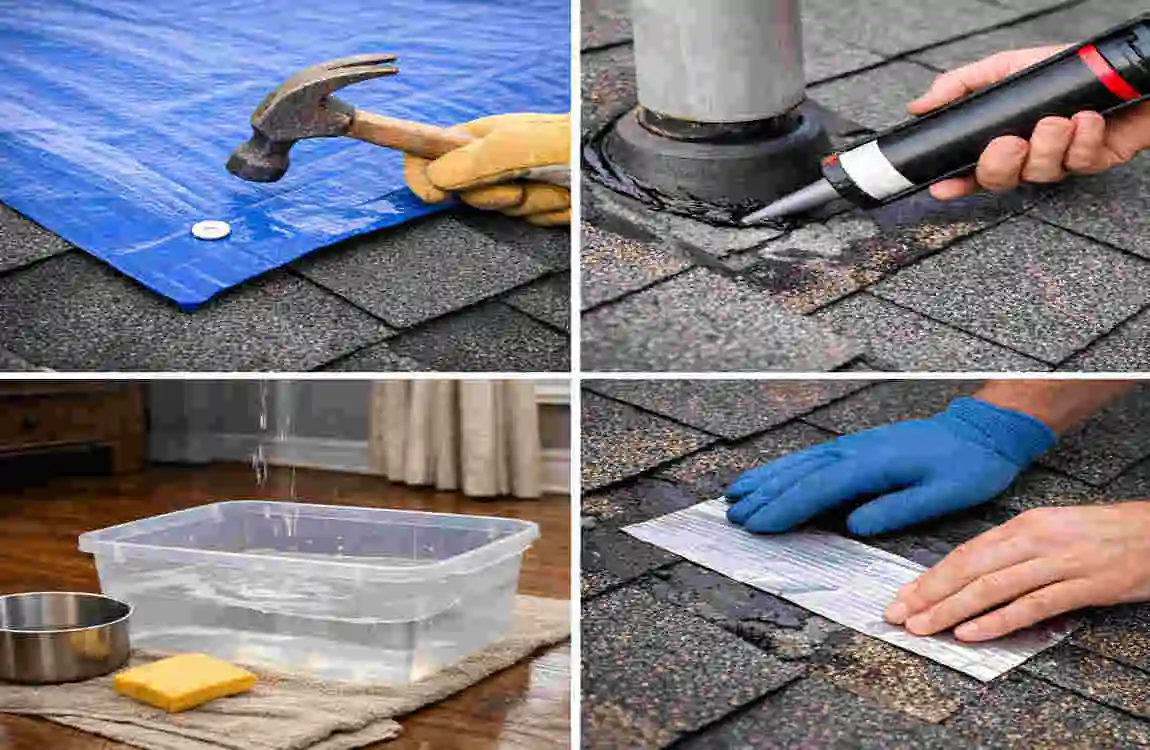
A roof tarp is one of the fastest ways to slow water damage. Cover the damaged section and secure the tarp well.
This is not a permanent fix, but it helps during storms or before a roofer arrives.
Seal Small Cracks with Roofing Cement
For small cracks, use roofing cement or sealant. Apply it carefully over minor splits or gaps.
This works best for small, visible problems, not major roof damage.
Replace Missing Shingles
If a few shingles are missing or loose, replace them as soon as possible. This helps restore the protective layer on your roof.
Repair Damaged Flashing
If flashing is loose or cracked, it should be resealed or replaced. This is one of the most common roof leak repair jobs.
Test the Repair
After the repair, check for more dripping during the next rain. If water still enters, the issue may be bigger than it first looked.
Emergency Roof Leak Fixes
Using a Waterproof Tarp
A tarp can protect the roof until a proper repair is done. Make sure it overlaps the damaged area and is tightly secured.
Roofing Tape
Roofing tape can help temporarily seal small cracks and gaps. It is useful for emergency patching.
Roofing Sealant
Sealant works well for tiny openings around flashing, vents, or nails. It should be used on clean, dry surfaces.
Plastic Sheeting for Interior Protection
Inside the home, plastic sheeting can protect floors and furniture from dripping water.
Tools and Materials Needed
Tool/MaterialPurpose
Roofing Cement Seal small cracks
Roof Tarp Temporary leak protection
Roofing Nails Secure shingles
Hammer Install shingles
Utility Knife Cut roofing material
Caulking Gun Apply sealant
Ladder Safe roof access
Safety Harness Fall protection
DIY Roof Repair vs Hiring a Professional
When DIY Is Safe
DIY may be okay for:
- Small leaks
- Loose shingles
- Minor flashing repairs
If the problem is simple and the roof is safe to access, you may be able to handle it.
When to Call a Roofer
Call a professional if you see:
- Structural damage
- Multiple leaks
- Large roof areas involved
- Steep or unsafe roof sections
A roofer can find hidden damage and make a lasting repair.
Mistakes to Avoid
Ignoring Small Leaks
A tiny leak can become major damage over time. Do not wait.
Walking on a Wet Roof
Wet roofs are slippery and dangerous. Avoid climbing up unless it is safe.
Using the Wrong Sealant
Not every sealant works for roofing. Use a product made for roof repair.
Delaying Repairs
Even temporary leaks should be fixed quickly. Waiting usually makes the problem worse.
Skipping Safety Equipment
Always use proper gear if you go on the roof. Safety matters more than speed.
How to Prevent Future Roof Leaks
Schedule Roof Inspections
Check your roof at least twice a year. This helps catch problems early.
Clean Gutters Regularly
Clear gutters help water drain away properly.
Trim Overhanging Trees
Branches can damage shingles and drop debris onto the roof.
Replace Damaged Shingles Early
Do not leave broken shingles in place. Replace them quickly.
Inspect Flashing Every Year
Flashing should be checked around chimneys, vents, and valleys.
Improve Attic Ventilation
Good attic airflow helps reduce moisture and heat buildup.
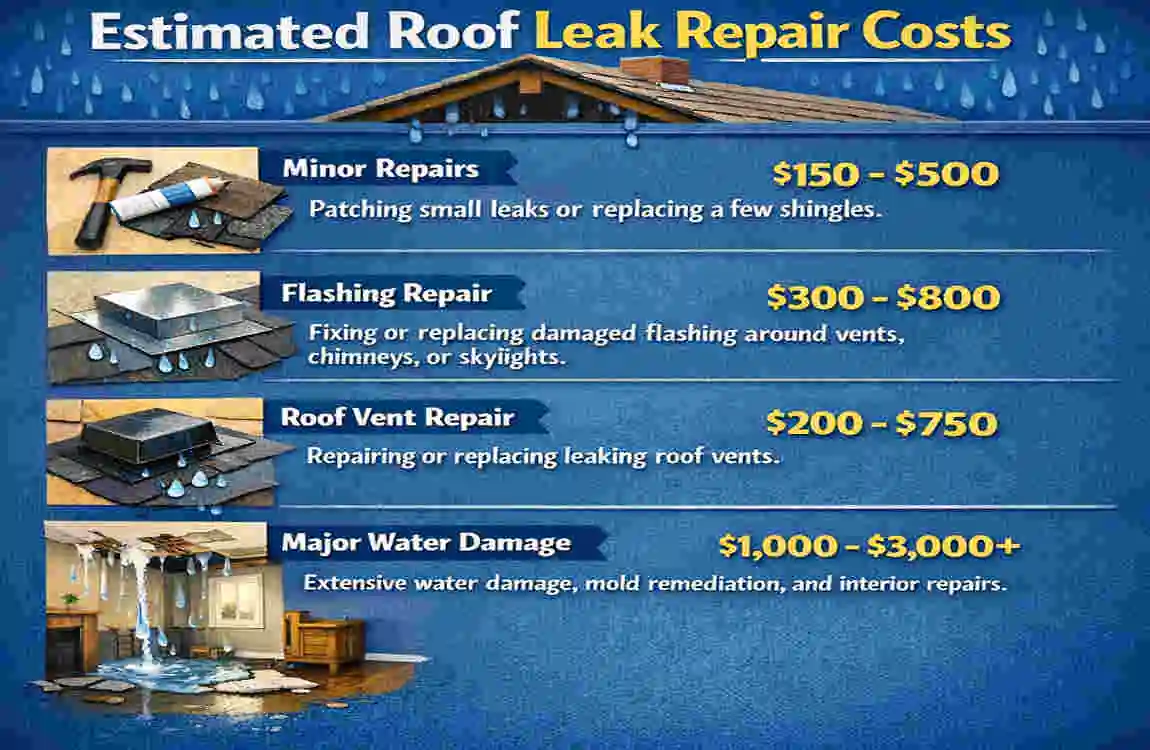
Estimated Roof Leak Repair Costs
Repair Type Average Cost (USD)
Minor Sealant Repair $150–$400
Flashing Repair $200–$600
Shingle Replacement $200–$800
Roof Leak Repair $300–$1,200
Partial Roof Replacement $1,500–$5,000
Full Roof Replacement $6,000–$20,000+
Pro Tips for Long-Term Roof Protection
- Inspect your roof twice a year
- Fix damaged shingles right away
- Remove debris after storms
- Keep gutters and downspouts clear
- Maintain attic ventilation
- Check roof penetrations regularly
Frequently Asked Questions
How do you temporarily stop a leaking roof?
Use a waterproof tarp, roofing tape, or roofing sealant to reduce water entry until repairs are made.
What is the best sealant for a leaking roof?
A roofing sealant or cement designed for exterior use is usually best for small leaks.
Can I repair a roof leak myself?
Yes, for small leaks and minor shingle or flashing issues. Bigger problems should go to a roofer.
How do I find the exact source of a roof leak?
Check the attic, look for stains, and inspect the roof above the wet area. The entry point is often higher than the indoor drip.
Does homeowners insurance cover roof leaks?
Sometimes, especially if the leak was caused by a sudden event, such as a storm, damage from neglect may not be covered.
How much does it cost to repair a leaking roof?
Small repairs may cost $150 to $400, while larger repairs can cost much more.
| Topic | Information |
|---|---|
| What Is a Roof Leak? | A roof leak occurs when water enters your home through damaged roofing materials or weak points. |
| Common Causes | Broken shingles, cracked flashing, clogged gutters, damaged roof vents, worn sealant, or storm damage. |
| Early Warning Signs | Water stains on ceilings, damp walls, mold growth, peeling paint, musty odors, or dripping water. |
| Temporary Fixes | Cover the damaged area with a waterproof tarp, apply roofing sealant, or use roofing tape until permanent repairs are made. |
| Permanent Solutions | Replace damaged shingles, repair flashing, reseal roof penetrations, clean gutters, and fix damaged underlayment if needed. |
| Tools Needed | Roofing sealant, replacement shingles, hammer, roofing nails, pry bar, ladder, utility knife, and safety gear. |
| Safety Tips | Never work on a wet or steep roof. Use a sturdy ladder, wear non-slip shoes, and consider hiring a professional for major repairs. |