A roof cap is a small but important part of your roofing system. It sits at key points on the roof. It helps control airflow, prevent water infiltration, and protect the home from external damage. Many homeowners do not notice it until something goes wrong, but it plays a big role in keeping the roof working well.
If you are learning how to install roof cap, it helps to first understand why it matters. A roof cap supports attic ventilation, helps reduce moisture, and adds another layer of protection against weather and debris. In simple terms, it helps your roof breathe while staying sealed.
| How It Helps | ||
|---|---|---|
| Enhances Ventilation | Vented ridge caps allow air to circulate freely, letting warm/moist air escape from the attic | |
| Protects Against Weather Damage | Withstands high winds, rain, snow, and ice, preventing water intrusion | |
| Extends Roof Lifespan | Safeguards the most vulnerable area where roof slopes meet, delaying replacement | |
| Prevents Roof Leaks | Seals the ridge line to stop rain, snow, and ice from penetrating | |
| Improves Energy Efficiency | Better air circulation reduces need for AC/heaters, lowering energy consumption | |
| Enhances Curb Appeal | Creates a polished, finished look that increases home value | |
| Keeps Pests Out | Prevents insects and small animals from entering the home | |
| Reduces Moisture & Mold Risk | Regulates attic temperature and moisture levels, preventing mold growth |
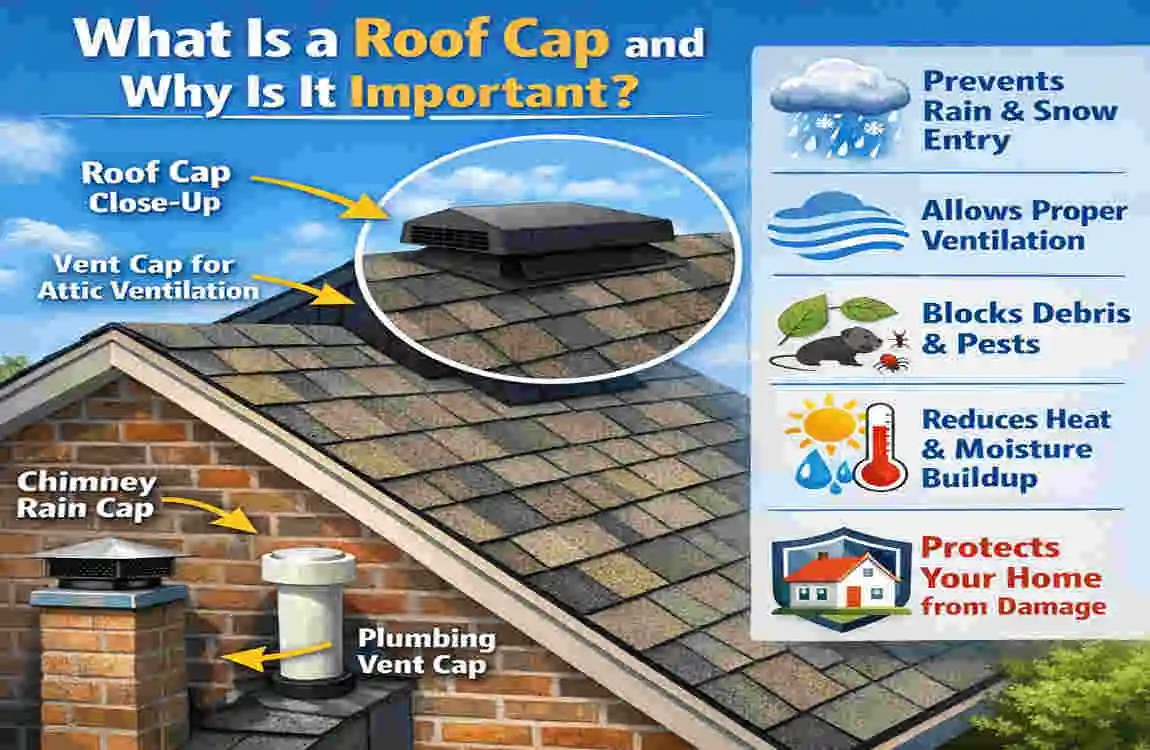
There are several common types of roof caps used on homes. Some help with ventilation, some cover ridges, and others protect exhaust openings. Each type serves a useful purpose in residential roofing solutions.
What Is a Roof Cap and Why Is It Important?
Definition of a Roof Cap
A roof cap is a cover or finishing piece placed over a roof opening, ridge, vent, or exhaust point. Its main job is to protect the opening while still allowing proper airflow where needed.
Common Types of Roof Caps
Some of the most common types include:
- Vent roof caps
- Ridge caps
- Chimney caps
- Exhaust roof caps
How Roof Caps Work
Roof caps support the roof ventilation system by guiding air in and out of the attic. At the same time, they help keep out rain, snow, dirt, and pests. This balance is important for roof protection tips and long-term roof health.
Signs Your Home Needs a New Roof Cap
Watch for these signs:
- Water leaks
- Poor attic ventilation
- Rust or corrosion
- Damaged flashing
If you notice any of these, roof cap replacement may be needed soon.
How to Install Roof Cap: Step-by-Step Overview
Tools and Materials Needed
Before starting, gather:
- Roof cap
- Roofing nails
- Roofing cement
- Drill
- Measuring tape
- Safety equipment
Preparing the Roof Surface
Start by inspecting the area where the cap will go. Remove old parts, loose nails, dirt, and debris. A clean surface helps the new cap sit properly and seal better.
Installation Process
Here is a simple overview of how to install roof cap:
- Measure and mark the location
- Cut the opening if needed
- Position the roof cap
- Secure it with fasteners
- Apply sealant and flashing
Safety Precautions During Installation
Roof work can be risky. Always use a strong ladder, wear fall protection, and avoid working in bad weather. Wet or windy conditions can make the job dangerous.
When to Hire a Professional
You may want a roofing contractor if your roof has a steep slope, a complex design, or deeper damage. A professional can also help if you are not comfortable installing the roof cap yourself.
Improves Roof Ventilation
Importance of Proper Airflow
A roof cap helps air move through the attic. This prevents heat buildup and supports better attic ventilation, which is especially useful in hot weather.
Impact on Indoor Comfort
When hot air escapes more easily, your home can feel cooler and more balanced. You may notice better temperature control throughout the house.
Energy Efficiency Advantages
Good airflow can reduce pressure on your HVAC system. That means less strain and often lower utility bills.
Prevents Moisture Damage
How Moisture Affects Roofing Systems
Too much moisture can lead to mold growth and wood rot. Over time, this can weaken the roof structure and lead to costly repairs.
Role of Roof Caps in Moisture Control
Roof caps help vent humid attic air. This reduces condensation and helps keep moisture from collecting in hidden areas.
Long-Term Structural Protection
By controlling moisture, a roof cap helps protect rafters, decking, and insulation. This supports the strength of the whole roof system.
Extends Roof Lifespan
Reduced Wear and Tear
A well-placed roof cap helps your roof work more smoothly. Better ventilation and lower moisture exposure can reduce early damage.
Protection Against Environmental Stress
Rain, snow, and UV rays can slowly wear down roofing materials. A roof cap adds another layer of defense against these pressures.
Lower Maintenance Requirements
When the roof is better protected, you may face fewer repairs and fewer major issues over time. That can mean longer gaps between replacements.
Keeps Pests and Debris Out
Common Roofing Intruders
Birds, rodents, and insects may try to enter roof openings. A roof cap makes that much harder.
Debris Protection
Leaves, twigs, and dirt can block airflow and create buildup. Roof caps help keep these materials out of sensitive roof areas.
Maintaining a Cleaner Ventilation System
When the system stays clear, air moves better and blockages are less likely. That supports the whole roof ventilation system.
Enhances Energy Efficiency
Relationship Between Ventilation and Energy Use
When warm air escapes properly, your home stays more balanced. That helps your heating and cooling systems work more efficiently.
Reduced Cooling Costs
In summer, proper roof cap installation can help reduce attic heat. This often leads to lower cooling costs and better comfort.
Reduced Heating Costs
In winter, it helps control moisture and reduce unwanted heat loss patterns. That supports a more efficient home overall.
Environmental Benefits
Using less energy is good for your budget and the environment. It is one more reason roof cap installation is a smart upgrade.
Protects Against Weather Damage
Defense Against Heavy Rain
Roof caps help reduce the chance of leaks around roof openings. They also guide water away from vulnerable areas.
Wind Resistance Benefits
A well-secured roof cap stays in place during strong winds and helps protect roof openings from exposure.
Snow and Ice Protection
Snow and ice can create moisture problems if they enter the roof system. Roof caps help limit that risk.
Year-Round Weather Performance
No matter the season, roof caps provide steady protection. That makes them a reliable part of residential roofing solutions.
Improves Indoor Air Quality
Removal of Excess Humidity
When moisture leaves the attic more easily, the air inside your home often feels fresher and less stale.
Reducing Mold and Mildew Risks
Less trapped moisture means fewer chances for mold and mildew to grow. That is better for both the home and your health.
Creating a Healthier Living Environment
Better air circulation supports a more comfortable home. If you value simple roof protection tips, this is one of the most important ones.
Increases Home Value and Curb Appeal
Modern Roofing Appearance
A clean, well-fitted roof cap can improve the look of your roof. Small details often make a home look better cared for.
Appeal to Potential Buyers
Buyers often pay attention to roof condition during inspections. A healthy roof ventilation system can help build confidence.
Return on Investment
Roof upgrades often pay off over time. A proper roof cap installation can support long-term property value and lower future repair costs.
Choosing the Right Roof Cap for Your Home
Consider Roof Type
Different roofs need different caps. Asphalt shingles, metal roofing, and tile roofs may all need specific styles.
Material Options
Common materials include:
Material Main Benefit
Aluminum Lightweight and rust-resistant
Galvanized steel Strong and durable
Copper Long-lasting and attractive
Plastic Affordable and simple
Size and Ventilation Requirements
The cap should match your airflow needs. A cap that is too small may not ventilate well, while one that is too large may not seal properly.
Climate Considerations
Your local weather matters too. If your area gets heavy rain, snow, or strong sun, choose materials that withstand those conditions.
Common Mistakes to Avoid When Installing a Roof Cap
Incorrect Measurements
If the cap does not fit right, it may leak or fail early.
Poor Sealing Techniques
Weak sealing can let in water and reduce roof protection.
Using Low-Quality Materials
Cheap materials may wear out faster and need earlier replacement.
Ignoring Manufacturer Instructions
Always follow the product guide closely for the best result.
Overlooking Safety Measures
Never rush roof work. Safety should always come first.
Roof Cap Maintenance Tips
Regular Inspections
Check the roof cap at least once a year. Look for loose parts, cracks, or rust.
Cleaning Debris
Remove leaves, dirt, and other buildup so airflow stays open.
Checking for Rust or Damage
Damaged metal can weaken the cap and cause roof leaks.
Resealing When Necessary
If the seal starts to fail, fix it promptly to avoid more serious issues.
Scheduling Professional Roof Evaluations
A roofing expert can spot small problems before they become costly repairs.
Frequently Asked Questions About How to Install Roof Cap
How difficult is it to install a roof cap?
It depends on the roof type and your skill level. A simple roof may be manageable, but many homeowners prefer a professional.
Can I install a roof cap myself?
Yes, if the job is basic and you are comfortable working safely on a roof. If not, hire help.
How much does roof cap installation cost?
The cost depends on material, roof type, and labor. Simple projects are usually less expensive than complex ones.
How long does a roof cap last?
A quality roof cap can last many years with proper care and regular inspections.
What type of roof cap is best for attic ventilation?
A vent roof cap or ridge cap is often used for attic ventilation, depending on the roof design.
Do roof caps prevent leaks?
They help reduce the risk of leaks by covering openings and supporting proper sealing.
How often should roof caps be inspected?
Check them at least twice a year and after major storms.
Can a damaged roof cap increase energy bills?
Yes. Poor ventilation can make heating and cooling systems work harder.