If you have ever asked what is estate sale house, the simple answer is this: it is a home being sold as part of someone’s estate, usually after a major life event such as death, downsizing, or a move into care. These homes often come with furniture, belongings, and legal steps that set them apart from a typical home sale.
| Aspect | What It Is / How It Works |
|---|---|
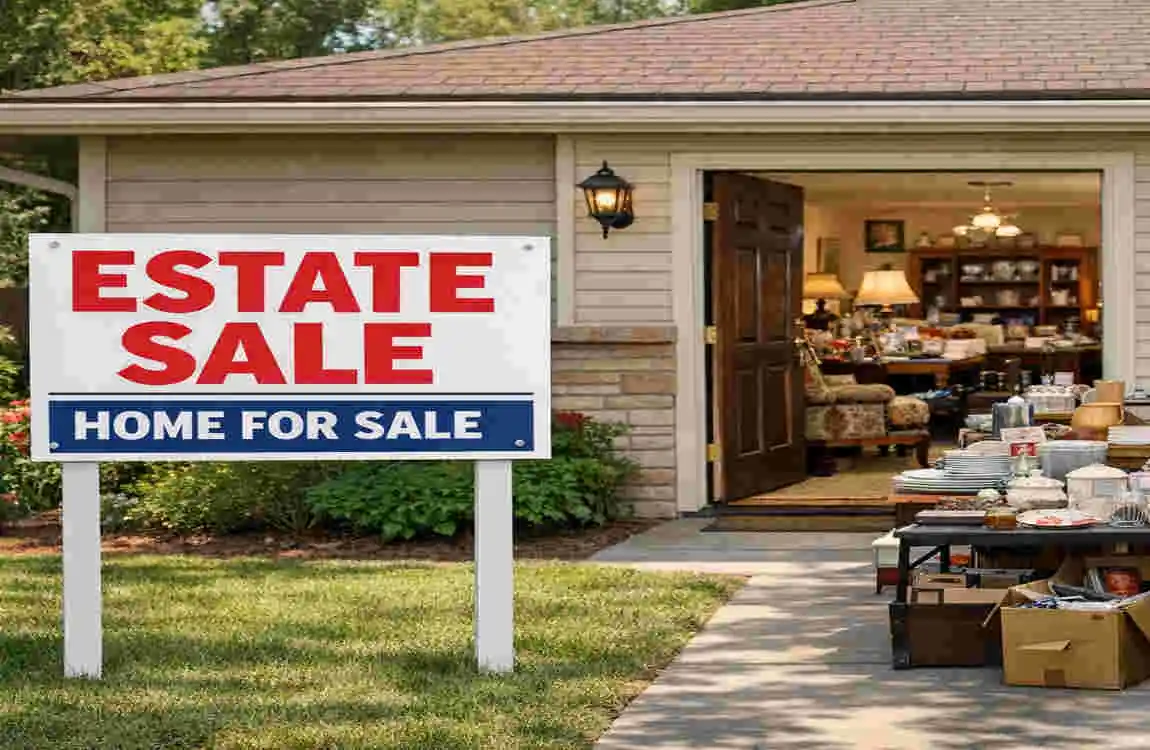
| Definition | An estate sale (also called a tag sale) liquidates a family’s belongings, typically held inside the home and often including everything in it |
| When It Happens | Common when someone is downsizing, moving, divorcing, filing bankruptcy, or has passed away |
| What’s Sold | Most or all home contents: furniture, antiques, collectibles, artwork, jewelry, kitchenware, tools, and occasionally vehicles |
| How It’s Run | Usually managed by professional estate sale companies who price items, advertise, stage the home, and manage the event |
| Pricing | Items have set prices (not bidding like auctions); prices often drop on later days to clear remaining items |
| Shopping Process | Buyers walk through the house room-by-room; most companies use first-come, first-served entry, sometimes with numbering systems |
| Duration | Typically lasts multiple days (often 2–3 days) |
| Buyers | Attracts antique collectors, resellers, interior designers, bargain hunters, and local shoppers |
Estate sale homes attract buyers, investors, and even first-time homeowners because they can offer value, unique features, and special buying opportunities. At the same time, they can also come with repair needs, paperwork, and emotional family situations. That is why it helps to understand the process before you buy or sell.
What Is an Estate Sale House?
Definition of an Estate Sale House
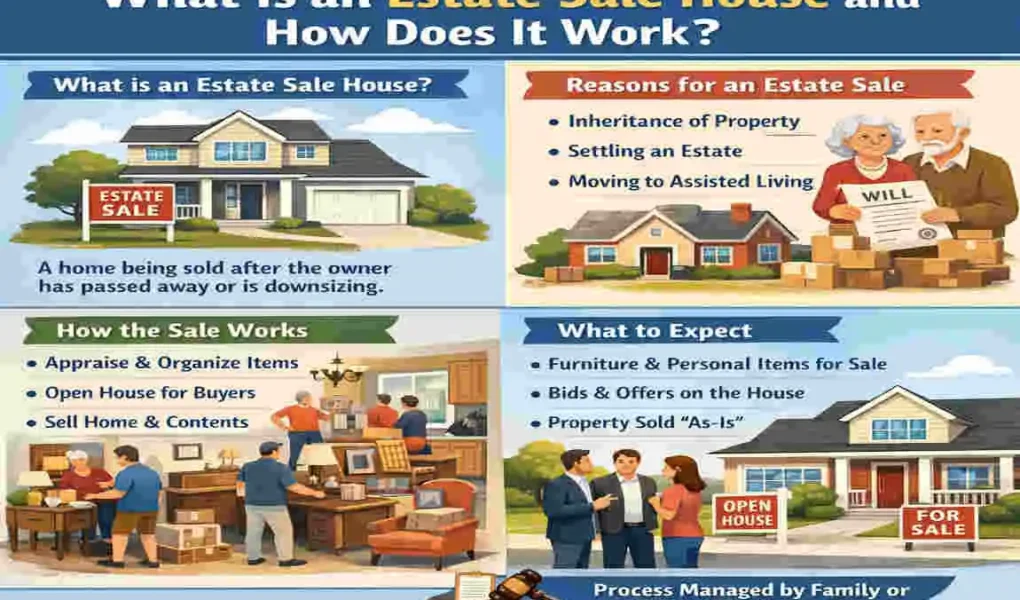
An estate sale house is a property sold from an estate, which is the legal collection of a person’s assets after they pass away or become unable to manage their affairs. Sometimes the term also applies when someone is selling their home and belongings because they are downsizing or relocating.
The main difference from a traditional home sale is that an estate property sale often includes personal items inside the house and may involve heirs, executors, probate courts, or estate attorneys.
Why Estate Sale Houses Are Sold
There are several common reasons why an estate home for sale enters the market:
- The homeowner has passed away
- The owner is downsizing
- The person is moving to assisted living
- Family members are settling an inherited property sale
- There are financial or legal reasons to sell
In many cases, the family wants to sell quickly and fairly, while also handling the belongings left behind.
Who Manages an Estate Sale House?
An estate sale process is usually managed by one or more of the following people:
- Executors
- Estate administrators
- Family members
- Probate attorneys
- Real estate agents
These people help ensure the home is sold legally and that the proceeds are distributed properly.
How Does an Estate Sale House Work?
Overview of the Estate Sale Process
The estate sale process usually begins with a property review. Someone checks the house, identifies its contents, and decides what belongs to the estate.
After that, the home may be cleaned out, repaired, or prepared for sale. In some cases, the sale of the home and the sale of the belongings happen at the same time. In other cases, they are handled separately.
Selling the Home and Contents
A key part of estate sale real estate is understanding that the house and its contents are not always sold together.
The belongings may be handled by:
- An estate sale company
- An auction service
- Family members
- Donation or disposal services
Then the real estate agent lists the house for sale. This makes the process a mix of property sales and the handling of personal property.
Distribution of Sale Proceeds
Once the house sells, the money usually goes first to:
- Pay debts
- Cover taxes
- Handle legal costs
- Settle the estate
After that, the remaining money is distributed to the heirs according to the will or local law.
Estate Sale House vs. Probate Sale
Understanding Probate Sales
A probate sale happens when a court oversees the sale of a property after the owner dies. Probate gives legal authority for the estate to be managed and sold.
Key Differences Between Estate Sales and Probate Sales
Here is a simple comparison:
FeatureEstate Sale HouseProbate Sale
Legal process May or may not involve court Usually involves court
Ownership Managed by executor or heirs Controlled through probate court
Timeline Can be faster Often slower
Approval Sometimes no court approval needed Court approval may be required
Common use General estate property sale Sale of assets after death
Which Option Is More Common?
The answer depends on the state, the estate’s paperwork, and whether the property has already been transferred to the heirs. In some areas, probate sales are very common. In others, the estate can sell the home with less court involvement.
Benefits of Buying an Estate Sale House
Potential Cost Savings
Many buyers consider buying an estate-sale house because the seller may want to close quickly. That can create better pricing opportunities.
This does not always mean the home is cheap, but it can mean the seller is more motivated and open to a fair deal.
Unique Property Features
Estate homes often have things you do not always find in newer houses, such as:
- Older craftsmanship
- Large yards
- Solid building materials
- Homes in established neighborhoods
For many buyers, these features make the property more attractive.
Less Competition in Some Markets
Some buyers avoid estate properties because they worry about repairs or legal steps. That can mean less competition for you if you are willing to do the research.
Investment Potential
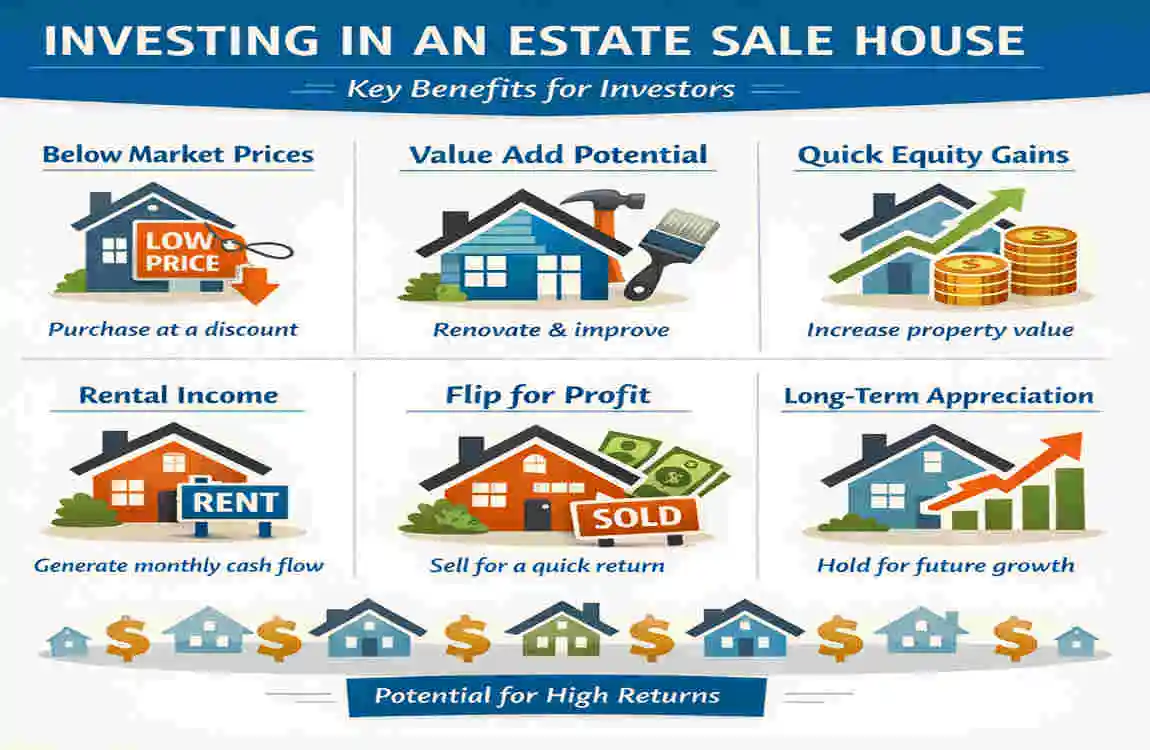
Estate house-for-sale opportunities can also work well for investors. A property may be a good fit for a fix-and-flip, rental home, or long-term value growth.
Risks of Buying an Estate Sale House
Deferred Maintenance Issues
One of the biggest risks is hidden wear and tear. Many inherited properties have aging systems, old roofs, weak plumbing, or outdated wiring.
Limited Property Disclosures
Estate homes are often sold as-is, meaning the seller may not make any repairs. Also, the person selling may not know much about the home’s condition.
Probate and Legal Delays
If the home is tied to probate, the sale can slow down due to court approval, title issues, or disagreements among heirs.
Emotional Family Situations
Sometimes family members do not agree on when or how to sell. That can cause delays and stress for everyone involved.
How to Find Estate Sale Houses
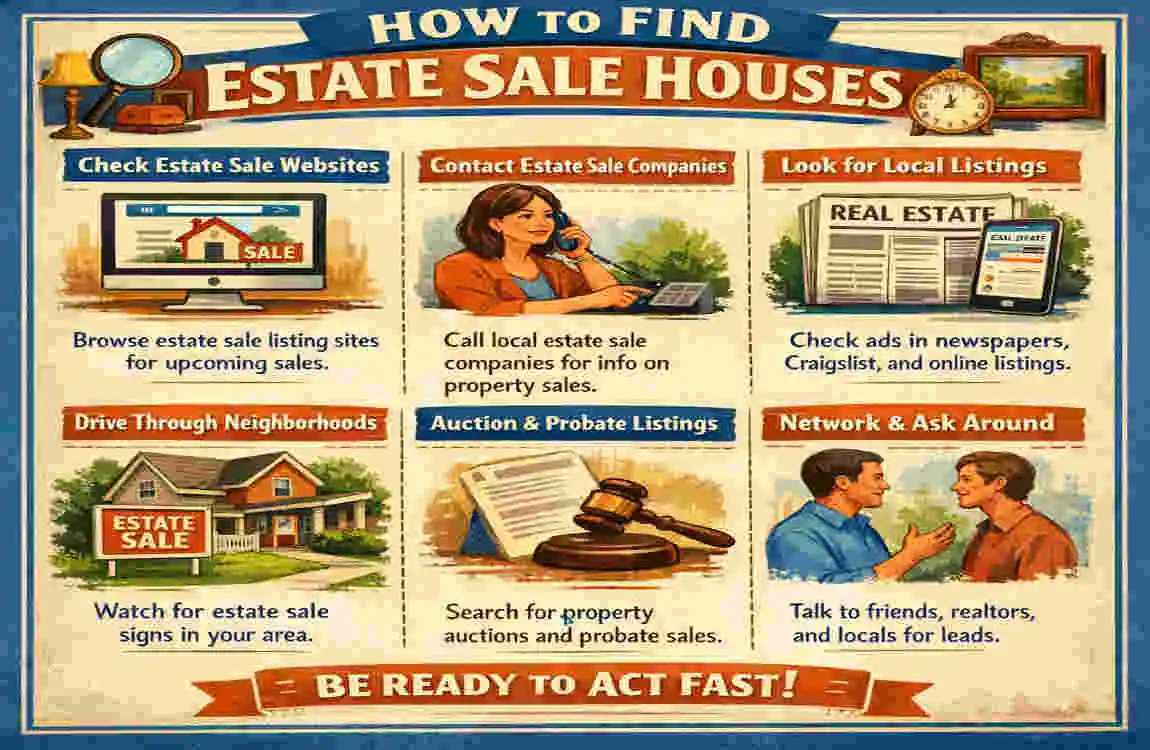
If you want to explore estate sale property investment opportunities or buy a home for yourself, here are some common ways to find them:
- Real estate websites
- Estate sale companies
- Probate court records
- Local real estate agents
- Auctions and foreclosure events
A good agent who understands estate sale real estate can save you time and help you spot good deals.
Steps to Buy an Estate Sale House
Get Pre-Approved for Financing
Before making an offer, get pre-approved for a mortgage. If you plan to pay cash, you may have an advantage in a competitive market.
Research the Property
Look at the home’s history, location, and neighborhood. Check nearby sale prices to see whether the asking price is fair.
Schedule a Professional Inspection
An inspection is important because estate homes may have hidden problems. This is one of the smartest steps in buying an estate-sale home.
Review Legal Documentation
Ensure the title is clear, and review any probate paperwork, liens, or ownership issues.
Submit an Offer and Close the Deal
Once everything checks out, make your offer, negotiate if needed, and move toward closing.
How to Sell an Estate Sale House
Determine Legal Authority to Sell
Before anything else, confirm who has the legal right to sell the property. This is often the executor or administrator.
Assess the Property Value
Use a market analysis or professional appraisal to find a realistic price. Good pricing helps the house sell faster.
Prepare the Home for Sale
Clean the house, remove clutter, and complete needed repairs. Even small improvements can make a difference.
Manage Personal Property
Decide what to keep, sell, donate, or discard. Some families hold estate sales to clear out belongings.
Market the Property Effectively
Use strong photos, honest descriptions, and the right listing strategy. Buyers respond well to clear information.
Accept Offers and Close the Sale
After reviewing the offers, choose the one that best fits the estate’s needs. Then complete the legal and financial closing steps.
Estate Sale House Pricing Factors
Main Factors That Affect Price
The value of an estate sale house usually depends on:
- Location
- Property condition
- Market demand
- Comparable nearby sales
- Legal or probate restrictions
A home in a popular neighborhood may sell faster and for more money, while a home that needs major repairs may be priced lower.
Legal Considerations for Estate Sale Houses
Probate Laws
Probate laws vary by state, so the process differs from state to state.
Title Transfers
The title must be transferred correctly so the buyer gets clear ownership.
Outstanding Debts and Liens
Mortgages, taxes, and liens must be handled before or during closing.
Heir Agreements
When multiple heirs are involved, everyone should agree on the sale terms to avoid disputes.
Estate Sale House Inspection Checklist
Exterior and Interior Basics
Before buying, check these areas carefully:
- Roof, foundation, and drainage
- Floors, walls, and ceilings
- HVAC, plumbing, and electrical systems
- Mold, asbestos, or lead paint risks
A thorough inspection can help you avoid expensive surprises later.
Estate Sale House Financing Options
Many buyers can finance an estate sale home with:
- Conventional mortgages
- FHA loans
- VA loans
- Hard money loans
- Cash purchases
Cash is often the fastest option, but regular loans can still work if the house meets lender standards.
Frequently Asked Questions About Estate Sale Houses
What is estate sale house?
It is a house sold as part of an estate, usually after death, downsizing, or another major life event.
Are estate sale houses cheaper?
Sometimes, yes. But the price depends on condition, location, and market demand.
Can you finance an estate sale house?
Yes. Many buyers use conventional, FHA, or VA financing if the property qualifies.
Do estate sale homes require probate?
Not always. Some are sold with court involvement, but others are sold without it.
Is buying an estate sale house risky?
It can be, especially if the home has hidden repair issues or legal delays. A good inspection and legal review reduce that risk.