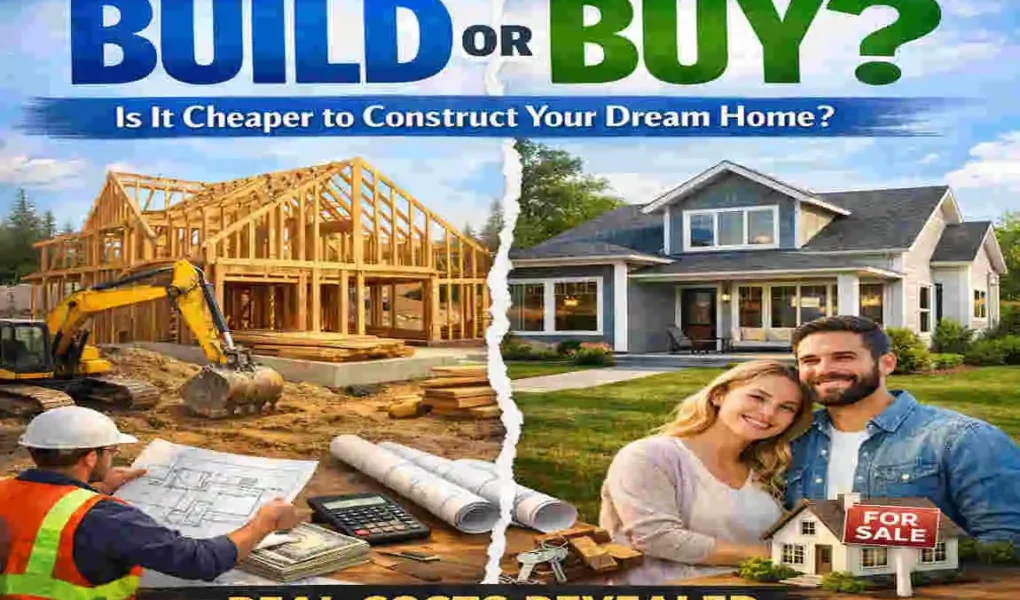
A lot of people reach the same big question at some point: is cheaper to build or buy a house? It sounds simple at first, but once you start looking at prices, land, labor, mortgage rates, and the reality of moving in, the answer gets much more complicated.
Picture a family sitting at the kitchen table in 2026. One person wants a custom home with a big pantry, a home office, and the perfect backyard. Another wants to stop renting fast and get into an existing home. Both choices feel exciting. Both choices feel risky. And both choices can cost far more than the first number you see on a listing or a builder’s estimate.
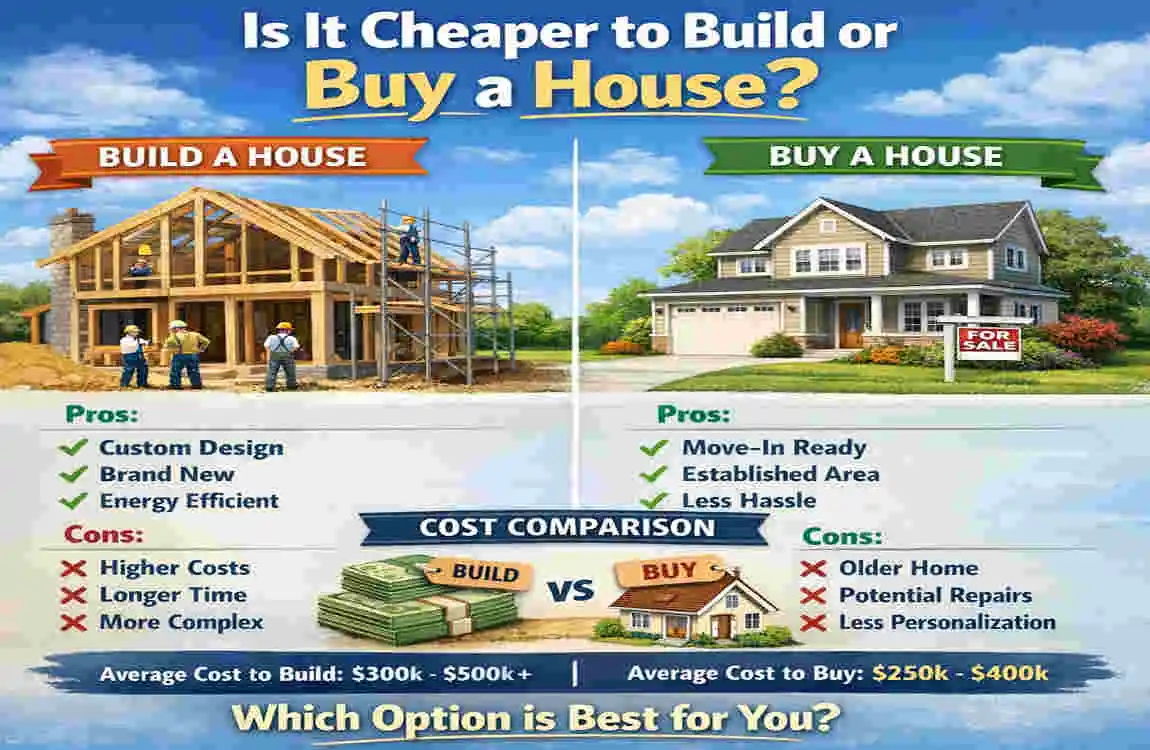
That is why this topic matters so much right now. In many cases, buying a house costs less upfront than building one. Still, building can offer more control, newer systems, and lower repair needs later. Recent figures often place building averages at $310,000 to $449,000, while buying averages range from $394,100 to $414,200, depending on how the data is measured and the market being discussed. The real answer depends on your location, timeline, budget, and the level of personalization you want.
In many U.S. markets, buying still comes out cheaper upfront. That does not mean building is never the better choice. It means the numbers often favor the already-built home when you focus only on the first purchase price.
Still, that first number can be misleading. A cheaper house can become expensive fast if it needs major repairs. A new build can look expensive at the start, but it may save you money on maintenance, energy use, and upgrades for years.
| Aspect | Build a New Home (Estimated) | Buy an Existing Home (Estimated) |
|---|---|---|
| Average base price | $138,000 – $524,000 (excluding land) | $359,892 – $394,100 (median–average) |
| Land cost | $3,000 – $150,000 depending on size/location | Not applicable (land included in purchase price) |
| Typical closing & fees | Higher (multiple loans + construction‑to‑mortgage) | 2–5% of purchase price (~$7,198–$17,995) |
| Inspection & repairs | Minimal (new build) | $19,514 – $87,474 for repairs/renos on average |
| Time to move in | 6–12+ months (design + build) | 1–3 months on average |
| Customization level | High (fully tailored to your needs) | Limited (often needs upgrades) |
Core Costs of Building a Dream Home

What goes into the price of a new build
When people hear the phrase dream home construction costs, many assume the biggest expense is the house itself. In reality, the total price comes from many smaller pieces that add up quickly.
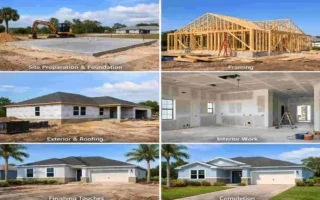
You are not just paying for walls and a roof. You are also paying for land, permits, design work, site prep, labor, materials, foundation work, inspections, and often a long list of finishing touches. Each of those parts can significantly shift the final number.
That is why building costs can vary so much from one family to another. A simple one-story house on easy land will cost less than a custom home on a steep lot with special finishes.
Common line items in a new build
ExpenseRangeNotes
Land $3,000–$150,000 Location-driven; rural land is usually cheaper
Design/Blueprints $500–$20,000 Custom plans cost more
Permits/Site Work $500–$11,800 Varies by state and local rules
Foundation/Frame $20,000–$50,000 Soil type and design affect cost
Construction Total for 2,500 sq ft $625,000–$1M Excludes land
These numbers show why building can become expensive fast. Even before you finish the house, you may have already spent a lot on things that don’t look flashy. The ground itself, the paperwork, and the structure all cost money.
Land can change everything
Land is one of the biggest wildcard costs. In a rural area, you may find an affordable lot. In a busy metro area, that same piece of land can cost a fortune.
This matters because land is not optional when you build. If you do not already own it, you need to buy it first. That means another payment, another loan, and another layer of financing risk.
If the land needs clearing, grading, or utility hookups, the total rises again. A lot that looks cheap on paper can become costly once you prepare it for construction.
Materials are still a major pressure point
Material prices continue to influence home construction in 2026. Lumber, concrete, roofing, windows, insulation, cabinets, and fixtures all add up. A builder may quote one number early on, but that estimate can move if supply prices rise or if you upgrade finishes.
A good rule of thumb is that materials can account for a very large share of the total per-square-foot cost. Many new builds land somewhere in the $150 to $400 per square foot range depending on location and finish quality.
That spread is huge. A modest home and a luxury custom home may look similar on the outside. Still, their costs can be very different under the surface.
Labor also pushes the price upward
Labor inflation has been a major issue in housing. Skilled workers are in demand, and that demand affects what you pay. Electricians, framers, roofers, plumbers, and finish crews all need to be scheduled and paid.
This is one reason delays can cost real money. If the build takes longer than expected, you may pay more in financing, rent, storage, or temporary housing. The longer the project drags on, the more pressure you feel.
Why cost overruns are so common
It is very common for building projects to go over budget. A 20% to 30% overrun is not unusual. That can happen for many reasons:
- The design changes after construction starts
- Materials become more expensive
- The lot has unexpected site problems
- Permit issues slow things down
- The builder discovers hidden soil or drainage issues
This is why building requires a strong cushion. If your budget is too tight, even small changes can cause stress.
Financing a build is different
A house build is not financed the same way as buying an existing home. You may need a construction loan, then later a mortgage once the house is complete. That can mean more paperwork, more closing costs, and often higher rates during the build phase.
There is also less room to negotiate. With an existing house, you might bargain on price or ask for seller concessions. With a build, the cost is often tied to the contract and change orders. If you want upgrades, you usually pay for them directly.
Why people still choose to build
Even with the higher upfront effort, many people still choose new construction because they want something very specific. They want the kitchen exactly where they imagine it. They want a primary suite that feels roomy. They want energy-efficient windows, new appliances, and fewer surprises with maintenance.
For those buyers, the extra cost can feel worth it.
Real Costs of Buying an Existing House
What you really pay for when you buy
Buying a home often looks simpler than building one, but there are still plenty of costs hiding behind the listing price. The purchase price is only the starting point.
You also need to think about inspections, closing fees, title charges, moving costs, repairs, and possible upgrades. A house that seems affordable may still need new flooring, a new roof, updated plumbing, or fresh paint before it feels like home.
Even so, the buying process usually moves faster. That speed is one of the biggest advantages.
Typical costs when buying
FeeBuy CostBuild Equivalent
Closing $8,000–$20,000 Multiple loans and extra setup can add around $5,000+
Repairs $5,000–$50,000 None upfront if you build new
These numbers show a key truth: buying can be cheaper on day one, but not always cheaper after move-in. Older homes can hide problems that only surface after you take possession.
Closing costs add up fast
Many first-time buyers focus on the purchase price and forget about closing costs. That is a mistake. Even a house that fits your budget can become harder to afford once you add lender fees, title charges, taxes, and insurance-related costs.
Closing costs often run 2% to 5% of the home price. On a higher-priced home, that becomes a meaningful number very quickly.
Inspections matter a lot
An inspection does not just protect you. It helps you understand the home’s true condition. A roof, drainage, or electrical issue can change your budget before you ever move in.
This is one of the reasons buying can feel less risky than building in some ways. You can see the home, inspect it, and judge what you are getting. With a build, some problems may not show up until much later.
Repairs and updates are part of the real cost
Many existing homes need some level of work. Maybe the kitchen is dated. Maybe the HVAC system is older. Maybe the windows leak. Maybe the bathrooms need new fixtures.
Even if these are not major repairs, they still cost money. A house may be technically livable while still requiring significant extra spending to feel modern and comfortable.
That is why a buyer should always think beyond the listing price. The real question is not just “How much does this home cost?” It is “How much will this home cost me after I move in?”
Buying can be faster and less stressful
If time matters more than customization, buying usually wins. You can often move in within a few months, sometimes even sooner. That is a huge advantage if you need to relocate for work, family, or school.
The process is also more predictable. You can compare homes side by side, look at neighborhoods, and decide based on your needs right now.
Negotiation can help in some markets
In a buyer’s market, you may have room to negotiate. The seller might lower the price, cover part of the closing costs, or agree to repairs before closing.
That flexibility can make a big difference. It is one reason buying often feels more financially manageable than building, especially in areas where land and labor costs are high.
Head-to-Head Cost Comparison
Which one is cheaper upfront?
On a national level, buying usually comes out lower at the start. Some recent figures place building at about $449,000 and buying at about $414,000, which means building can cost roughly $34,000 more upfront.
That difference matters. For many households, $34,000 is not a small gap. It could affect the down payment, monthly payment, or amount of savings left in reserve.
Why the comparison is not always equal
This comparison can be tricky because not every home is the same. A brand-new build with modern materials is not really equal to a 30-year-old home that needs repairs. At the same time, a very expensive existing house in a premium neighborhood is not the same as a simpler new build in a less costly area.
So when people ask is cheaper to build or buy a house, the answer depends on the kind of home you are comparing.
Long-term ownership can change the story
Building may cost more at the start, but it can save money over time in some cases. New homes often need less maintenance early on. They also tend to have better energy performance, which can reduce utility bills.
Some long-term ownership data suggests that over 25 years, building can sometimes come out ahead by a very large amount in certain markets. That happens because older homes may need repeated repairs, replacements, and upgrades over time.
Still, that does not mean building is always cheaper in the long run. The resale market, local demand, taxes, and financing all matter too.
State-by-state differences are huge
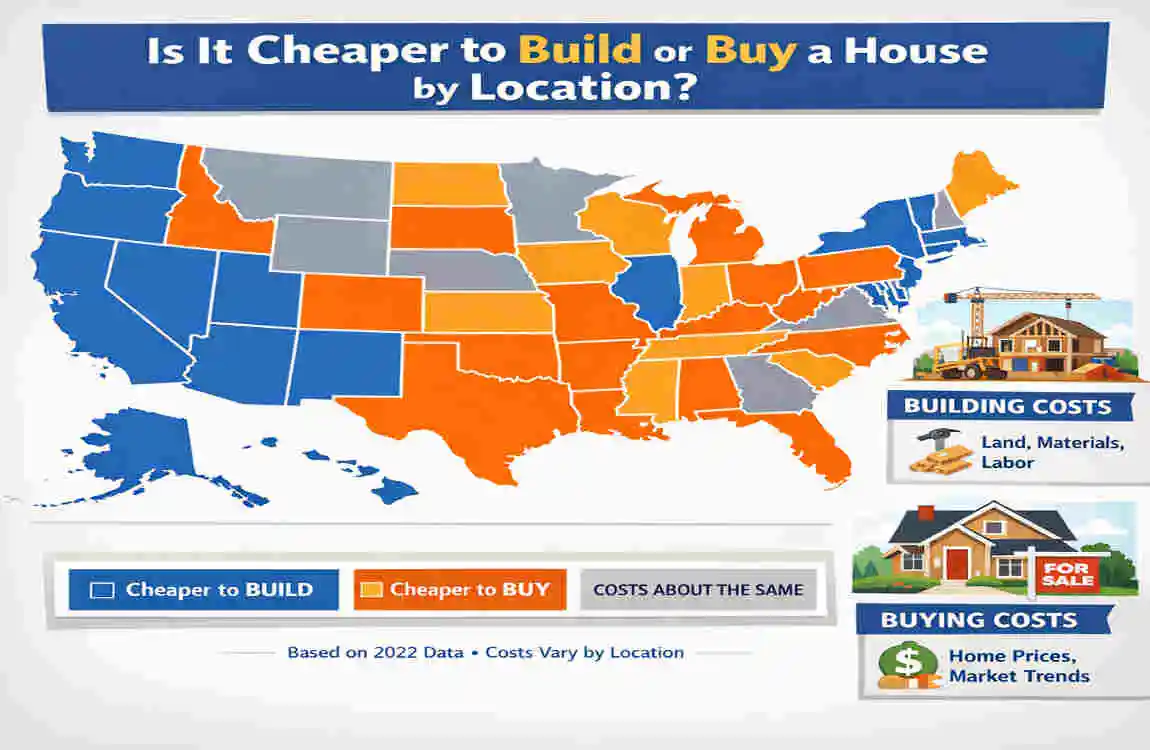
One of the biggest reasons this question has no single answer is geography. In some states, building can be far cheaper than buying. In others, the gap is smaller. In a few places, buying remains the easier choice.
Here is a simple view of some states where building may save a lot compared with buying:
StateBuild Savings vs. Buy
Hawaii $494,000
California $205,000
Colorado $108,000
Florida $76,000
These differences show how local market pressure changes the equation. A market with very expensive existing homes can make new construction look attractive. A market with low-cost homes can make buying the better deal.
Regional patterns matter too
In general, the Midwest often offers lower home prices, which can make buying more appealing. In places where land is affordable and labor is less expensive, building may also be more affordable.
On the other hand, coastal states and high-demand metro areas can push both building and buying prices higher. In those markets, the relative gap between the two may shift in surprising ways.
A simple way to think about it
If you want the lowest short-term cost and the fastest move-in, buying usually wins.
If you want more control, newer systems, and the chance to design exactly what you want, building may be worth the extra money.
The smarter choice is the one that fits your life, not just the one that looks cheaper on a spreadsheet.
Pros and Cons of Building vs. Buying

Building a home: main advantages
Building has some real strengths. For many people, those strengths are the main reason they choose it.
Pros of building:
- Custom design: You can shape the home around your needs and style.
- Energy efficiency: New homes often use better insulation and newer systems.
- New materials and systems: You start with fewer immediate repairs.
- Modern layout: Floor plans can fit how people actually live today.
- Personal satisfaction: There is something special about creating a home from the ground up.
A new build can feel deeply personal. That matters to many buyers.
Building a home: main drawbacks
The downsides are just as real.
Cons of building:
- Longer timeline: You may wait 6 to 12 months or more.
- Budget overruns: Costs can rise during construction.
- Decision fatigue: You must choose everything from cabinets to flooring.
- Loan complexity: Construction financing can be more complicated.
- Market risk: Prices can shift before the home is complete.
Building can be exciting but also exhausting. If you do not like uncertainty, it may not be the best route.
Buying a home: main advantages
Buying is often easier to understand.
Pros of buying:
- Faster move-in: You can usually get settled much sooner.
- Clearer pricing: The home already exists, so the cost is easier to see.
- Negotiation options: You may be able to ask for concessions or repairs.
- Established neighborhoods: You can know the area better before you buy.
- Less upfront planning: You avoid the long construction process.
For many people, this simplicity is a major benefit.
Buying a home: main drawbacks
Buying also comes with tradeoffs.
Cons of buying:
- Older systems: Roofs, HVAC, plumbing, or wiring may need updates.
- Less customization: You may have to live with the current layout.
- Possible renovations: A cheap purchase can become expensive after move-in.
- Competition: Good homes can get multiple offers quickly.
- Energy inefficiency: Older homes may cost more to heat and cool.
So while buying is often cheaper upfront, it may not always be the cheapest path after you move in.
Factors That Influence Your Decision
Location is everything
Where you buy or build can change the whole equation. A lot that looks affordable in one county may be very expensive in another. A move-in-ready house in one suburb may cost less than raw land in a growing city.
Location also affects property taxes, insurance, commuting costs, and resale value. These are all part of the real cost of owning a home.
Your timeline matters
If you need a home soon, buying is usually the better fit. Building takes time, and delays are common. Weather, permits, labor availability, and supply changes can all slow a project down.
If you can wait and you want something tailored to your exact needs, building may make more sense.
Your budget tolerance matters too
Some people can handle surprises. Others cannot.
If you want a more predictable path, buying may feel safer. If you are comfortable with planning, change orders, and occasional stress, building can work for you.
The key is knowing how much uncertainty you can handle without losing sleep.
A simple self-check
Ask yourself these questions:
- Do I need to move soon?
- Do I want a custom layout?
- Can I handle cost changes?
- Is land available where I want to live?
- Am I willing to wait for construction?
- Do I want a house that needs less repair right away?
If you answer yes to customization and patience, building may be a better fit. If you answer yes to speed and simplicity, buying may be the better choice.
2026 market trends to keep in mind
In 2026, material prices remain a challenge in many areas, with costs often still elevated compared with earlier years. Labor is also tight in some regions, which keeps pressure on construction budgets.
Mortgage rates also matter. Even if the home price looks manageable, financing can change the monthly payment enough to influence your decision.
That is why the best move is to look at the whole picture, not just the asking price.
Long-Term Ownership Costs

The cost of owning after the move
A home does not stop costing money after closing. You still have taxes, insurance, maintenance, repairs, utilities, and possible upgrades.
This is where new builds sometimes shine. A new home may have lower utility costs because it often features better insulation, windows, and systems. That can reduce energy use by 20% to 30% in some cases.
Taxes and insurance can differ
New builds can sometimes face higher property taxes at first, especially if built in a developing area or assessed after completion. Insurance can also vary depending on the materials and the location.
Existing homes may have lower taxes in some cases, but that does not guarantee lower monthly ownership costs. Older houses may require more repairs over time.
Maintenance is where the gap can grow
A new house usually needs less maintenance early on. A bought home may need roof repairs, appliance replacement, paint, or plumbing work sooner than expected.
That is why long-term savings can show up in different places. You might pay more upfront for a new build, but you may save on upkeep and utility bills later.
Building or Buying: Which One Fits Different Types of Buyers?
Best for first-time buyers
First-time buyers often prefer buying because it is easier to understand and faster to complete. There are fewer moving parts, and the process can feel less overwhelming.
That said, if a first-time buyer has strong savings, patience, and a desire for a very specific home, building can still be a good option.
Best for growing families
Families that need a larger layout, more storage, or specific bedroom arrangements may love building. It allows them to shape the home to their daily life rather than adjust their lives to an older house.
Still, if the family needs space now, buying an existing larger home may be the quicker solution.
Best for long-term planners
People who plan to stay in one place for many years often think more carefully about total value. For them, building can make sense if they want lower maintenance and a custom layout.
If a resale is likely soon, buying may be safer because the entry cost is usually lower.
Best for budget-focused buyers
If the goal is to spend as little as possible upfront, buying usually wins. It gives you a clearer starting point and often a lower immediate cost.
Building is more of a lifestyle choice mixed with a financial choice. It can be smart, but it is rarely the cheapest option at the beginning.
A Simple Decision Table
Build vs. buy at a glance
Decision FactorBuild a HouseBuy a House
Upfront price Usually higher Usually lower
Time to move in Slower Faster
Customization Very high Limited
Repair risk early on Lower Higher
Stress level Often higher Often lower
Long-term efficiency Often better Depends on age
Financing complexity Higher Lower
Best for Custom needs and long-term planning Speed and simplicity
This table makes the choice easier to see. If you want control and customization, building is attractive. If you want speed and certainty, buying is often the better fit.
Practical Tips Before You Decide
Get real numbers, not guesses
Do not rely solely on rough opinions from friends or general internet advice. Get actual estimates for both options in your area.
If you are considering building, talk to builders, lenders, and local officials about land, permits, and site prep. If you are considering buying, compare sale prices, inspection needs, and likely repair costs.
Build a buffer into your budget
Whether you buy or build, give yourself breathing room. A home is too big of a purchase to leave no cushion for surprises.
Even a modest reserve can help you feel more secure if something unexpected comes up.
Think beyond the first year
The cheapest home today is not always the cheapest home over time. Ask yourself what the house will cost after move-in, after year one, and after five years.
FAQs
Is cheaper to build or buy a house in 2026?
In 2026, buying is usually cheaper upfront, while building may cost more initially. The exact answer depends on your location, land prices, labor costs, and the type of home you want. If you want the lowest immediate cost, buying often wins.
Why does building a house cost more in some areas?
Building costs more in some places because land is expensive, labor is limited, and permit or site work requirements are stricter. Local demand also affects pricing. High-cost states often make building much more expensive than expected.
What hidden costs should I expect when building?
Hidden costs can include land prep, utility hookups, permit delays, change orders, upgraded finishes, and temporary housing while the home is being built. Many people also forget about furniture, landscaping, and inspection-related expenses.
What hidden costs should I expect when buying?
When buying, hidden costs often include closing fees, inspection costs, repairs, appliance replacements, and upgrades after move-in. An older home can look affordable at first but still require a lot of work.
Is building better for long-term savings?
Sometimes, yes. New homes often need less maintenance and may use less energy, which can lower bills. But long-term savings depend on how much more you pay upfront, how long you stay, and how strong the local resale market is.
Is buying better if I need to move quickly?
Yes. Buying is usually the better choice if you need to move soon. Existing homes can often close in a few months or less, while building usually takes much longer.
Are new homes cheaper to maintain?
Usually, yes. New homes generally need fewer repairs in the first several years because everything is new. That said, maintenance still exists, and some costs like landscaping and property taxes can still be significant.
Should I build if I want a specific floor plan?
If you want a very specific layout, building may be the best option. It gives you more control over room sizes, storage, flow, and design. Buying may not give you the exact setup you want.
Is it harder to finance a new build?
It can be. Construction loans are often more complex than standard mortgages. They may involve more paperwork, more steps, and more risk during the build phase.
What type of buyer should usually buy instead of build?
Buyers who want speed, less stress, and a lower upfront cost often do better by buying. It is also a better fit if you do not want to make dozens of design decisions or wait many months for move-in.
What type of buyer should usually build instead of buy?
Buyers who want a custom home, plan to stay for many years, and have enough budget flexibility often benefit from building. It can be a strong choice if you care deeply about personalization and energy efficiency in new homes.