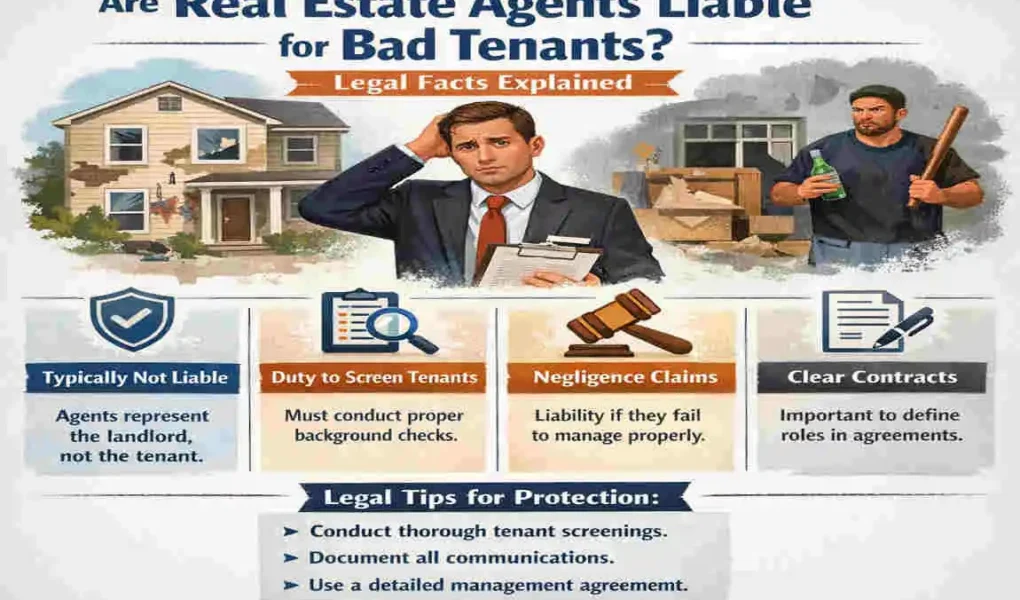
If you are a landlord, this question may have crossed your mind: can you hold your real estate agent responsible if they place a bad tenant in your property? It is a fair concern. A bad tenant can cause unpaid rent, damage, noise complaints, stress, and even legal trouble.
Real estate agents play an important role in finding tenants. Still, their responsibilities are not always the same as those of a property manager. In many cases, whether they are liable depends on their agreement, their actions, and local laws.
Understanding the Role of a Real Estate Agent in Tenant Placement

What Does a Real Estate Agent Do for Rental Properties?
A real estate agent often helps with the early part of renting a property. Their job may include:
- Marketing the rental
- Showing the property to possible tenants
- Collecting applications
- Helping with lease documents
- Sharing information between landlord and tenant
In many cases, the agent helps you find a tenant, but does not manage the property after the lease is signed.
Is Tenant Screening Part of a Real Estate Agent’s Responsibility?
Sometimes yes, sometimes no. It depends on the contract.
A screening process may include:
- Background checks
- Credit checks
- Employment verification
- Rental history review
- Reference checks
If the agent agreed to do these steps, they should do them carefully. If they were not hired to screen tenants, that duty may stay with the landlord.
Difference Between a Real Estate Agent and Property Manager
Real Estate Agent Property Manager
Helps find tenants Handles daily tenant issues
Usually involved during leasing Manages property long-term
Limited responsibility after lease signing Responsible for ongoing management
This difference matters a lot. A real estate agent usually helps at the start. At the same time, a property manager often stays involved after the tenant moves in.
Are Real Estate Agents Liable for Bad Tenants?
General Rule About Agent Liability
In most cases, real estate agents are not automatically liable if a tenant turns out to be bad.
That is because a landlord usually accepts the tenant after reviewing the application. Once you approve the tenant, you also take on some risk. A tenant may look good on paper and still cause problems later.
A bad outcome does not always mean the agent did something wrong.
Situations Where a Real Estate Agent May Be Liable
There are situations in which the agent could be held responsible.
1. Negligent Tenant Screening
An agent may be liable if they:
- Ignored clear warning signs
- Did not do the screening they promised
- Failed to check important details
- Shared false information about the tenant
For example, if the agent said they ran a background check but never did, that could become a serious issue.
2. Misrepresentation or Fraud
If an agent lies or hides important facts, that may create liability.
Examples include:
- Hiding a tenant’s past rental problems
- Giving false claims about income or job status
- Presenting fake rental history
Honesty matters. If the agent knowingly provides incorrect information, it can hurt the landlord and may lead to legal action.
3. Violating Professional Duties
Agents must follow their licensing rules and act in good faith. They should protect the client’s interests and be honest about what they know.
If they fail to act properly, they may be responsible for part of the loss.
When Real Estate Agents Are Usually Not Responsible for Bad Tenants
Tenant Stops Paying Rent After Approval
This is one of the most common problems. A tenant may look stable during screening, but later lose a job or face financial trouble.
The agent cannot predict the future. If the tenant later stops paying, that does not automatically mean the agent made a mistake.
Tenant Damages Property
Property damage is usually a tenant issue first.
You may use:
- Security deposits
- Insurance
- Legal action if needed
But the agent is usually not responsible just because the tenant caused damage after moving in.
Tenant Breaks Lease Rules
Tenants may violate rules in many ways, such as:
- Bringing in unauthorized occupants
- Making too much noise
- Using the property in the wrong way
These problems are usually the tenant’s responsibility, not the agent’s.
Tenant Screening Responsibilities: What Should Agents Do?
Proper Tenant Screening Steps
A careful screening process can reduce risk. Good agents should try to:
- Verify income
- Check credit history
- Contact prior landlords
- Confirm employment
- Review records where the law allows it
This does not guarantee a perfect tenant, but it helps reduce mistakes.
Following Fair Housing Laws
Agents must treat applicants fairly. They cannot discriminate based on protected characteristics.
That means they should:
- Use the same standards for every applicant
- Keep records of decisions
- Avoid unfair treatment
A consistent process protects landlords, agents, and tenants.
Importance of Written Screening Policies
Written rules matter because they make the process clearer.
A good policy helps:
- Avoid confusion
- Support fair treatment
- Reduce legal risk
When everyone understands the process, problems are easier to prevent.
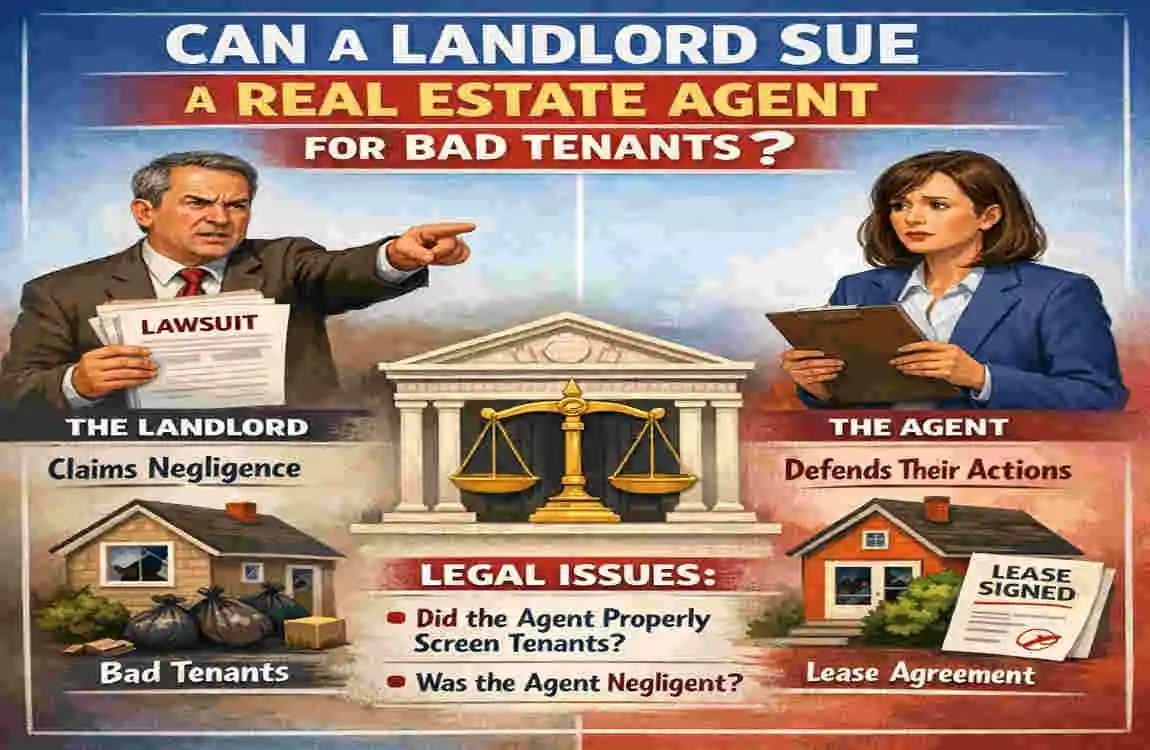
Can a Landlord Sue a Real Estate Agent for Bad Tenants?
Legal Requirements for Filing a Claim
A landlord usually needs to prove:
- The agent had a duty to act carefully
- The agent failed that duty
- That failure caused real financial damage
Without proof, the case may be weak.
Evidence Needed Against an Agent
Useful evidence may include:
- Emails and text messages
- Rental applications
- Screening reports
- Signed agreements
- Financial records showing loss
The more proof you have, the stronger your claim may be.
Challenges in Proving Agent Negligence
This can be difficult because tenant behavior is unpredictable. A tenant may seem reliable at first and still become a problem later.
Also, courts usually want more than a bad result. They want proof that the agent actually acted carelessly or dishonestly.
How Landlords Can Protect Themselves From Bad Tenants
Perform Independent Due Diligence
Do not rely only on someone else’s judgment. Review applications yourself when possible.
You can:
- Ask direct questions
- Check documents carefully
- Review income and rental history
Use Strong Lease Agreements
A clear lease protects everyone.
Make sure it includes:
- Rent due dates
- Maintenance duties
- Tenant behavior rules
- Eviction terms
A strong lease can prevent confusion later.
Require Security Deposits and Insurance
A security deposit can help cover some damage. Landlord insurance can also help protect your property and finances.
Work With Experienced Real Estate Professionals
An experienced agent or manager can lower your risk by using better systems and knowing local rules.
That does not remove all risk, but it can help you avoid costly mistakes.
Questions to Ask a Real Estate Agent Before Hiring Them
Before you sign anything, ask:
- How do you screen tenants?
- Do you run background checks?
- What happens if a tenant defaults?
- Are you licensed and insured?
- What services are included?
- Do you provide written agreements?
These questions can help you understand exactly what the agent will and will not do.
Real Estate Agent Liability vs Landlord Responsibility
Issue Responsible Party
Tenant stops paying rent Tenant/Landlord process
False tenant information Possibly Agent
Property damage Tenant/Insurance
Poor screening by agent Possibly Agent
Lease violations Tenant
Daily property management issues Property Manager
This table shows the main difference: not every tenant problem is the agent’s fault.
How to Handle a Problem Tenant When an Agent Was Involved
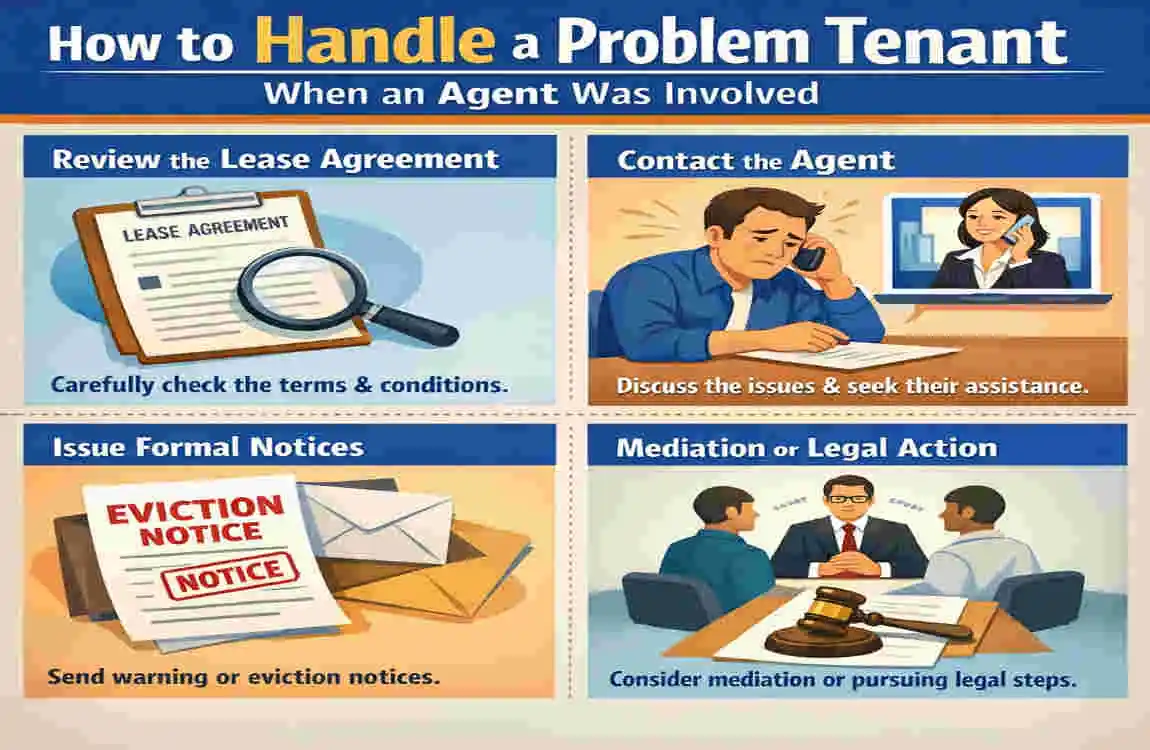
If a tenant becomes a problem, stay calm and follow a clear process.
- Review the agent agreement
- Collect all documents
- Speak with the tenant
- Follow local eviction laws
- Talk to a real estate attorney if needed
The key is to act quickly and keep good records.
FAQ
Are real estate agents responsible for bad tenants?
Usually not. They are only responsible if they acted carelessly or dishonestly, or failed to do their agreed-upon job.
Can I sue my real estate agent for choosing a bad tenant?
You may have a case if the agent ignored screening duties, gave false information, or broke their professional duties.
Do real estate agents have to run background checks?
Not always. It depends on the agreement and local laws.
Who is responsible if a tenant damages a rental property?
Usually the tenant, while the landlord may use the security deposit or insurance.
Can a landlord hold an agent responsible for unpaid rent?
Usually not, because the tenant’s financial situation can change after approval.
What protects landlords from bad tenants?
Good screening, strong leases, security deposits, insurance, and experienced professionals help reduce risk.
| Topic | Information |
|---|---|
| Agent Responsibility | Real estate agents usually help landlords find and screen tenants but are not automatically responsible for tenant behavior after the lease is signed. |
| Tenant Screening Duty | Agents may be liable if they fail to follow agreed screening procedures, provide false information, or hide important tenant details. |
| Negligence Claims | A landlord may claim negligence if an agent acted carelessly during tenant selection and caused financial loss. |
| False Information | Agents can face legal issues if they knowingly provide incorrect details about a tenant’s income, background, or rental history. |
| Fair Housing Laws | Agents must follow housing laws and cannot reject or select tenants based on protected characteristics such as race, religion, disability, or family status. |
| Tenant Damage or Misconduct | Agents are generally not liable for unpaid rent, property damage, noise complaints, or tenant disputes unless their actions contributed to the problem. |
| Management Agreements | Liability depends on the contract between the landlord and agent. Property managers may have greater responsibilities than sales agents. |
| Landlord’s Responsibility | The property owner is usually responsible for choosing tenants, maintaining the property, and handling tenant-related legal matters. |
| How Agents Reduce Risk | Agents should use proper applications, verify references, document communication, and follow local rental laws. |
| Legal Advice | Landlords should review contracts and consult a real estate attorney if they believe an agent’s negligence caused losses. |