Refinishing floors means sanding down the old surface and adding a fresh finish so the wood looks clean, smooth, and renewed. It is one of the best ways to bring tired hardwood floors back to life without replacing them.
If you are wondering how to refinish floors while living in the house, the good news is that it can be done. You need a smart plan, some patience, and a little flexibility with your daily routine. The biggest challenge is not the work itself. It is living around the work while keeping dust, noise, and odour under control.
Can You Refinish Floors While Living in the House?
Is It Safe?
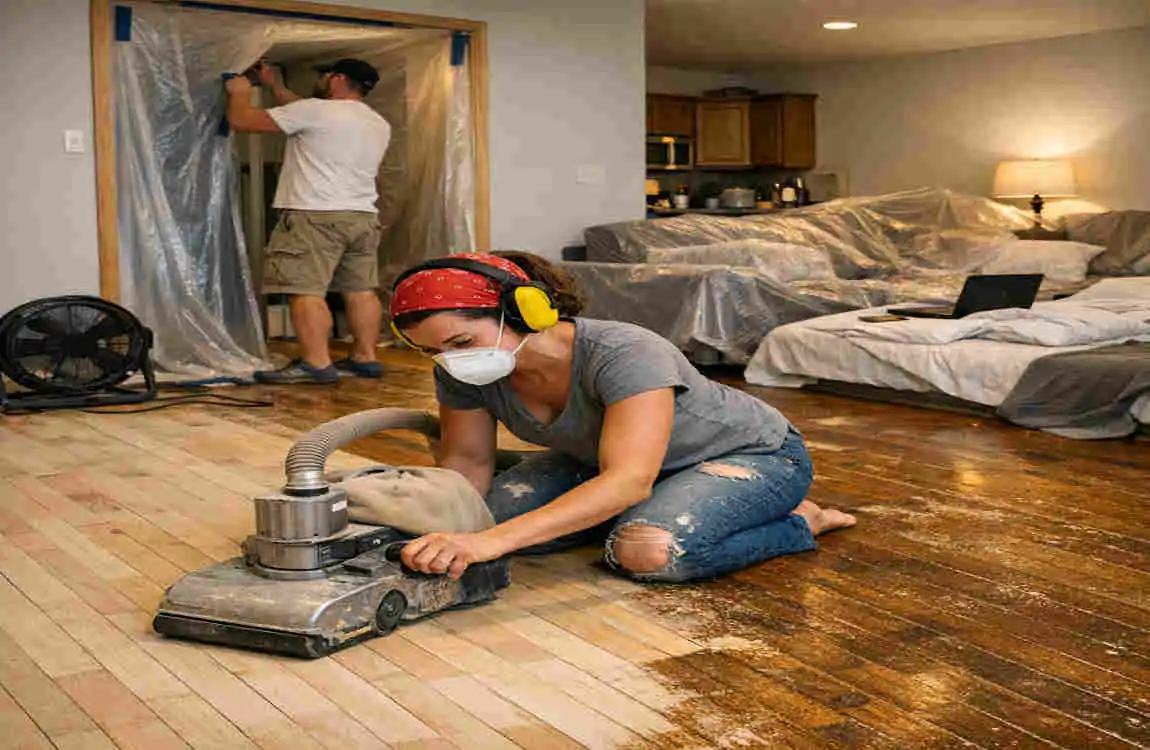
Yes, it can be safe to stay in the house during floor refinishing, but only if you manage the space carefully.
The main concerns are dust, fumes, and wet finish. Sanding creates fine dust that can spread through the home. Some finishes also give off strong odours, so you need good airflow and the right product choice.
Advantages and Challenges
Staying home has a few clear benefits. You save money on temporary housing, and you can keep an eye on the project. You also avoid the stress of leaving your home for several days.
But there are challenges too. You may need to limit access to certain rooms, sleep in a different area, and deal with noise during sanding. That is why planning matters so much.
When It Makes Sense to Stay Home
It makes sense to stay home if:
- The project is being done one room or section at a time
- You can stay in another part of the house
- The home has good ventilation
- You choose a low-odour finish
- You are comfortable with some noise and temporary disruption
If the job is large, the home is small, or someone in the house has breathing issues, staying elsewhere may be better.
Things to Do Before Refinishing Floors
Remove Furniture and Decorations
Start by clearing the room completely. Move out furniture, rugs, wall decor, and small items. This gives the crew or your tools full access to the floor.
If you leave items in the space, they may get covered in dust or damaged during sanding. A clean room also helps the job move faster.
Protect Electronics and Belongings
Dust can travel farther than people expect. Cover electronics, books, clothing, and items stored nearby.
If possible, move valuable things to a closed room that will not be refinished. For extra protection, use plastic sheeting or sealed storage bins.
Plan a Room-by-Room Schedule
A room-by-room plan makes the process much easier to manage. It allows you to keep part of your home usable while one section is being worked on.
For example, you can start with bedrooms, then move to the living room, and finish with hallways or other key spaces. This keeps disruption to a minimum and helps you stay organised.
Choose Low-VOC Floor Finishes
If you will live in the home during the job, choose a finish with low VOCs whenever possible. VOCs are chemicals that can create strong odours and poor indoor air quality.
Water-based finishes are often a better choice for occupied homes because they dry faster and smell less than many oil-based options.
How to Refinish Floors While Living in House
Inspect the Flooring
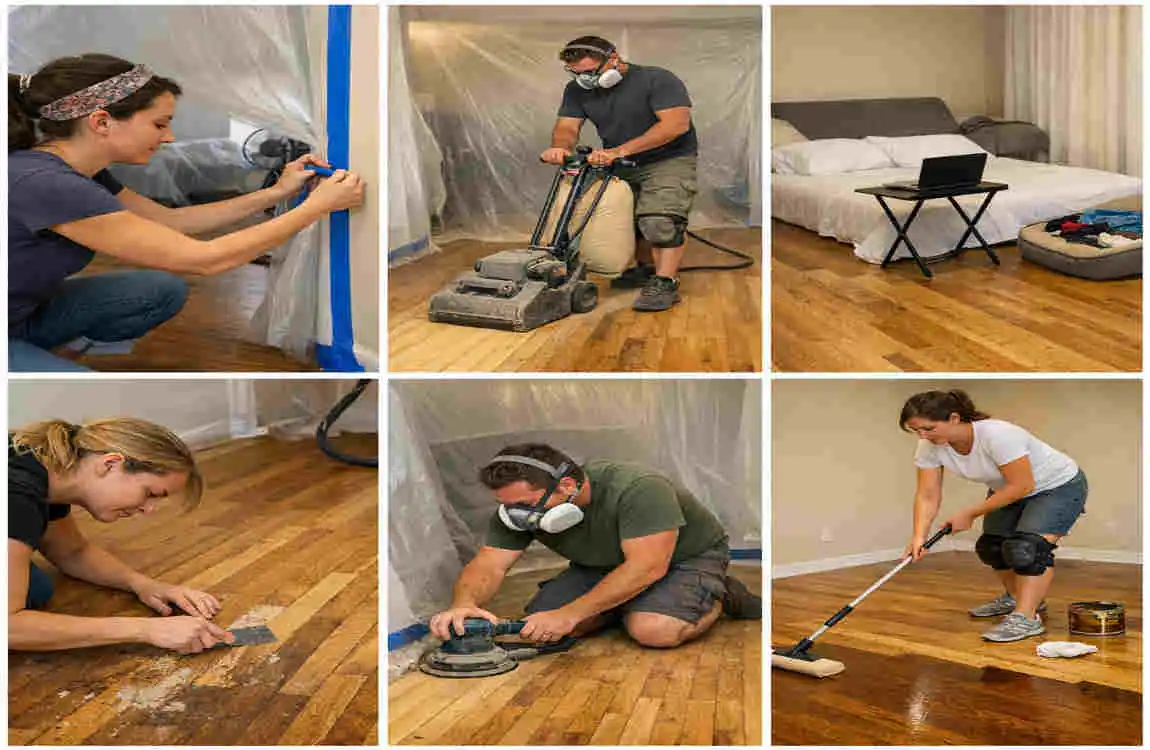
Before sanding, inspect the floor for damage, loose boards, deep scratches, and nails sticking up. Fixing these issues early helps avoid bigger problems later.
You also want to check whether the wood is thick enough for refinishing. Not every floor can handle repeated sanding.
Clean and Prepare the Surface
The floor must be free of dirt, dust, and debris before sanding starts. Sweep and vacuum the area well.
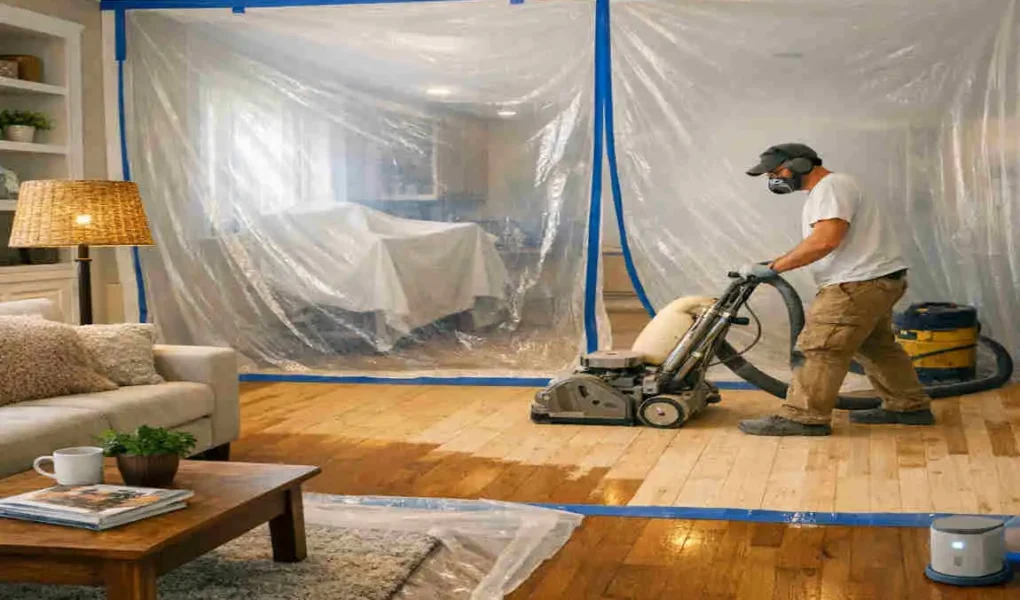
Preparation also means sealing off the room. Close vents if needed, cover doorways, and protect nearby areas so dust does not spread too far.
Sand the Floor Properly
Sanding removes the old finish and levels the surface. This is the most important step in the process.
If you are doing the work yourself, move slowly and follow the grain of the wood. If a professional is doing it, they may use dust-reducing sanding equipment to help keep the home cleaner.
Remove Dust Completely
After sanding, vacuum every inch of the floor, baseboards, corners, and nearby surfaces.
Do not rush this part. Even a thin layer of dust can affect the final finish and leave the surface uneven.
Apply Stain Optional
If you want to change the colour of the wood, apply stain after the floor is fully clean and dry.
This step is optional. Some homeowners prefer the natural wood tone, while others want a darker or warmer look.
Tips to Reduce Dust and Odours
Use Dust Containment Systems
Modern sanding tools can collect a lot of the dust as the work happens. That helps keep the home cleaner and easier to live in.
Improve Ventilation
Open windows when possible and use fans to move air out of the house. Good airflow helps reduce odour and keeps the space more comfortable.
Seal Off Work Areas
Use plastic sheeting or temporary barriers to close off the refinishing area. This is one of the simplest ways to keep dust from spreading.
Use Air Purifiers
Air purifiers with HEPA filters can help catch fine dust particles floating in the air. They are especially useful if you are staying in the home during the project.
Living Comfortably During the Project
Set Up Temporary Living Areas
Pick a clean area of the house where you can sleep, relax, and eat while the floor is drying. Keep this area simple and easy to maintain.
If a kitchen or bedroom is being refinished, you may need a temporary setup in another room.
Keep Pets Safe
Pets can walk through wet finish, spread dust, or become stressed by the noise. Keep them away from work zones and drying floors.
Protect Children
Children should also stay out of refinished areas until the floor is safe. Wet finish, dust, and tools can all create hazards.
Plan Meals and Daily Activities
Try to keep your routine simple during the project. Plan easy meals, limit the number of trips across work areas, and set clear rules for moving through the house.
Common Mistakes to Avoid
Some mistakes can ruin the results or make the project harder than it needs to be.
- Rushing the drying process
- Walking on wet floors too early
- Using harsh cleaners afterwards
- Ignoring ventilation
- Choosing the wrong finish
If you avoid these problems, your floors will look better and last longer.
How Long Does Floor Refinishing Take?
Stage Estimated Time
Room Preparation 2–4 Hours
Sanding 1 Day
Cleaning 2–3 Hours
Applying Finish 1 Day
Drying 24–48 Hours
Full Cure 7–30 Days
The exact timeline depends on the floor size, the product used, and the number of coats needed. Even after the floor looks finished, try to treat it gently until the curing period is over.
Benefits of Refinishing Floors Instead of Replacing Them
Refinishing is often the smarter choice when the wood is still in good shape.
- Saves money
- Restores natural beauty
- Increases home value
- Extends floor lifespan
- Environmentally friendly
It gives your home a fresh look without the higher cost and waste of full replacement.
Maintenance Tips After Refinishing
Wait Before Replacing Furniture
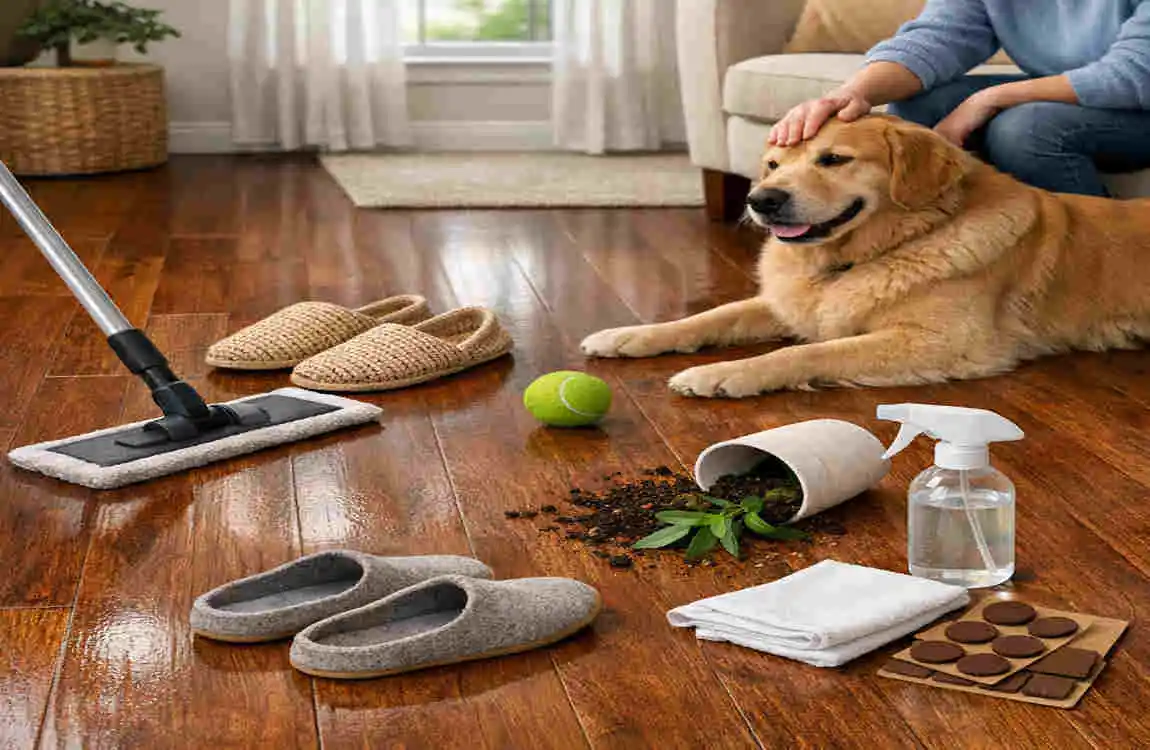
Do not rush to move furniture back. Wait until the floor is ready, and use care when placing items in the room.
Use Felt Pads
Put felt pads under chair and table legs to reduce scratches. This is a simple way to protect the new finish.
Clean with Recommended Products
Use gentle cleaners made for hardwood floors. Harsh chemicals can dull the finish over time.
Maintain Proper Humidity Levels
Wood reacts to moisture in the air. Try to keep indoor humidity steady so the floor stays stable.
Schedule Regular Maintenance
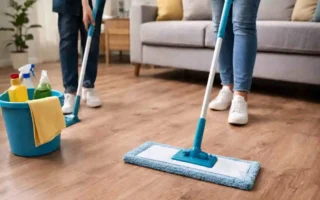
A quick sweep, soft mop, and regular checkup can help your refinished floor stay beautiful for years.
When to Hire a Professional
You may want expert help if:
- The floor has extensive damage
- The home is large
- You have historic hardwood flooring
- You have limited time
- You want a flawless finish
A professional can often save time and reduce mistakes, especially in occupied homes where dust control matters a lot.
Frequently Asked Questions
Can you stay in the house while refinishing hardwood floors?
Yes, but it is best to isolate the work area, keep air moving, and use low-VOC finishes when possible.
How do you reduce dust while refinishing floors?
Use dust-control sanding tools, seal rooms with plastic sheeting, and vacuum with a HEPA filter.
How long before you can walk on refinished floors?
Most floors allow light foot traffic after 24–48 hours, but full curing may take much longer.
What is the best finish for occupied homes?
Water-based polyurethane is often a good choice because it dries faster and usually has lower odour.
| Topic | Details |
|---|---|
| Purpose | Restore worn hardwood floors without moving out of your home. |
| Best Flooring | Solid hardwood floors are the easiest to refinish multiple times. |
| Average Project Time | 3–7 days depending on the size of the home and drying time. |
| Can You Stay Home? | Yes, with proper planning, room-by-room refinishing, and good ventilation. |
| Preparation | Remove furniture, cover belongings, seal off work areas, and keep pets and children away. |
| Low-Odor Finish | Water-based polyurethane is ideal because it dries quickly and has fewer fumes. |
| Dust Control | Use dustless sanding equipment and plastic barriers to reduce mess. |
| Ventilation Tips | Open windows, use fans, and maintain fresh airflow during and after refinishing. |
| Living Tips | Stay in unaffected rooms, follow the contractor’s schedule, and avoid walking on newly finished floors until cured. |