Wondering how long floorboards last in a house before they need replacing? You are not alone. Many homeowners want a floor that looks good, feels strong, and requires minimal repairs. The good news is that a floorboard house can remain durable for a very long time when the right material is used, and the floor is properly cared for.
In many homes, solid wood floorboards can last 50 to 100+ years, while engineered boards often last several decades. The real answer depends on the wood type, how well it was installed, and how much daily wear it takes. A well-kept floor can outlive many other parts of the home.
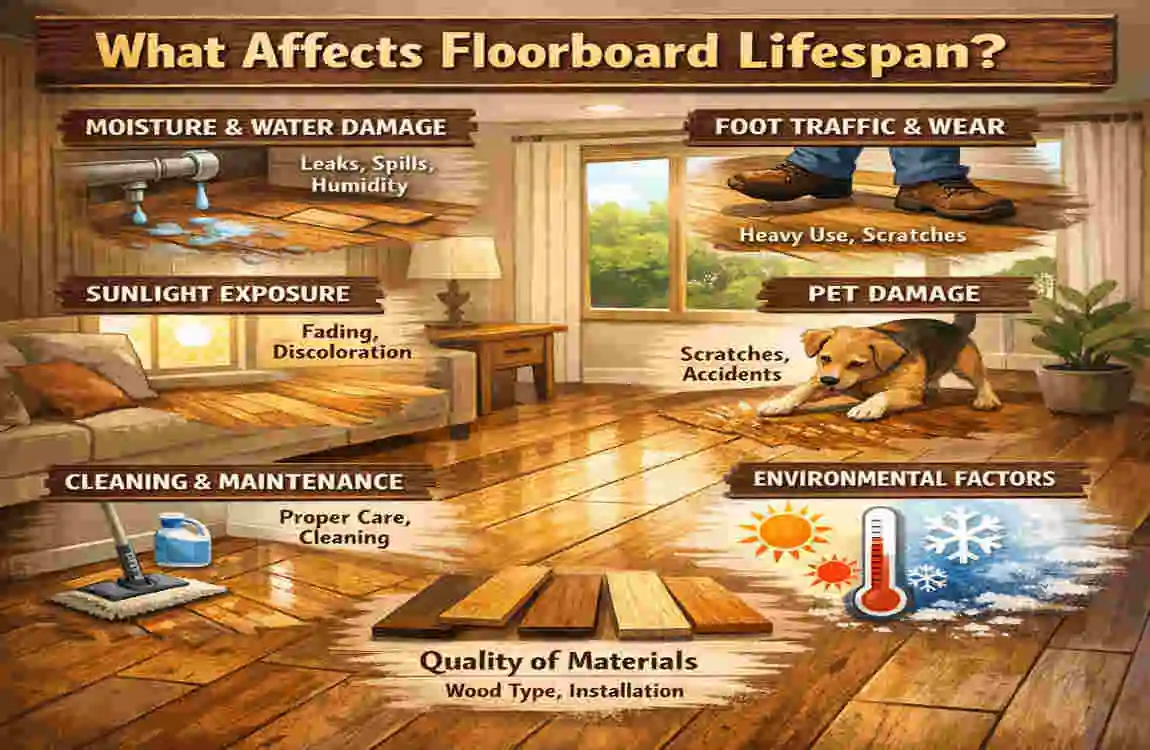
What Affects Floorboard Lifespan?
Material Type Matters Most
Not all floorboards age the same way. Some are built to last for generations, while others are better for short- to medium-term use.
Here is a simple comparison:
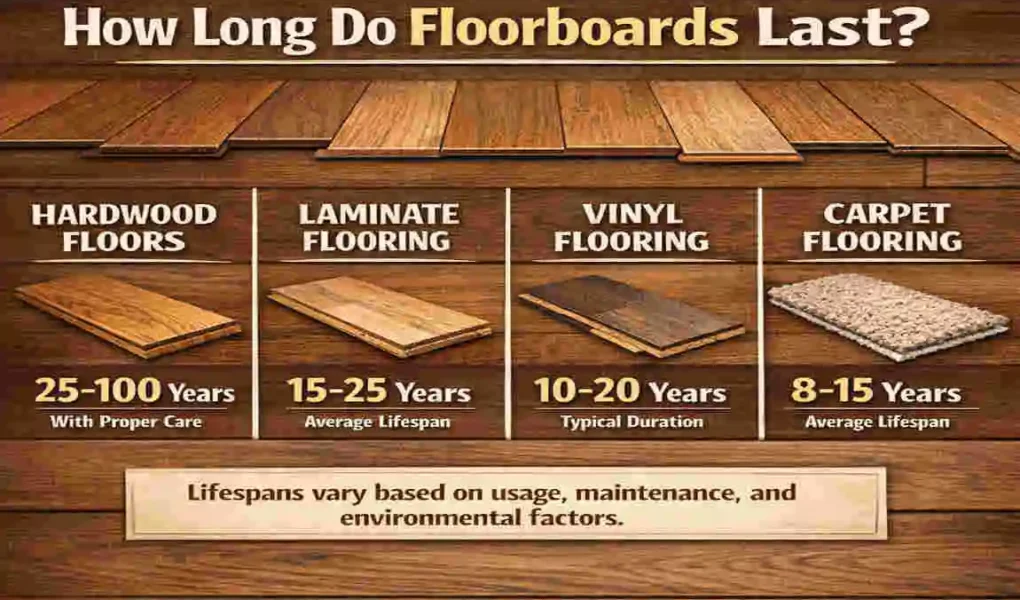
MaterialAvg. Lifespan in a House: Pros and Cons
Solid Hardwood 80-100+ years Timeless, strong, refinable Sensitive to moisture
Engineered Floorboards 40-70 years Stable, more affordable, Limited refinishing
Laminate 20-50 years Budget-friendly Not refinable
Softwood/Pine 40-60 years Warm look, lower cost Scratches more easily
A floorboard house with solid hardwood floors is usually the longest-lasting. Engineered boards are also a smart option if you want a mix of durability and cost control.
Installation Quality Can Change Everything
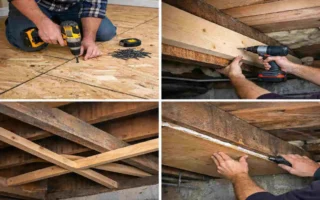
Even the best floorboard can wear out early if it is installed badly. A strong floor starts with a level, dry, and clean subfloor. If the base is uneven or damp, the boards may move, squeak, or warp over time.
There are also different ways to install floorboards. Some are nailed down, some are glued, and some float over the subfloor. The right method depends on the material and the luxury room. For example, a poor DIY job may lead to gaps or loose boards much sooner than a professional installation.
If you want a long-lasting floorboard house, good installation is just as important as good material.
Environment and Daily Use
Your home’s environment also affects the lifespan of your floorboards. Wood reacts to moisture, heat, sunlight, and repeated foot traffic.
Humidity
Too much moisture can make boards swell, cup, or warp. Too little moisture can make them shrink and split.
Sunlight
Strong sunlight can fade the color of floorboards over time, especially in rooms with large windows.
Foot Traffic
Hallways, living rooms, and entryways wear down faster than guest rooms or bedrooms because people walk through them more often.
Pests and Water
Leaks, termites, and standing water can cause serious damage. Once the wood is weakened, repairs become harder and more expensive.
Average Lifespan by Floorboard Type
Solid Hardwood: The Longest-Lasting Option
Solid hardwood is often the best choice for a long-lasting floorboard house. Oak, maple, and similar woods can last for decades, and in dry, well-kept homes, they may last more than 100 years.
One big advantage is refinishing. Instead of replacing the whole floor, you can sand and refinish it several times. This gives the boards a fresh look and extends their life.
Engineered Floorboards: A Practical Middle Ground
Engineered floorboards are made of layers, making them more stable than many solid-wood options in humid spaces. They are a strong choice for homeowners who want a wood look without the same price tag.
They usually last 40 to 70 years, depending on the top layer and the care they receive. They may not be refinished as many times as solid wood, but they still offer good value.
Softwood and Pine: Good, But Less Durable
Softwoods like pine can work well in the right home, but they tend to show wear sooner. They dent more easily and are more sensitive to heavy furniture and daily traffic.
Still, with good maintenance, they can serve a floorboard house well for many years, especially in low-traffic rooms.
Laminate: Shorter Life, Lower Cost
Laminate is not real wood, but many people still choose it because it is affordable and simple to install. It can last a long time in light-use rooms, but once it is damaged, you usually replace it rather than repair it.
For homeowners on a budget, laminate can be a useful short- to medium-term choice.
Signs Your Floorboards Need Attention
Not sure whether your floors are still in good shape? Watch for these signs:
- Squeaking or moving boards when you walk across them
- Cupping or warping, often caused by moisture
- Deep scratches that go beyond the surface finish
- Gaps between boards that keep getting wider
- Soft spots that may point to rot or water damage
- Fading or dull patches where the finish is wearing away
- Stains or dark marks that do not clean off
If you notice one or two of these signs, a repair may be enough. But if the damage keeps spreading, it may be time to inspect the whole floorboard house more closely.
How to Make Floorboards Last Longer
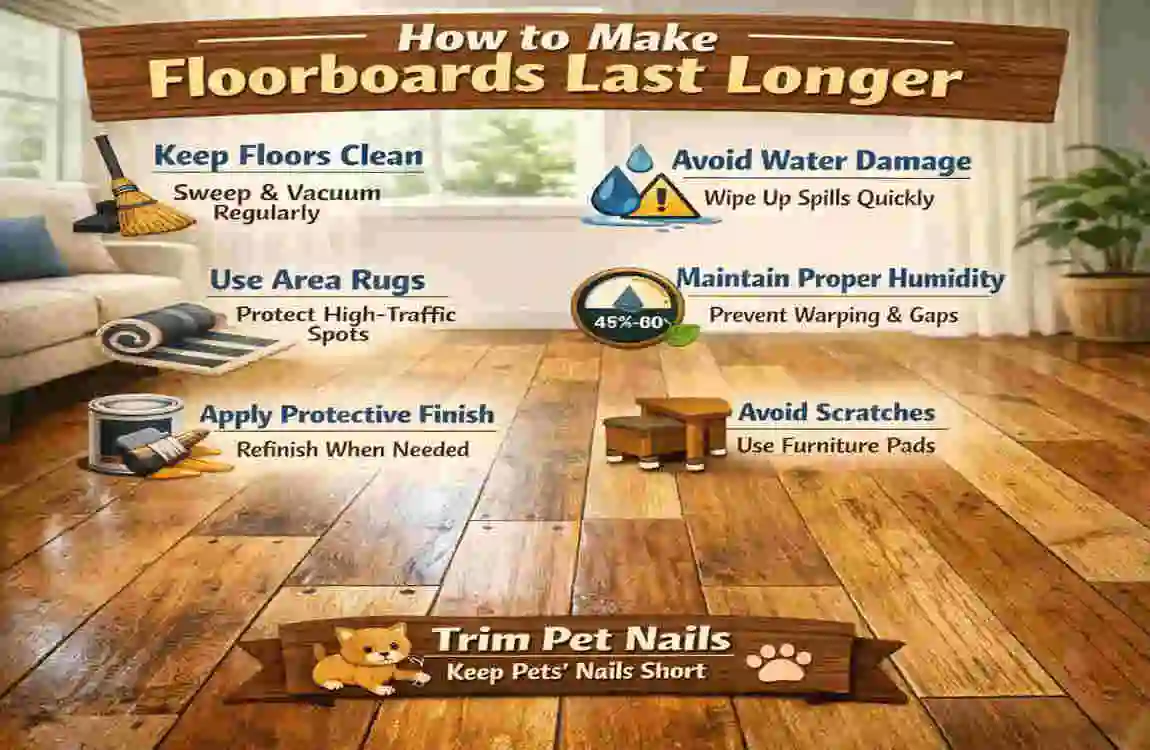
A little care goes a long way. Here are the easiest ways to protect your floors.
- Sweep or vacuum often
- Dust and grit act like sandpaper. They slowly scratch the surface, so regular cleaning matters.
- Mop with a gentle cleaner
- Use a pH-neutral cleaner and avoid soaking the floor. Too much water can damage wood.
- Keep indoor humidity steady
- Aim for a comfortable range around 40-60% so the boards do not swell or shrink too much.
- Refinish when needed
- For solid wood floors, refinishing every 5 to 10 years can bring back the surface and add years of life.
- Protect the surface
- Use felt pads under furniture, mats near entrances, and rugs in busy areas.
- Fix leaks quickly
- Water damage spreads fast. The sooner you act, the better your chance of saving the floor.
A well-cared-for floorboard house can keep its charm for decades if you stay ahead of small problems.
Repair vs. Replace
Sometimes a floor only needs a repair. Other times, replacement is the smarter choice.
Option Cost per sq ft in 2026Lifespan Boost
Repair/Refinish $3-6 +20-50 years
Full Replacement $8-15 New 40-100 years
If the damage is small, repair usually makes more sense. If the boards are badly warped, rotten, or deeply damaged, replacement may save money in the long run. In many homes, labor costs also depend on local market rates, material availability, and the amount of prep work required.
FAQs
How long do floorboards last in a house with pets?
Floorboards can still last a long time with pets, but they may show scratches faster. Solid hardwood or engineered boards with a strong finish usually handle pet traffic better. Trimming pet nails and using rugs in high-use areas can help protect the floor.
Can floorboards be repaired instead of replaced?
Yes, many floorboards can be repaired. Small scratches, loose boards, and worn finishes often respond well to sanding, tightening, or refinishing. If the wood is rotten, badly warped, or badly water-damaged, replacement may be the better choice.
What is the best floorboard for humid climates?
Engineered floorboards usually perform better in humid climates because they are more stable than solid wood. They handle moisture changes more evenly, which can reduce swelling and shrinking. Good ventilation and humidity control still matter in any floorboard house.
How do I know if my floorboards are still safe?
If the floor feels solid underfoot, does not sag, and has no soft spots or major movement, it is usually still safe. Warning signs such as rot, loose sections, or deep water damage should be checked promptly by a flooring professional.
| Floorboard Type | Average Lifespan in House | Key Factors for Longevity |
|---|---|---|
| Solid Hardwood | 25-100+ years | Refinishing, stable humidity |
| Engineered Wood | 20-40 years | Moisture resistance, wear layer |
| Laminate | 10-25 years | Low traffic, dry environments |