The kitchen is one of the busiest rooms in any home. It deals with water, spills, heat, dropped food, and heavy foot traffic every single day. That is why choosing the best waterproof vinyl flooring for kitchens is such a smart move.
Waterproof vinyl gives you a strong mix of style, comfort, and easy care. It looks great, feels softer underfoot than tile, and handles kitchen messes much better than many older flooring choices. You can also find it in styles that resemble wood, stone, or modern patterns, making it easy to match your kitchen design.
Why Choose Waterproof Vinyl Flooring for Kitchens?
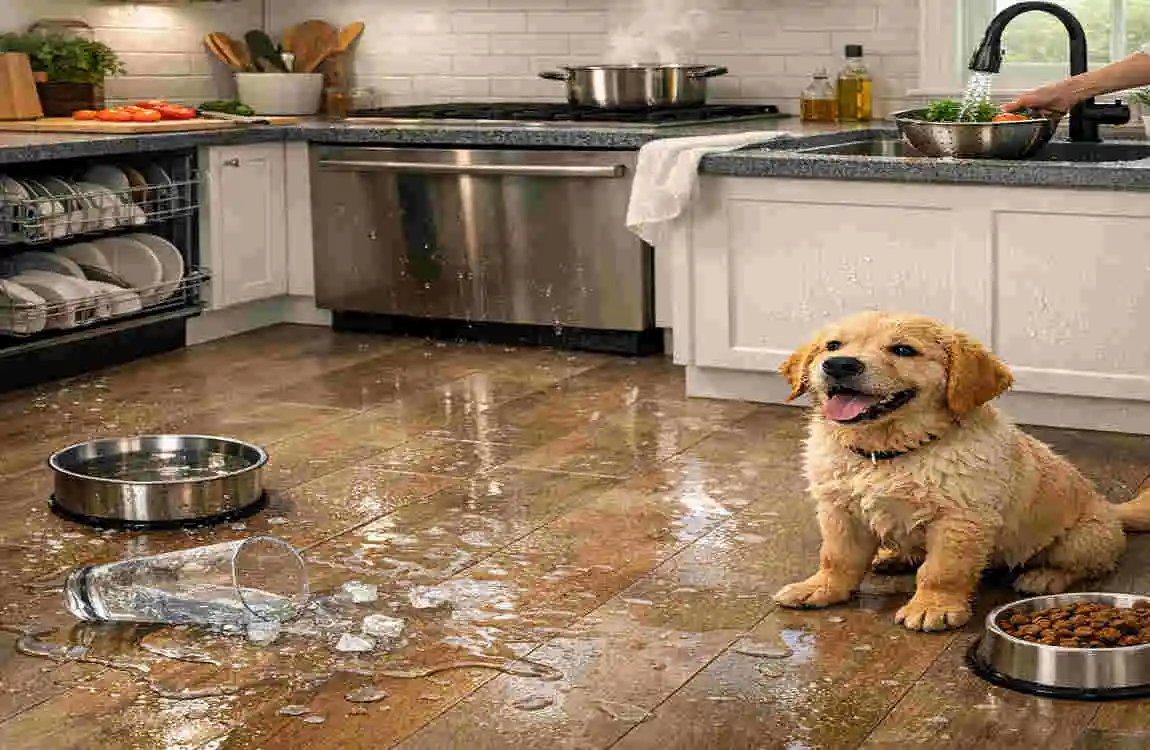
100% Waterproof Protection
Kitchens deal with spills all the time. Water from the sink, dropped drinks, cleaning splashes, and food messes can all reach the floor. That is why waterproof flooring matters so much.
Vinyl flooring helps protect your kitchen from moisture damage. It does not swell like some other flooring types when water sits on it for a while. This makes it a safer choice for busy homes where accidents happen often.
Comfortable Underfoot
Standing in the kitchen for a long time can be tiring. Cooking, washing dishes, and cleaning can put pressure on your feet and legs. Vinyl flooring feels softer than ceramic tile, so it is easier to stand on for longer periods.
That added comfort matters more than many people realise. If you spend a lot of time in the kitchen, a softer floor can make daily tasks feel less tiring.
Affordable Yet Stylish
One of the biggest reasons people choose vinyl is cost. It often gives you the look of a much more expensive floor without the high price tag.
You can find designs that look like oak, marble, slate, or polished stone. This means you can create a stylish kitchen without overspending.
Easy Cleaning
Kitchen floors need simple care. You do not want a surface that takes too much time or special treatment.
Vinyl is easy to clean with basic sweeping, mopping, and wiping. For most homes, that is all you need to keep it looking fresh.
Types of Waterproof Vinyl Flooring
Luxury Vinyl Plank (LVP)
LVP is one of the most popular vinyl flooring choices for kitchens. It is made to look like wooden planks, giving you a warm, natural style.
It is a great option if you want the look of hardwood without the worry of water damage. Many homeowners choose LVP because it feels modern, durable, and easy to live with.
Luxury Vinyl Tile (LVT)
LVT looks more like stone, ceramic, or patterned tile. It works well if you want a kitchen with a more polished or elegant feel.
This style is good for people who like the look of tile but want something warmer and softer underfoot. It also works well in traditional and modern spaces.
Sheet Vinyl Flooring
Sheet vinyl comes in large rolls, which means fewer seams. This can be helpful in kitchens because fewer seams can mean fewer places for moisture to reach.
It is often one of the most budget-friendly options. If you want a simple and practical floor, sheet vinyl is worth considering.
Rigid Core SPC Flooring
SPC stands for stone plastic composite. This type of flooring has a strong core, which makes it very stable and durable.
SPC is a great pick for kitchens with lots of activity. It handles moisture well and often feels more solid than standard vinyl.
WPC Vinyl Flooring
WPC stands for wood-plastic composite. It feels a little softer than SPC and often gives a more cushioned feel underfoot.
It is a strong choice if comfort matters a lot to you. Many homeowners like WPC because it balances durability with a more comfortable walking surface.
Best Waterproof Vinyl Flooring for Different Kitchen Styles
Modern Kitchens
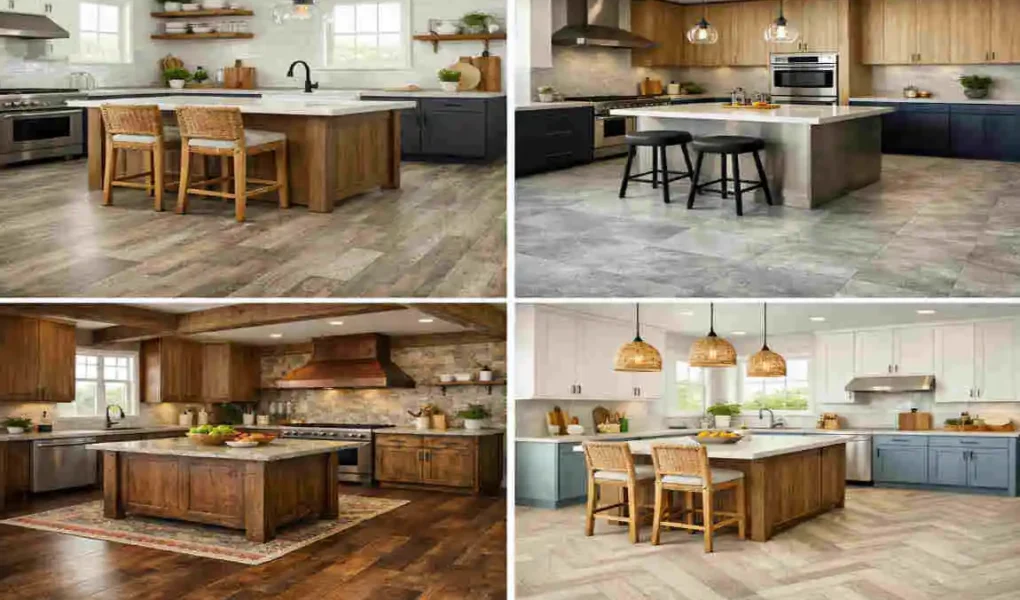
Modern kitchens often look best with clean lines, smooth surfaces, and simple colours. Vinyl flooring in grey, white oak, or light stone designs works very well here.
You want flooring that feels fresh and uncluttered. A simple plank or tile pattern can help the room feel open and polished.
Farmhouse Kitchens
Farmhouse kitchens usually feel warm, welcoming, and homey. Wood-look vinyl works especially well in this type of space.
Light oak, weathered wood, and soft brown tones can help create that cosy farmhouse feel. These styles pair well with open shelves, rustic furniture, and soft neutral cabinets.
Traditional Kitchens
Traditional kitchens often use classic details and warm finishes. Vinyl flooring with rich wood looks or elegant stone styles can fit beautifully here.
A timeless floor will help the room stay stylish for years. Avoid overly trendy colours if you want a more classic look.
Rustic Kitchens
Rustic kitchens usually have natural textures and a relaxed feel. Wood-look vinyl with deeper tones or textured finishes can work very well.
This type of flooring gives the room a warm and grounded look. It is a smart choice if you want the kitchen to feel natural and comfortable.
Contemporary Kitchens
Contemporary kitchens often mix clean design with modern style. Grey wood, marble-look vinyl, and smooth stone patterns are common choices.
These floors can help the space feel sleek without looking cold. They work especially well with modern cabinets and simple decor.
Small Kitchens
Small kitchens need flooring that helps the room feel bigger. Light colours and simple patterns can make a big difference.
Try using:
- Light oak
- Whitewashed finishes
- Soft gray wood
- Small-scale stone looks
These choices can make a small kitchen feel brighter and more open.
Features to Look for Before Buying
Wear Layer Thickness
The wear layer is the top protective layer of the flooring. It helps resist scratches, stains, and everyday damage.
A thicker wear layer usually lasts longer. If your kitchen gets a lot of use, this feature becomes very important.
Slip Resistance
Kitchen floors should be safe, especially when water or oil gets on them. Slip resistance helps reduce the chance of accidents.
This is especially useful if you have kids, older adults, or pets in the home. A floor that grips better can make the kitchen feel safer.
Scratch Resistance
Kitchen floors often get scratched by chairs, pet claws, and moving items. A scratch-resistant surface helps keep the floor looking better for longer.
If your kitchen is busy, this feature is worth paying attention to.
Waterproof Core
Some vinyl floors only resist water on the top layer, while others have a waterproof core. A waterproof core provides better protection against spills and moisture.
This is one of the most important things to check before buying.
Easy Installation
Many homeowners want flooring that is simple to install. Click-lock systems are often easier for DIY projects, while glue-down styles may offer a firmer hold.
Choose the method that fits your skill level and your kitchen needs.
Warranty Coverage
A strong warranty can give you peace of mind. It shows that the manufacturer stands behind the product.
Always read the warranty details carefully. Make sure you understand what is covered and what is not.
Waterproof Vinyl Flooring vs Other Kitchen Flooring
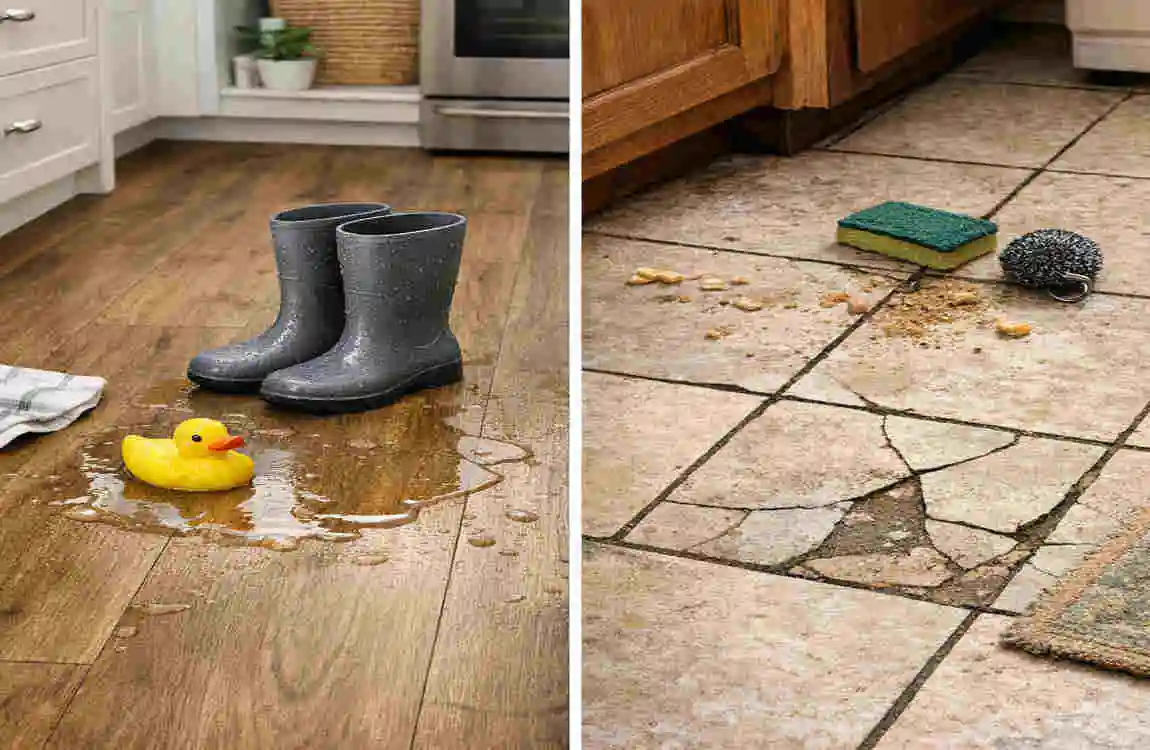
Flooring Type Waterproof Comfort Maintenance Cost Best For
Waterproof Vinyl Excellent High Easy $$ Most kitchens
Tile Excellent Low Easy $$$ High-moisture areas
Hardwood Poor High Moderate $$$$ Dry spaces
Laminate Moderate Medium Easy $$ Low-moisture kitchens
Vinyl stands out for its strong balance of water protection, comfort, and affordability. Tile is very waterproof, but it can feel hard and cold. Hardwood looks beautiful, but it is not the best choice for wet kitchen areas.
Popular Colours and Designs
Light Oak
Light oak is one of the most loved kitchen flooring looks. It feels warm, bright, and easy to match with many cabinet colours.
This style works well in modern, farmhouse, and classic kitchens.
Gray Wood
Grey wood flooring gives the kitchen a fresh, modern feel. It pairs well with white cabinets, black hardware, and simple decor.
If you want a clean look that still feels soft, grey wood is a great option.
Whitewashed Finish
Whitewashed vinyl can make a kitchen feel larger and brighter. It works especially well in small or dark rooms.
This finish is often used in coastal, farmhouse, and Scandinavian-style kitchens.
Stone Look
Stone-look vinyl gives you a natural and solid appearance. It can make the kitchen feel more expensive and polished.
This design is a good match for traditional and contemporary spaces.
Marble Look
Marble-look flooring adds a touch of elegance. It gives the kitchen a more refined appearance without the full cost of real marble.
This is a strong option if you want a high-end style on a budget.
Herringbone Patterns
Herringbone adds visual interest and style. It works well in modern kitchens that need a little more character.
If you want your floor to stand out, this pattern is a stylish choice.
Installation Options
DIY Installation
Many vinyl floors are made for DIY installation. If you are comfortable measuring, cutting, and laying flooring, you may be able to do the work yourself.
DIY can save money, but it still requires careful planning and a smooth subfloor.
Professional Installation
Hiring a professional often gives you the best finish. This is especially helpful if your kitchen has uneven floors or tricky corners.
A good installer can make the job faster and help avoid mistakes.
Click-Lock Systems
Click-lock vinyl pieces fit together without glue. This makes them easier to install and easier to replace later if needed.
This system is popular with homeowners who want a simpler project.
Glue-Down Vinyl
Glue-down vinyl provides a firm, stable finish. It can work well in kitchens with heavy foot traffic.
It may take more effort to install, but it can feel very secure once in place.
Maintenance Tips
Daily Cleaning
For everyday care, sweep or vacuum loose dirt and crumbs. Then wipe spills quickly so they do not sit on the floor too long.
This simple routine helps your kitchen stay neat and fresh.
Weekly Care
Use a damp mop with a mild cleaner once a week. Avoid soaking the floor with too much water.
A gentle cleaning routine is usually enough to keep vinyl looking good.
Preventing Scratches
You can protect your floor by using felt pads under chairs and furniture. Avoid dragging heavy items across the surface.
These small habits help the floor last longer.
Removing Stains
Most stains come up easily with a soft cloth and mild soap. Do not use harsh scrubbing tools that can damage the finish.
Quick cleaning is always better than letting stains sit.
Long-Term Maintenance
Over time, keep checking for loose edges or damaged areas. Replace worn pieces early if needed.
A little care goes a long way with vinyl flooring.
Common Mistakes to Avoid
A few mistakes can cause trouble later. Try to avoid these:
- Ignoring wear layer thickness
- Choosing indoor-only flooring for a wet kitchen
- Skipping subfloor preparation
- Using harsh cleaning chemicals
- Buying based only on price
If you focus only on the cheapest option, you may end up replacing the floor sooner than expected.
Cost of Waterproof Vinyl Flooring
Flooring Type Material Cost (per sq. ft.)Installation Cost
Sheet Vinyl $1–$3 $2–$5
LVP $2–$7 $3–$8
LVT $3–$8 $4–$9
SPC Vinyl $3–$7 $3–$8
WPC Vinyl $4–$9 $4–$9
Sheet vinyl is often the most budget-friendly. LVP and LVT usually cost more, but they also tend to look more premium. SPC and WPC can cost a bit more, but many homeowners like the extra strength or comfort.
Pros and Cons
Pros
- Fully waterproof
- Budget-friendly
- Stylish appearance
- Easy maintenance
- DIY-friendly
- Comfortable to walk on
Cons
- Can dent under heavy furniture
- Not easily repairable if deeply damaged
- Premium products cost more
For many kitchens, the pros outweigh the cons. The key is choosing a product that matches your home and lifestyle.
How to Choose the Best Waterproof Vinyl Flooring for Kitchens
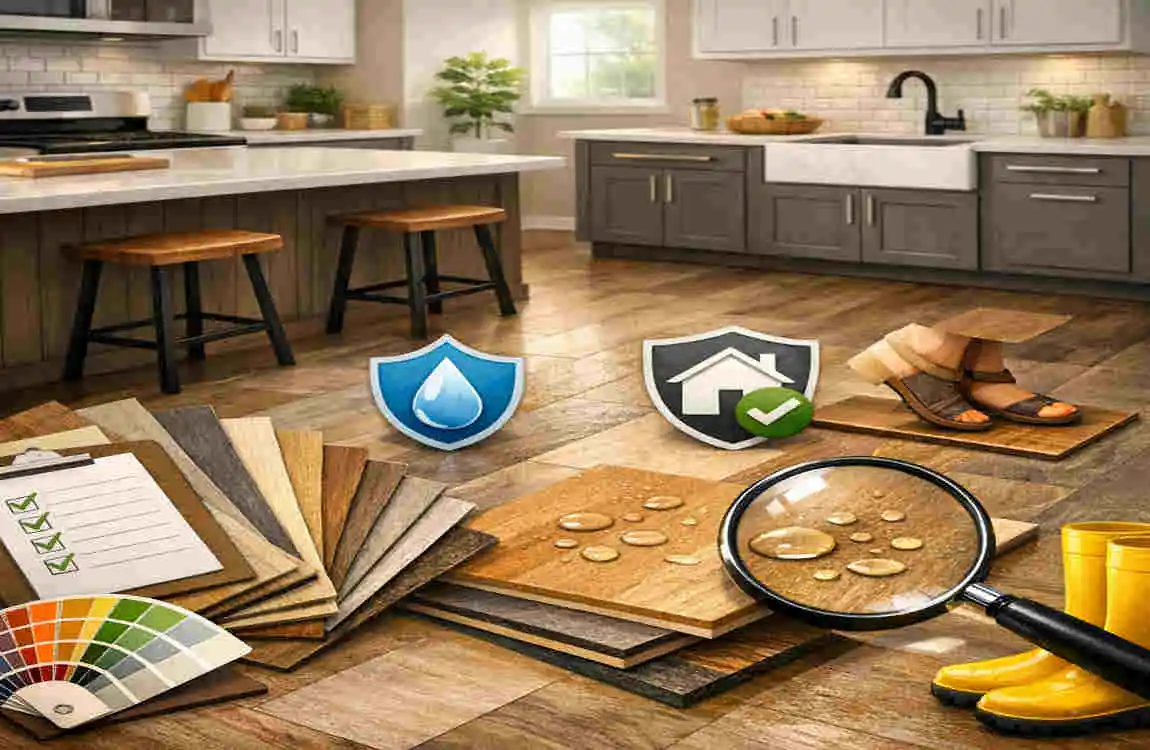
To make the best choice, think about your kitchen in practical terms.
Start with your style. Do you want modern, farmhouse, traditional, or rustic? Then think about how busy the kitchen is. A large family kitchen may need a tougher wear layer than a light-use space.
Also look at thickness, finish, and warranty. If you want easier care and longer life, these details matter more than you might expect.
A simple checklist can help:
- Match flooring to your kitchen style
- Consider household traffic
- Choose the right thickness
- Compare warranties
- Select the proper finish
- Set a realistic budget
Frequently Asked Questions
What is the best waterproof vinyl flooring for kitchens?
Luxury Vinyl Plank (LVP) and SPC rigid-core flooring are among the best choices because they offer strong water resistance, durability, and realistic designs.
Is waterproof vinyl flooring suitable for busy kitchens?
Yes. It handles spills, scratches, stains, and heavy foot traffic very well, which makes it a great fit for active homes.
How long does waterproof vinyl flooring last?
High-quality waterproof vinyl flooring can last 15–25 years with good care.
Can I install waterproof vinyl flooring myself?
Yes, many click-lock products are DIY-friendly if your subfloor is prepared properly. Still, professional installation may give better long-term results.
Does waterproof vinyl flooring increase home value?
It may not boost value as much as hardwood, but it can improve the look, durability, and appeal of your kitchen to buyers.
| Kitchen Style | Best Waterproof Vinyl Flooring | Recommended Color | Key Features | Why It Works |
|---|---|---|---|---|
| Modern Kitchen | Luxury Vinyl Plank (LVP) | Light Gray, White Oak | 100% waterproof, scratch-resistant | Creates a clean, contemporary look. |
| Farmhouse Kitchen | Wood-Look Vinyl Plank | Rustic Oak, Hickory | Waterproof, textured finish | Adds warmth and rustic charm. |
| Traditional Kitchen | Luxury Vinyl Tile (LVT) | Walnut, Cherry | Durable, stain-resistant | Matches classic cabinetry and décor. |
| Contemporary Kitchen | Wide-Plank Vinyl Flooring | Charcoal, Ash Gray | Waterproof core, low maintenance | Complements sleek, minimalist interiors. |
| Coastal Kitchen | Whitewashed Vinyl Plank | Driftwood, Sandy Beige | Moisture-resistant, easy to clean | Brightens the space with a beach-inspired feel. |
| Industrial Kitchen | Stone-Look Vinyl Tile | Concrete Gray, Slate | Heavy-duty wear layer, waterproof | Enhances modern industrial aesthetics. |
| Scandinavian Kitchen | Matte Oak Vinyl Plank | Natural Oak, Blonde Wood | Waterproof, soft wood texture | Keeps the room bright and airy. |
| Small Kitchen | Light-Tone Vinyl Plank | Beige, Light Maple | Water-resistant, reflective finish | Makes compact kitchens appear larger. |
| Luxury Kitchen | Premium Rigid Core Vinyl | Marble White, Dark Walnut | Waterproof, dent-resistant, premium finish | Delivers an elegant, high-end appearance. |
| Family Kitchen | SPC Vinyl Flooring | Medium Oak, Greige | 100% waterproof, pet- and kid-friendly | Built for busy households with heavy foot traffic. |