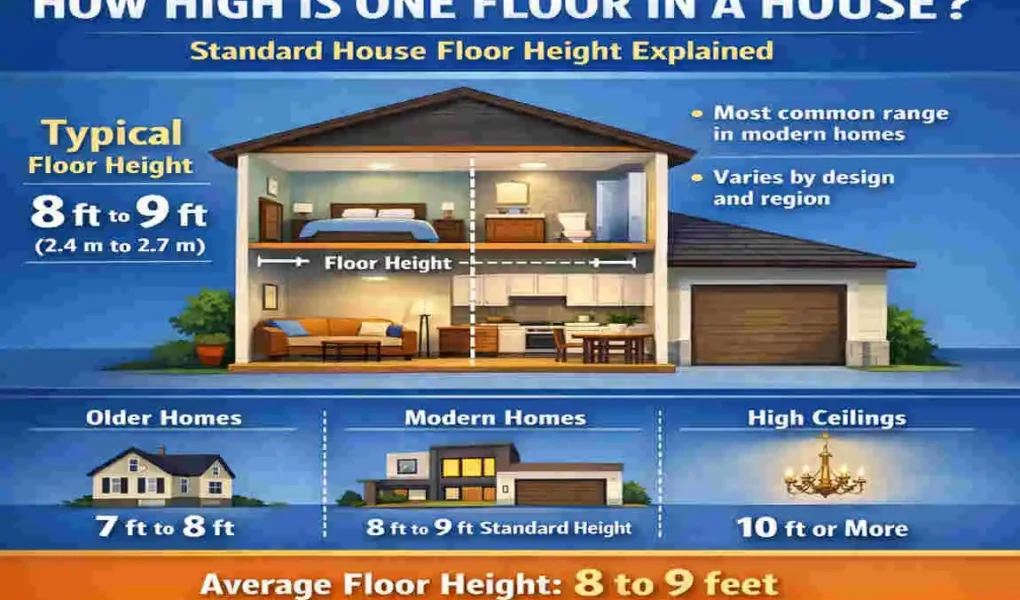
If you have ever asked, “How high is one floor?” you are not alone. People ask this when buying a home, planning a renovation, designing a building, or simply trying to better understand house measurements.
| House type | Typical height of one floor |
|---|---|
| Standard house | 8 to 10 feet |
| Common modern home | About 9 feet |
| Higher-ceiling home | 10 feet or more |
| Floor-to-floor height | Usually around 9 to 10 feet |
The short answer is this: one floor in a house is usually about 8 to 12 feet tall. In metric terms, that is around 2.4 to 3.6 meters. But the exact height depends on the country, building style, and the structure’s purpose.
What Does “One Floor” Mean in Construction?
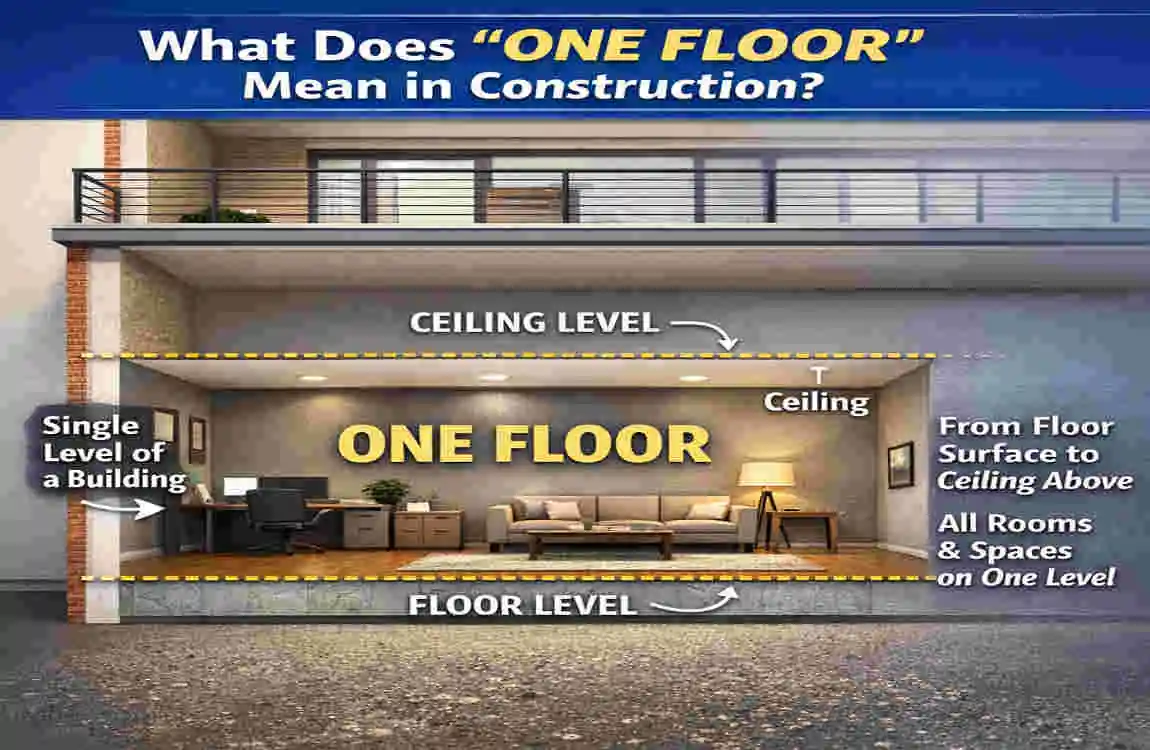
Definition of a Floor in Building Terms
In building language, a floor usually refers to a structural level between two slabs or layers of a building. It is not always the same as the space you see inside a room.
This is where many people get confused. Floor, story, and ceiling height are related, but they are not the same thing.
- Floor: the full structural level
- Storey: the complete level of a building
- Ceiling height: the inside height you actually see and use
Why Floor Height Matters
Floor height is more important than many people think. It affects:
- Safety and structure
- Air movement and ventilation
- Room size and comfort
- Natural light
- Building rules and code compliance
A higher floor can make a home feel open and airy. A lower floor can make a house easier to heat and cheaper to build.
How High Is One Floor in a House? Standard Measurements
Standard Residential Floor Height
For most homes, a single floor is usually about 8 to 10 feet high. In many modern houses, it is usually between 9 and 12 feet.
This does not mean the inside room is that tall. The total floor height includes the space for:
- the ceiling
- the slab or structure between floors
- wiring, pipes, and other building systems
So the actual usable indoor height is usually a little less than the full floor-to-floor height.
Commercial vs Residential Differences
Homes and commercial buildings do not use the same floor height.
Building Type Typical Floor Height
Small house 8–9 feet
Standard home 9–10 feet
Modern home 9–12 feet
Office building 10–14 feet
Luxury villa 12 feet and above
Commercial spaces usually need more space for lighting and HVAC systems, and a larger, more open feel. That is why their floors are often taller.
Floor-to-Floor vs Ceiling Height
This is one of the most common mistakes people make.
- Floor-to-floor height = total height from one structural floor to the next
- Ceiling height = the inside height from the floor to the ceiling in the room
For example, a house may have a 10-foot floor height, but the ceiling height in the room may be only 8 or 9 feet.
Factors That Affect How High One Floor Is
Architectural Design Choices
The house’s design plays a big role. A simple home may use lower ceilings to save money. A modern open-plan home may use higher ceilings to create a spacious look.
Architects also think about style. Some homes are built to feel cozy. Others are built to feel grand and open.
Climate and Geography
Climate matters too.
- Hot climates often use higher ceilings so hot air can rise and rooms can feel cooler.
- In cold climates, lower ceilings can help retain heat and reduce energy use.
This is why floor height can vary even between similar homes in different places.
Building Codes and Regulations
Every country has rules about minimum ceiling height and safe living space. These rules help make homes healthy and comfortable.
Building codes usually cover:
- minimum room height
- air flow requirements
- safety standards
- livability rules
So even if a builder wants to go smaller or larger, the local rules may limit the design.
Purpose of the Building
The building’s purpose also changes the floor height.
- Homes: usually smaller and more practical
- Apartments: often compact for efficient space use
- Offices: taller for air systems and open space
- Malls or luxury buildings: much higher for design and comfort
How High Is One Floor in Different Countries?
Floor height is not the same everywhere. Here is a simple comparison:
Region Typical Floor Height
United States & Canada 9–12 feet / 2.7–3.6 meters
United Kingdom & Europe 2.4–2.7 meters
India & Pakistan 8–10 feet / 2.4–3 meters
Middle East luxury buildings 3–4 meters or more
United States & Canada
In North America, many homes have a standard floor height of around 9 feet. Bigger homes and luxury houses often reach 10 or 12 feet.
United Kingdom & Europe
In the UK and many parts of Europe, homes often have floor heights around 2.4 to 2.7 meters. These homes tend to focus on efficiency and practical design.
Asia
In countries like India and Pakistan, the common range is usually 8 to 10 feet. In cities, newer homes are sometimes built with higher ceilings because people want more light and better airflow.
Middle East Luxury Buildings
In some Middle Eastern homes and luxury buildings, the floor height can be 3 to 4 meters or more. These buildings often aim for a premium look with spacious interiors.
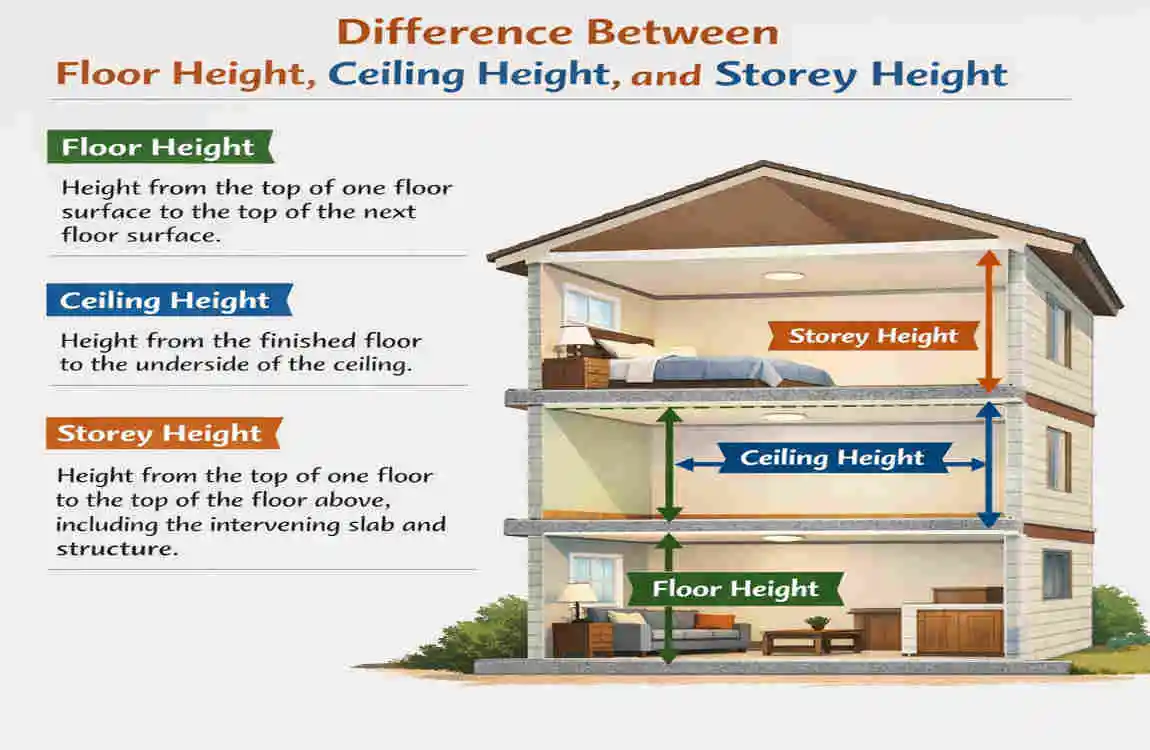
Difference Between Floor Height, Ceiling Height, and Storey Height
Floor Height Explained
Floor height means the full vertical distance from one floor slab to the next. It is the structural height of a level.
Ceiling Height Explained
Ceiling height is the height of the space inside the room that you can actually see and use. This is the measurement most people care about when they think about comfort.
Storey Height Explained
Storey height is the total height of one complete level in a building. It may include:
- the floor slab
- the ceiling space
- beams
- pipes and wiring
- air systems
So when someone says “one floor is 10 feet,” they may be talking about the structural level, not the exact interior room height.
Why Modern Homes Are Building Higher Floors
Better Ventilation and Cooling
Higher floors help air move more freely. This makes the home feel less crowded and can improve comfort, especially in warm weather.
Aesthetic Appeal
Tall ceilings often make a room look more elegant and open. That is one reason many people prefer modern homes with higher floor heights.
Natural Lighting
Higher ceilings can allow for larger windows. Bigger windows let in more daylight, making rooms feel brighter and more welcoming.
Energy Efficiency
In some homes, higher ceilings can help balance temperatures. Warm air rises, and with the right design, the room can feel more pleasant.
How to Measure the Height of One Floor in a House
Simple Measuring Tools
You do not need special equipment for a basic estimate. Common tools include:
- a measuring tape
- a laser distance meter
Step-by-Step Process
- Measure from the floor to the ceiling inside the room.
- Check the building plan if you have it.
- Add the slab thickness if you want the full floor-to-floor height.
Professional Survey Methods
Architects and engineers usually use building drawings, site measurements, and structural plans. This gives the most accurate result.
Common Misconceptions About Floor Height
“One floor equals 10 feet always”
This is not true. Some floors are shorter, and some are much taller. It depends on the building.
Confusing Ceiling Height with Floor Height
Many people mix these up. The ceiling height is the usable inside height, while the floor height is the full structural level.
All Houses Have the Same Standards
That is another myth. Floor height changes based on:
- location
- budget
- design
- climate
- building rules
Ideal Floor Height for Different Types of Homes
Small Houses
Small houses often work well with 8 to 9 feet. This keeps costs lower and makes the home easier to heat or cool.
Standard Family Homes
For many families, 9 to 10 feet is a comfortable choice. It gives a nice balance between openness and efficiency.
Luxury Villas
Luxury homes often use 10 to 14 feet or even more. This creates a grand, spacious feeling.
Apartments
Apartments usually stay around 8 to 10 feet because builders want to save space and reduce construction cost.
Pros and Cons of Higher Floor Heights
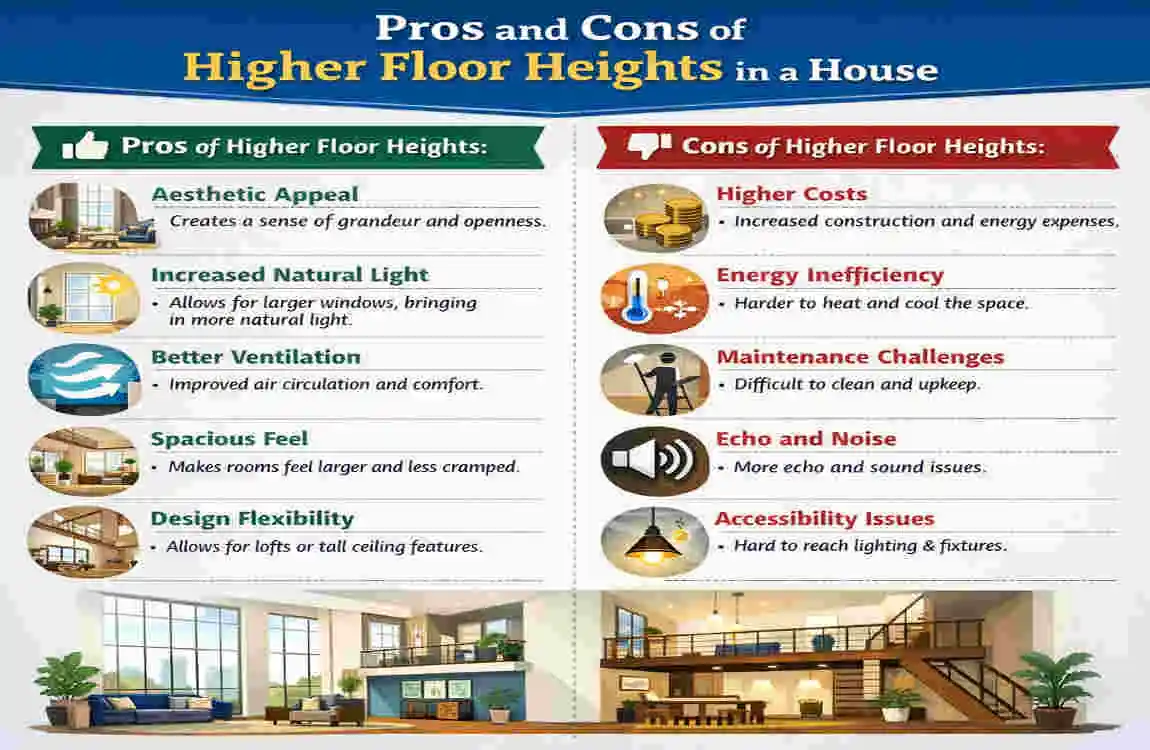
Advantages
Higher floors can offer:
- better airflow
- more natural light
- a premium look
- a stronger sense of space
Disadvantages
But they also have downsides:
- higher construction cost
- more heating and cooling needs
- more complex building design
So higher is not always better. It depends on what you want from the home.
FAQs About How High Is One Floor
How high is one floor in meters?
Usually, one floor is about 2.4 to 3.6 meters high.
Is each floor the same height in all buildings?
No. Floor heights vary from one building to another, depending on design and purpose.
What is the standard ceiling height?
In many homes, the standard ceiling height is around 8 to 10 feet.
Can floor height be customized?
Yes. Custom homes often feature floor heights tailored to the owner’s needs and style.