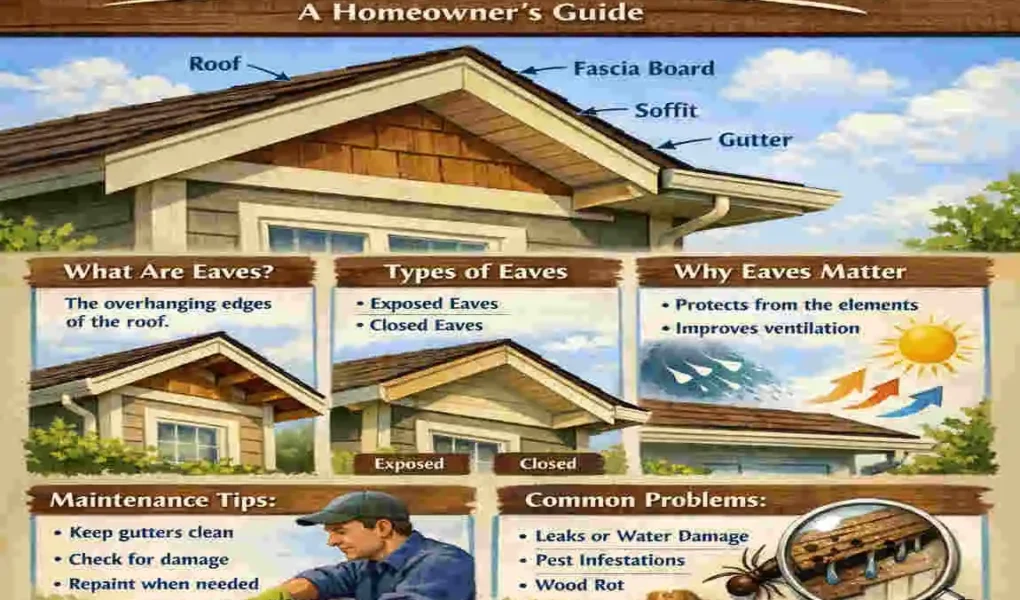
Roof design does more than shape a home’s look. It also helps protect the walls, control rainwater, support ventilation, and even improve energy use. One small but very important part of that design is the eaves.
| Topic | Simple Explanation | Why It Matters for Homeowners |
|---|---|---|
| What eaves are | The part of the roof that sticks out past the exterior walls. | Helps throw rainwater away from walls and foundation, reducing damage. |
| Main parts | Soffit (underside), fascia (front board), and often gutters along the edge. | Each part plays a role in ventilation, appearance, and drainage. |
| Key functions | Keeps rain off walls, shades windows, and lets attic air move through vents. | Improves comfort, energy efficiency, and prevents moisture problems. |
| Common types | Open/exposed, boxed/soffited, and abbreviated (little or no overhang). | Different looks and protection levels to match your home’s design. |
| Basic maintenance | Inspect for rot or pests, keep gutters clear, and ensure vents aren’t blocked. | Prevents leaks, mold, and costly structural repairs over time. |
If you have ever looked at the edge of a roof and wondered what are eaves on a house, you are not alone. Many homeowners hear the term but do not fully understand what it means or why it matters. The truth is, eaves are a major part of how a house stays dry, comfortable, and protected through the seasons.
What Are Eaves on a House?
Simple Definition of Eaves
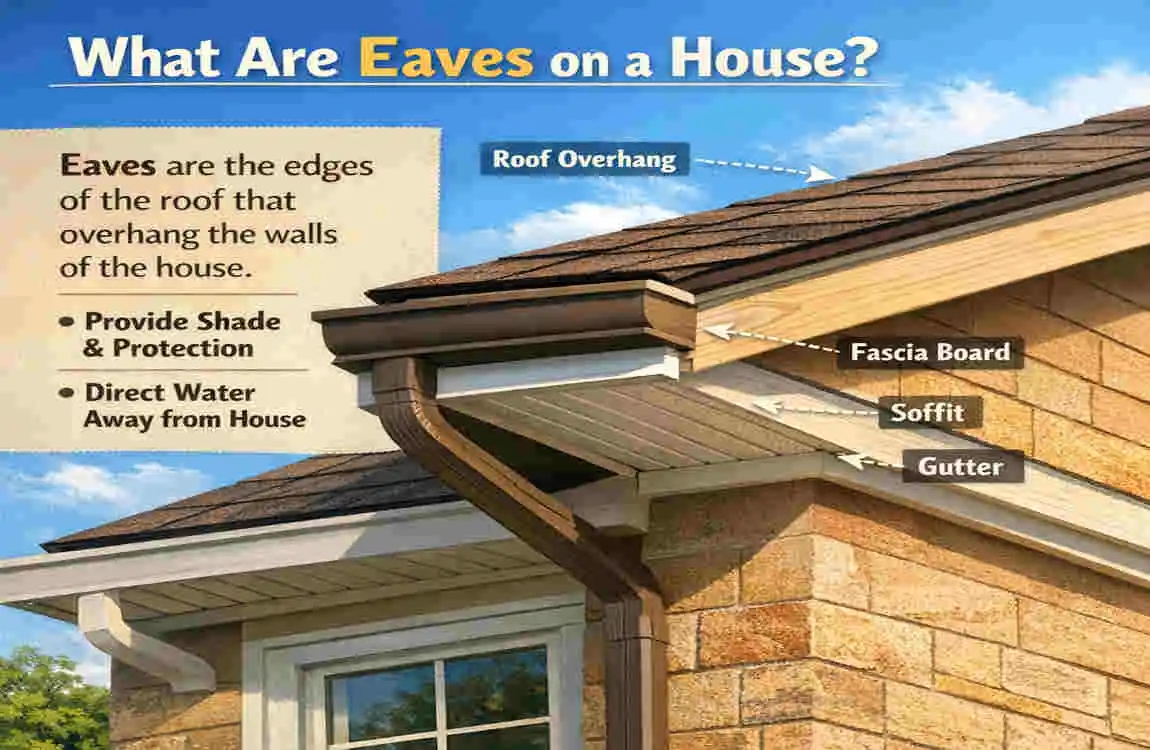
Eaves are the part of the roof that extends past the outside walls of a house. In simple terms, they are the roof edges that stick out beyond the wall line.
This small overhang may not seem important at first glance, but it plays a big role in protecting the home. When rain falls, the eaves help carry water away from the walls. When the sun is strong, they can also provide a bit of shade. That is why eaves are both practical and useful in house design.
You will often hear people refer to the eaves of a house or the eaves of a roof when talking about this part of the structure. The idea is the same: it is the overhanging edge of the roof.
Where Eaves Are Located on a Home
Eaves are usually found around the outside edges of the roof, along the perimeter of the house. They create a small extension beyond the walls and are visible from the ground.
The relationship between the roofline and the walls matters here. The roof does not end right at the wall in many homes. Instead, it projects a little outward. That extra space is the eave. In many designs, the eaves wrap around the house, while in others they may appear only on certain sides.
This placement is important because it helps guide water away from the siding and foundation. It also gives the home a more finished look.
Main Components of Eaves
A complete eave system comprises several components of the house roof. Each one has a different job.
- Fascia board: The long board that runs along the roof edge. It gives the roof a neat finish and often supports the gutters.
- Soffit: The underside of the eave. It may be vented to help air move through the attic.
- Gutters: These collect rainwater and move it away from the home.
- Rafters: These are the structural beams that help support the roof overhang.
- Drip edge: This is a metal piece that helps water flow away from the roof edge and prevents it from sneaking under the shingles.
Together, these parts create a system that protects both the roof and the walls.
Why Eaves Matter in Home Construction
Eaves are not just decorative. They are a key part of the building’s defense system.
First, they help with water management. Rainwater naturally runs off the roof, and the eaves help direct it. Second, they protect the exterior of the home from constant exposure to the elements. Third, they can improve ventilation when designed with soffits. Fourth, they add visual balance, which improves curb appeal.
In short, eaves do more than people often realize. They help a house last longer and function better.
The Purpose of Eaves on a House
Protecting Exterior Walls From Rain
One of the biggest jobs of eaves is to keep rainwater from hitting the siding directly. Without them, water would run straight down the walls, causing more wear over time.
This matters because repeated water contact can lead to staining, paint damage, and even mold or mildew growth. Eaves reduce that risk by pushing the drip line farther away from the wall. That small bit of distance makes a big difference.
Improving Drainage Around the Foundation
Eaves also help with drainage at ground level. By keeping water from running too close to the base of the house, they lower the chance of soil erosion and pooling water.
This is important for the foundation. If too much water collects near the house, it can lead to leaks, cracking, or basement moisture problems. A good roof overhang works with gutters and downspouts to safely move water away.
Enhancing Energy Efficiency
Eaves can also help control heat from the sun. In warm months, they may block direct sunlight from entering windows or heating the walls too much.
That shade can help keep the home cooler and reduce strain on the air conditioner. While eaves are not a replacement for insulation or modern windows, they do support a more energy-efficient home.
Supporting Roof Ventilation
When eaves include vented soffits, they help air move into the attic. This airflow is part of a healthy roof ventilation system.
Why does this matter? Because trapped heat and moisture in the attic can damage roofing materials and create mold problems. Good ventilation helps the attic stay dry and balanced. In that way, eaves support the whole roof system, not just the edge.
Increasing Home Lifespan
Eaves help reduce the amount of weather damage a house takes over time. They shield paint, wood trim, siding, and even some window areas from constant exposure.
That protection adds years to the life of many exterior materials. Less water damage means fewer repairs, less rot, and better-looking surfaces. So while eaves are easy to ignore, they are doing quiet, steady work every day.
Different Types of Eaves Explained
Open Eaves
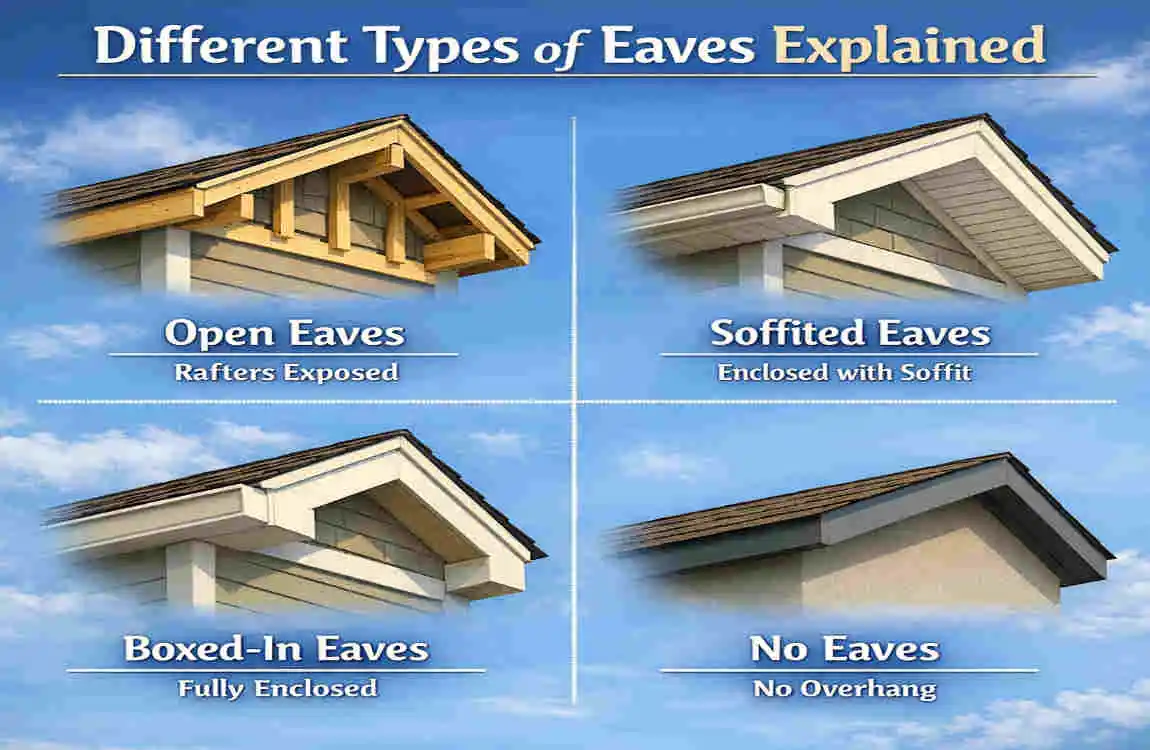
Open eaves leave the rafters visible from below. This style gives a home a more traditional or rustic look.
Many people like open eaves because they show the roof structure and add character. They can work well in craftsman-style or older homes. The downside is that exposed parts may need more maintenance and may be more vulnerable to weather or pests.
Closed Eaves
Closed eaves have the underside covered with a soffit, so the rafters are not visible. This is a very common style in modern homes.
Closed eaves usually look cleaner and more polished. They also offer better protection against birds, insects, and debris getting into the roof area. For many homeowners, this is a practical and attractive choice.
Boxed Eaves
Boxed eaves are fully enclosed. The underside, sides, and edge of the overhang are all covered in a neat, finished design.
This style is popular in contemporary houses because it looks streamlined and refined. Boxed eaves can also be built to more efficiently support insulation and ventilation, depending on the roof design.
Abbreviated Eaves
Abbreviated eaves are shorter roof overhangs. They extend only a little beyond the walls, or sometimes just enough to offer basic protection.
These are common in some modern architectural designs where clean lines matter more than heavy overhangs. The main advantage is the sleek look. The drawback is that shorter eaves offer less protection from rain and sun.
Decorative Eaves
Some homes use eaves as a design feature. These may include trim details, carved edges, brackets, or other decorative touches.
Decorative eaves are often found in luxury homes, historic houses, or styles that emphasize craftsmanship. They can make a house stand out and add charm, but they may also require more care to keep them in good shape.
Comparison of Common Eave Types
Type of EavesAppearanceBenefitsDrawbacks
Open Eaves Visible rafters, traditional look Stylish, simple structure, easy to inspect More exposed to weather and pests
Closed Eaves Covered underside, clean finish Better protection, neater look, pest resistance Can be harder to inspect
Boxed Eaves Fully enclosed and streamlined Modern look, good insulation and vent options More complex to build or repair
Abbreviated Eaves Short overhang, minimal look Works well in modern homes, compact design Less weather protection
Decorative Eaves Custom trims and details Adds charm and character Can cost more to maintain
Parts of an Eave System
Fascia Boards
The fascia is the long, straight board at the roof edge. It gives the roofline a clean finish and helps support the gutter system.
Because it sits at the edge of the roof, it is often exposed to water and weather. That means it needs to stay in good condition to protect the whole edge of the roof.
Soffits
The soffit covers the underside of the eave. It is one of the most important parts of the eave system because it helps protect the roof structure and may include vents.
When soffits are vented, they allow fresh air into the attic. That airflow helps control moisture and heat. If you want to understand soffit vs fascia, think of the fascia as the front vertical board and the soffit as the underside covering.
Gutters and Downspouts
Gutters collect rainwater from the roof edge, while downspouts carry that water down and away from the house.
Without them, water could spill directly beside the foundation. That can lead to puddles, erosion, or basement problems. Gutters and downspouts work closely with eaves to protect the home’s exterior.
Rafters and Roof Structure
Rafters are part of the roof frame. They support the roof and help create the overhang that becomes the eaves.
The strength of the rafters matters because they support the roof edge. If the structure weakens, the overhang may sag or become unstable.
Drip Edge
The drip edge is a thin metal strip installed along the roof edge. It helps water move away from the roof deck and stops it from seeping underneath the shingles.
This small part is easy to overlook, but it is important for preventing water damage around the eaves.
Common Materials Used for Eaves
Wood Eaves
Wood is a classic choice for eaves because it looks natural and complements many home styles.
The downside is maintenance. Wood can rot, crack, or fade if it is not sealed and regularly cared for. Still, many homeowners like its warm, traditional look.
Aluminum Eaves
Aluminium is lightweight, durable, and rust-resistant. It is a popular option for soffits and fascia in many homes.
It works especially well in areas that get a lot of rain because it holds up better than untreated wood. It is also relatively low-maintenance.
Vinyl and PVC Eaves
Vinyl and PVC are budget-friendly and easy to maintain. They resist moisture and do not need to be painted as often as wood.
These materials are common in modern homes because they are practical and simple to install. They are a smart choice for homeowners who want less upkeep.
Fiber Cement Materials
Fiber cement is strong and long-lasting. It resists fire, pests, and harsh weather better than many other materials.
It can be a good option when you want durability and a more premium finish. It is often used where long-term performance is a priority.
Best Material for Different Climates
The best material often depends on the weather in your area.
- Humid regions: Vinyl, PVC, or aluminum usually work well because they resist moisture.
- Snowy climates: Durable materials like aluminium or fibre-cement can withstand freeze-thaw cycles better.
- Coastal areas: Rust-resistant and moisture-resistant materials are often the best choice.
Choosing the right material helps your eaves last longer and perform better.
Signs Your House Eaves Need Repair
Water Stains and Leaks
If you notice stains on the walls, ceiling edges, or near the roofline, water may be getting into the eave area.
This often points to a drainage problem or roof-edge damage. Leaks should never be ignored because they can lead to deeper structural issues.
Rotting Wood or Cracks
Soft wood, peeling layers, or visible cracks can mean the eaves are starting to fail.
Rot usually starts when moisture gets inside and stays there. Once wood begins to decay, it can weaken quickly. Catching it early can save time and money.
Peeling Paint and Mold
When paint starts peeling on the fascia or soffit, it often means the surface is exposed to too much moisture.
Mold or mildew near the eaves is another warning sign. These problems usually mean water is not being managed properly.
Sagging Gutters
If gutters are bending, pulling away, or sagging, the fascia or supporting structure may be damaged.
Sometimes the problem is too much debris or water buildup. Other times, the support behind the gutter has weakened. Either way, it needs attention.
Pest Infestations
Birds, squirrels, insects, and other pests may try to enter through damaged soffits or eave openings.
If you hear movement or see nesting activity near the roof edge, take it seriously. Small gaps can become bigger entry points over time.
Quick Checklist for Homeowners
Use this simple check when looking at your eaves:
- Look for cracks, holes, or soft wood
- Check for stains or peeling paint
- Watch for sagging gutters
- Notice any signs of pests or nesting
- Inspect the roof edge after heavy rain
A short visual check a few times a year can help you catch problems early.
How to Maintain Eaves Properly
Regular Gutter Cleaning
One of the simplest ways to protect eaves is to keep gutters clear.
When gutters clog, water can overflow and soak the fascia and soffit. Clean gutters help water move where it should instead of spilling over the edge.
Inspect Soffits and Fascia Annually
Try to inspect these parts at least once a year, or after major storms.
Look for loose boards, damage, moisture stains, or signs of wear. A yearly check can help you spot small issues before they become big repairs.
Repaint or Seal Wood Surfaces
If your eaves are made of wood, paint or seal them regularly.
This creates a protective layer against moisture, sun, and temperature changes. Fresh paint also helps the home look cared for and well kept.
Trim Nearby Trees
Tree branches can drop leaves, twigs, and other debris onto the roof.
They can also give pests an easier path to your roof. Keeping branches trimmed back helps reduce both mess and access.
Schedule Professional Roof Inspections
Sometimes it helps to let an expert take a look.
A professional can check the roof edge, ventilation, and support structure more carefully than most homeowners can. That can prevent expensive structural repairs later.
Maintenance Tips Box
Seasonal reminders for eaves care:
- Spring: Check for storm damage and clean out debris
- Summer: Look for peeling paint, heat damage, or pest activity
- Fall: Clear gutters and prepare for wet weather
- Winter: Watch for ice buildup and sagging areas
Eaves and Home Design Styles’
Traditional Homes
Traditional homes often have wider eaves because they offer good protection and suit classic architecture.
The deeper overhang also helps create a balanced look and adds charm. This style works well in areas that get frequent rain or strong sun.
Modern Architecture
Modern homes often use shorter or more minimal eaves.
These designs focus on clean lines and simple shapes. While they look sleek, they may offer less weather protection than wider overhangs.
Craftsman and Cottage Homes
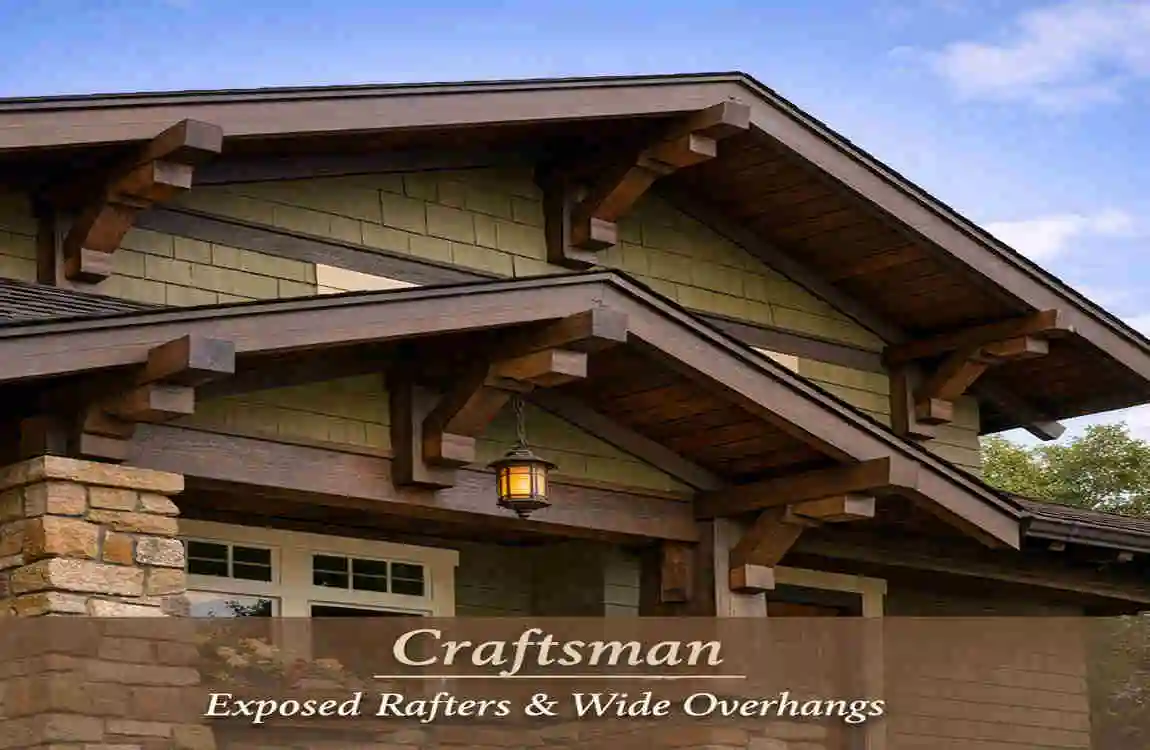
Craftsman and cottage styles often use decorative eaves with visible rafters or trim details.
These features add warmth and character. They also connect the roof edge with the rest of the home’s handcrafted feel.
Tropical and Hot Climate Designs
In hot climates, eaves are often extended to provide extra shade.
This helps reduce heat gain inside the house and keeps outdoor walls cooler. In these homes, eaves serve both practical and climate-control purposes.
Energy-Efficient Home Designs
Eaves can help with solar shading, especially when carefully planned.
By blocking strong summer sun while still allowing winter light in some regions, they can help reduce energy use. That makes them a useful feature in smarter home design.
Do All Houses Have Eaves?
Homes With Minimal or No Eaves
Not every house has large eaves. Some flat-roof homes or modern designs use very little overhang.
These homes often focus on a clean, sharp appearance. In urban areas, the style may be chosen more for looks than weather protection.
Pros and Cons of No-Eave Designs
A no-eave design can look sleek and simple. It may also fit modern architecture very well.
But the downside is less protection from rain, snow, and sun. That can mean more wear on siding and windows over time.
Climate Considerations
Climate matters a lot. In rainy or snowy places, eaves are often more important because they help push water away from the home.
In dry climates, the need may be less urgent, but eaves can still add shade and style. The best choice depends on both design goals and weather conditions.
Cost of Repairing or Replacing Eaves
Average Repair Costs
Small repairs, such as fixing a section of soffit or fascia, are usually less expensive than a full replacement.
The cost depends on the material, the labour, and the extent of the damage. A minor repair may be straightforward, while water damage can increase the price.
Full Replacement Costs
If the damage is widespread, replacing the eaves may be the better option.
Full replacement includes materials, labour, removal of damaged parts, and, sometimes, gutter work. Homes with complex rooflines may cost more because the work takes longer.
Factors That Affect Pricing
Several things can raise or lower the final cost:
- House size
- Material choice
- Extent of damage
- Roof height and access
- Local labor rates
The more complicated the job, the more it usually costs.
DIY vs Professional Repair
Small cosmetic fixes may be possible for skilled homeowners. But eave repairs can involve ladders, roof edges, moisture problems, and hidden damage.
For safety and quality, many repairs are best left to professionals, especially if the roof structure is affected.
Frequently Asked Questions About House Eaves
What Are Eaves on a House Used For?
Eaves protect the walls and foundation from rain, help support ventilation, and improve the appearance of the home. They are a major part of roof edge design and weather control.
Are Eaves Necessary?
Not every house needs wide eaves, but they are very useful. They help with water control, shading, and exterior protection, which makes them valuable in many climates.
What Is the Difference Between Soffit and Eaves?
Eaves are the overhanging edge of the roof. The soffit is the underside covering of that overhang. So, the soffit is part of the eave system, not the whole eave itself.
How Far Should Eaves Extend?
That depends on the home style, climate, and design goals. Some eaves are short and subtle, while others extend farther to provide more shade and rain protection.
Can Damaged Eaves Cause Roof Leaks?
Yes, they can. If water gets into damaged fascia, soffits, or roof edges, it may spread into the roof structure, creating leaks inside the home.
How Often Should Eaves Be Inspected?
A good rule is to inspect them at least once a year. It is also wise to check them after storms, heavy wind, or long periods of rain.