How to Turn On the Heater in Your House: Easy Tips for Fast and Safe Home Heating
Home Improvement

How to Turn On the Heater in Your House: Easy Tips for Fast and Safe Home Heating

As the cold season approaches, there’s nothing quite like the cozy warmth of a heater to make your home feel snug and inviting. But have you ever found yourself puzzled, wondering how to turn on the heater in your house? You’re not alone! Knowing how to quickly and safely get your heater up and running is crucial for those chilly days. 

Understanding Different Types of Home Heaters

How to Turn On the Heater in Your House: Easy Tips for Fast and Safe Home Heating

Before we jump into how to turn on the heater in your house, let’s take a moment to understand the different types of home heating systems you might encounter. Knowing the type of heater you have will help you follow the proper steps for turning it on safely and efficiently.

Central Heating Systems

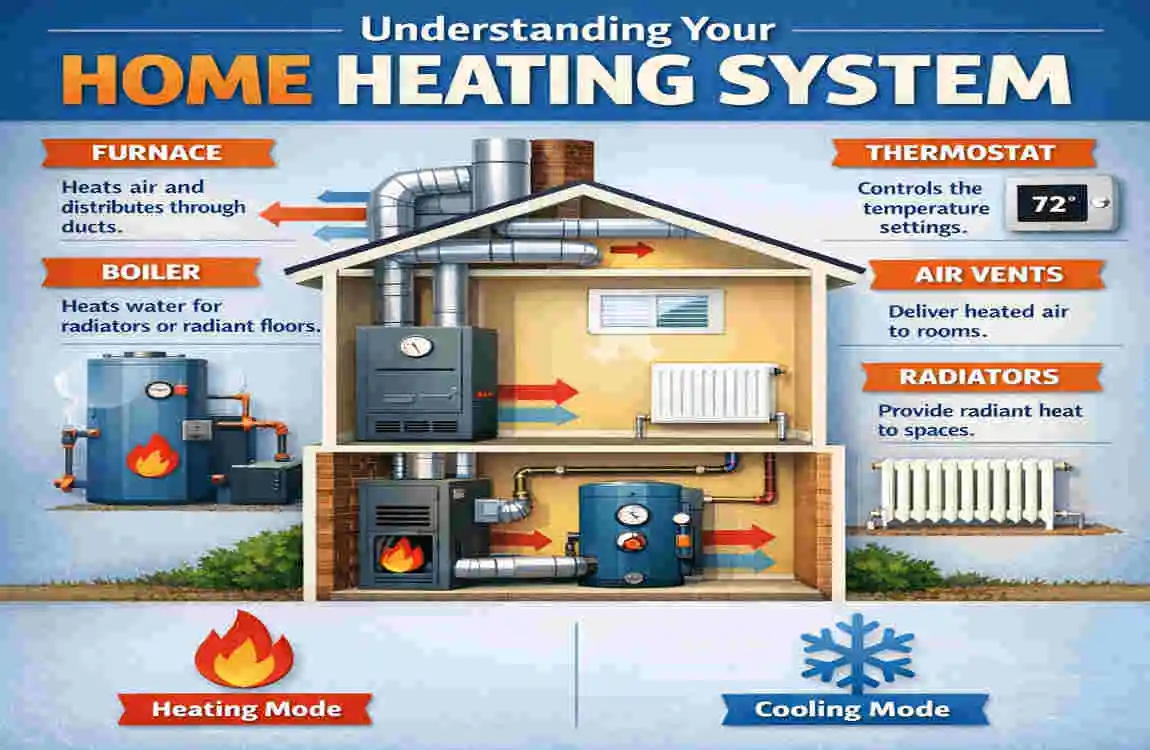
Central heating systems are the most common type of home heating system, typically using a furnace or boiler to distribute heat throughout your home.

  • Furnaces use a fuel source (like natural gas or oil) to heat air, which is then circulated through ducts to warm your home.
  • Boilers, on the other hand, heat water, which is then pumped through radiators or radiant floor systems to provide warmth.

To turn on the heater in your house with a central heating system, locate the main unit and follow the specific steps for your system type.

Space Heaters

Space heaters are designed to heat a single room or area, making them an excellent option for supplemental heating or in homes without central heating.

  • Electric space heaters plug into a wall outlet and use electricity to generate heat. They’re often portable and easy to move from room to room.
  • Gas space heaters use propane or natural gas to create heat. They may require a professional installation and regular maintenance.

Turning on a space heater is generally simpler than a central system, but it’s still essential to follow safety guidelines.

Heat Pumps

Heat pumps are an energy-efficient heating option that can also provide cooling in the summer months. They work by transferring heat from the outside air (or ground) into your home.

When it comes to how to turn on the heater in your house with a heat pump, you’ll typically use a thermostat to control the system, similar to a central heating system.

Understanding your heater type is crucial because the process of turning on your house’s heater can vary depending on the system you have. Now that we’ve covered the basics, let’s dive into the step-by-step guide.

Step-by-Step Guide: How to Turn On the Heater in Your House

Now that you know the different types of home heaters, let’s walk through how to turn on your home heater safely and efficiently. We’ll start with essential safety precautions, then move on to the specific steps for each heater type.

Safety First: Precautions Before Turning the Heater On

Before you even think about turning on the heater in your house, it’s crucial to prioritize safety. Here are some essential precautions to take:

  • Check for gas leaks if you have a gas heater. If you smell gas or suspect a leak, don’t attempt to turn on the heater. Instead, leave your home immediately and call your gas company or emergency services.
  • Look out for electrical hazards if you’re using an electric heater. Make sure the outlet and cord are in good condition, and avoid using extension cords or power strips.
  • Ensure proper ventilation for any heater. Open a window slightly or use a ventilation fan to prevent the buildup of carbon monoxide or other harmful gases.

Remember, safety should always come first when turning on the heater in your house.

Preparation Steps

Once you’ve taken the necessary safety precautions, it’s time to prepare your heater for use. Here are some steps to follow:

  • Inspect and clean vents and filters. Make sure the vents are clear of any obstructions and the filters are clean. Clogged filters can reduce efficiency and even pose a fire hazard.
  • Check thermostat settings. Ensure your thermostat is set to the desired temperature and that it’s functioning correctly. If you have a programmable thermostat, make sure it’s set to the correct schedule.

By taking these preparation steps, you’ll be well on your way to successfully turning on your heater.

Detailed Steps Based on Heater Type

Now, let’s dive into the specific steps for turning on your house‘s heater, depending on the type you have.

For Central Heating Systems: Turning on the Furnace or Boiler

If you have a central heating system with a furnace or boiler, follow these steps:

  1. Locate the central unit. Find the furnace or boiler, usually located in a basement, utility room, or closet.
  2. Check the power supply. Ensure the unit is plugged in or that the circuit breaker is in the “on” position.
  3. Turn on the gas supply if you have a gas furnace or boiler. Locate the gas valve and turn it to the “on” position.
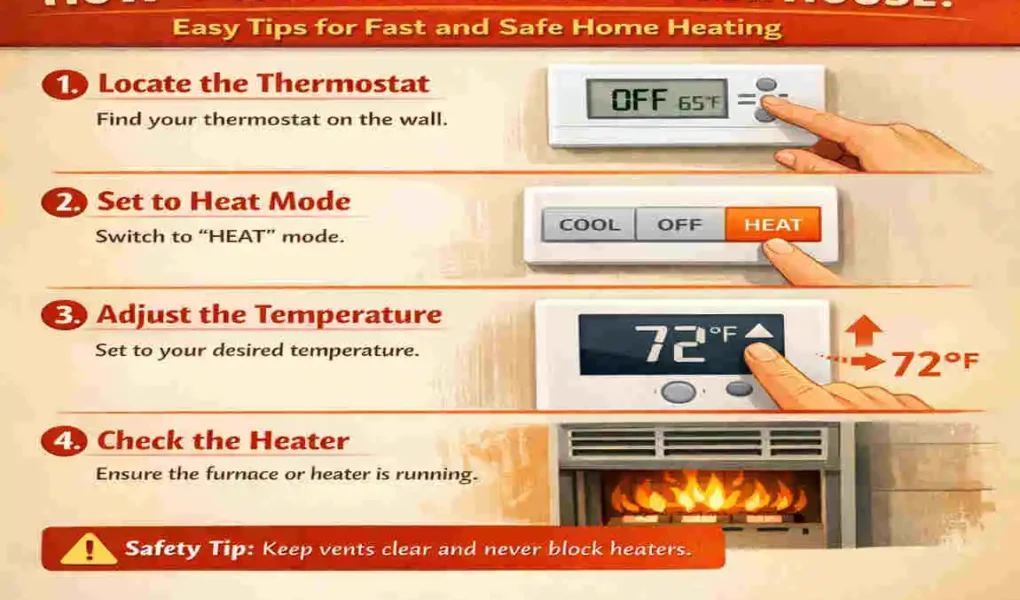
  4. Set the thermostat. Adjust the thermostat to your desired temperature. You may need to press a “heat” or “on” button to activate the system.
  5. Listen for the system to start. You should hear the furnace or boiler kick on within a few minutes. If it doesn’t, refer to the troubleshooting section later in this guide.

For Electric Space Heaters: Plugging in and Setting Controls

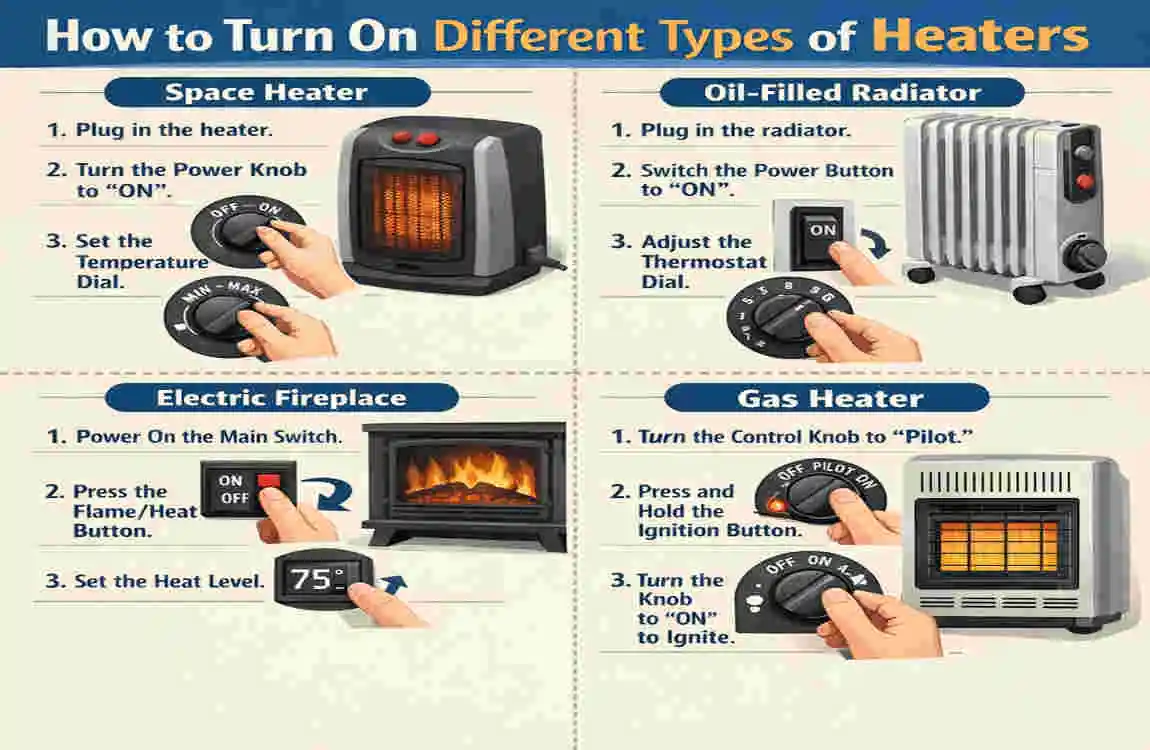
If you’re using an electric space heater, the process is generally more straightforward:

  1. Choose a safe location. Place the heater on a level, non-flammable surface away from curtains, furniture, and other combustible materials.
  2. Plug in the heater. Use a dedicated wall outlet that can handle the heater’s power requirements.
  3. Set the controls. Most electric space heaters have a simple dial or button to adjust the temperature and fan speed. Please set it to your desired level.
  4. Allow the heater to warm up. It may take a few minutes for the heater to reach the set temperature.

For Gas Space Heaters: Lighting Pilot Lights, Ignition Methods

If you have a gas space heater, follow these steps to turn it on safely:

  1. Ensure proper ventilation. Make sure the room is well-ventilated before attempting to light the heater.
  2. Check the gas supply. Ensure the gas valve is in the “on” position and that there are no leaks.
  3. Light the pilot light if your heater has one. Follow the manufacturer’s instructions carefully, as the process can vary.
  4. Use the ignition method. Some gas heaters have an electronic ignition, while others require a match or lighter. Follow the specific instructions for your heater.
  5. Adjust the heat output. Once the heater is lit, you can adjust the flame height or temperature to your desired level.

Using Smart Thermostats and Remote Controls for Easy Startup

If you have a smart thermostat or remote control for your heater, you can make the process of turning on the heater in your house even easier:

  • Smart thermostats let you control your heating system from your smartphone or other devices. You can turn on the heat remotely, set schedules, and even receive alerts if something goes wrong.
  • Remote controls for space heaters or fireplaces can also simplify the process. Just press a button to turn on the heat without having to get up from your cozy spot on the couch.

By following these step-by-step instructions, you’ll be able to turn on your heater safely and efficiently, regardless of the type of system you have.

Tips for Fast and Efficient Heating

Now that you know how to turn on the heater in your house, let’s talk about some tips to help you heat your home quickly and efficiently. After all, who wants to wait around for the heat to kick in on a cold day?

Proper Thermostat Settings

One of the easiest ways to maximize your heater’s efficiency is to set your thermostat correctly:

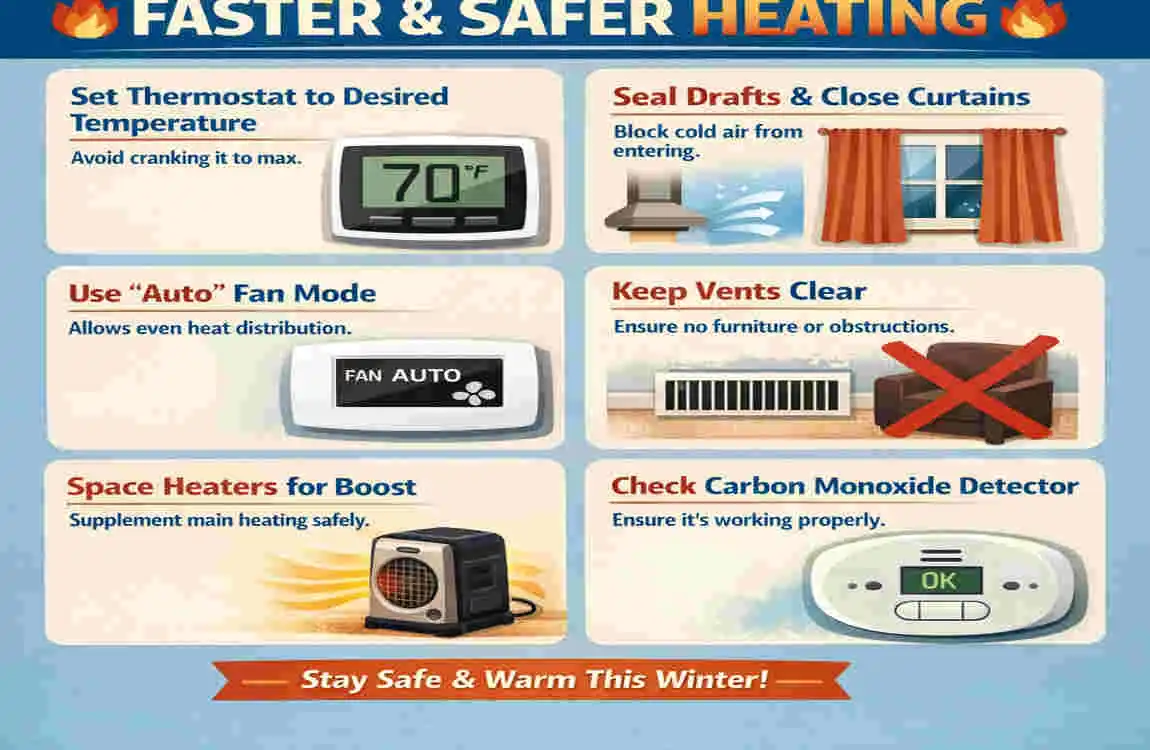
  • Set it and forget it. Choose a comfortable temperature and leave it there. Constantly adjusting the thermostat can cause your heater to work harder than necessary.
  • Use a programmable thermostat. If you have a programmable thermostat, set it to lower the temperature when you’re away from home and raise it before you return. This can help you save energy without sacrificing comfort.

Closing Doors and Windows

It might seem obvious, but closing doors and windows is crucial for keeping the heat in:

  • Close off unused rooms. If you have rooms you don’t use regularly, close the doors to keep the heat where you do use it.
  • Seal drafty windows. Use weather stripping or caulk to seal any gaps around your windows, preventing heat from escaping.

Using Ceiling Fans to Distribute Warm Air

You can use your ceiling fan to help distribute warm air more efficiently.

  • Reverse the fan direction. In the winter, set your ceiling fan to rotate clockwise at a low speed. This will help push the warm air that rises to the ceiling back down into the room.
  • Keep the fan on. Even when your heater is running, keeping the ceiling fan on can help circulate the warm air more evenly throughout the room.

Encouraging Consistent Maintenance

To keep your heater running at its best, it’s essential to perform regular maintenance:

  • Change filters regularly. Dirty filters can restrict airflow and reduce efficiency. Check your filters every month and replace them as needed.
  • Schedule annual tune-ups. Have a professional inspect and service your heating system once a year to ensure it’s running safely and efficiently.

Using Insulation to Support the Heating Process

Proper insulation is key to keeping your home warm and reducing the workload on your heater:

  • Check your attic insulation. Make sure your attic is adequately insulated to prevent heat from escaping through the roof.
  • Seal air leaks. Use caulk or weather stripping to seal gaps around doors, windows, and other openings where air can leak out.

By following these tips, you can help your heater work more efficiently, keeping your home warm and cozy while saving energy and money.

Safety Tips When Using Your Home Heater

How to Turn On the Heater in Your House: Easy Tips for Fast and Safe Home Heating

When turning on the heater in your house, safety should always be your top priority. Here are some essential safety tips to keep in mind:

Regular Maintenance and Safety Checks

To keep your heater running safely, it’s crucial to perform regular maintenance and safety checks:

  • Schedule annual inspections. Have a professional inspect your heating system at least once a year to ensure it’s functioning correctly and safely.
  • Check for carbon monoxide leaks. If you have a gas or oil heater, make sure it is regularly checked for carbon monoxide leaks.

Avoiding Common Hazards

There are several common hazards to be aware of when using your heater:

  • Keep flammable materials away. Never place clothing, curtains, or other combustible items near your heater. Keep a clear space of at least three feet around the unit.
  • Avoid using extension cords. Plug your heater directly into a wall outlet, and never use an extension cord or power strip. These can overheat and cause a fire.
  • Don’t leave the heater unattended. Always turn off your heater when you leave the room or go to bed.

Using Carbon Monoxide Detectors

Carbon monoxide is a silent, deadly gas that can be produced by faulty heating systems. To protect yourself and your family:

  • Install carbon monoxide detectors. Place detectors on every level of your home, especially near sleeping areas.
  • Test the detectors regularly. Check your carbon monoxide detectors at least once a month to ensure they’re working correctly.

What to Do if the Heater Smells Strange or Emits Smoke

If you notice any strange smells or smoke coming from your heater:

  • Turn off the heater immediately. If your heater starts to smell strange or emit smoke, turn it off right away and unplug it if possible.
  • Ventilate the area. Open windows and doors to allow fresh air to circulate and help clear out any potential harmful gases.
  • Call a professional. If the problem persists, contact a heating professional to inspect and repair your heater before using it again.

Emergency Shutdown Procedures

In case of an emergency, it’s essential to know how to shut down your heater quickly and safely:

  • Turn off the power. If your heater is electric, unplug it or turn off the circuit breaker. For gas heaters, turn off the gas supply at the valve.
  • Ventilate the area. Open windows and doors to allow fresh air to circulate and help clear out any potential harmful gases.
  • Evacuate if necessary. If you suspect a gas leak or carbon monoxide poisoning, leave your home immediately and call emergency services from a safe location.

By following these safety tips, you can enjoy the warmth of your heater while minimizing the risks. Always prioritize safety when turning on the heater in your house.

Troubleshooting Common Heating Problems

Even with proper maintenance and safety precautions, you may encounter some issues when turning on the heater in your house. Here are some common problems and how to troubleshoot them:

Heater Won’t Turn On: Common Reasons and Fixes

If your heater won’t turn on, there could be several reasons:

  • Power issues. Check that the heater is plugged in and that the circuit breaker hasn’t tripped. For gas heaters, ensure the gas supply is turned on.
  • Thermostat problems. Make sure the thermostat is set to the correct temperature and Mode (heat). Try resetting the thermostat or replacing the batteries if it’s battery-operated.
  • Pilot light issues. If your gas heater has a pilot light, check that it’s lit. If it’s out, follow the manufacturer’s instructions to relight it.

If these simple fixes don’t work, it may be time to call a professional for further assistance.

Strange Noises or Smells When Turning on the Heater

If you notice strange noises or smells when turning on your heater:

  • Listen carefully. Identify the type of noise (e.g., rattling, banging, whistling) and where it’s coming from. This can help you pinpoint the issue.
  • Check for loose parts. Tighten any loose screws or bolts on the heater or its components.
  • Investigate the smell. If you smell gas, turn off the heater and leave your home immediately. For other strange smells, turn off the heater and call a professional for inspection.

Thermostat Not Responding

If your thermostat isn’t responding when you try to turn on the heater:

  • Check the batteries. If your thermostat is battery-operated, replace the batteries and see if that resolves the issue.
  • Reset the thermostat. Many thermostats have a reset button or process. Consult your user manual for instructions on resetting your specific model.
  • Check the wiring. If the thermostat is hardwired, ensure the wires are securely connected and not damaged.

If the thermostat still isn’t responding after trying these steps, it may need to be replaced.

What to Check Before Calling a Professional

Before you call a heating professional for help, there are a few things you can check:

  • Filters. Dirty filters can cause your heater to malfunction. Check and replace the filters if necessary.
  • Vents. Make sure all vents are open and unobstructed to allow proper airflow.
  • Pilot light. If you have a gas heater, check that the pilot light is lit and functioning correctly.
  • Circuit breaker. Ensure the circuit breaker for your heater hasn’t tripped and reset it if necessary.

If you’ve checked all these items and your heater still isn’t working correctly, it’s time to call in a professional for further diagnosis and repair.

By troubleshooting these common heating problems, you can often resolve issues with how to turn on the heater in your house without needing professional help. However, if you’re unsure or uncomfortable performing any of these steps, always err on the side of caution and call a qualified heating technician.

Energy-Saving Tips for Home Heating

While knowing how to turn on the heater in your house is essential for staying warm, it’s also important to consider energy efficiency. Here are some tips to help you save energy and money while using your heater:

Minimizing Energy Consumption

To minimize your heater’s energy consumption:

  • Set the thermostat wisely. Lower the temperature by a few degrees when you’re away from home or sleeping. You can save up to 10% on your heating bill by turning down the thermostat 7-10 degrees for 8 hours a day.
  • Use a programmable thermostat. A programmable thermostat lets you set a schedule for your heater, ensuring it runs only when needed.
  • Close off unused rooms. If you have rooms you don’t use regularly, close the doors and vents to focus the heat on the areas you do use.

Benefits of Programmable Thermostats

Programmable thermostats offer several benefits for energy-efficient heating:

  • Convenience. You can set a schedule that automatically adjusts the temperature based on your daily routine, so you don’t have to remember to turn the heat up or down.
  • Energy savings. By only heating your home when necessary, you can save up to 30% on your heating costs compared to a non-programmable thermostat.
  • Comfort. Programmable thermostats can help maintain a consistent temperature, making your home more comfortable while reducing energy waste.

Alternative Heating Methods

In addition to your central heater, consider using alternative heating methods to supplement your warmth:

  • Space heaters. Use space heaters in the rooms you use most often to reduce the workload on your central heating system.
  • Fireplaces. If you have a fireplace, use it to heat your living area while turning down the thermostat in the rest of the house.
  • Sunlight. Open curtains and blinds during the day to let in the sun’s warmth. Close them at night to keep the heat in.

By implementing these energy-saving tips, you can enjoy a warm, cozy home while minimizing your environmental impact and saving money on heating bills.

You may also like...

Leave a Reply

Your email address will not be published. Required fields are marked *