
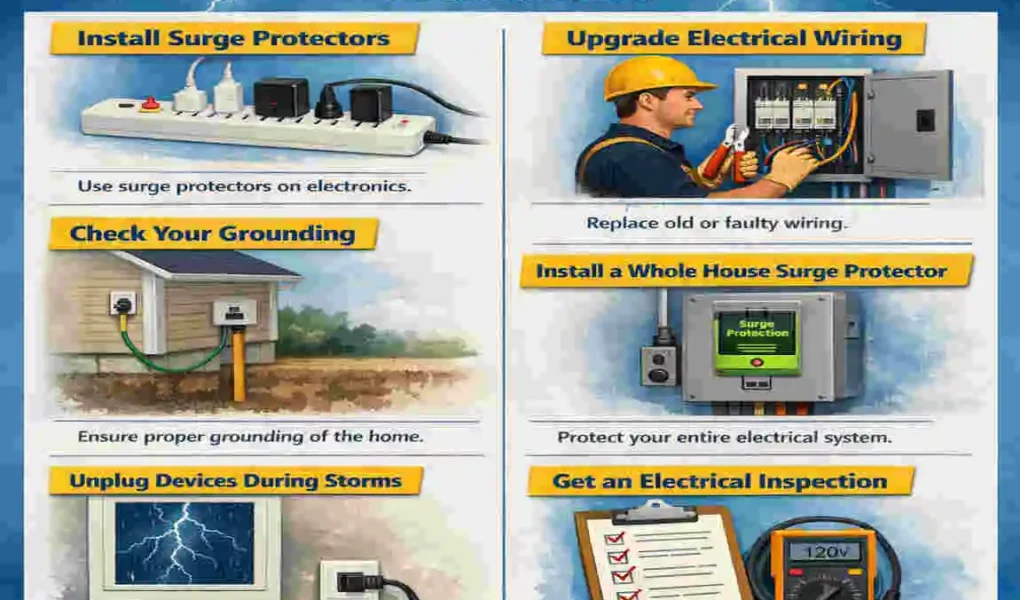
Power surges can happen when the voltage in your home suddenly increases, potentially damaging electronics and appliances. If you are wondering why is my house power surging, common causes include utility problems, lightning, faulty wiring, and high-power appliances. Understanding the cause and using proper surge protection can help protect your home and electrical devices.
| Problem or Cause | Simple Solution |
|---|---|
| Utility voltage fluctuations | Contact your electricity provider |
| Lightning and storms | Unplug sensitive electronics when safe |
| Overloaded circuits | Reduce the number of devices on one circuit |
| Faulty wiring | Have a qualified electrician inspect the wiring |
| Appliance-related surges | Check or service large appliances |
| Electrical damage | Install a properly rated surge protector |
| Frequent power surges | Consider whole-house surge protection |
What Causes Power Surges in a House?
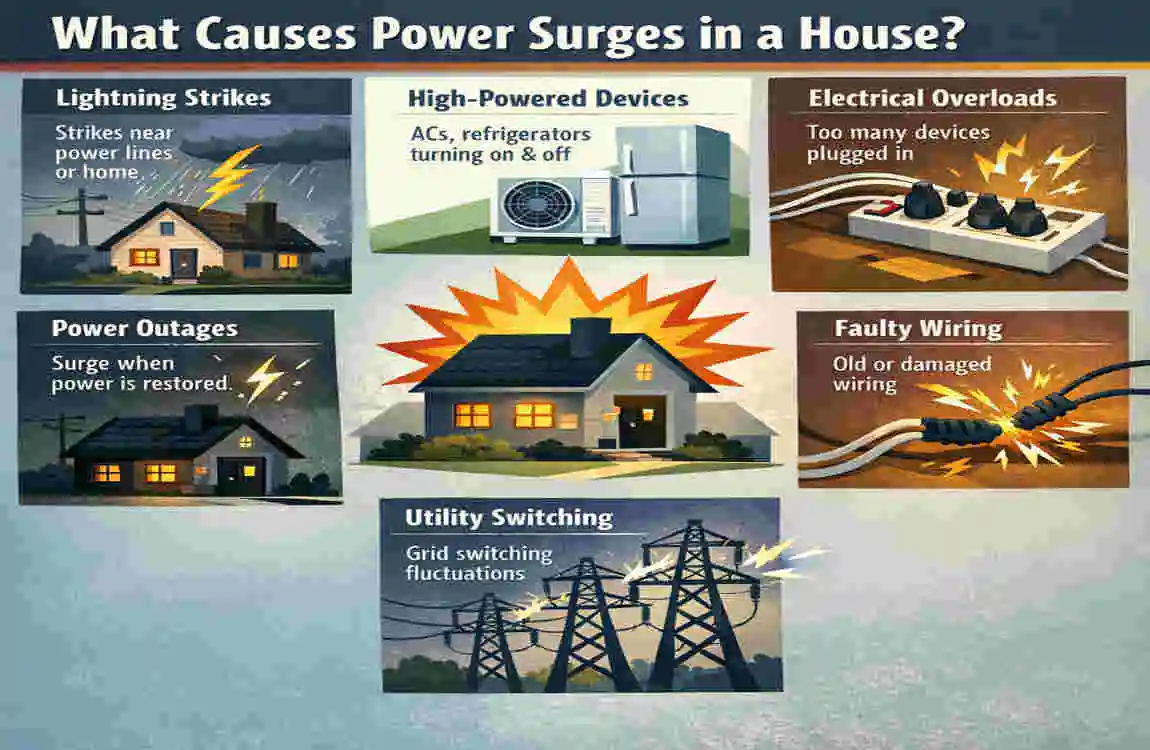
Utility Company Problems
The power company’s grid can experience brief voltage spikes when it switches lines or balances loads. These external fluctuations often travel straight into your home’s wiring.
Lightning and Severe Weather
A lightning strike can dump a huge amount of energy into the lines that serve your house. Even if the bolt doesn’t hit your roof directly, the surge can travel through the utility poles and affect your outlets.
Large Appliances Turning On and Off
Air conditioners, refrigerators, water pumps, and electric heaters draw a lot of power when they start. The sudden demand can cause a brief dip followed by a spike, which shows up as dimming lights or buzzing noises.
Faulty or Damaged Wiring
Loose connections, corroded terminals, or outdated wiring can create resistance that leads to erratic voltage. Over time, this can turn a minor fluctuation into a full‑blown surge.
Overloaded Electrical Circuits
Plugging too many high-wattage devices into a single circuit forces the wiring to carry more current than it was designed for. The strain can cause the voltage to bounce around, especially when one device kicks on or off.
Signs Your House May Be Experiencing Power Surges
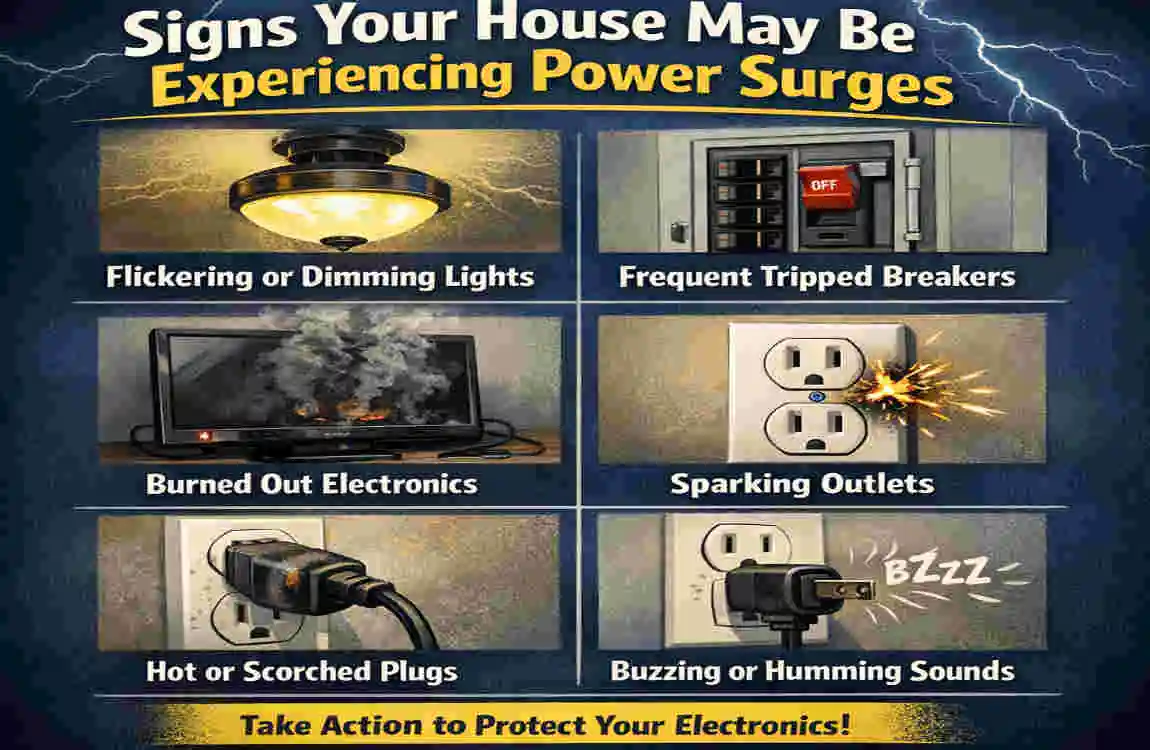
Flickering or Dimming Lights
When voltage drops, lights may dim; when it spikes, they may flicker. Repeated episodes are a red flag.
Appliances Restarting Unexpectedly
If your TV, computer, or router turns off and on by itself, a surge may be interrupting the power supply.
Burnt or Damaged Electronics
A burnt smell, melted plug, or discoloured outlet points to an over‑voltage event that has already caused damage.
Circuit Breakers Tripping
Frequent trips are often more than a simple overload—they can indicate a wiring fault or a surge source.
How To Fix Power Surges in Your Home
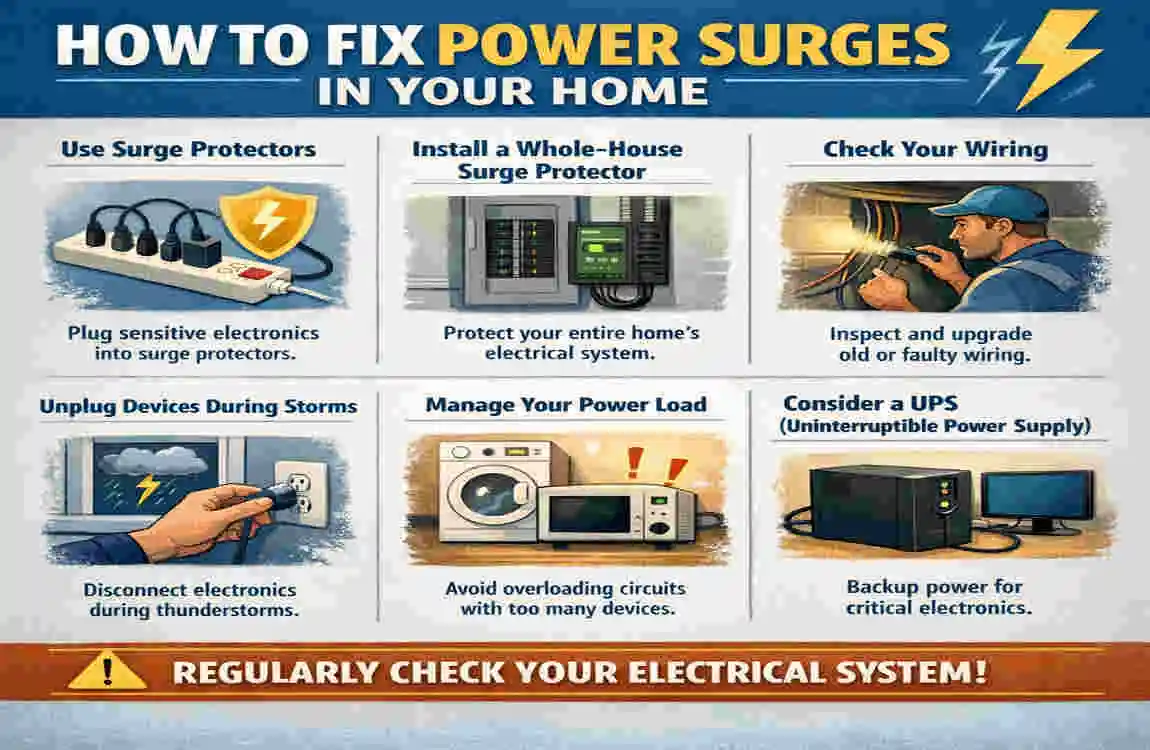
- Install Surge Protectors – Use plug‑in units for individual devices and consider a whole‑house protector for broader coverage.
- Check Electrical Loads – Spread high‑watt appliances across different circuits to avoid overloading any single line.
Inspect Wiring and Connections
Never attempt major wiring repairs yourself. Hire a licensed electrician to tighten loose terminals, replace damaged sections, and verify solid grounding.
Protect Sensitive Electronics
Connect computers, TVs, and networking gear to surge‑protected power strips. Look for a rating of at least 330 J (joules) to handle moderate spikes.
Consider a Whole‑House Surge Protector
A professionally installed device sits at your main panel and shields all circuits from external surges, especially those caused by lightning or utility issues.
Protection Type | Where It Works | Typical Cost
Plug‑in Surge Strip Individual devices Low
Panel‑Mounted Surge Device Whole home (all branch circuits) Moderate‑High
Whole‑House Surge Protector Main service entrance (entire home) High
When To Call an Electrician About Power Surges
- Frequent Flickering or Surging – If the problem repeats daily, a professional inspection is essential.
- Burning Smells or Sparks – Smoke, sparks, or hot odours require immediate attention.
- Repeated Breaker Trips – Persistent trips often signal a deeper wiring fault that only an electrician can diagnose.
- Protecting the Home From Major Damage – An expert can assess grounding, panel health, and utility connections to prevent catastrophic failures.
How To Prevent Future Power Surges
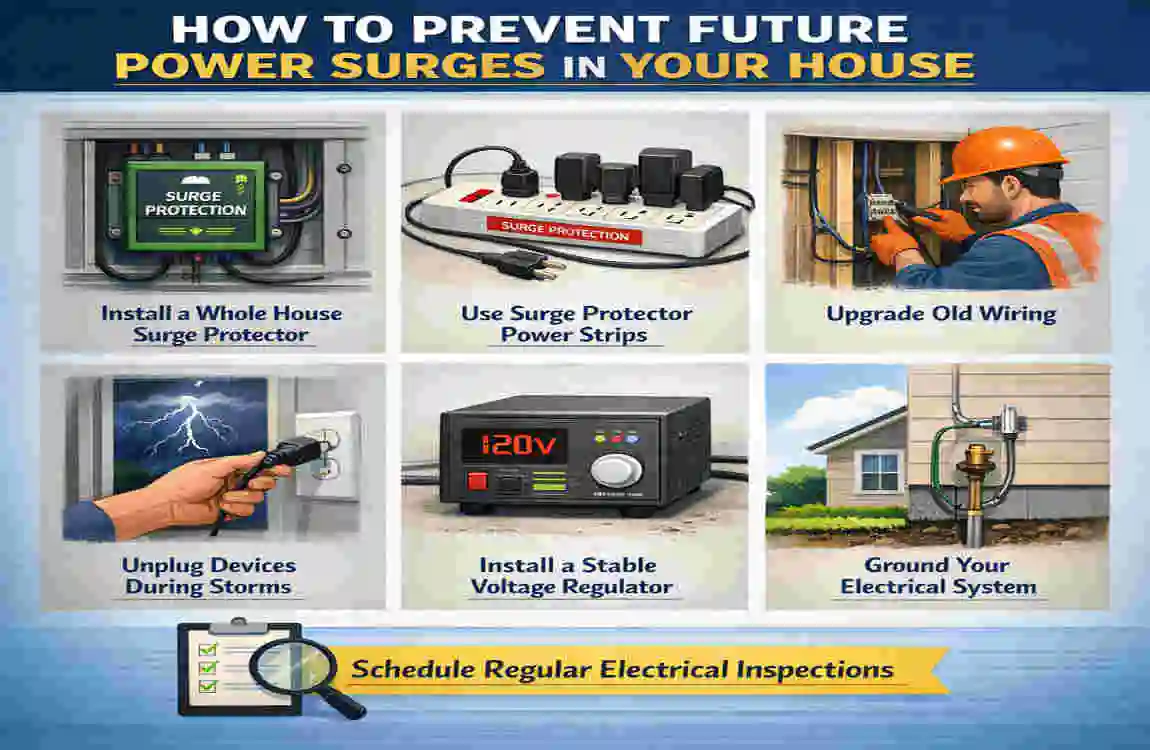
- Use Quality Surge Protection – Choose protectors with proper joule ratings for your most valuable electronics.
- Maintain the Electrical System – Schedule routine checks, especially in older homes where wiring may have degraded.
- Avoid Overloading Outlets – Keep high-wattage appliances on separate circuits; never daisy‑chain power strips.
- Unplug Sensitive Electronics During Severe Storms – When possible, disconnect devices to avoid lightning‑induced spikes.
FAQ: Power Surges in Your Home
Why is my house power surging?
Utility fluctuations, large‑appliance start‑ups, storms, overloaded circuits, or wiring faults can all cause surges.
How do I know if my house is having a power surge?
Watch for flickering lights, unexpected device restarts, burnt smells, or frequent breaker trips.
Can a power surge damage appliances?
Yes—excess voltage can fry circuitry, shorten electronics’ lifespan, and even ruin entire appliances.
Does a surge protector stop all power surges?
It reduces most spikes, especially those from appliances or minor utility fluctuations, but it can’t block a direct lightning strike without a whole‑house system.
Should I install a whole‑house surge protector?
If you experience frequent surges, have valuable electronics, or live in a storm-prone area, a whole‑house protector is a wise investment.
Can faulty wiring cause power surges?
Loose or damaged wiring can create resistance that causes irregular voltage, so a professional inspection is crucial.
Why do my lights flicker when appliances turn on?
High‑draw devices cause a momentary voltage dip, making lights dim or flicker. An electrician should check repeated flickering.
When should I call an electrician for power surges?
Call immediately if you smell burning, see sparks, have repeated breaker trips, or experience persistent surges that don’t resolve.