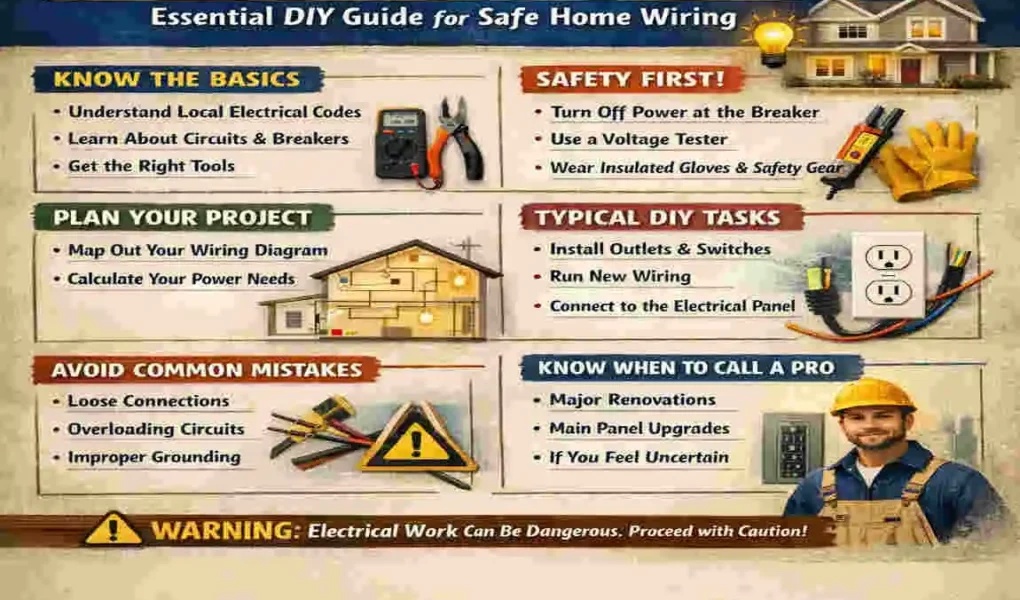
More homeowners are considering DIY electrical work to save money and stay in control of their projects. If you are planning a renovation, adding outlets, or building a room from scratch, it is natural to ask, “Can I wire my own house?”
| Aspect | What DIY Is (Sometimes) OK* | When You Should Not DIY |
|---|---|---|
| Legal / permits | Replacing a light fixture or outlet, if codes allow. | Full house rewiring, new circuits, service panel work. |
| Safety risk | Low–moderate if power is off and you know basics. | High: shock, fire, or code-violation risk. |
| Knowledge needed | Basic wiring colors, breakers, and tools. | Load calculations, code rules, fault diagnosis. |
| Typical DIY tasks | Swap switches, outlets, simple lights. | Main panel changes, rewiring whole rooms/house. |
| Inspection requirement | Often not required for tiny repairs. | Usually required for new circuits/rewires |
Home wiring is the system that carries electricity to your lights, outlets, appliances, and switches. It sounds simple at first, but it involves planning, proper installation, proper grounding, and adherence to strict code requirements. One small mistake can create a fire risk, damage equipment, or cause injury.
That is why this topic matters so much. Yes, doing your own wiring can save money. But the savings only matter if the work is safe, legal, and approved. In many places, homeowners can do some electrical work themselves, but permits and inspections are still required. In other places, licensed electricians must do the job.
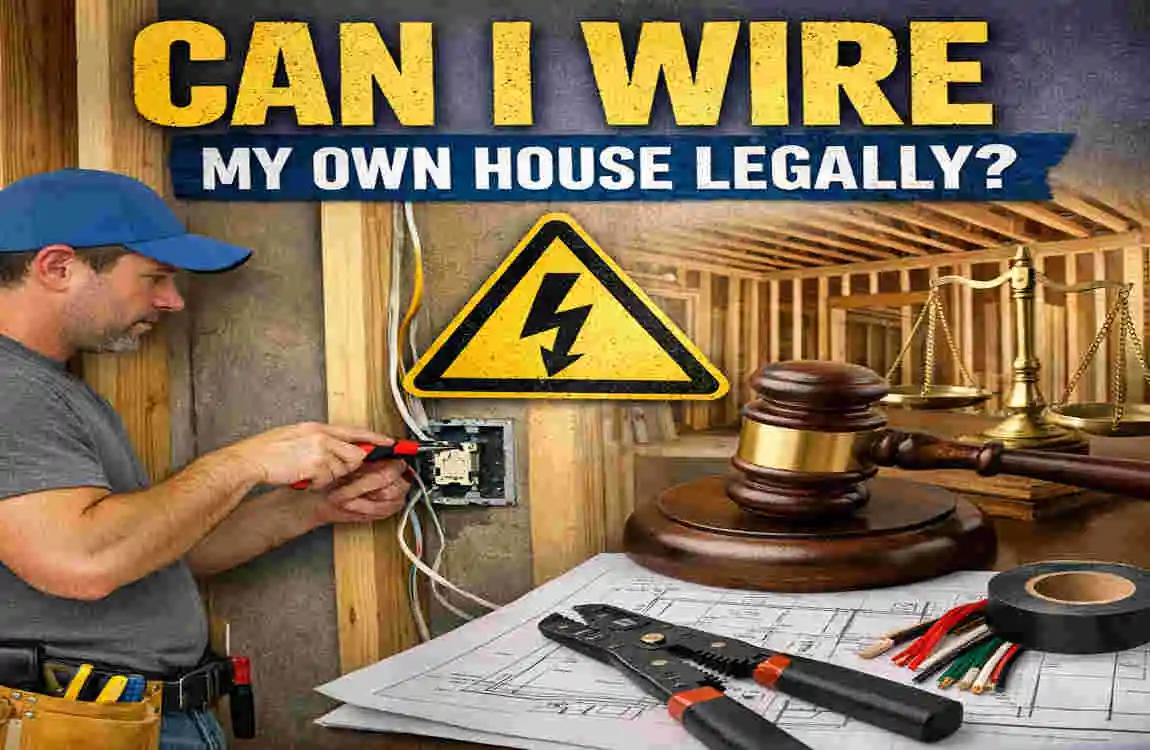
Can I Wire My Own House Legally?
Understanding Homeowner Electrical Rights
The answer depends on where you live. In many areas, homeowners can do electrical work at their primary residence, especially for smaller jobs such as adding outlets, switches, or light fixtures. However, the rules are not the same everywhere.
Some places allow homeowner electrical work only if you own and live in the home. Others require a licensed electrician for almost everything. The key point is this: owning the house does not always mean you can do any wiring you want.
There is also a big difference between small repairs and full electrical systems. A homeowner may be allowed to replace a light fixture, but not rewire an entire panel or install new service lines.
Permits and Inspection Requirements
Even when DIY wiring is allowed, permits are often required. A permit tells the local building department what work is being done. This matters because electrical systems affect everyone’s safety in the home.
After the work is finished, an inspector may need to check it before the power can be turned on. That inspection helps confirm the job meets local rules and basic safety standards. If the work fails inspection, you may need to fix it before approval.
This is why planning matters. If you skip the permit process, you may face fines, delays, or problems when you sell the house later.
Situations Where DIY Wiring May Be Illegal
There are several times when DIY wiring is usually not allowed or not smart:
- Rental properties: Landlords and tenants usually cannot do major electrical work without proper licensing.
- Commercial buildings: These often have stricter rules than homes.
- HOA restrictions: Some homeowner associations have their own limits.
- Insurance limitations: Unapproved wiring can lead to claims issues.
Before starting, check with your local code office. That step can save you from major trouble later.
Is Wiring Your Own House Safe?
Common Electrical Hazards
Wiring a house carries real risks. The most common ones are electric shock, fire, and overloaded circuits. Even if the power seems off, hidden wires can still carry current. That is why testing is so important.
A loose wire, a bad splice, or a circuit that carries too much load can heat up over time. That heat can damage insulation and start a fire. This is one reason electrical work should never be rushed.
Mistakes DIYers Commonly Make
Many beginners make the same errors:
- Choosing the wrong wire gauge
- Missing or poor grounding
- Making loose connections
These mistakes may not show up right away. A light may work today and fail months later. That is what makes bad wiring dangerous. It can hide inside walls until something goes wrong.
When You Should Hire a Professional
Some jobs are best left to a licensed electrician. Call a pro if you are dealing with:
- Full-house rewiring
- Main service panel upgrades
- Complicated smart-home systems
If the project affects the whole home or the main power supply, the risk level goes way up. In those cases, hiring help is often the safer and smarter choice.
Basic Electrical Knowledge You Need Before Starting
Understanding Electrical Terms
Before you learn how to wire a house, you need a few simple terms:
- Voltage: the force that pushes electricity
- Amperage: the amount of current flowing
- Watts: the total electrical power used
- Circuits: paths that carry electricity
- Breakers: switches that shut off power when a circuit is overloaded
These words may sound technical, but they are really the basics of electrical wiring. If you understand them, you can make better choices about safety and load size.
Types of Electrical Wiring Used in Homes
Homes usually use a few common wiring types:
- NM cable (Romex): very common in dry indoor spaces
- Conduit wiring: wires run through protective tubing
- Armoured cable: has a metal covering for extra protection
Each type has a specific use. The right choice depends on where the wire will go and what your local code allows.
Understanding Your Home’s Electrical Panel
Your electrical panel is the control centre. It holds the circuit breakers that protect each circuit. Each breaker should be labelled to indicate what it controls.
A smart panel layout also helps with load balancing. That means spreading power use evenly so that no circuit carries too much. Good balance helps prevent tripped breakers and overheated wires.
Tools and Materials Needed for DIY House Wiring
Essential Electrical Tools
If you want to attempt DIY house wiring, you need the right tools first:
- Voltage tester
- Wire strippers
- Fish tape
- Multimeter
- Screwdrivers
Each tool has a purpose. A voltage tester checks whether a wire is live. A multimeter helps you measure electrical values. Fish tape helps pull wires through walls.
Materials You’ll Need
You will also need the main parts of the system:
- Electrical boxes
- Wires
- Switches
- Outlets
- Breakers
Choose quality materials. Cheap parts can fail early or create loose connections. That is not worth the risk.
Safety Equipment
Do not forget safety gear:
- Insulated gloves
- Safety goggles
- Rubber-soled shoes
Safety equipment does not replace good work habits, but it provides an additional layer of protection.
Step-by-Step Guide to Wiring a House
Create an Electrical plan
Before touching any wire, make a clear plan. Map out where you want outlets, switches, lights, and appliances. Then decide which items need their own circuit.
For example, large appliances often need dedicated circuits. That prevents overloads and improves reliability.
A good plan saves time later. It also helps you estimate materials, labour, and breaker size.
Turn Off Power Safely
Always shut off power at the main breaker before starting work. Do not assume a switch is enough. Power can still be present in nearby wires, so test every line before touching it.
If possible, use lockout precautions to prevent anyone from accidentally turning the power back on. That small step can prevent a serious injury.
install Electrical Boxes
Electrical boxes hold outlets, switches, and wire connections. Place them at standard heights and in locations that make sense for daily use.
Make sure the box is large enough for the wires you plan to place inside. A box that is too small can make connections crowded and unsafe.
Run Electrical Cables
Now you can run the cables through walls, ceilings, or floors. Drill holes in studs carefully and keep wires away from nails or screws.
Whenever wires pass through wood framing, protect them from damage. This is a simple step, but it matters a lot. A wire damaged inside a wall can become a hidden hazard.
Connect Outlets and Switches
This is where colour coding becomes important. In many homes, black or red wires carry power, white wires are neutral, and bare or green wires are ground. Always confirm your wire type before connecting anything.
Grounding is a key part of safe wiring. It provides a safe path for stray electricity and reduces the risk of shock. Make all connections tight and secure.
install Circuit Breakers
Each circuit should have the correct breaker size. If the breaker is too large, it may not trip when it should. If it is too small, it may trip too often.
This step is one of the most important parts of wiring a house safely. Breakers protect the wiring, so they must match the wire and the expected load.
Test the System
After everything is connected, test each circuit with a voltage tester and a multimeter. Check for proper polarity, good grounding, and correct breaker operation.
Never skip testing. It is the last chance to catch a problem before the walls are closed up and the power is used every day.
Understanding Electrical Codes and Compliance
What Is the NEC?
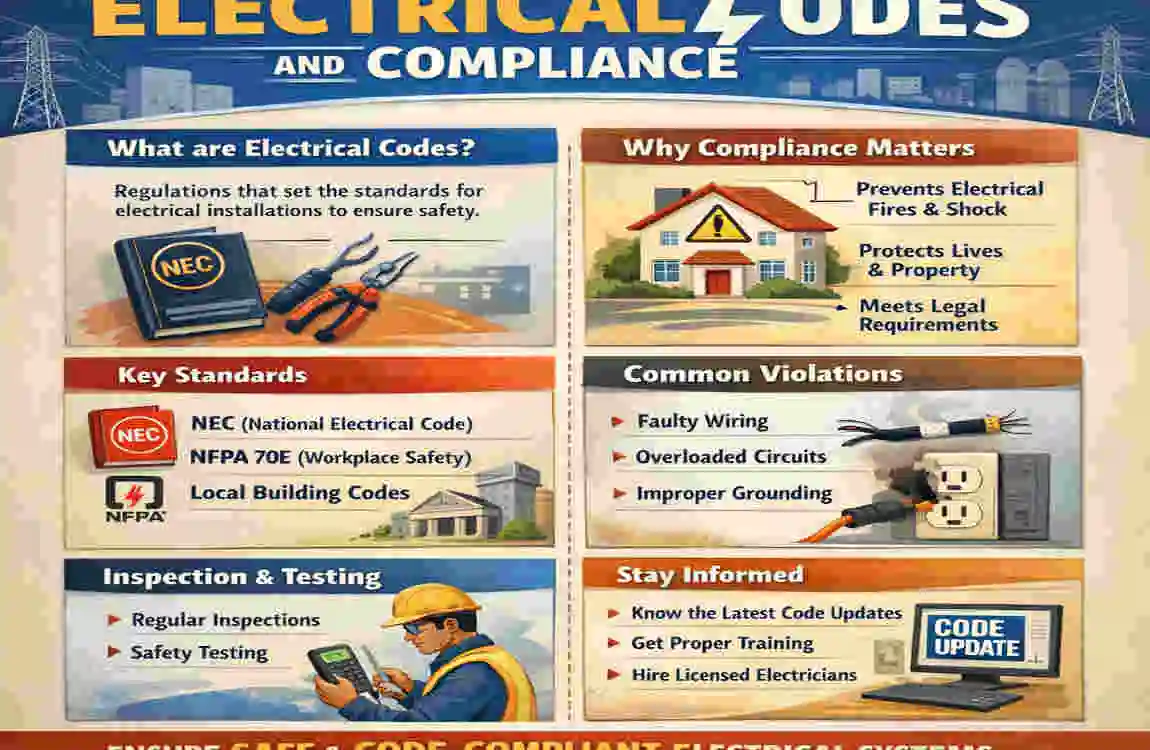
The National Electrical Code (NEC) is a major safety standard used throughout the United States. Its purpose is to guide safe electrical installation.
Codes matter because they help reduce shocks, fires, and system failures. They also give inspectors a clear standard to follow.
Common Residential Wiring Code Requirements
Some common rules include:
- GFCI outlets in wet areas
- AFCI breakers in many living spaces
- Special rules for bathrooms and kitchens
These devices help protect people and property. GFCIs protect against shock near water. AFCIs help detect dangerous arcing.
Inspection Checklist Before Approval
Before inspection, make sure:
- Connections are secure
- Labels are clear
- Box fill is correct
That last point matters more than many beginners realise. Too many wires in a single box can generate heat and make maintenance more difficult.
How Much Money Can You Save Wiring Your Own House?
Average Cost of Professional House Wiring
Professional wiring can be expensive, especially in a full-home project. Costs vary by size, region, and complexity, but labour often accounts for a large share of the bill.
In many cases, prices are measured by the square foot, and larger homes can become expensive quickly.
DIY Cost Breakdown
If you do the work yourself, your costs may include:
- Tools
- Materials
- Permit fees
At first, DIY looks cheaper. And it can be. But only if the work is done the first time correctly.
Hidden Costs DIYers Forget
Many people forget about:
- Repairs from mistakes
- Failed inspections
- Time investment
A cheap DIY job can become expensive if you have to open walls, replace bad wiring, or hire an electrician to fix the mistakes.
Cost Area DIY Wiring Professional Wiring
Labor Low High
Materials Medium Medium
Permit fees required. Often handled for you
Mistake risk Higher Lower
Time spent High Lower
Pros and Cons of DIY Home Wiring
Advantages
DIY wiring has real benefits:
- Significant cost savings
- Useful skills
- Full project control
For simple projects, learning to handle wiring can be empowering. You get to understand your home better and manage the work on your own schedule.
Disadvantages
The downsides are just as important:
- Safety risks
- Legal complications
- Insurance issues
- Time-consuming work
The biggest concern is safety. If you are not fully confident, the savings may not be worth the risk.
Common DIY Wiring Mistakes to Avoid
Using the Wrong Wire Size
Wire size must match the circuit load. If the wire is too small, it can overheat. This is one of the most common and dangerous mistakes.
Overloading Circuits
Do not put too many devices on one circuit. Overloading causes frequent breaker trips and can create heat inside the walls.
Ignoring Grounding Requirements
Grounding is not optional. It protects your home and helps prevent shock.
Poor Wire Connections
Loose or sloppy wire connections can fail later. Always make clean, tight, secure connections.
Skipping Permits or Inspections
This is a major mistake. Even if the wiring works, unapproved work can cause legal and insurance trouble later.
Tips for Safely Wiring Your Own House
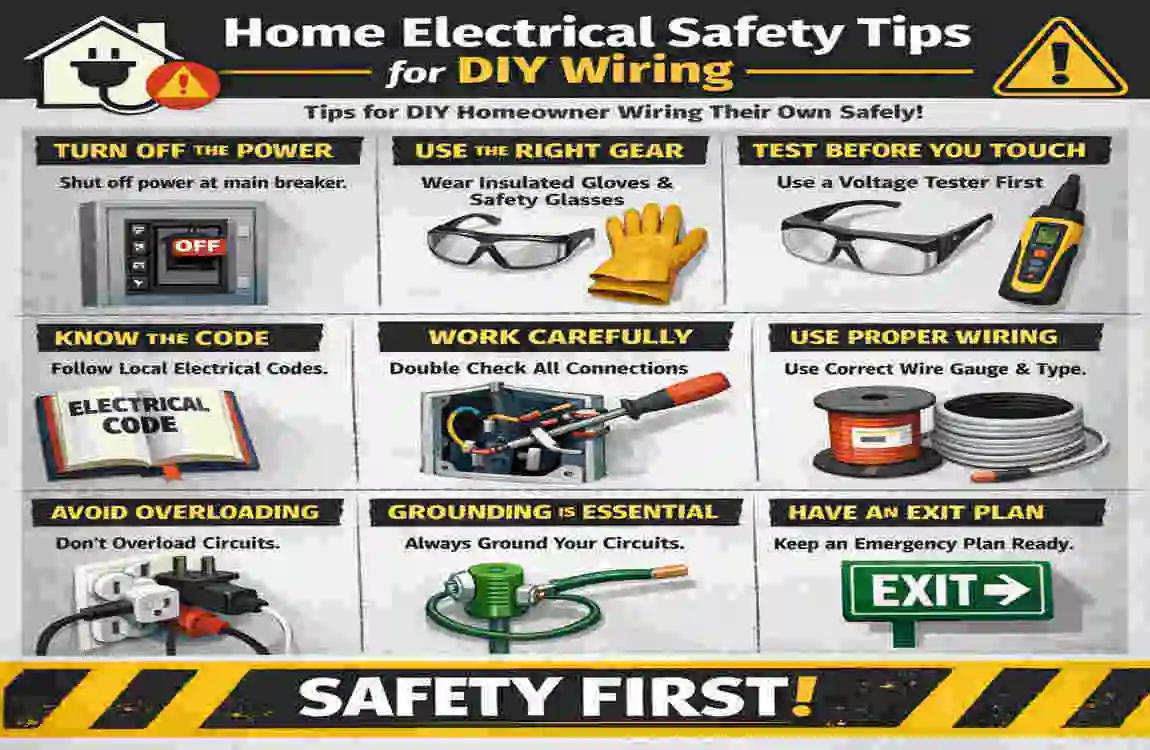
- Always shut off the power before starting
- Double-check every connection
- Label all circuits clearly
- Use high-quality materials
- Never rush electrical work
- Keep updated code books nearby
These small habits can make a big difference. Careful work is safe work.
Frequently Asked Questions About DIY House Wiring
Can I wire my own house without an electrician?
In some places, yes, but only if local laws allow homeowner electrical work; you may still need permits and inspections.
Do I need a permit to wire my house?
Most likely, yes. Permits help ensure the work meets safety rules and passes inspection.
How long does it take to wire a house?
It depends on the size of your home, your skill level, and the scope of the job. A full house can take a DIYer days or even weeks.
Is DIY wiring cheaper?
Usually, yes, at least at first. But mistakes, failed inspections, and repairs can quickly erode those savings.
Can bad wiring cause a home inspection to fail?
Yes. Poor grounding, unsafe connections, or missing code items can all cause inspection problems.
What electrical work can homeowners legally do?
That depends on local law. In some places, homeowners can do small repairs and replacements. In others, nearly all electrical work must be done by a licensed electrician.