When you look around your home, you might not think much about the wires and pipes that make everything work. But did you know that where these wires and pipes are placed can affect your safety? That’s right, the proximity of your electrical wiring to your house plumbing can be a big deal.
Basic Principles of Electrical Wiring and Plumbing

Types of Electrical Wiring
In residential buildings, you’ll typically find a few different types of electrical wiring. The most common are:
- Non-metallic sheathed cable (NM cable): This is the most widely used type of wiring in homes. It has a plastic sheath that protects the individual wires inside.
- Armored cable (AC cable): This type of wiring has a flexible metal armor that provides extra protection.
- Metal-clad cable (MC cable): Similar to AC cable, but with a smoother metal covering.
Common Plumbing Materials and Configurations
When it comes to plumbing, you’ll encounter various materials and setups in a home. Some of the most common include:
- Copper pipes: Known for their durability and resistance to corrosion.
- PVC pipes: Lightweight, affordable, and resistant to chemicals.
- PEX pipes: Flexible and easy to Install, making them popular in modern homes.
Standard Installation Practices and Codes
Both electrical wiring and plumbing have specific installation practices and codes that must be followed. These standards ensure the safety and proper functioning of the systems. For example:
- Electrical wiring should be secured to studs and joists using approved fasteners.
- Plumbing pipes should be adequately supported and insulated to prevent freezing.
Why Understanding the Interaction Matters
It’s crucial to understand how these two systems interact, as they can affect each other’s performance and safety. For instance, if electrical wiring is too close to plumbing, it could lead to problems like:
- Electrical shock: If water from a leaking pipe comes into contact with a wire, it could create a dangerous situation.
- Fire risk: Faulty wiring near plumbing could potentially cause a fire.
By understanding these principles, you can make informed decisions about your home’s wiring and plumbing.
Regulatory and Safety Standards
Key Electrical Codes
When it comes to electrical wiring safety, there are several essential codes to be aware of:
- National Electric Code (NEC): This is the most widely adopted code in the United States. It covers everything from wire sizing to installation practices.
- Local codes: Many areas have their own specific codes that may be more stringent than the NEC.
Plumbing Codes and Separation Requirements
Plumbing also has its own set of codes and regulations. Some key points include:
- International Plumbing Code (IPC): This code covers the design and installation of plumbing systems.
- Separation requirements: Many codes specify minimum distances between plumbing and electrical systems.
National and Local Regulations
Both national and local regulations help ensure the safety of your home’s wiring and plumbing. These regulations may cover:
- Proximity and installation practices: Specific rules about how close wiring and plumbing can be to each other.
- Inspection requirements: Regular inspections may be required to ensure compliance with codes.
Consequences and Penalties of Code Violations
Failing to follow these codes and regulations can have serious consequences:
- Safety risks: Non-compliance can put you and your family at risk of electrical shock or fire.
- Legal penalties: You may face fines or other legal action if your home doesn’t meet the required standards.
- Insurance issues: Some insurance companies may deny coverage if your home doesn’t comply with codes.
How Building Inspections Enforce Safety Standards
Building inspections play a crucial role in enforcing safety standards. During an inspection, a qualified professional will:
- Check for code compliance: They’ll ensure your wiring and plumbing comply with all relevant codes and regulations.
- Identify potential issues: They may spot problems that could lead to safety hazards if left unaddressed.
- Provide recommendations: Based on their findings, they’ll offer suggestions for how to bring your home up to code.
By understanding these regulatory and safety standards, you can ensure your home’s wiring and plumbing are safe and compliant.
Risks of Running Electrical Wire Next to Plumbing
Potential Hazards
Running electrical wire too close to your house plumbing can lead to some serious hazards. Let’s break them down:
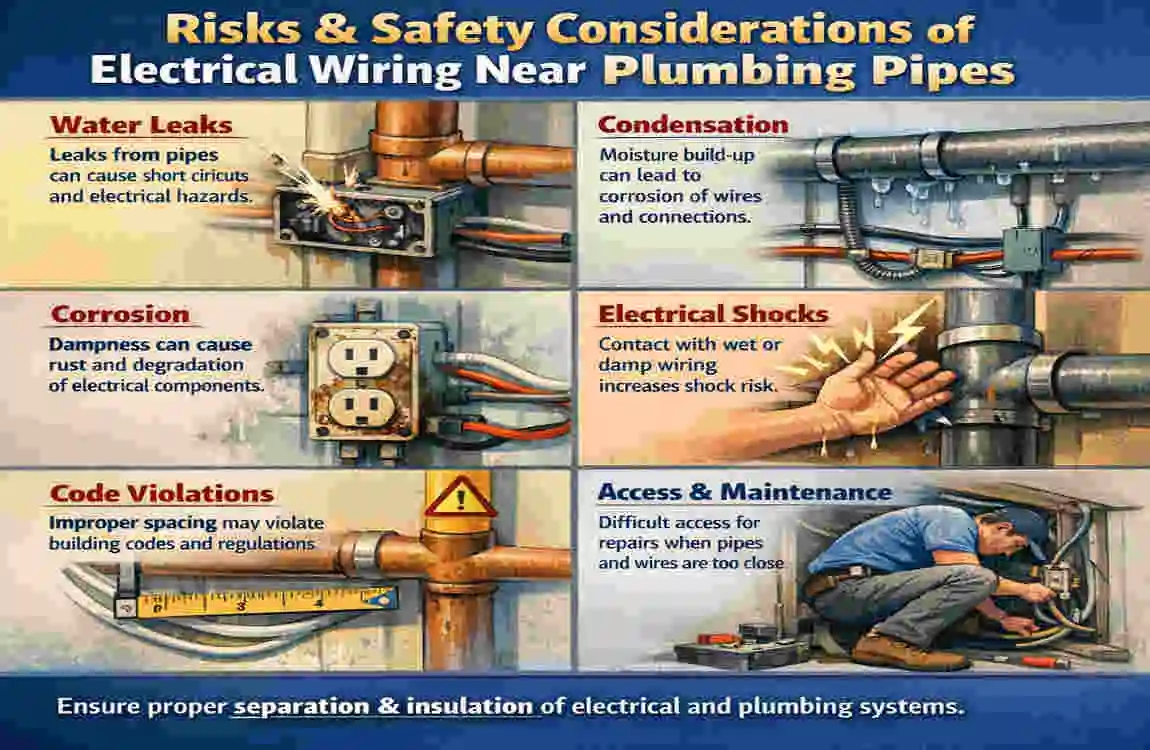
- Electric shock: If water from a leaking pipe comes into contact with an electrical wire, it could create a dangerous situation. Water conducts electricity, so this could lead to a shock or even electrocution.
- Fire risk: Faulty wiring near plumbing could potentially cause a fire. If a wire is damaged or overheated, it could ignite nearby materials, including the plumbing itself.
Impact of Water Leaks or Plumbing Failures
Water leaks or plumbing failures can have a significant impact on your electrical wiring:
- Short circuits: If water comes into contact with a wire, it could cause a short circuit. This happens when electricity takes an unintended path to ground, which can cause a power outage or even a fire.
- Corrosion: Over time, exposure to water can cause corrosion of electrical components. This can weaken the wiring and increase the risk of failure.
Electromagnetic Interference and Signal Disruption
Another risk to consider is electromagnetic interference (EMI) and signal disruption:
- EMI: Electrical wires can generate electromagnetic fields that can interfere with nearby plumbing. This could affect the performance of specific plumbing components, such as electronic valves.
- Signal disruption: If you have communication or data cables running near your plumbing, electromagnetic fields from the electrical wiring can disrupt signal transmission.
Case Studies or Incidents
There have been real-life incidents that highlight the dangers of running electrical wire too close to plumbing:
- House fire: In one case, a water leak from a pipe contacted an electrical wire, causing a short circuit and a fire that destroyed a home.
- Electrical shock: Another incident involved a homeowner who received an electric shock after touching a metal faucet connected to a pipe running near an electrical wire.
Long-term Safety Concerns
Running electrical wire next to plumbing can also lead to long-term safety concerns:
- Deterioration: Over time, constant exposure to moisture from plumbing can cause electrical wiring to deteriorate. This increases the risk of failure and potential hazards.
- Property integrity: If a fire or other incident occurs due to the proximity of wiring and plumbing, it could compromise the structural integrity of your home.
By understanding these risks, you can take steps to ensure your home’s wiring and plumbing are safely separated and maintained.
Can You Run Electrical Wire Next to House Plumbing?

Summarized Answer
Can you run electrical wire alongside the house’s plumbing? The short answer is: it depends. Based on the regulations and safety principles we’ve discussed, there are certain situations where it may be acceptable, but others where it’s not.
Expert Opinions and Manufacturer Guidelines
Experts in the field, as well as manufacturers of electrical and plumbing components, generally agree on the following:
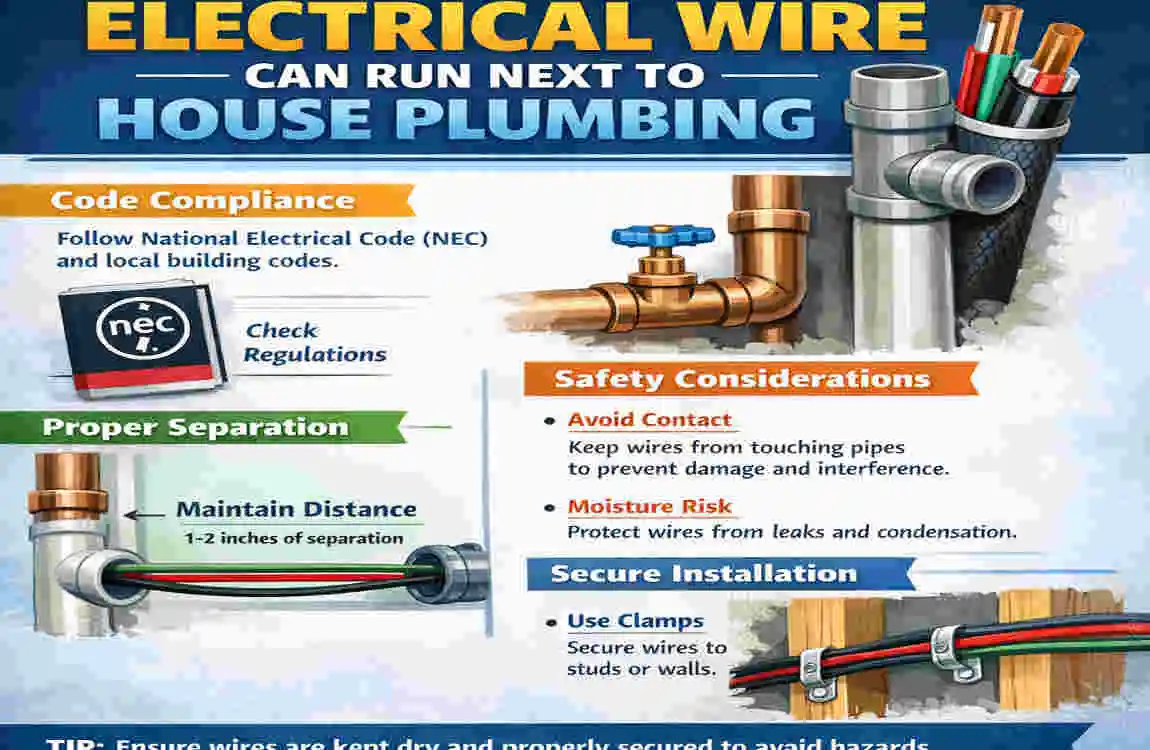
- Follow the codes: Always adhere to the relevant electrical and plumbing codes, which often specify minimum separation distances.
- Use caution: Even if the codes allow for proximity, it’s best to err on the side of caution and maintain as much separation as possible.
- Consult professionals: If you’re unsure about a specific situation, consult licensed electricians and plumbers who can provide guidance tailored to your home’s unique layout.
Common Scenarios Where Wiring and Plumbing Are Close But Compliant
There are some common scenarios where wiring and plumbing may be close but still compliant with codes:
- Parallel runs: If the wiring and plumbing run parallel for a short distance and are appropriately secured and insulated, it may be acceptable.
- Crossing paths: If the wiring and plumbing need to cross at a 90-degree angle with proper separation, it’s usually allowed.
When It’s Unsafe or Non-Compliant
However, there are situations where running wiring next to plumbing is unsafe or non-compliant:
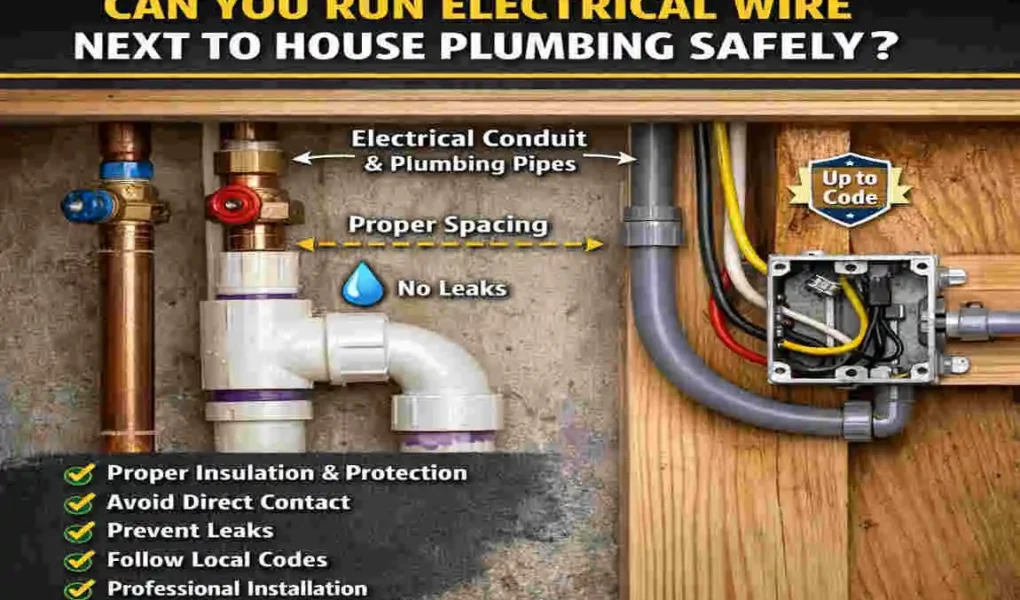
- Direct contact: If wiring and plumbing are in direct contact, it’s a clear violation of safety standards.
- Inadequate separation: If the wiring and plumbing are too close together, even if they are not touching, they may not meet the required separation distances.
- Moisture-prone areas: Running wiring near plumbing in areas prone to moisture, like basements or bathrooms, increases the risk of problems.
In these cases, it’s crucial to either separate the wiring and plumbing or consult professionals to find a safe solution.
Best Practices for Installing Electrical Wiring Near Plumbing
Proper Clearances and Separation Distances
When installing electrical wiring near plumbing, it’s essential to maintain proper clearances and separation distances. Here are some best practices:
- Follow the codes: Always adhere to the minimum separation distances specified in the relevant electrical and plumbing codes.
- Increase separation when possible: Even if the codes allow a certain proximity, try to increase it as much as possible to minimize risk.
- Use vertical separation: When wiring and plumbing must be close, try to keep them separated vertically rather than horizontally.
Use of Protective Conduits and Insulation
Protective conduits and insulation can help minimize the risks of running wiring near plumbing:
- Use conduit: Running wiring through a protective conduit can help shield it from moisture and potential damage from nearby plumbing.
- Insulate pipes: Insulating plumbing pipes can help prevent condensation and reduce the risk of water contacting nearby wiring.
- Seal gaps: Use sealants or fire-resistant materials to fill any gaps between wiring and plumbing where they pass through walls or floors.
Techniques to Minimize Electromagnetic Interference
To minimize the risk of electromagnetic interference (EMI) from electrical wiring affecting nearby plumbing:
- Use shielded cables: Opt for shielded cables for extra protection against EMI.
- Twist wires: Twisting the wires in a cable can help cancel out some of the electromagnetic fields they generate.
- Keep sensitive components separate: If you have sensitive plumbing components, like electronic valves, try to keep them as far away from electrical wiring as possible.
Recommendations for Plumbers and Electricians
For professionals working on electrical and plumbing installations:
- Communicate and coordinate: Plumbers and electricians should work together to plan the layout of wiring and plumbing to minimize proximity and potential conflicts.
- Use specialized components: In some cases, using specialized wiring or plumbing components designed for proximity can help ensure safety and compliance.
- Document the installation: Keep detailed records, including photos and notes on the proximity of wiring and plumbing, to support future maintenance and inspections.
DIY Tips for Homeowners
If you’re a homeowner considering modifications to your wiring or plumbing:
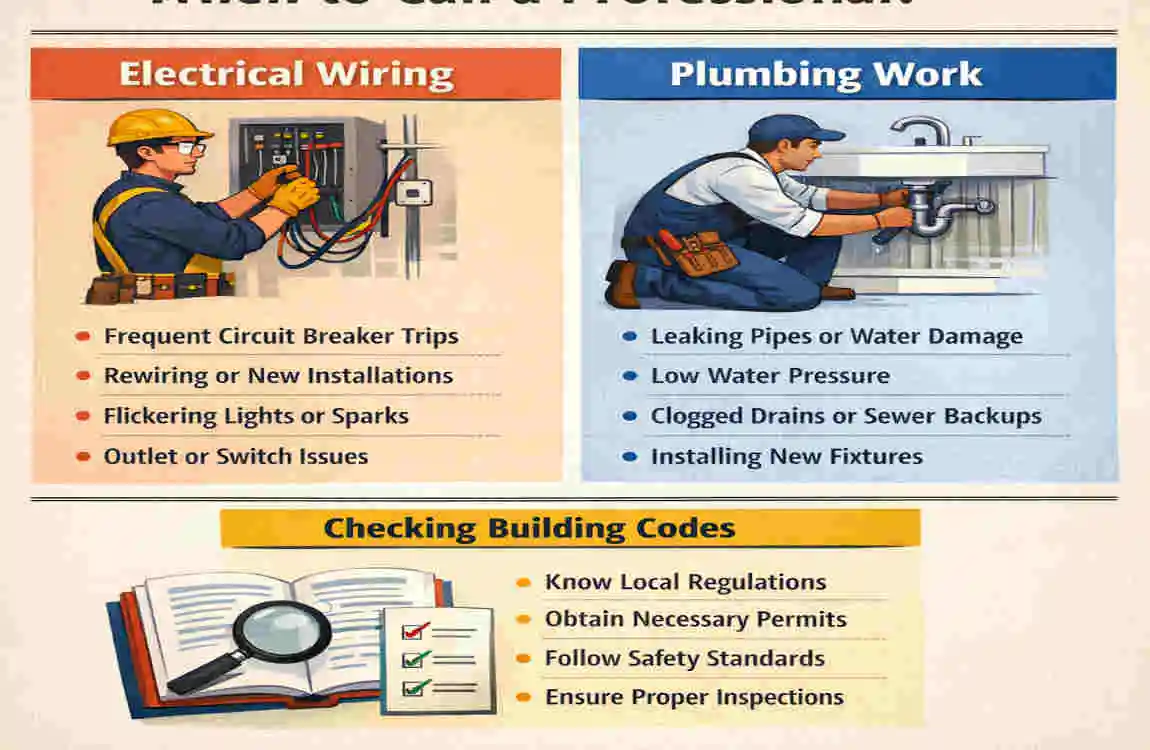
- Know your limits: If you’re not experienced with electrical or plumbing work, it’s best to leave it to the professionals.
- Consult the codes: Familiarize yourself with the relevant electrical and plumbing codes in your area before attempting any work.
- Use caution: If you do decide to tackle a project, proceed with caution and always prioritize safety over convenience.
By following these best practices, you can help ensure that your home’s wiring and plumbing are installed safely and in compliance with relevant codes and standards.
Solutions and Alternatives
When and How to Reroute Wiring or Plumbing
If you find that your wiring and plumbing are too close for comfort, you may need to consider rerouting one or both:
- Assess the situation: Carefully evaluate the current layout and identify areas where wiring and plumbing are too close together.
- Plan the rerouting: Work with professionals to develop a plan for rerouting the wiring or plumbing to achieve proper separation.
- Execute the plan: Have licensed electricians and plumbers carry out the rerouting work, ensuring compliance with all relevant codes and standards.
Use of Specialized Wiring or Plumbing Components
In some cases, using specialized components can help address proximity issues:
- Shielded wiring: Using shielded electrical cables can help minimize the risk of electromagnetic interference from nearby plumbing.
- Insulated pipes: Insulating plumbing pipes can help prevent condensation and reduce the risk of water contacting nearby wiring.
- Specialized fittings: Specialized fittings and connectors are available to safely accommodate proximity between wiring and plumbing.
Consulting with Licensed Professionals
When dealing with complex installations or proximity issues, it’s always best to consult with licensed professionals:
- Electricians: A licensed electrician can assess your home’s wiring and provide guidance on how to safely Install or modify it in relation to your plumbing.
- Plumbers: A licensed plumber can evaluate your plumbing system and offer recommendations for how to maintain proper separation from electrical wiring.
- Engineers: In some cases, consulting with a structural or electrical engineer can provide valuable insights and solutions for complex situations.
Innovative Solutions to Improve Safety and Compliance
There are also innovative solutions being developed to improve safety and compliance when it comes to wiring and plumbing proximity:
- Smart home technology: Some smart home systems can monitor the performance of your electrical and plumbing systems, alerting you to potential issues before they become serious problems.
- Wireless communication: Using it for specific applications can help eliminate the need to run wires near plumbing altogether.
- Advanced materials: New materials and technologies are being developed that can help minimize the risks associated with proximity between wiring and plumbing.
By exploring these solutions and alternatives, you can find the best approach for your home’s unique situation and ensure the safety and compliance of your electrical and plumbing systems.
Maintenance and Inspection Tips

Regular Home Inspections
To keep your home’s electrical and plumbing systems safe and compliant, it’s crucial to perform regular inspections:
- Visual checks: Regularly inspect visible wiring and plumbing for signs of damage, wear, or improper installation.
- Functional tests: Test outlets, switches, and plumbing fixtures to ensure they’re working correctly and not showing signs of issues.
- Scheduled maintenance: Consider scheduling annual or bi-annual professional inspections to catch any potential problems early.
Recognizing Signs of Potential Problems
Being able to recognize signs of potential problems can help you address issues before they become serious:
- Water leaks: Look for signs of water damage or leaks around plumbing fixtures, pipes, or areas where wiring and plumbing are close.
- Electrical issues: Be alert for flickering lights, tripped breakers, or outlets that feel warm to the touch, as these could indicate wiring problems.
- Unusual odors: A burning smell or gas odor could indicate a serious issue with your electrical or plumbing systems.
Immediate Steps to Take
If you suspect a problem with your wiring or plumbing, take these immediate steps:
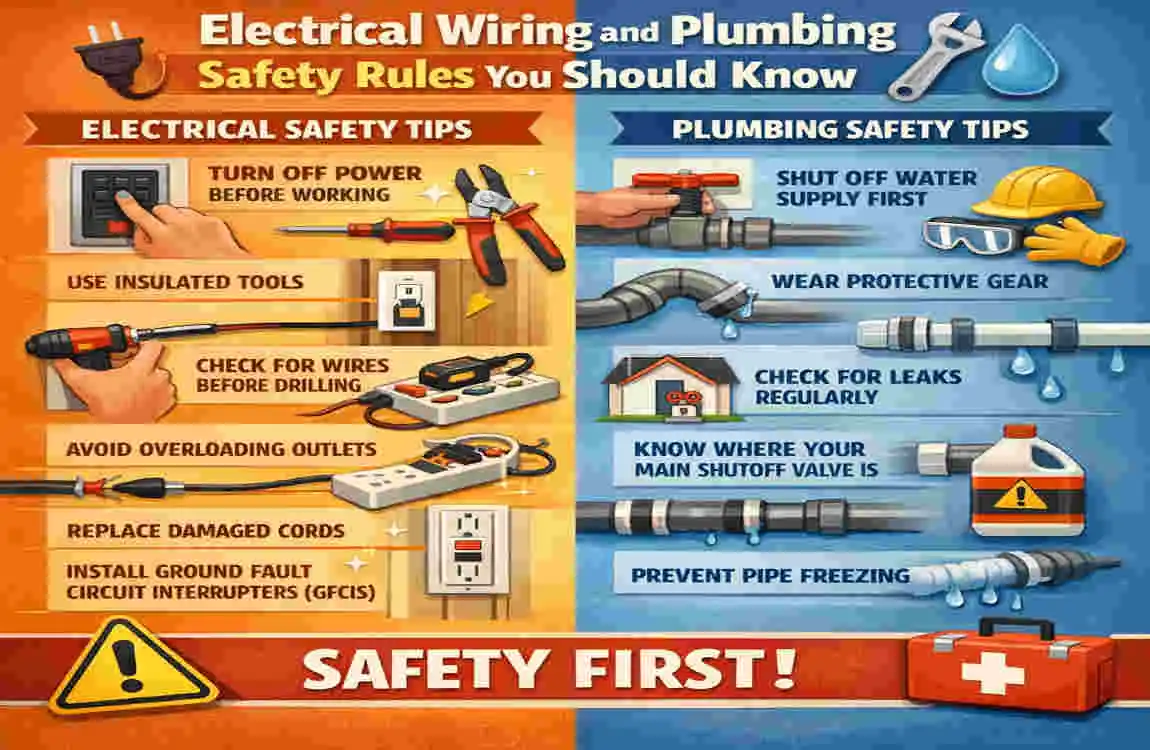
- Turn off power: If you suspect an electrical issue, turn off the power to the affected area at the breaker panel.
- Shut off water: If you detect a water leak, turn off the main water supply to your home to prevent further damage.
- Call professionals: Contact licensed electricians and plumbers to assess the situation and make necessary repairs.
Benefits of Professional Inspections and Audits
Hiring professionals to perform inspections and audits can provide several benefits:
- Thorough assessment: Professionals have the knowledge and tools to thoroughly assess your electrical and plumbing systems.
- Code compliance: They can ensure your systems comply with all relevant codes and standards.
- Preventive maintenance: They can identify potential issues and recommend preventive measures to keep your systems safe and functioning correctly.
- Documentation: They can provide detailed reports and documentation of their findings, which can be valuable for future reference and when selling your home.
By following these maintenance and inspection tips, you can help ensure the ongoing safety and compliance of your home’s electrical and plumbing systems.
Final Verdict: Safe or Risky?
So, is it safe or risky to run electrical wire next to house plumbing? The answer is clear: it’s dangerous. While there may be some situations where proximity is allowed by code, the potential hazards and long-term safety concerns make it a practice to avoid whenever possible.
As a homeowner, your best course of action is to prioritize safety and compliance. If you’re planning any electrical or plumbing work, consult licensed professionals to ensure proper separation and code compliance. And if you suspect any issues with your current setup, don’t hesitate to have it inspected and addressed.
Remember, when it comes to your home’s safety, it’s always better to err on the side of caution. By taking the necessary steps to keep your wiring and plumbing safely separated, you can enjoy peace of mind and protect your family and property.
Frequently Asked Questions
Can electrical wires run underwater near plumbing?
No, it’s not safe to run electrical wires underwater near plumbing. Water conducts electricity, so this setup could pose serious hazards, such as electric shock or fire. If you need to run wiring near plumbing in a wet area, consult with a licensed electrician to find a safe solution.
What are the specific separation distances recommended by code?
The specific separation distances can vary depending on your location and the relevant codes. However, as a general rule, the National Electrical Code (NEC) recommends a minimum separation of 6 inches between electrical wiring and plumbing. Local codes may have more stringent requirements, so it’s essential to check with your local authorities.
How to safely upgrade existing wiring and plumbing?
To safely upgrade existing wiring and plumbing:
- Assess the current setup: Have a licensed electrician and plumber evaluate your current systems and identify any proximity issues.
- Develop a plan: Work with the professionals to create a plan for upgrading your systems while maintaining proper separation and code compliance.
- Execute the plan: Have the licensed professionals carry out the upgrades, ensuring all work is done safely and in compliance with code.
- Schedule inspections: Verify that enhancements comply with all relevant codes and standards.
What should I do if I suspect a violation in my home?
If you suspect a violation in your home:
- Document the issue: Take photos and notes about the alleged violation, including the location and any visible damage or hazards.
- Contact local authorities: Reach out to your local building department or code enforcement office to report the suspected violation.
- Hire professionals: Engage licensed electricians and plumbers to assess the situation and make necessary repairs to bring your home into compliance.
- Keep records: Maintain detailed records of the violation, the steps you took to address it, and any communication with authorities or professionals.
By following these steps, you can help ensure the safety and compliance of your home’s electrical and plumbing systems.