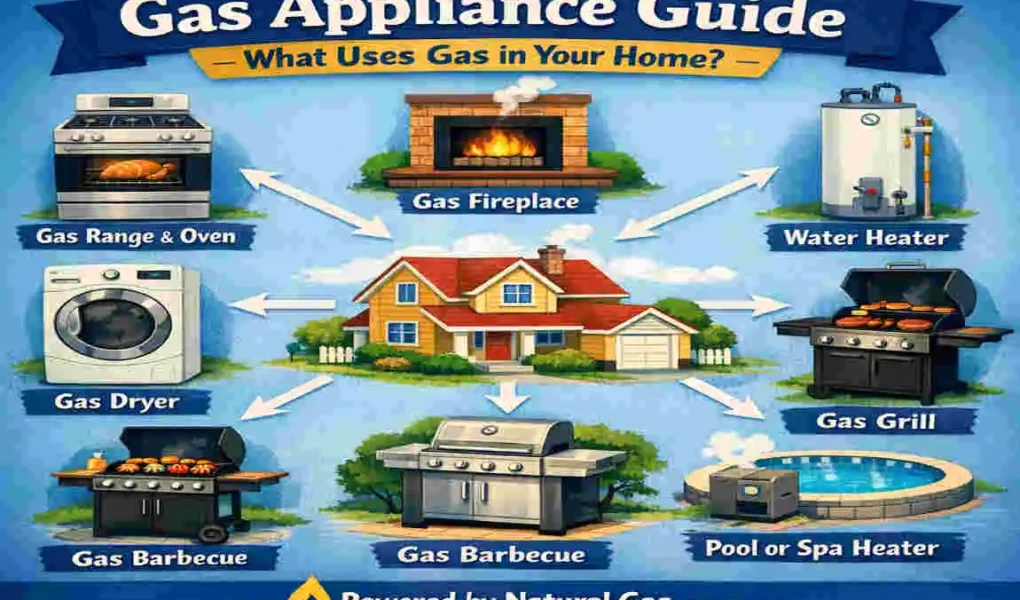
Many homeowners wonder which parts of the house use gas and how these appliances actually work. The answer is simple: gas powers several of the most important systems in a home, especially heating, hot water, cooking, and laundry. In some homes, gas also helps with fireplaces, outdoor equipment, and backup power.
| Gas appliance | What it does |
|---|---|
| Gas stove / cooktop | Cooks food with direct flame or burners. |
| Gas oven | Bakes and roasts using gas heat. |
| Water heater | Heats water for showers, sinks, and laundry. |
| Furnace / boiler | Heats the home and sometimes the water. |
| Gas dryer | Dries clothes faster using gas heat. |
| Fireplace / gas fire | Provides room heat and ambiance. |
| Gas grill | Used for outdoor cooking. |
Understanding your household gas appliances matters for several key reasons. It helps you stay safer, manage energy costs, and keep your equipment running well. It also helps you notice problems early, like leaks, poor ventilation, or unusual gas usage on your bill.
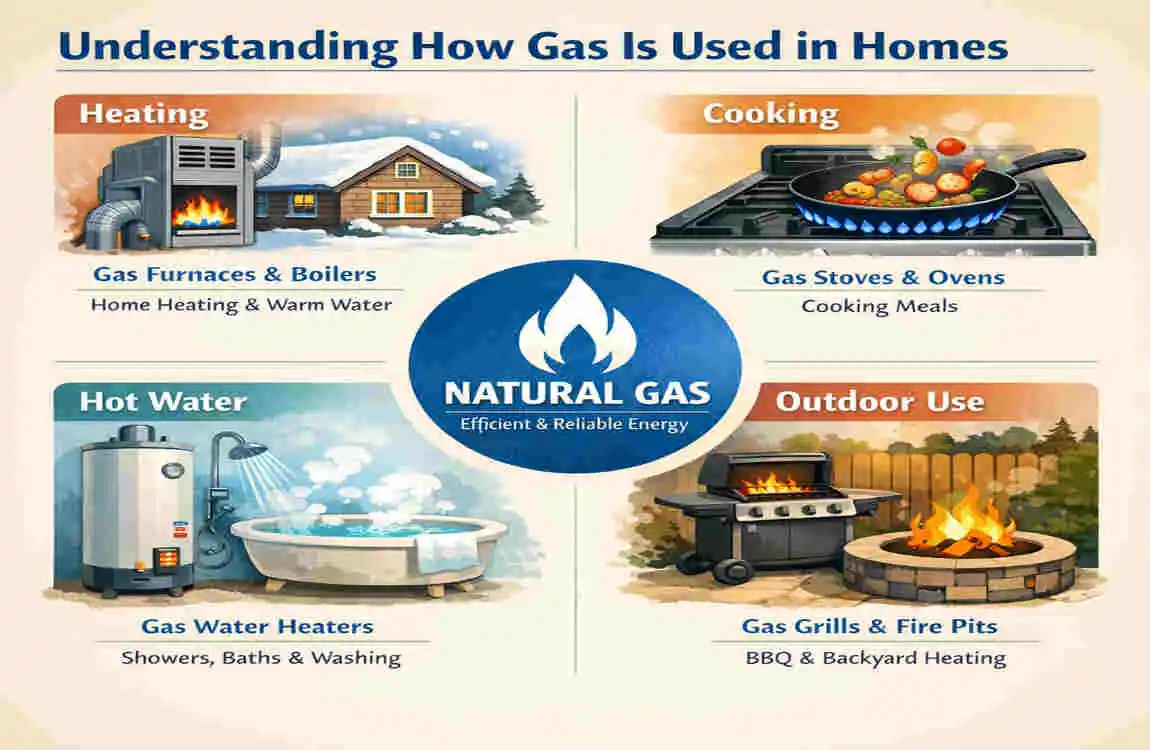
Understanding How Gas Is Used in Homes
Natural Gas vs Propane
Natural gas and propane are both fuel sources used in homes, but they are not the same.
Natural gas usually comes through underground utility lines and is delivered directly to homes in cities and suburbs. Propane is stored in a tank on the property and is more common in rural areas, off-grid homes, and some vacation properties.
Both fuels can power the same types of appliances, but the setup is a little different. Natural gas is connected to the utility system, while propane depends on tank refills.
How Gas Reaches Your Appliances
Gas starts at the utility source and travels through underground gas lines to your home. From there, it passes through a gas meter, which measures how much you use. Inside the home, a network of pipes carries gas to appliances such as furnaces, stoves, and water heaters.
In many cases, you can spot the gas supply by looking for metal connectors, shutoff valves, or visible piping behind appliances.
Why Gas Remains Popular
Gas is still popular because it offers fast heating, steady performance, and often lower operating costs. It is especially useful in colder climates where homes need strong heating systems during winter.
It is also dependable. Even when electricity is interrupted, some gas appliances can still work if they do not rely on electric ignition or controls.
What in the House Uses Gas? Main Household Appliances
Gas Furnaces and Home Heating Systems
One of the biggest gas users in most homes is the heating system. Gas furnaces are very common because they warm a home quickly and keep indoor temperatures steady.
A gas furnace burns fuel to heat air, then blows that warm air through ducts and vents. Boilers work similarly, but they heat water rather than air. That hot water then moves through pipes or radiators. Some homes also use wall heaters, which warm smaller spaces directly.
Why homeowners like gas heating:
- It heats rooms fast.
- It can be more efficient in cold weather.
- It is often cheaper to run than electric heat in many places.
If your winter bills rise sharply, your furnace is often the main reason. In many homes, it uses more gas than any other appliance.
Gas Water Heaters
A gas water heater is another major gas user. It heats the water you use for showers, dishes, laundry, and handwashing.
There are two main types:
- Tank water heaters, which store hot water in a large tank
- Tankless gas water heaters, which heat water only when you need it
Gas water heaters are popular because they recover heat quickly. That means they can warm water more quickly after heavy use, which is helpful for larger households.
Signs your water heater uses gas:
- You see a gas line connected to the unit
- There is a vent pipe going out of the top
- You notice a burner flame or pilot light
If your home has hot water from a fuel-burning unit, it is very likely one of the main uses of natural gas in homes.
Gas Stoves and Ovens
Many people love gas cooking because it gives instant heat control. When you turn the knob, the flame changes right away. That makes it easier to cook food evenly and to adjust the heat quickly.
A gas cooktop uses burners on top, while a gas oven uses gas heat inside the oven compartment. Some homeowners prefer gas over electric because they feel more in control while cooking.
Benefits of gas cooking:
- Fast flame response
- Better control for simmering and searing
- Useful for both everyday meals and serious cooking
Still, safety matters. Always keep burners clean, watch for weak flames, and make sure your kitchen has proper ventilation.
Gas Clothes Dryers
A gas clothes dryer works differently from an electric dryer. Instead of using electricity to generate all the heat, it burns gas to warm the air more quickly.
This can mean shorter drying times and, in some homes, lower operating costs. Gas dryers are common in houses that already have a gas hookup for other appliances.
They do need proper installation and ventilation. The dryer must be connected safely, and the exhaust vent should be kept clean so air can flow out correctly.
Gas Fireplaces
Gas fireplaces have become popular because they are easy to use and create a cozy atmosphere with less effort than wood-burning fireplaces.
There are several types:
- Decorative gas fireplaces
- Ventless fireplaces
- Gas inserts for existing fireplace openings
These fireplaces offer quick comfort and can add warmth to a room without needing firewood. They are convenient, but they still need regular inspection to make sure they vent correctly and burn cleanly.
Outdoor Gas Appliances
Gas is not just for inside the home. Many people use it outdoors too.
Common examples include:
- Gas grills
- Patio heaters
- Outdoor kitchens
- Pool heaters
Some of these use propane tanks, while others connect to a permanent natural gas line. Outdoor gas appliances are useful because they provide steady heat and are easy to control.
Common Gas Appliances at a Glance
ApplianceWhat It DoesGas Type Often Used
Furnace Heats the home Natural gas
Water heater Heats water for daily use Natural gas or propane
Stove/oven Cooks food Natural gas or propane
Clothes dryer Dries laundry Natural gas or propane
Fireplace Adds heat and comfort Natural gas or propane
Grill Cooks food outdoors Propane or natural gas
Less Common Household Appliances That Use Gas
Some gas appliances are less common, but they still appear in certain homes or special setups.
Gas Refrigerators
Gas refrigerators are usually found in RVs, cabins, or off-grid homes. They are useful where electricity is limited or unreliable.
Gas Lamps and Lighting
Gas lamps are mostly decorative today. You may still see them in older homes or historic properties.
Gas Generators
Some homes use gas-powered generators for backup electricity during outages. These are more common in places with frequent storms or power loss.
Gas-Powered Pool and Spa Heaters
These heaters warm water much faster than many electric systems. That makes them appealing for homeowners who want quick heating for a pool or spa.
How to Tell Which Appliances in Your House Use Gas
If you are not sure which appliances in the house use gas, there are a few easy ways to check.
Look for Gas Supply Lines
Look behind or beside appliances for metal gas pipes or flexible connectors. You may also see a yellow shutoff valve, which is often a strong sign that the appliance uses gas.
Check Appliance Labels
Most appliances have a label that tells you the fuel type. Look for words like:
- Natural gas
- LP gas
- Propane
- Fuel gas
Inspect Utility Bills
If your home gets a separate gas bill, that is another clue. Big jumps in usage during winter often point to heating or hot water use.
Recognize Gas Appliance Features
Gas appliances often have one or more of these features:
- Pilot lights
- Burner flames
- Vent pipes
- Exhaust flues
These signs can help you tell gas and electric appliances apart quickly.
Advantages of Using Gas Appliances at Home
Gas appliances remain popular for good reasons.
Lower Energy Costs
In many locations, gas costs less than electricity for heating, hot water, and cooking. That can lead to smaller monthly utility bills.
Faster Heating and Cooking
Gas gives instant heat. You do not have to wait long for burners, water heaters, or furnaces to respond.
Reliable During Power Interruptions
Some gas appliances still work during blackouts, especially basic heating or cooking systems that do not depend heavily on electricity.
Environmental Considerations
Gas often produces fewer emissions than some other fuel sources. While it is not the cleanest option available, it can be a more efficient choice than older or less efficient systems.
Safety Tips for Homes With Gas Appliances
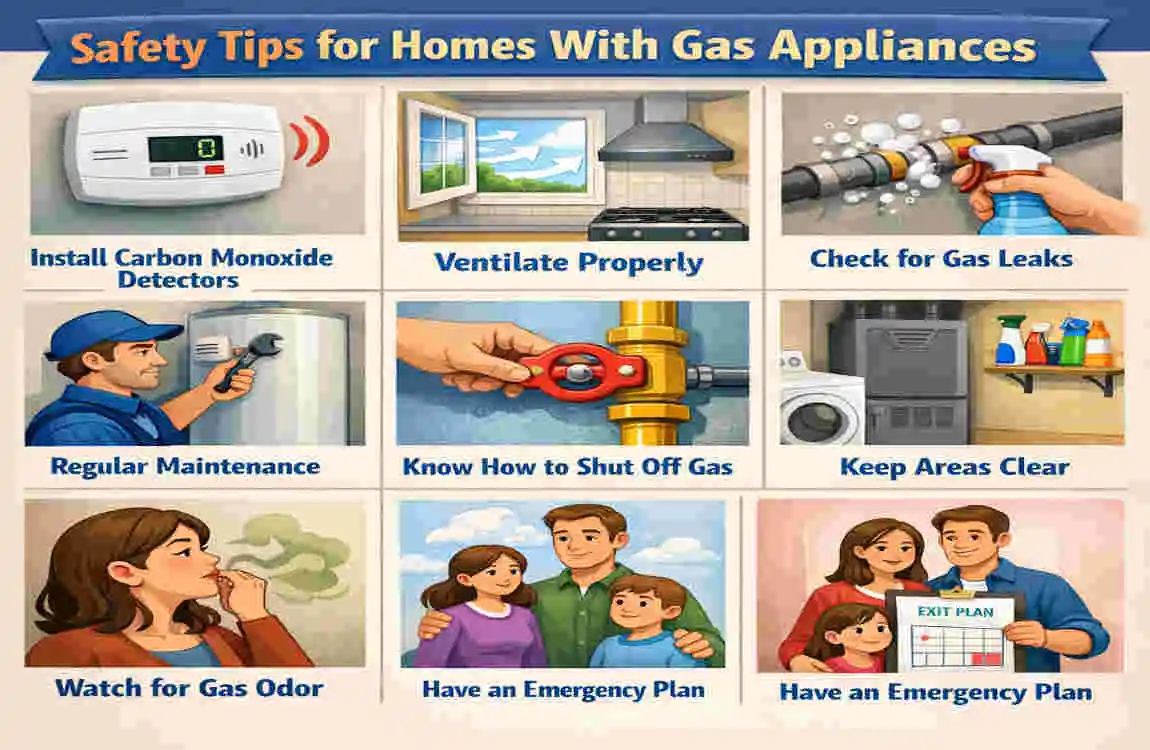
Safety should always come first when dealing with gas.
Install Carbon Monoxide Detectors
A carbon monoxide detector is essential in any home with gas appliances. Place detectors near sleeping areas and on every level of the house. Test them regularly and replace batteries as needed.
Recognize Signs of a Gas Leak
A gas leak may show up in several ways:
- Rotten egg smell
- Hissing or whistling sound
- Dead grass or plants near a gas line
- Dizziness or nausea indoors
If you notice these signs, treat the situation seriously.
Schedule Regular Maintenance
Have your furnace, water heater, and other gas appliances checked regularly. Cleaning, tune-ups, and inspections help prevent bigger problems later.
Ensure Proper Ventilation
Gas appliances need fresh air and proper venting. Without it, carbon monoxide can build up indoors, which is dangerous.
What to Do During a Gas Leak
If you think there is a leak, act fast:
- Leave the home immediately
- Do not use switches, phones, or appliances inside
- Turn off gas only if it is safe to do so
- Call emergency services or your gas utility from outside
Do not try to ignore the smell or wait to see if it goes away.
Gas vs Electric Appliances: Which Is Better?
The better choice depends on your home, budget, and goals.
Cost Comparison
Gas appliances often cost less to run, but electric appliances may cost less to install. The right choice depends on your local utility rates.
Energy Efficiency
Modern gas appliances can be very efficient, especially newer furnaces and water heaters. Electric models can also be efficient, but the results vary by appliance.
Performance Differences
Gas usually wins for fast heating, cooking precision, and quick recovery. Electric appliances can be easier to install and may perform better in homes designed for all-electric systems.
Environmental Impact
Electric appliances can be cleaner if your electricity comes from renewable sources. Gas may still be a practical option for many families, especially in colder areas.
Best Choice for Different Homeowners
- Budget-conscious families often choose gas for lower operating costs
- Eco-focused homeowners may prefer electric or hybrid setups
- Cold-climate households often benefit from gas heating systems
How to Improve Efficiency of Gas Appliances
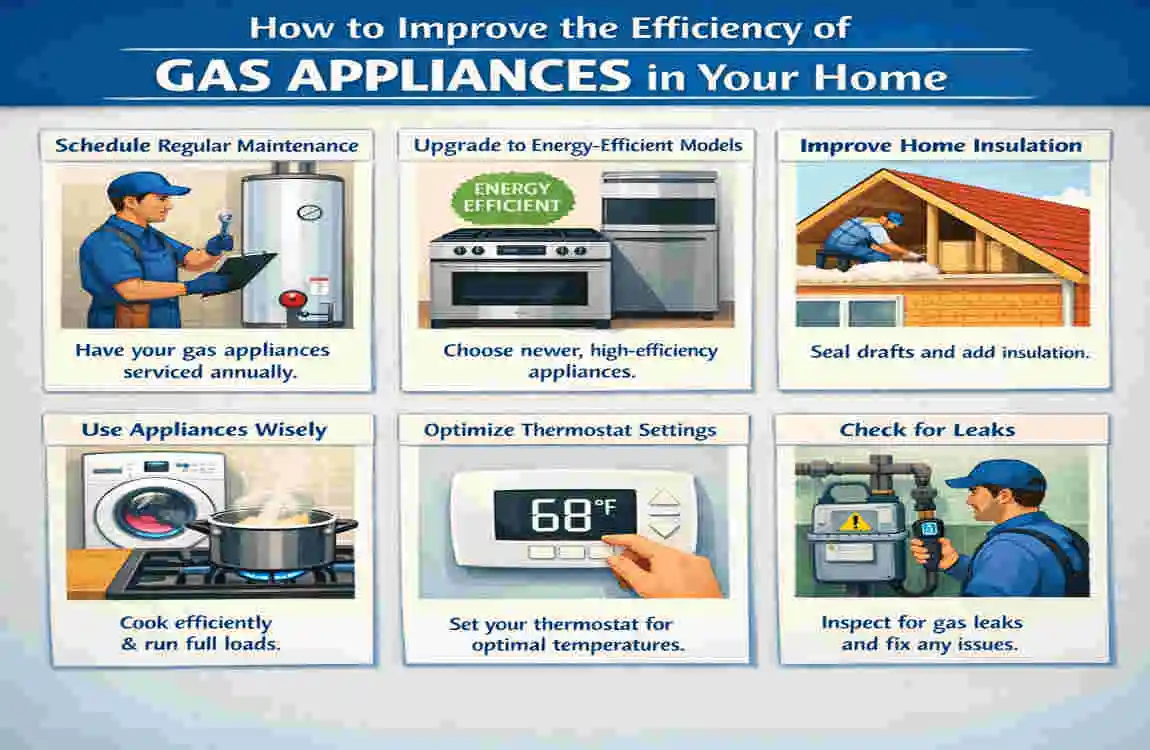
You can lower gas use without replacing everything in your home.
Upgrade Older Appliances
Newer models often use fuel better. High-efficiency furnaces and water heaters can cut waste and save money over time.
Perform Regular Maintenance
Clean burners, replace filters, and check venting. Small tasks can make a big difference.
Improve Home Insulation
A well-insulated home holds heat better, so your furnace does not have to work as hard.
Use Smart Thermostats
A smart thermostat helps you manage heating more carefully and avoid wasting gas when no one is home.
Frequently Asked Questions
What in the house uses the most gas?
Usually, the furnace and water heater use the most gas. Heating and hot water are the biggest fuel demands in many homes.
Do all homes use natural gas?
No. Some homes use propane, and others do not use gas at all. It depends on where you live and how the home is set up.
Is gas cheaper than electricity?
It depends on your local rates and the efficiency of your appliances. In many places, gas is cheaper for heating and cooking, but not always.
Can I switch gas appliances to electric?
Yes, in many cases, but it may require new wiring, new equipment, or plumbing changes. A licensed technician can tell you what is possible.
Are gas appliances safe?
Yes, when they are installed and maintained properly. Safety checks, good ventilation, and carbon monoxide detectors are very important.