In-house real estate financing gives buyers another path to property ownership when a traditional bank loan isn’t the best fit. Instead of borrowing only from a bank or credit union, you can arrange payment directly with the seller, developer, builder, or a property-specific financing company.
| Feature | Details |
|---|---|
| Definition | Financing provided by a property seller, developer, or financing company |
| How It Works | Buyer agrees to repay the financed amount in installments |
| Down Payment | An initial amount paid toward the property purchase |
| Interest Rate | Depends on the provider and financing agreement |
| Monthly Payments | Scheduled payments toward the amount borrowed and interest |
| Main Benefit | Potentially flexible financing terms |
| Main Risk | High costs, unfavorable terms, or penalties for missed payments |
| Best Advice | Review the contract and compare financing options before signing |
This option often comes up when buyers want more flexible terms, faster decisions, or a way around strict mortgage rules. It can also help real estate investors and self-employed buyers who may not fit neatly into standard lending boxes.
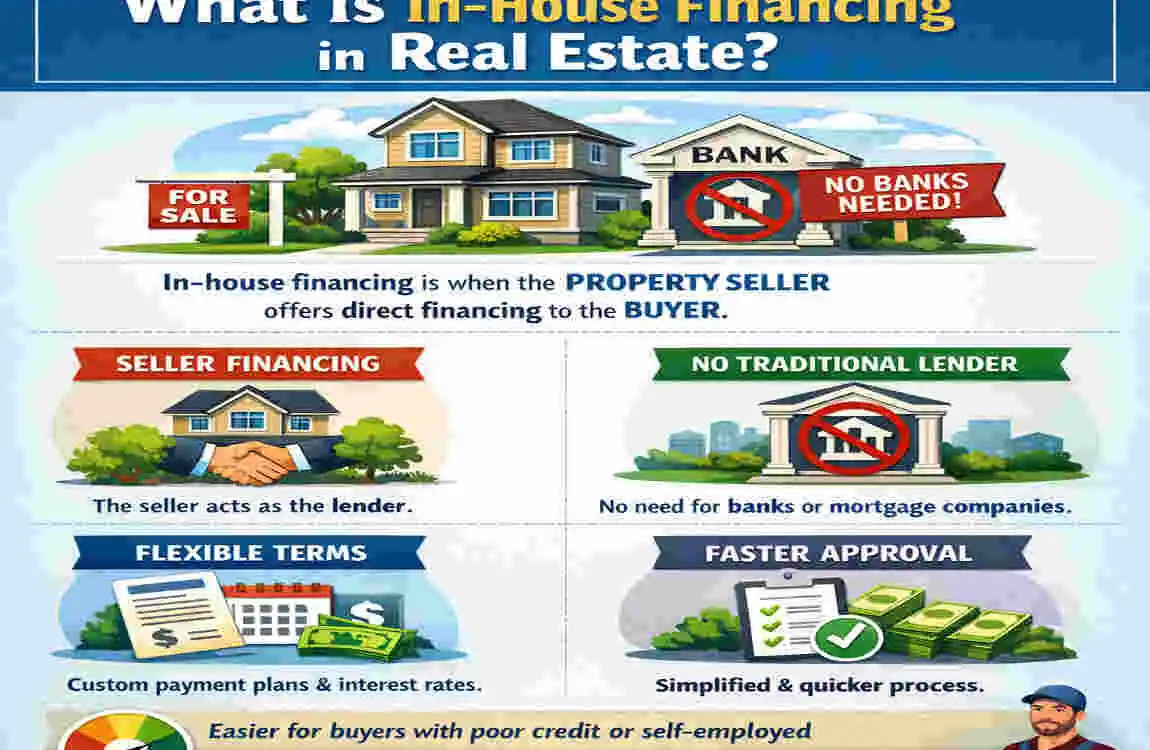
What Is In-House Financing in Real Estate?
Definition of In-House Financing
In-house financing means the person or company selling the property also helps arrange the financing. In simple terms, the buyer does not go only to a bank. The seller or another related business may accept payments over time under agreed terms.
The exact setup depends on the transaction. Some deals are very direct, while others use an affiliated financing company with its own rules. This can be appealing to buyers who have trouble getting a conventional mortgage.
How In-House Financing Differs From Traditional Mortgages
Traditional home mortgages usually come from banks, credit unions, or mortgage lenders. These lenders check credit, income, debt, savings, and other details through formal underwriting.
In-house financing can sometimes be more flexible. A seller may focus less on a perfect credit score and more on whether the buyer can make payments. Still, this doesn’t mean the deal is automatically cheaper, easier, or exempt from legal rules.
Common Types of In-House Real Estate Financing
- Seller financing lets the seller accept payments over time instead of taking the full amount upfront.
- Developers often use financing for new homes or projects under construction.
- Builder financing may offer special terms or payment plans for qualified buyers.
- Business-provided financing comes from a real estate company or an affiliated lending entity.
These options differ in ownership transfer, repayment structure, interest charges, and legal protection, so the contract matters a lot.
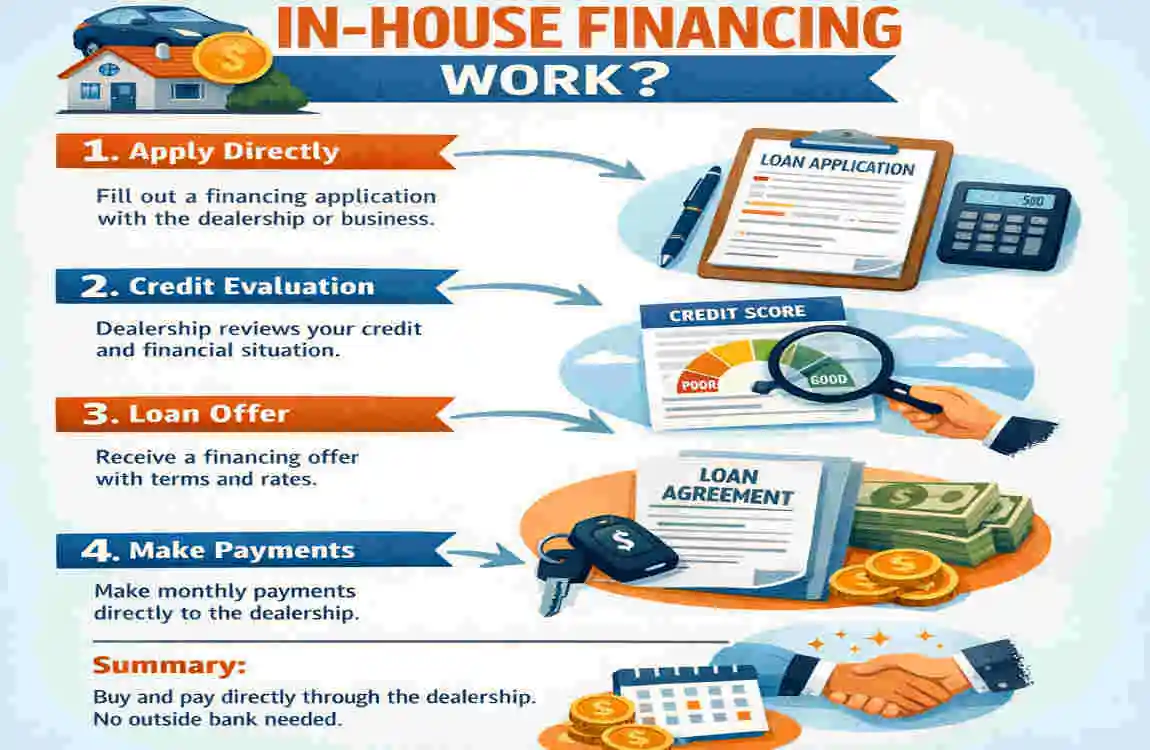
How Does In-House Financing Work?
The Property Buyer and Financing Provider Agreement
The process usually starts when a buyer selects a property and asks about financing options. Then both sides agree on the price, down payment, interest rate, repayment period, and monthly payment schedule.
Put everything in writing. Real estate agents, attorneys, and other professionals can help review the deal so the buyer understands what they are signing.
Application and Approval Process
The financing provider will usually review the buyer’s financial situation. This may include:
- Income or business records
- Employment history
- Credit history
- Savings
- Existing debts
Rules can vary widely. A seller may be more flexible than a professional financing company. Still, that flexibility doesn’t remove the need to show you can repay the loan.
Down Payments, Interest Rates, and Monthly Payments
The down payment lowers the amount that must be financed. A larger home down payment often means smaller monthly payments. Interest rates may be fixed or variable, depending on the agreement.
Also watch for taxes, insurance, and fees, as they can affect affordability. Also check for a balloon payment, a large final amount due at the end of the term.
Property Ownership and Legal Documentation
In some deals, ownership may transfer right away, while other arrangements delay full title until the loan is paid off. Some contracts use installment structures, while others involve different legal protections.
Because the legal side can be complex, buyers should review the title, liens, default terms, and registration rules before signing. Independent legal advice is a smart real estate step.
Benefits of In-House Financing for Real Estate Buyers and Sellers
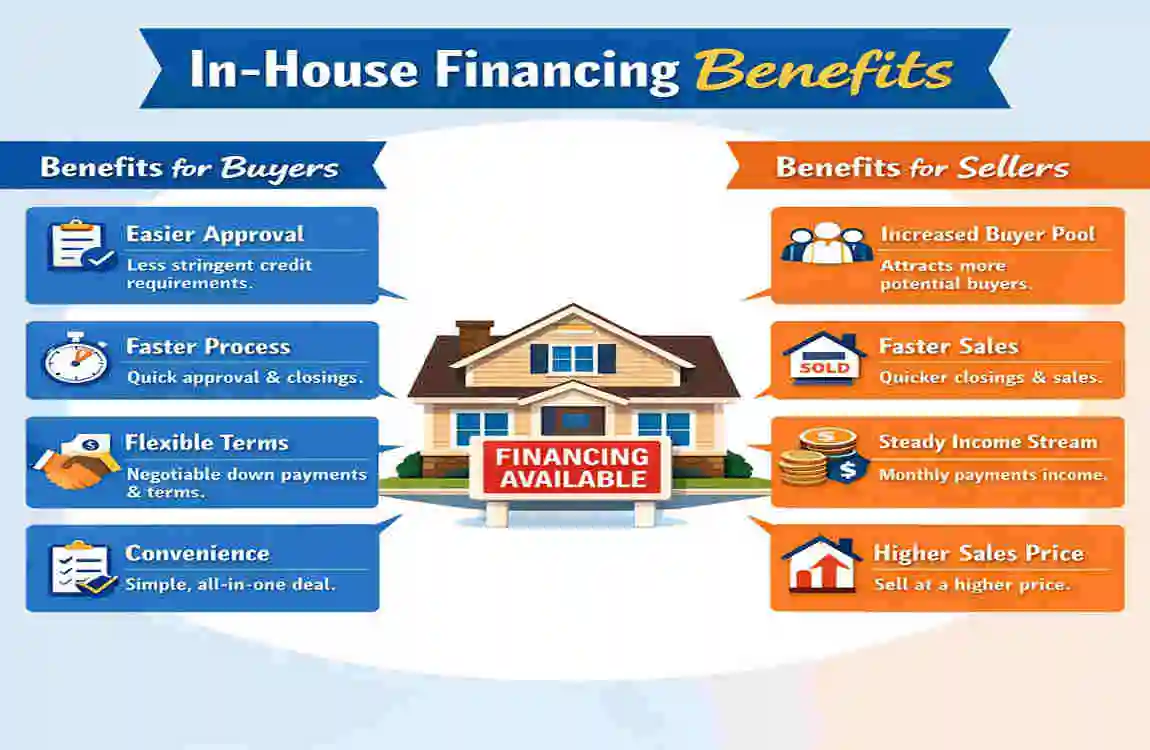
Benefits for Buyers
In-house financing can help buyers who don’t easily qualify for a bank mortgage. It may also allow more room to negotiate the down payment, payment schedule, or interest rate.
Another advantage is speed. Some transactions move faster because there may be fewer approval steps. For buyers with irregular income, that flexibility can make a big difference.
Benefits for Property Sellers and Developers
Sellers may reach a wider group of buyers by offering financing. Developers and builders may also use payment plans to make new properties easier to sell.
Seller financing can create extra income through interest payments, and flexible terms can help a property stand out in a crowded market. Of course, the seller also takes on the responsibility of checking buyer reliability and managing repayments.
Situations Where In-House Financing May Be Useful
This option may be helpful for:
- Self-employed buyers
- Buyers with nontraditional income
- Buyers who need a customized payment plan
- Sellers who want to attract more buyers
- Investors exploring alternative funding options
Risks, Costs, and Disadvantages of In-House Financing
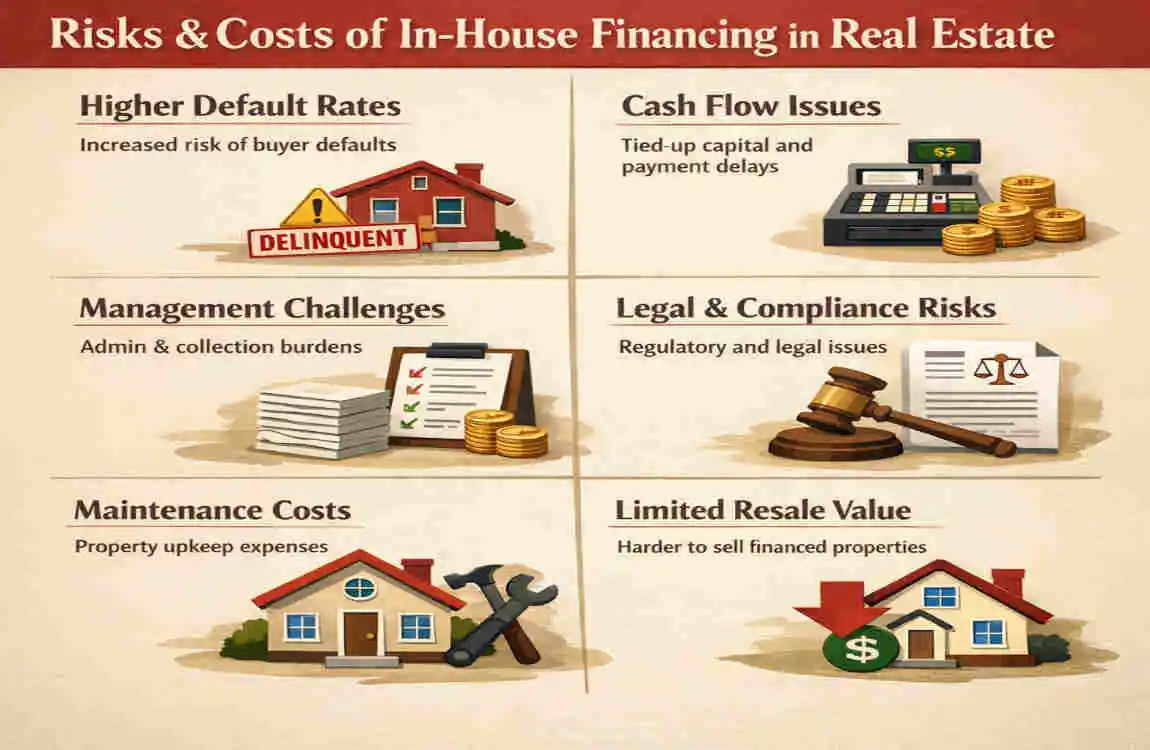
Higher Interest Rates and Additional Fees
Some in-house financing deals cost more than traditional mortgages. Interest rates may be higher, and you may also pay legal fees, admin fees, or origination charges.
Always ask for a full written breakdown of the total amount you will repay. Do not focus only on the monthly payment.
Risk of Default and Losing the Property
If payments are missed, the consequences can be serious. The provider may charge late fees, send default notices, or, if allowed by law, start legal action.
The exact outcome depends on the contract and local rules property, so make sure you understand the consequences before agreeing.
Balloon Payments and Unfavorable Contract Terms
A balloon payment can create a big problem if you are not ready for it. You may plan for the monthly payment, but still struggle with the final lump sum.
Other terms to review include prepayment penalties, variable rates, and restrictions on selling the property. The best way to protect yourself is to stress-test your budget before signing.
How to Protect Yourself Before Signing
Before you agree to anything, make sure you:
- Verify the seller’s ownership and the title
- Review the full agreement with a qualified professional
- Calculate the real monthly and total cost
- Confirm what happens with missed or early payments
- Keep every signed document and payment record
In-House Financing vs. Rent-to-Own
Rent-to-own differs because you usually rent first and may have the option to buy later. Some rent payments may count toward a future purchase, but not always.
Check whether the option to buy is guaranteed, when the deadline ends, and whether rent credits actually build toward ownership.
In-House Financing vs. Cash Purchases and Personal Loans
Paying cash can be simple and fast, but it requires significant available funds. Personal loans may be easier to obtain in some cases, but they often have shorter terms or higher costs.
For a property purchase, unsecured borrowing is not always the best choice. Compare affordability, speed, ownership, and risk before deciding.
Which Financing Option Is Best for You?
The best option depends on your credit, income stability, savings, and the property you want. Do not look only at the monthly payment.
Compare the total borrowing cost, the deal’s legal security, and each option’s flexibility. Getting multiple written offers can help you make a smarter decision.
How to Qualify for In-House Financing and Make a Smart Decision
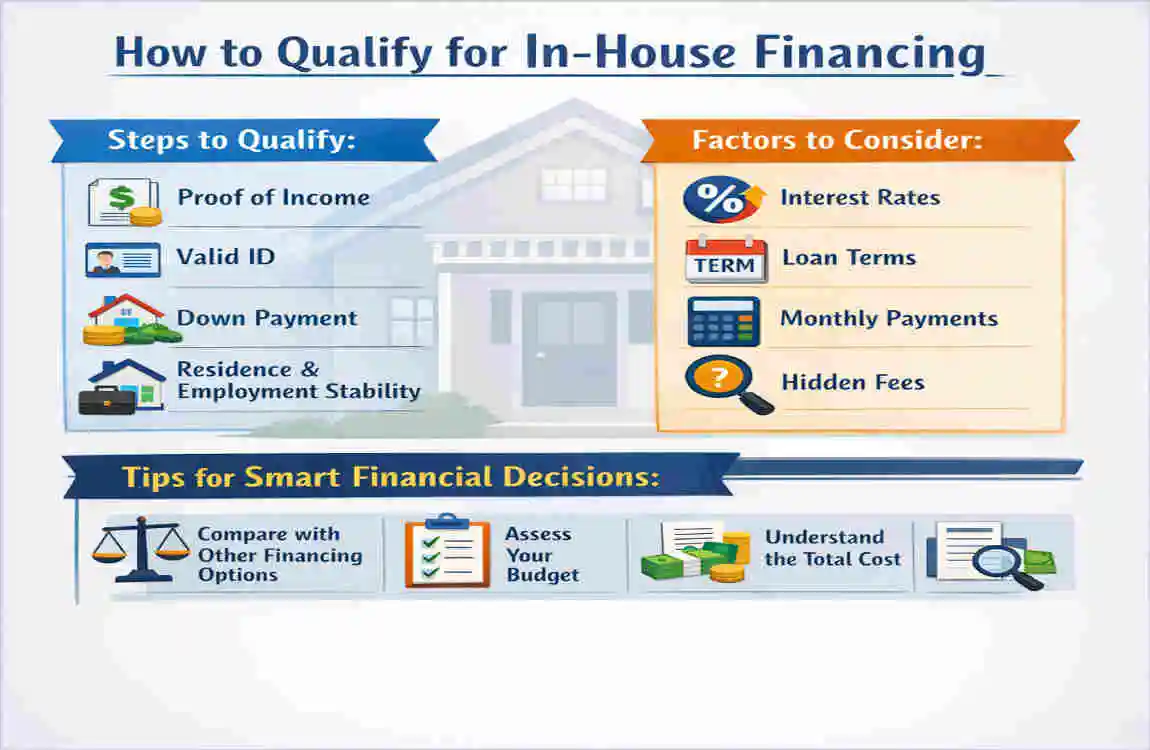
Typical Eligibility Requirements
Many providers ask for proof of identity, income, savings, debts, and sometimes credit history. Some may also review the property and transaction details before approving your application.
Steps to Improve Your Chances of Approval
To improve your chances, keep your financial records organized, save for the down payment, reduce debt where possible, and ask direct questions about fees and default terms.
Questions to Ask Before Accepting an Offer
Before signing, ask:
- Who legally provides the financing?
- What is the total amount I will repay?
- Is the interest rate fixed or variable?
- Are there fees or a balloon payment?
- When does ownership transfer?
- What happens if I miss a payment?
- Can I repay early without penalty?
A Practical Example of In-House Financing
Imagine a home costs $200,000. The buyer pays $40,000 upfront and finances $160,000 at a fixed annual rate of 8% over 15 years.
The monthly principal-and-interest payment would be about $1,529. Over the full term, the total of payments would be about $275,200, with about $115,200 in interest.
These are only estimates. They don’t include taxes, insurance, fees, or other costs, and real terms may differ.
Final Checklist Before Signing a Financing Agreement
- Confirm the property price and down payment
- Understand the interest rate and repayment schedule
- Review all fees and the full repayment amount
- Check for balloon payments and prepayment penalties
- Verify title and ownership transfer terms
- Understand the consequences of default
- Have the agreement reviewed by a legal professional
- Make sure the payments stay affordable
Frequently Asked Questions
What Is In-House Financing in Real Estate?
It is a property financing arrangement where the seller, developer, or another related company provides or arranges financing directly.
How Does In-House Financing Work?
The buyer agrees to a price, down payment, interest rate, and repayment schedule, then makes payments under the written contract.
Is In-House Financing Better Than a Mortgage?
Not always. The better option depends on cost, qualification rules, legal protection, and your financial situation.
Can You Get In-House Financing With Bad Credit?
Sometimes yes, because some providers are more flexible. But approval is not guaranteed, and the cost may be higher.
Does In-House Financing Require a Down Payment?
Often yes, but the amount varies by provider and agreement.
Are Interest Rates Higher With In-House Financing?
They can be higher, lower, or similar depending on the deal and market conditions.
Can You Pay Off In-House Financing Early?
Sometimes, but it depends on the contract. Check for prepayment penalties or restrictions.
What Happens If You Miss a Payment?
You may face late fees, default notices, or legal remedies, depending on the contract and local law.
Is In-House Financing Safe?
It can be safe when the provider is credible, the contract is clear, and the legal details are properly reviewed.
Who Should Consider In-House Real Estate Financing?
It may suit buyers who need more flexible terms or an alternative mortgage, as long as payments remain affordable and the agreement is carefully reviewed.