dangerous
Cleaning Home Improvement

Are House Centipedes Dangerous? Facts You Must Know

If you have ever seen a house centipede racing across a bathroom floor, you probably reacted the same way most people do: with surprise, fear, and maybe a quick jump backward. Their many legs, fast movement, and strange look make them easy to dislike.

Fact Details
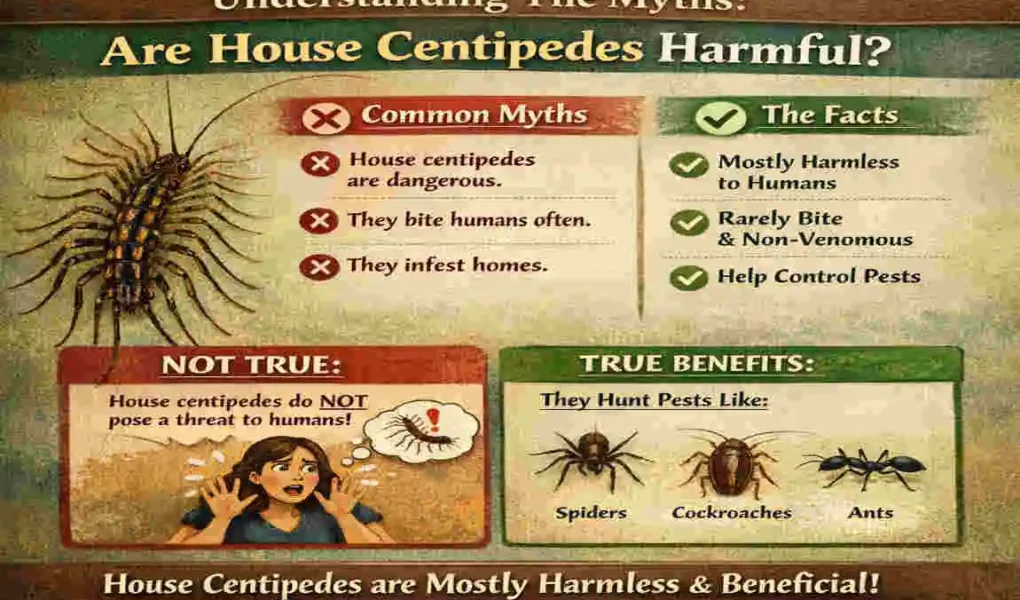
Are they dangerous? No, house centipedes are not dangerous to humans
Do they bite? Bites are very rare; they prefer to retreat rather than bite
Bite effects If bitten, pain is mild (like a bee sting), with slight swelling/redness lasting <48 hours
Jaw strength Their jaws are too weak to usually break human skin
Venom potency Venom is not strong enough to harm humans or pets; only affects small insects
Beneficial role They hunt household pests (cockroaches, bed bugs, silverfish, spiders)
Property damage Cause no harm to structures, fabrics, or stored products
When to worry Only rough handling may trigger a bite; otherwise they’re harmless nuisance pests

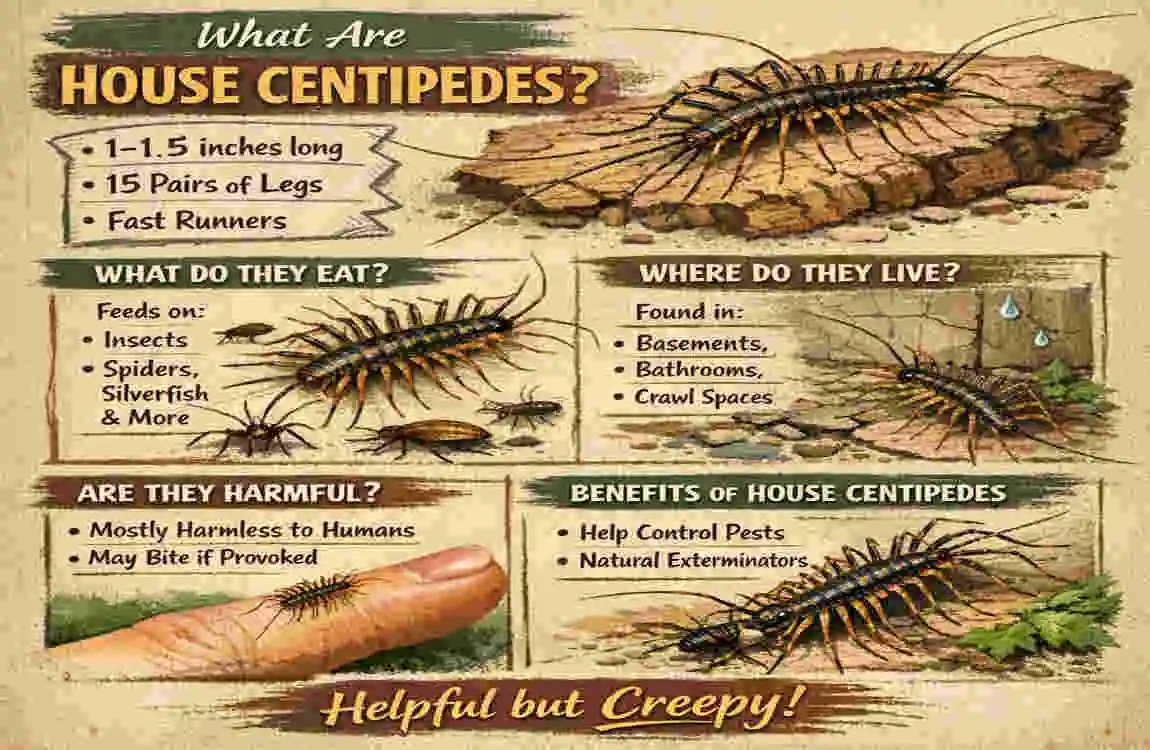
What Are House Centipedes?

dangerous

Physical Appearance

House centipedes are easy to spot once you know what to look for. They usually have a yellow-gray body, long antennae, and very long legs that stick out from the sides. Their legs can make them look much larger than they really are.

Most house centipedes are about 1 to 1.5 inches long, not counting the legs. Because they move so quickly, many people think they are bigger than they are.

Where House Centipedes Commonly Live

House centipedes love dark, damp spaces. You may find them in:

  • Bathrooms
  • Basements
  • Kitchens
  • Crawl spaces
  • Under sinks
  • Storage areas

These places give them moisture, shelter, and access to food.

Why They Enter Homes

House centipedes usually come inside for two reasons: water and food. They hunt insects, and they also look for damp areas where they can hide.

Warm homes are appealing to them, especially when the weather outside is dry, cold, or rainy. So if you see one, it doesn’t necessarily mean your home is dirty. It may simply mean the insect found a good hiding place.

Are House Centipedes Dangerous to Humans?

Do House Centipedes Bite?

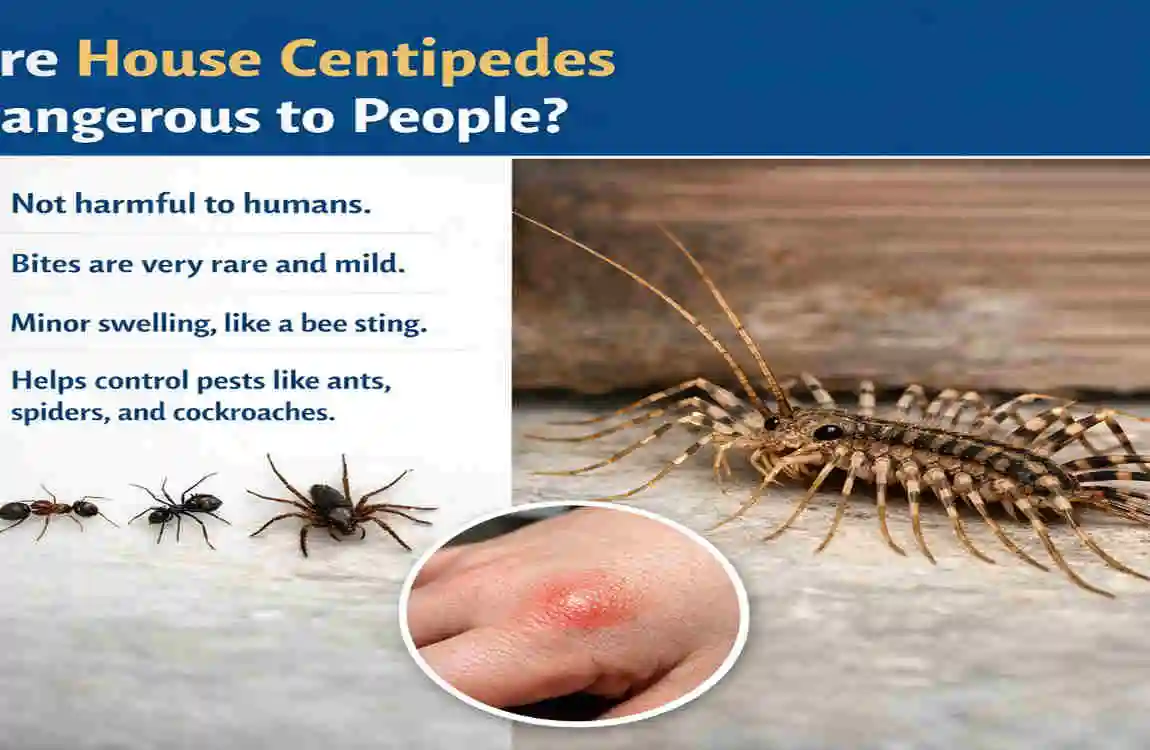
House centipedes can bite, but they usually do not. They prefer running away from people rather than fighting.

A bite usually happens only if the centipede is handled, trapped, or threatened. In most cases, they want nothing to do with humans.

What Does a House Centipede Bite Feel Like?

If a bite does happen, it is usually mild. Many people describe it as a small sting or a bee-like pinch.

You may notice:

  • Slight pain
  • Redness
  • Minor swelling

Most reactions go away on their own. Serious problems are rare, but people with sensitive skin or allergies should be more careful.

Are House Centipedes Poisonous or Venomous?

People often say “poisonous,” but the correct word is usually venomous. That means the centipede has a small amount of venom it uses to catch prey.

The good news is that this venom is very weak against humans. It is strong enough to stop tiny insects, but not strong enough to cause serious harm to most people.

Can House Centipedes Spread Diseases?

No, house centipedes are not known to spread disease. That makes them very different from pests like cockroaches or rodents.

They may look scary, but they are not a major health threat like some other household pests.

Are They Dangerous to Children or Pets?

House centipedes are generally harmless to children and pets. A child or pet may be startled by one, but that is usually the biggest problem.

A pet might try to eat one, and that could cause mild mouth irritation or an upset stomach. Still, this is not common. If your pet has a strange reaction, contact a vet.

Quick safety note

If a centipede is found in a home with small children or curious pets, it is smart to remove it. That is more about comfort and caution than real danger.

Why House Centipedes May Actually Be Helpful

Natural Pest Control Benefits

House centipedes are hunters. They feed on other insects, helping control pests naturally.

They may eat:

  • Spiders
  • Cockroaches
  • Ants
  • Silverfish
  • Termites
  • Bed bugs in some cases

That is why some pest experts do not rush to kill them. They may be doing part of the pest-control job for you.

Why Pest Experts Often Leave Them Alone

If you only see one or two, leaving them alone can make sense. They may help reduce the number of other bugs in your home.

That can mean less need for chemical sprays and fewer pest problems overall.

Pros and Cons of Keeping Them Around

Pros Cons

They eat other insects. They look creepy

They rarely bite. They move very fast

They do not damage your home. They often signal moisture problems

So, while they are not exactly welcome guests, they are not the worst pest you could have.

Signs You Have House Centipedes in Your Home

dangerous

Common Warning Signs

You may have house centipedes if you:

  • See them at night
  • Spot them in bathrooms or basements
  • Notice more of them after the rain
  • Find them near drains or sinks

They are mostly active at night, so daytime sightings are less common.

Why You Might Suddenly Notice More of Them

A sudden increase often occurs due to humidity, rain, or another insect problem. If their food supply grows, they may show up more often.

This is why a house centipede sighting can be a sign of a bigger issue, even if the centipede itself is not dangerous.

Where They Hide During the Day

During the day, they hide in small, quiet places such as:

  • Cracks and crevices
  • Behind furniture
  • Under boxes
  • Near drains

If you want to reduce sightings, you need to make these hiding spots less appealing.

What Attracts House Centipedes?

Excess Moisture and Humidity

Moisture is one of the biggest reasons house centipedes come inside. They love damp places because those areas support the insects they eat.

Common moisture problems include:

  • Leaky pipes
  • Condensation
  • Poor ventilation
  • Damp basements

Presence of Other Insects

If your home has ants, roaches, spiders, or silverfish, centipedes may follow. They are drawn to food sources just as any other predator is.

So, if you are wondering why I have house centipedes, the answer may be that your home has the right mix of moisture and bugs.

Clutter and Dark Spaces

Clutter gives centipedes more places to hide. Boxes, piles of paper, storage bins, and messy corners can all make your home more comfortable for them.

A clean, dry, open space is far less appealing.

How to Get Rid of House Centipedes Safely

Reduce Moisture Levels

The first step is to reduce the dampness in your home. Try these simple actions:

  • Use a dehumidifier
  • Fix leaks quickly
  • Improve airflow
  • Run bathroom fans after showers

When moisture levels drop, house centipedes often leave on their own.

Eliminate Their Food Source

If you control the insects they eat, you make your home less attractive to them.

Focus on reducing:

  • Spiders
  • Ants
  • Roaches
  • Silverfish

This disrupts the food chain, making centipedes less likely to stay.

Seal Entry Points

House centipedes can slip through tiny openings. Seal cracks and gaps around:

  • Windows
  • Doors
  • Baseboards
  • Pipes

Using caulk and door sweeps can make a big difference.

Natural Remedies for House Centipedes

If you want a gentler approach, you can try:

  • Sticky traps
  • Diatomaceous earth
  • Certain essential oils

These may help reduce centipedes without heavy chemical use.

Chemical Treatments

If you have a bigger problem, indoor insect sprays or other insecticides may help. But always use them carefully.

Keep children and pets away from treated areas, and follow label directions exactly.

When to Call a Professional

A pest control expert may be the best choice if:

  • You keep seeing centipedes often
  • Your home has a moisture problem
  • You also have other pests
  • DIY steps are not working

That usually means the issue is larger than just one insect.

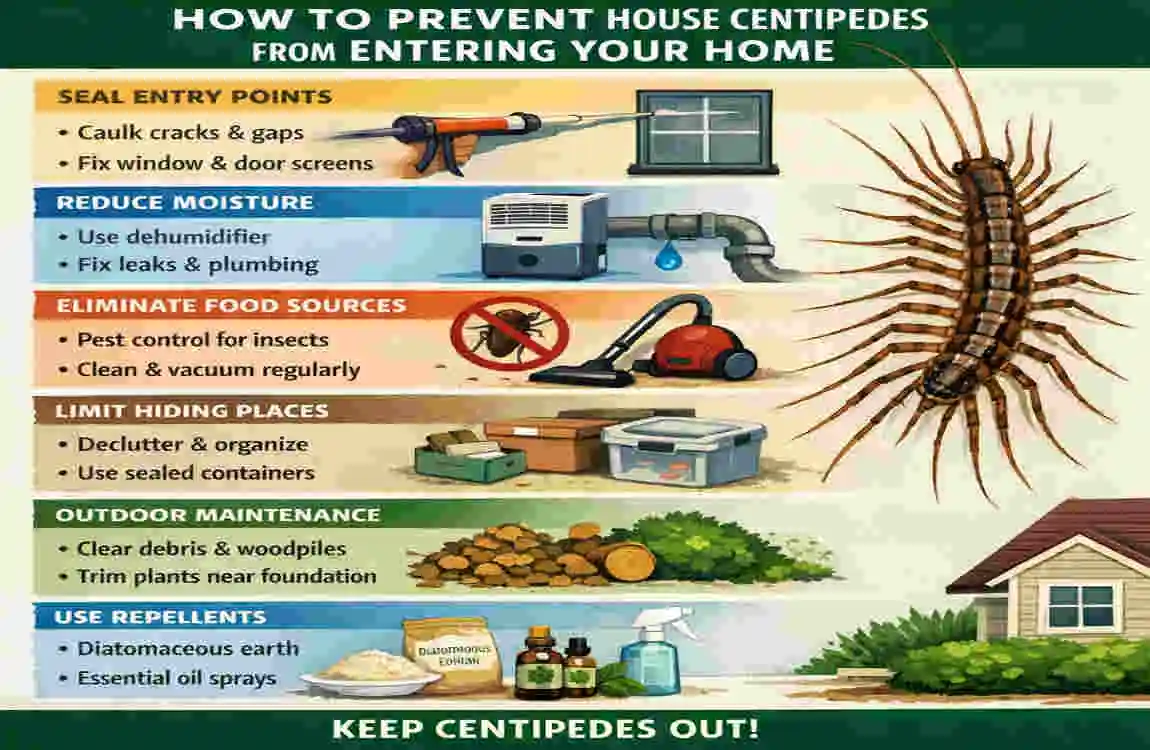
How to Prevent House Centipedes from Returning

Keep Your Home Dry

Dry homes are less attractive to centipedes. Use bathroom fans, fix water issues, and keep basements dry.

Maintain a Clean Home

A cleaner home provides fewer hiding places for centipedes.

Try to:

  • Vacuum regularly
  • Reduce clutter
  • Store items in sealed containers

Outdoor Prevention Tips

Outside your home matters too. Remove leaf piles, improve drainage, and keep mulch away from the foundation.

That lowers the number of insects near your house.

Seasonal Prevention Checklist

  • Spring: Check for cracks and damp spots
  • Summer: Watch humidity levels
  • Winter: Seal doors and windows carefully

A little seasonal care can prevent a bigger pest problem later.

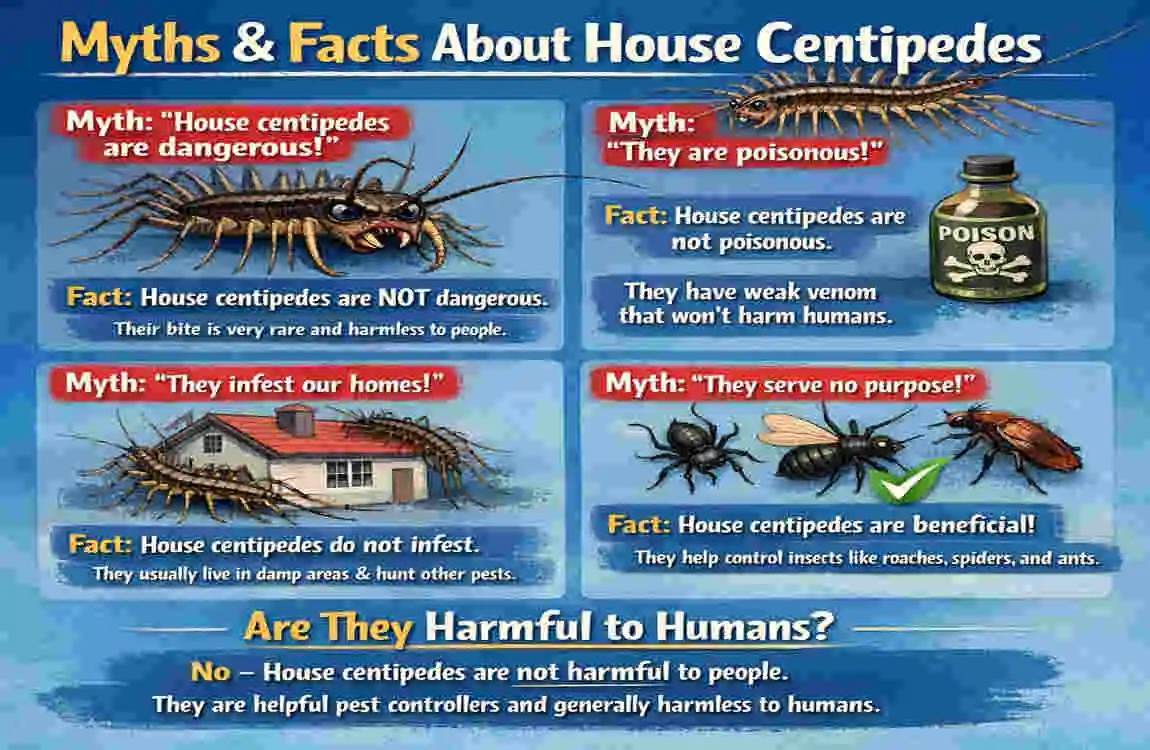
Common Myths About House Centipedes

Myth: House Centipedes Crawl Into Beds

This is not common. They usually stay near damp places and hunt insects, not people.

Myth: They Are Extremely Poisonous

This is exaggerated. Their venom is weak for humans and rarely causes serious issues.

Myth: Seeing One Means a Huge Infestation

Not always. Sometimes you may only have a few centipedes, especially if one found its way inside.

Myth: They Damage Homes

Unlike termites, house centipedes do not damage wood or structures.

House Centipedes vs Other Common Household Pests

Pest Main Concern Risk Level

House centipede Scary look, rare bite Low

Millipede Harmless, may curl up , very low

Silverfish can damage paper and fabrics. Low to moderate

Cockroaches can spread germs and trigger allergies

This table shows why house centipedes are usually less harmful than many people think.

Should You Kill House Centipedes or Leave Them Alone?

dangerous

Situations Where Leaving Them Alone Makes Sense

If you only see one or two, and they are not bothering you, leaving them alone may be fine. They can help control other pests.

Situations Where Removal Is Better

You may want to remove them if:

  • You see them often
  • You have children or pets who may react
  • Their appearance makes your family uncomfortable

Eco-Friendly Pest Management Approach

The best method is usually a balanced one. Reduce moisture, limit clutter, and control other insects first. That way, you lower centipede numbers without using too many chemicals.

Frequently Asked Questions About House Centipedes

Are house centipedes dangerous at night?

Not really. They are more active at night, but they are not usually dangerous to people.

Can house centipedes climb beds or walls?

Yes, they can climb walls and other surfaces. But they usually avoid people and stay near hiding spots.

What kills house centipedes instantly?

Sticky traps or direct insect sprays may kill them quickly. Still, removing moisture and food sources works better long term.

Why do I keep finding centipedes in my bathroom?

Bathrooms often have moisture, warmth, and small insects. That makes them a common hiding place.

Are house centipedes good or bad?

They are both, in a way. They are unpleasant to look at, but they also help control other pests.

Do house centipedes lay eggs indoors?

Yes, they can reproduce indoors if conditions are right, especially in damp areas with plenty of hiding places.

How long do house centipedes live?

They can live for several years, especially if they find a safe indoor environment.

You may also like...

Leave a Reply

Your email address will not be published. Required fields are marked *