If you suddenly spot a small gecko climbing your wall at night, you are not alone. Many homes, especially in warm or humid places, attract geckos because they are always on the lookout for food, shelter, and a safe place to hide.
| Aspect | Good / Beneficial side | Potential downside (if any) |
|---|---|---|
| Safety for humans | Non‑venomous and harmless; do not bite or attack people under normal conditions . | Very rare minor bite if roughly handled, usually no serious harm . |
| Pest control | Eat mosquitoes, flies, cockroaches, and other insects, helping reduce pests naturally . | Do not eliminate all insects; they only help reduce numbers, not replace hygiene or pest control entirely . |
| Health impact | Lower insect numbers can reduce chances of insect‑borne diseases like dengue or malaria . | Fecal droppings can be a minor hygiene issue if not cleaned; like any wild animal, basic cleanliness is advised . |
| Damage to home | Do not damage furniture or most structures; they mostly just climb walls and ceilings . | Rarely, some species may chew on thin wires or insulation, potentially causing electrical issues . |
| Emotional / cultural views | Many people enjoy them as quiet, low‑maintenance “free pest control” . | Some people find them creepy or worry about them due to myths; others dislike their sudden appearances on walls |
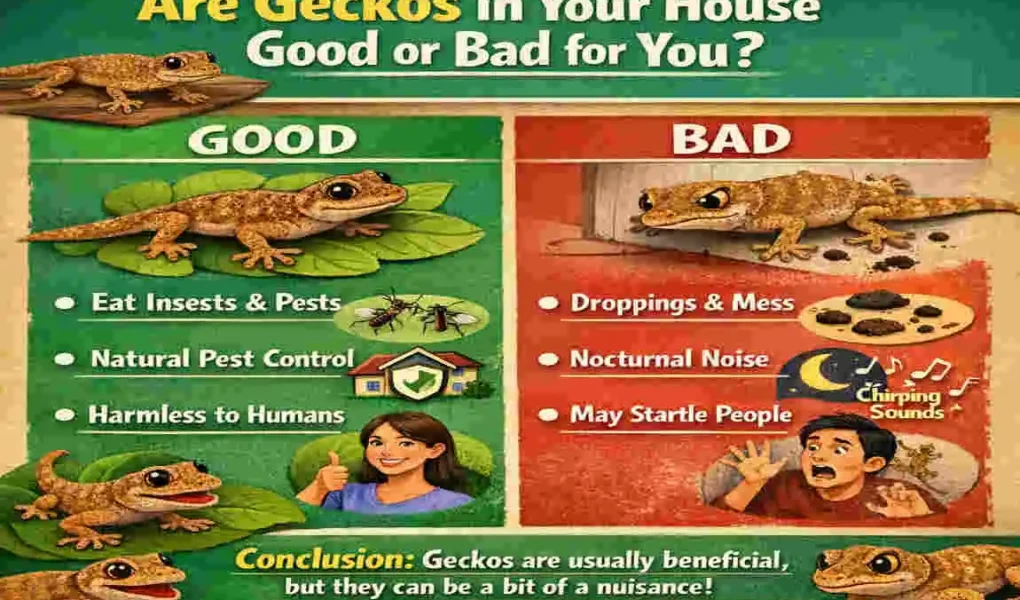
So, is a gecko in the house good or bad? The short answer is mostly good. In many cases, geckos help by eating insects like mosquitoes, flies, and moths. They are usually harmless to people and pets, too. But they can still cause problems, such as droppings, noise, or discomfort for some homeowners.
What Is a House Gecko?
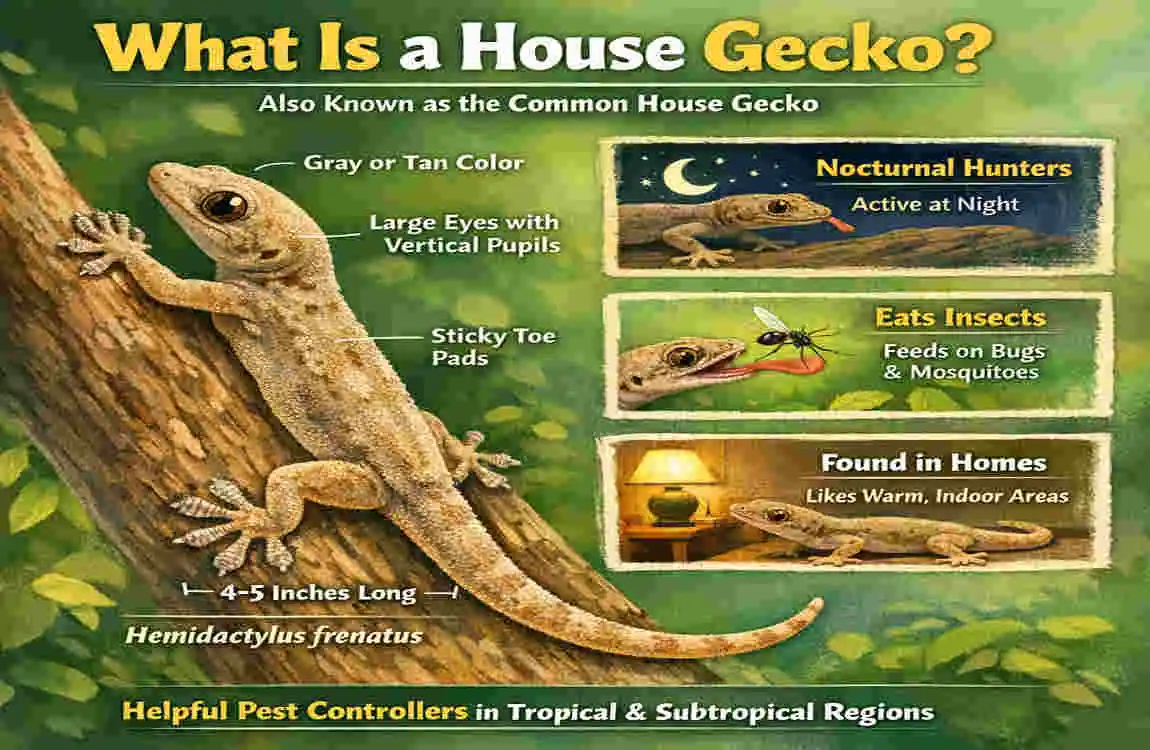
House geckos are small lizards that often live near people. They are quick, quiet, and very good at climbing walls and ceilings. Most of the time, they stay hidden during the day and become active at night.
Common Types of House Geckos
Some of the most common house geckos include the Asian house gecko, the Mediterranean house gecko, and the tropical house gecko. These species are known for adapting well to homes, garages, and outdoor walls.
Why Geckos Enter Homes
Geckos usually come inside for three main reasons: food, warmth, and shelter. If your home has insects, soft lighting, and hidden corners, it becomes a good place for them to stay.
Where Geckos Usually Hide
You will often find them on ceilings, behind furniture, in kitchens, bathrooms, near windows, or close to lights. They like spots where they can watch for insects without being disturbed.
Gecko in House: Good or Bad? Quick Answer
The Short Answer
In most homes, a gecko is more helpful than harmful. It eats pests, avoids people, and rarely causes damage. This is why many people see house geckos as a natural form of gecko pest control.
When Geckos Can Become a Problem
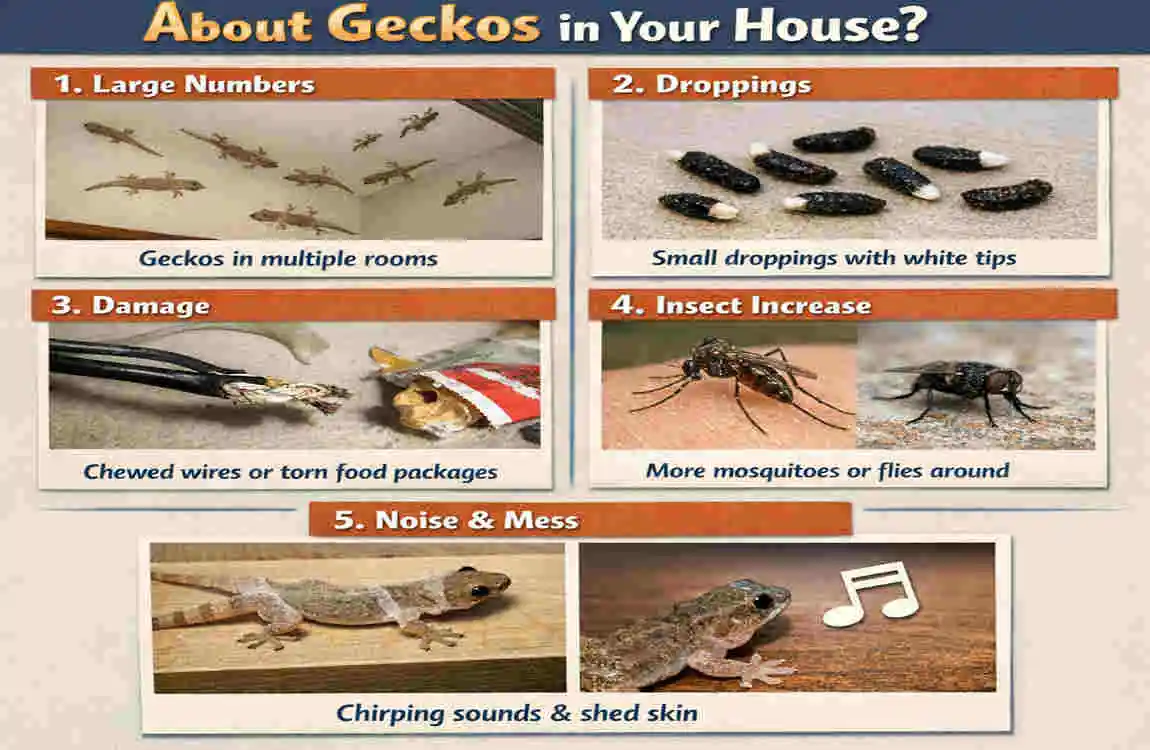
They may become annoying if there are too many of them, if they leave droppings around the house, or if their nighttime sounds bother you. Some people also do not like seeing lizards indoors.
Key takeaway: In most homes, geckos are more beneficial than dangerous.
Benefits of Having Geckos in Your House
Natural Pest Control
One of the biggest benefits of house geckos is that they eat insects. A gecko may help reduce mosquitoes, flies, ants, moths, and even small spiders. If your home has bug problems, a gecko may actually be doing you a favor.
This is one reason people ask whether geckos in the house are good or bad, and often end up finding that geckos are useful helpers rather than pests themselves.
Non-Aggressive Toward Humans
Geckos are not looking for trouble. They usually avoid people and run away when disturbed. They rarely bite, and most of the time, they stay out of your way.
Eco-Friendly Alternative to Chemicals
If you have geckos in your home, they may help reduce your need for chemical sprays. That means less exposure to strong cleaning or pest-control products indoors. For many families, that is a helpful and more natural option.
A Sign of Hidden Insects
Sometimes a gecko inside the home is a sign that insects are nearby. If you keep seeing geckos, it may be worth checking for bugs around lights, windows, drains, or food areas.
Low-Maintenance Wildlife
Unlike rodents, geckos do not build nests in walls or chew wires. They are simple creatures. They usually come, hunt, and hide. That makes them much easier to tolerate than many other household pests.
Benefit vs. Concern Table
Possible Benefit Possible Concern
Eats mosquitoes and flies. Leaves small droppings
Rarely harms people. It can be noisy at night
Helps reduce pests naturally. May make some people uncomfortable
Usually stays hidden. It can signal insect problems
Potential Problems Caused by House Geckos
Gecko Droppings and Cleanliness Issues
Even though geckos are helpful, they can leave behind small black droppings. These may appear on walls, floors, shelves, or behind furniture. Over time, this can become a hygiene issue, especially in kitchens or food storage areas.
Noise Disturbance at Night
House geckos can make clicking or chirping sounds, especially at night. For some people, this is just background noise. For others, it can be annoying, especially if they are trying to sleep.
Can Geckos Carry Diseases?
The risk is usually low, but like many reptiles, geckos can carry bacteria such as Salmonella. That is why you should avoid touching them with your bare hands and always wash your hands afterward.
Allergies and Sensitive Individuals
Most people do not react to geckos. Still, some sensitive individuals may feel uncomfortable around their droppings or shed skin. If someone in the house has a weak immune system, it is smart to keep the home clean and avoid direct contact.
Geckos Attracting Other Predators
In some regions, geckos may attract cats, snakes, or other animals that hunt small reptiles. This is not common in every home, but it can happen if there is a larger outdoor pest issue.
Are Geckos Dangerous to Humans or Pets?
Do Geckos Bite?
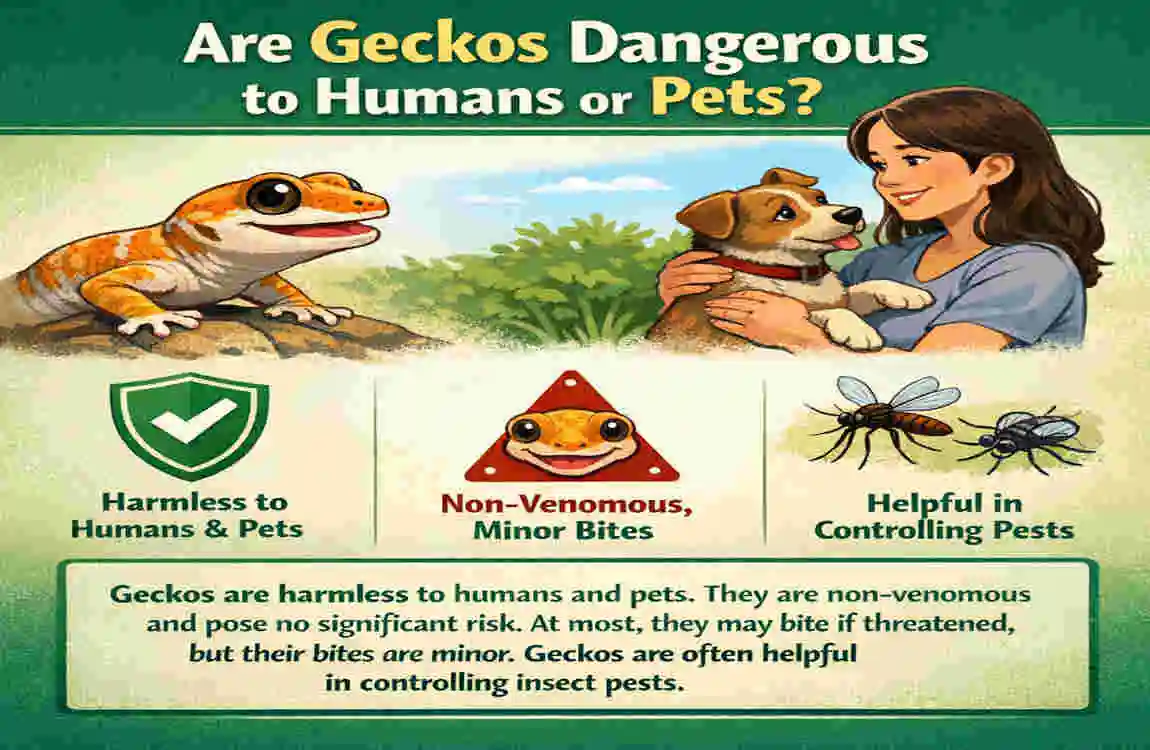
Geckos can bite if they feel trapped, but this is rare. Their bites are usually very small and cause little to no pain. They are not aggressive animals.
Are House Geckos Poisonous?
No, the most common house geckos are not poisonous or venomous. They do not attack people or release toxins.
Are Geckos Safe Around Children?
Yes, generally they are safe around children as long as children do not try to catch or handle them. Wild geckos should always be left alone.
Are Geckos Harmful to Cats and Dogs?
Usually, no. But some pets may chase or eat them. That can lead to a mild stomach upset. It is better to stop pets from playing with wild geckos.
Cultural Beliefs About Geckos in the House
Geckos as Symbols of Good Luck
In many cultures, people believe geckos bring good luck. Some even see them as signs of protection, prosperity, or positive energy. This is why the phrase are geckos good luck is common in many homes.
Spiritual Meanings Associated With Geckos
Some people connect geckos with adaptability, Survival, and renewal. Because geckos can live in many environments, they are often seen as symbols of strength and flexibility.
Superstitions Around House Geckos
Depending on the region, a gecko in the home may be seen as a good omen or a warning sign. Some families believe they bring blessings, while others think they point to changing weather or hidden energy in the house.
Scientific vs Cultural Perspectives
From a scientific point of view, geckos are just small reptiles looking for food and shelter. From a cultural perspective, they may hold deeper meaning. Both views can coexist. What matters most is how you feel about having them inside.
Why Are There So Many Geckos in My House?
Presence of Insects
The biggest reason is simple: insects. If your house has bugs, geckos will hunt them down.
Moisture and Humidity
Geckos also like warm, damp spaces. Bathrooms, kitchens, laundry areas, and places with leaks can attract them.
Open Entry Points
Cracks, open doors, loose window screens, and roof gaps can all provide geckos with easy access.
Outdoor Lighting
Bright lights attract insects, and insects attract geckos. If you keep outdoor lights on all night, you may notice more of them around your home.
How to Prevent Geckos From Entering Your House
Seal Entry Points
Close cracks in walls, fix broken screens, and add door sweeps. Even small gaps can become easy entry points.
Reduce Indoor Insects
Keep food covered, clean crumbs quickly, and remove standing water. The fewer bugs you have, the less reason geckos have to stay.
Lower Outdoor Attraction
Use softer lights outside when possible. Bright white lights often attract more insects than warm-toned lighting.
Natural Gecko Repellents
Some people use garlic, peppermint spray, or eggshells near problem areas. These methods may help a little, though results can vary. They are usually better than harsh chemical sprays inside the home.
Maintain a Clean Home
A tidy home is less attractive to both insects and geckos. Regular cleaning, less clutter, and better storage habits can make a big difference.
Safe and Humane Ways to Remove Geckos
Catch-and-Release Methods
If you want to remove one gecko, use a container and a piece of cardboard. Gently trap it, carry it outside, and release it away from the house.
Sticky Traps and Humane Concerns
Sticky traps can hurt geckos and cause suffering. For that reason, many people prefer more humane methods instead of using them indoors.
Professional Pest Control
If geckos keep coming back in large numbers, you may have an insect problem or an entry-point problem. In that case, pest control help may be the best step.
What Not to Do
Do not use dangerous chemicals inside your clean home to remove a gecko. Also, do not try to grab or harm it aggressively. That can hurt both you and the animal.
When Should You Be Concerned About Geckos?
Large Infestations
If you are seeing many geckos, lots of droppings, or hearing them constantly at night, it may be time to act.
Signs of Underlying Pest Issues
Geckos often indicate that insects are nearby. So if you notice them often, check for bugs, moisture, and food sources.
Health Concerns
People with weak immune systems should be extra careful about droppings and sanitation. A clean home lowers risk and keeps everyone safer.
Frequently Asked Questions
Is a gecko in the house good or bad for health?
Usually good overall, because geckos eat insects. Still, their droppings and possible bacteria mean you should keep the area clean.
Are geckos lucky in the house?
Many cultures say yes. Geckos are often linked with good luck, protection, and positive energy.
Should I remove geckos from my home?
Only if they bother you or if there are too many. One gecko is usually not a serious problem.
Can geckos damage property?
Not usually. They do not chew walls, wires, or furniture like rodents do.
What smells keep geckos away?
Some people try peppermint, garlic, or strong herbal smells. These may help, but sealing entry points is more reliable.
Do geckos mean you have bugs?
Often, yes. Geckos usually follow their food source.
Are geckos safe to touch?
It is better not to touch wild geckos unless you must. If you do, wash your hands afterward.
How long do house geckos live indoors?
Their lifespan depends on food, water, and safety, but many live for several years if conditions are good.