ants in house can't find source
Cleaning Home Improvement

Why Are Ants in My House If I Can’t Find the Source?

You spot a few ants marching across your kitchen counter, and at first, it seems simple enough. You grab a tissue, wipe them away, and look around for the nest. But here’s the strange part: you follow the trail, and then it just disappears. No pile of crumbs. No obvious hole. No nest in sight.

That is exactly why ants in house can’t find source feels so frustrating. It’s not just about seeing ants. It’s about the mystery behind them. When you cannot figure out where they are coming from, the problem feels bigger and harder to control.

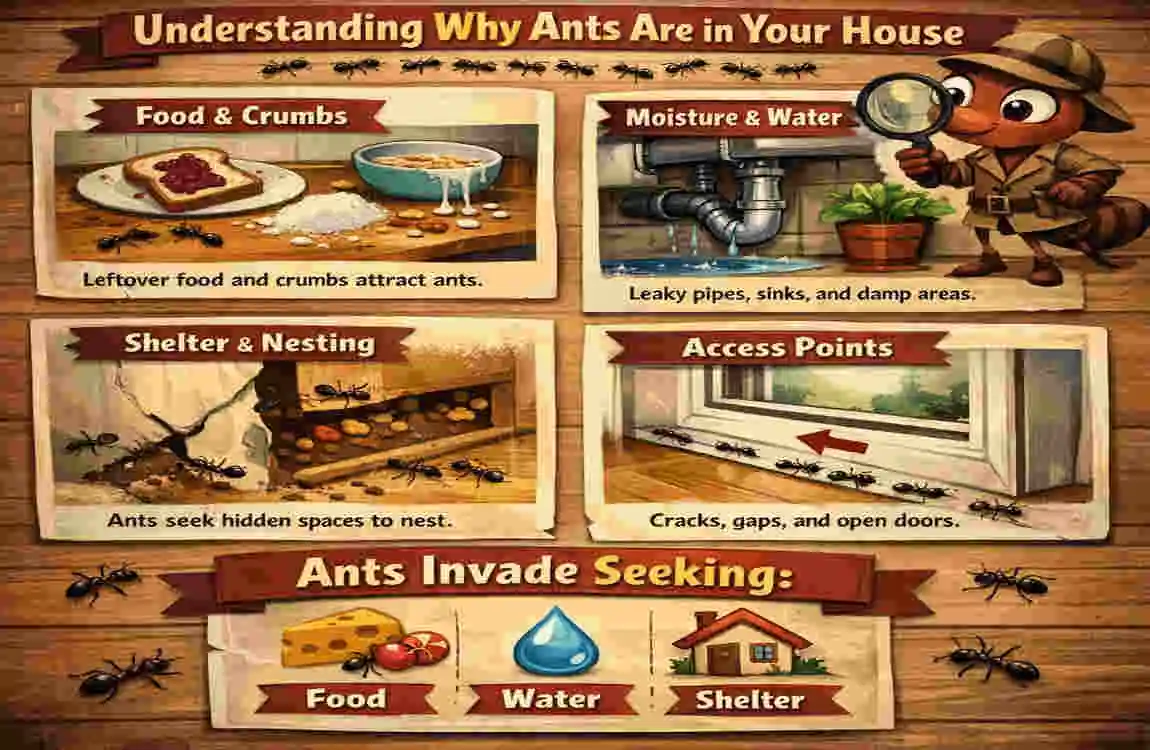
The truth is, ants are small, clever, and persistent. They can squeeze through tiny gaps, travel through wall spaces, and forage far from their nest in search of food, water, or shelter. Sometimes, what looks like a random invasion is actually a sign of something hidden in your home. Maybe a damp pipe. Maybe an outdoor nest. Maybe a crack in the wall you have never noticed.

Potential Source Why It Often Goes Unnoticed Recommended Action
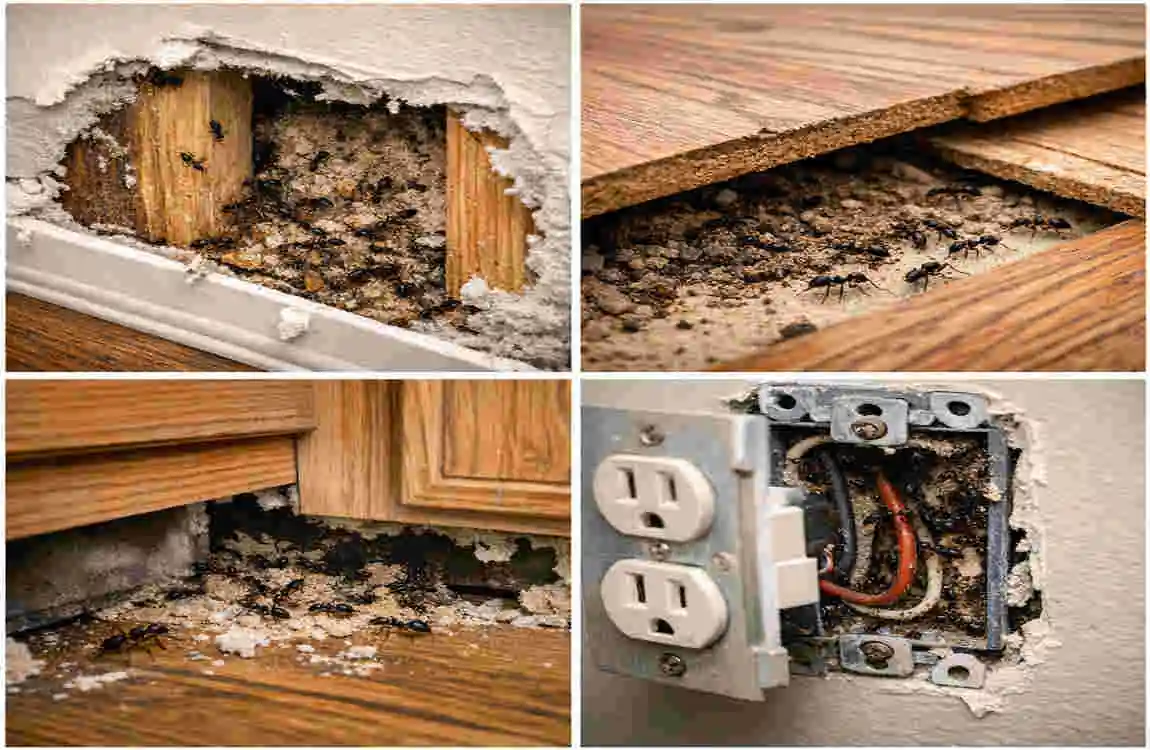
Structural Voids Ants often nest inside wall cavities, subfloors, or ceilings . Look for trails near baseboards or electrical outlets .
Micro-Gaps Tiny cracks in foundations, window seals, or door thresholds allow entry . Seal gaps larger than a quarter-inch with caulk .
Utility Penetrations Gaps around pipes, gas lines, and HVAC units serve as “highways” . Inspect and seal areas where utilities enter the structure .
Hitchhiking Items Ants can be introduced via infested houseplants, groceries, or furniture . Inspect new plants and items brought inside for stowaway pests .
Hidden Moisture Leaking pipes, sweating faucets, or HVAC condensation attract foraging ants . Fix leaks and remove sources of standing water or moisture .

Common Reasons for Hidden Ant Invasions

ants in house can't find source

When people ask why ants in house can’t find source, the answer is usually not “because they appeared from nowhere.” Ants almost always have a reason for coming inside. The trick is that their reason is often hidden.

Some ants are just scouting. Some are following a scent trail. Some are looking for moisture. Others may already have a nest in a hard-to-inspect place, such as a wall void, a floor crack, or the outdoor edge of the home. In many cases, the ants you see are only a tiny part of a much larger colony.

Foraging scouts may be the first sign

One of the most common reasons ants in the house can’t find the source is that you are seeing foraging scouts. These are worker ants sent out to search for food and water. They do not live alone. They leave the nest, explore, and return to report what they find.

That means a few ants on the counter do not always mean the nest is in your kitchen. It may be outside, under a slab, inside a wall, or somewhere nearby. The ants you spot are simply the “search team.”

This is why the trail can seem to vanish. Ants may move along baseboards, behind appliances, or into tiny cracks where your eyes cannot follow. Once they disappear into a hidden gap, it feels like the source is impossible to find.

Moisture can attract ants without obvious water

Another major reason ants appear is moisture. You may not see standing water, but ants can still detect damp areas. A slow leak under the sink, condensation near a pipe, wet wood, or a bathroom that stays humid can all attract them.

This matters because moisture does two things at once. First, it gives ants a water source. Second, it can soften materials such as wood, drywall, and insulation, making hidden nesting easier.

So if you keep asking why ants in house can’t find source, check the places where water collects quietly. Behind toilets. Under sinks. Around AC lines. Near washing machines. Inside cabinets with poor airflow. These spots often get overlooked because they do not look dramatic from the outside.

Outdoor nests often send ants indoors

Sometimes the nest is not inside at all. It is outside, near the home, and the ants are simply entering through tiny gaps. This is especially common when plants, tree branches, or garden edges come into contact with the building.

In that case, the ants can move from the yard into the house without using a big, obvious opening. They may travel along the foundation, slip through a crack, and head straight to food or moisture.

This is one reason many homeowners think they have a hidden indoor nest when the source is actually outdoors. The trail leads into the house, but the colony itself may live just a few feet away.

Hitchhiking items can bring ants inside

Sometimes ants arrive by accident. A box from storage. A potted plant. Firewood. Grocery bags. Used furniture. Even a package left on the floor for too long can carry a few ants into your home.

These situations often create a small beginning that grows over time. At first, you may see only one or two ants. Then a few more. Then a trail. Before long, it looks like a full infestation, even though the original entry was tiny.

Some ant species are harder to track than others

Not all ants behave the same way. Some species are easier to spot, while others are much better at hiding.

Common home invaders include:

  • Odorous house ants, which are known for forming trails and moving quickly toward food
  • Carpenter ants, which can nest in damp or damaged wood
  • Pharaoh ants, which are tiny and can spread through hidden spaces
  • Little black ants, which often enter through cracks and wall gaps

Some species prefer sugary food. Others are drawn to grease, protein, or moisture. That is why a kitchen cleanup alone may not solve the issue. You need to figure out what is attracting them in the first place.

Why this problem feels worse during humid months

If you live in a place with hot, wet weather, the issue can become even more noticeable. In and across Punjab, monsoon humidity can make homes more appealing to ants because damp conditions create more moisture indoors and outdoors.

During humid months, ants may move in search of dry shelter, water, or new nesting spots. That is why some homes see a sudden surge after rainfall or during seasonal weather changes. The ants are not random. They are responding to conditions that help them survive.

Quick comparison table: common reasons ants appear

ReasonDescriptionWhy It’s Hard to Spot

Foraging scouts Worker ants search for food and water Trails may disappear into cracks

Moisture attraction Leaks and damp zones draw ants in The source may be hidden under sinks or behind walls

Outdoor nests Ants enter from outside nests near the house Trails look like they “come from nowhere”

Hitchhiking items Ants arrive on boxes, plants, or furniture The problem starts small and spreads slowly

The big takeaway is simple: if ants in house can’t find source, the source is often hidden rather than absent.

Sneaky Entry Points to Check

Once you know ants are not appearing by magic, the next question is where they are getting in. This is where careful inspection matters. The most frustrating thing about ants in the clean house is that the entry point is often small, hidden, and easy to ignore.

A professional would not start by guessing. They would start by checking the most likely routes first. You can do the same.

Windows and doors are classic weak spots

Windows and doors are among the easiest points of entry for ants. Tiny gaps around frames, worn weather stripping, loose seals, and cracks in the caulking can all become pathways.

Even a gap that seems too small to matter can still be enough for ants. They do not need a wide opening. They only need a sliver.

Pay special attention to:

  • Window corners
  • Door thresholds
  • Gaps around sliding doors
  • Cracked caulking near frames
  • Areas where sunlight shows through

If you notice ants on window ledges or near door trim, that is a strong clue that the trail is entering from outside rather than starting inside the room.

Pipes and utility lines often hide the real entry

Water pipes, drain lines, AC lines, gas connections, and cable openings are all common hidden entry points for ants. These gaps are especially important to inspect if ants keep appearing under sinks, around bathrooms, or near laundry areas.

The problem is that utility penetrations often get little attention during regular cleaning. They may be hidden behind cabinets, appliances, or decorative covers. But to an ant, these are open doors.

Look under sinks. Check the wall where pipes enter. Inspect around the back of toilets and washing machines. Search for tiny cracks around lines that pass through exterior walls.

Vents, outlets, and wall gaps can be overlooked

Ants do not always come through the obvious places. They can move through air vents, electrical boxes, and wall voids. If the trail seems to vanish in one room and reappear in another, your walls may be acting like a highway system.

That is why it is so important not to focus only on the visible floor and counters. Ants often travel inside hidden spaces, especially where they can stay close to warmth or moisture.

Things to check include:

  • Air vents
  • Baseboards
  • Electrical outlets
  • Cracks near light switches
  • Wall corners
  • Small gaps behind cabinets

If you see ants emerging from a wall area with no visible opening, that often means the real entry point is tucked inside the structure.

Outdoor bridges can lead ants straight inside

Sometimes the source is outside the home, but the route is very direct. Plants touching the wall, tree branches leaning over the roof, stacked firewood, garden furniture, and even garden hoses can create a bridge for ants.

This is one of the easiest problems to miss because it does not look like a “hole” in the home. But ants love shortcuts.

If a bush touches your wall or a branch touches your window, ants may use that contact point to move indoors. This is why trimming vegetation can be just as important as sealing cracks.

Nighttime inspection helps more than daytime inspection

Ants are often more active at night or in low light. A flashlight inspection after dark can reveal movement you would miss during the day. Their trails may be easier to spot when the house is quiet and lights are lower.

Try checking:

  • Kitchen counters
  • Baseboards
  • Under sinks
  • Around trash bins
  • Near pet food
  • Along exterior walls

A night inspection is especially useful when you are dealing with ants in the house and can’t find the source, because it lets you follow the movement before the trail disappears into a hidden space.

Inspection checklist table

AreaWhat to InspectTools Needed

Kitchen and bath Behind appliances, under sinks, around cabinets Flashlight, magnifying glass

Exterior walls Foundation cracks, siding gaps, window edges Caulk gun, sealant

Utilities Pipe openings, vent edges, electrical boxes Flashlight, expanding foam or sealant

Outdoor spaces Plants touching walls, firewood piles, soil mounds Gloves, rake, pruning shears

The more patient you are here, the better your results will be. Hidden entry points are usually small, but once you find one, the whole problem starts to make sense.

How to Locate the Hidden Nest

ants in house can't find source

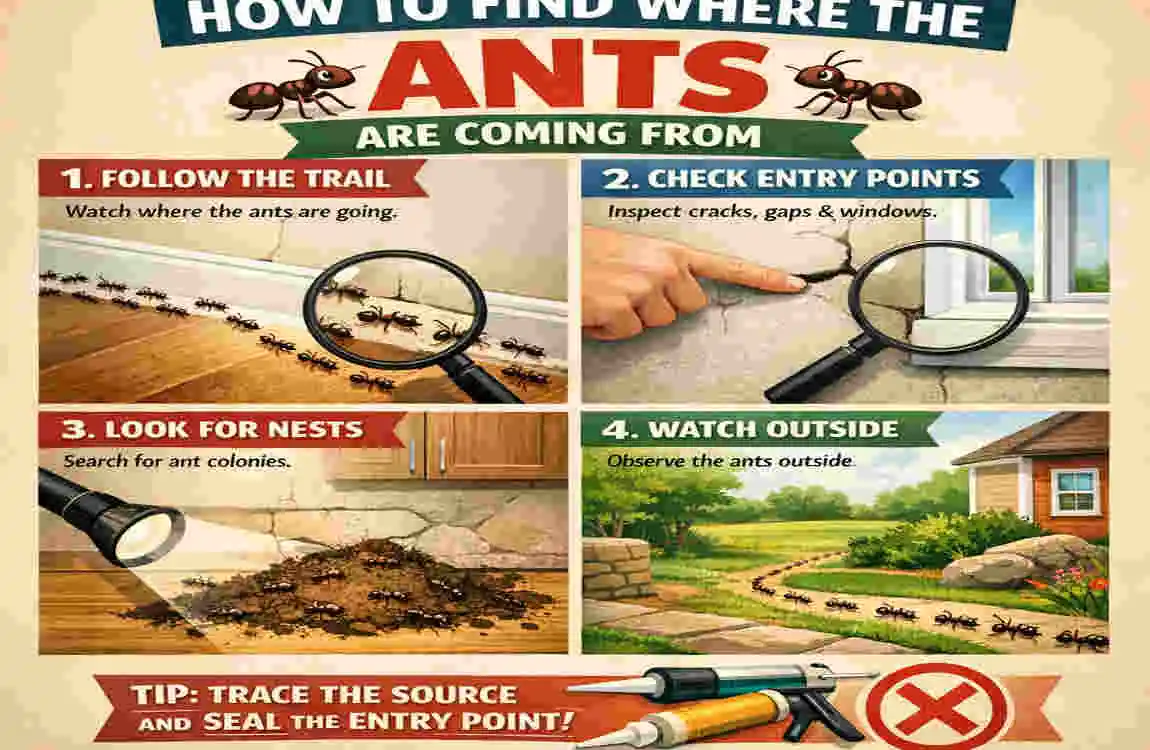
When people say ants in house can’t find source, they often mean they can see the ants but not the nest. Finding the nest is important because it helps you understand whether you are dealing with a small local problem or a larger colony with multiple access points.

The good news is that there is a practical way to investigate. You do not need special equipment to start. You only need patience, observation, and a willingness to trace the ants carefully.

Follow the trail in reverse

The first step is simple, but it matters a lot. Watch where the ants are going, then try to follow them back instead of only watching them come toward food.

If you place a small bait near the trail, the ants may gather more visibly. That makes it easier to see the direction they travel. Sugar water or a small sweet lure can help bring workers out into the open, which makes trail-following easier.

When you follow the trail backward, stay calm and move slowly. Ants may seem random at first, but if you watch long enough, they usually reveal a pattern.

Look for moisture-rich areas

If you cannot find the source, check where water might be hiding. Ants often nest near moisture because it supports their survival and softens the building materials they use.

Focus on:

  • Wet wood
  • Leaky pipes
  • Condensation around HVAC units
  • Damp cabinets
  • Bathroom corners
  • Laundry areas
  • Wall areas near water lines

This step matters because a nest does not always look like a classic dirt mound. Indoors, it can hide inside damaged wood, behind trim, in insulation, or inside a warm wall cavity.

Search outdoors near the house

Even if the ants are inside, the nest may still be just outside the wall. Check along the foundation, under mulch, near flower beds, around firewood, under stones, and near soil mounds.

Many homeowners forget to inspect the yard because the problem shows up in the kitchen. But ants can travel from an outdoor nest into a home through tiny cracks and gaps.

Look for:

  • Small dirt piles
  • Ant movement along walls
  • Nest openings near pavers
  • Activity under flower pots
  • Trails running under siding or through vents

Sometimes the nest is not a single giant colony. It may be a satellite nest connected to a larger colony elsewhere. That means the ants you see inside may be part of a network rather than one simple nest.

Watch for carpenter ant signs

If you suspect carpenter ants, look for frass. Frass is a sawdust-like material that may appear near nest areas or entry holes. It can be a strong clue that ants have been tunneling in wood.

Carpenter ants do not eat wood the way termites do, but they do hollow it out for nesting. That is why damp or damaged wood is such a concern. If you see frass, soft wood, or hollow-sounding trim, it is worth taking seriously.

Other carpenter ant signs may include:

  • Large black ants
  • Rustling in walls
  • Piles of debris near baseboards
  • Activity near wet wood
  • Ants appearing after dark

Accept the possibility of a satellite nest

This is one of the most important ideas to understand. Sometimes the ants you see inside are not living in the main colony. They are part of a satellite nest.

A satellite nest is a smaller nesting area connected to the main colony. It can form indoors under favorable conditions, especially when food and moisture are available.

That is why ants in house can’t find source can be such a tricky problem. You may think you are dealing with one single nest, but in reality, there may be a main nest outside and a smaller nest inside.

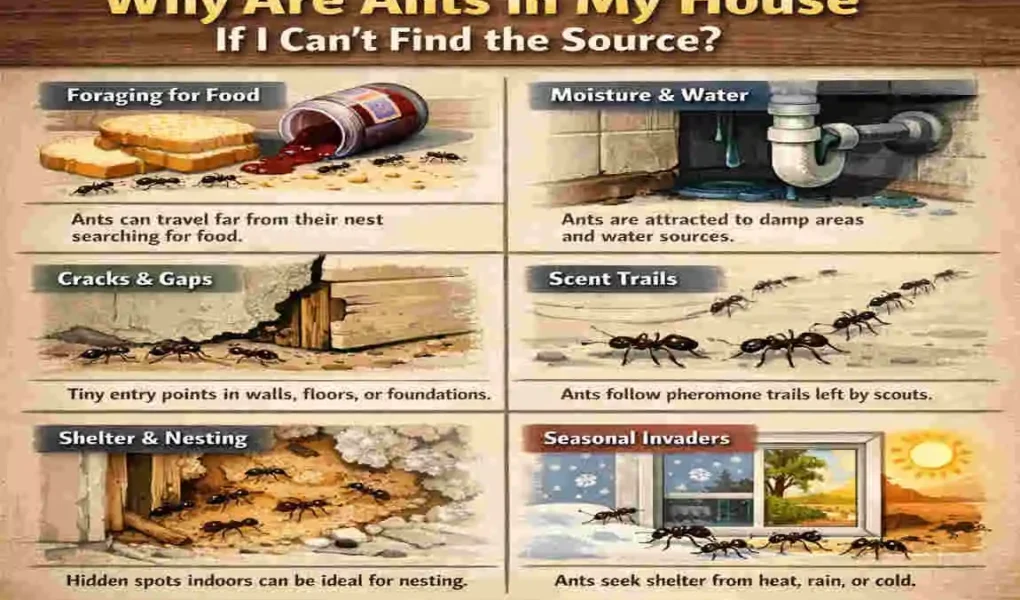
This simple visual shows why ants can seem to appear from nowhere. The trail may pass through places you cannot see, especially inside walls or behind cabinets.

Signs that suggest you need professional help

You may be able to handle a small problem on your own, but some signs point to a deeper issue.

Call in help if:

  • Ants return every day
  • You keep finding them in multiple rooms
  • You notice water damage or soft wood
  • You suspect carpenter ants
  • You cannot locate the trail at all
  • The infestation gets worse after sealing visible gaps

These signs often mean the issue is larger than a simple cleanup job.

Effective Elimination Strategies

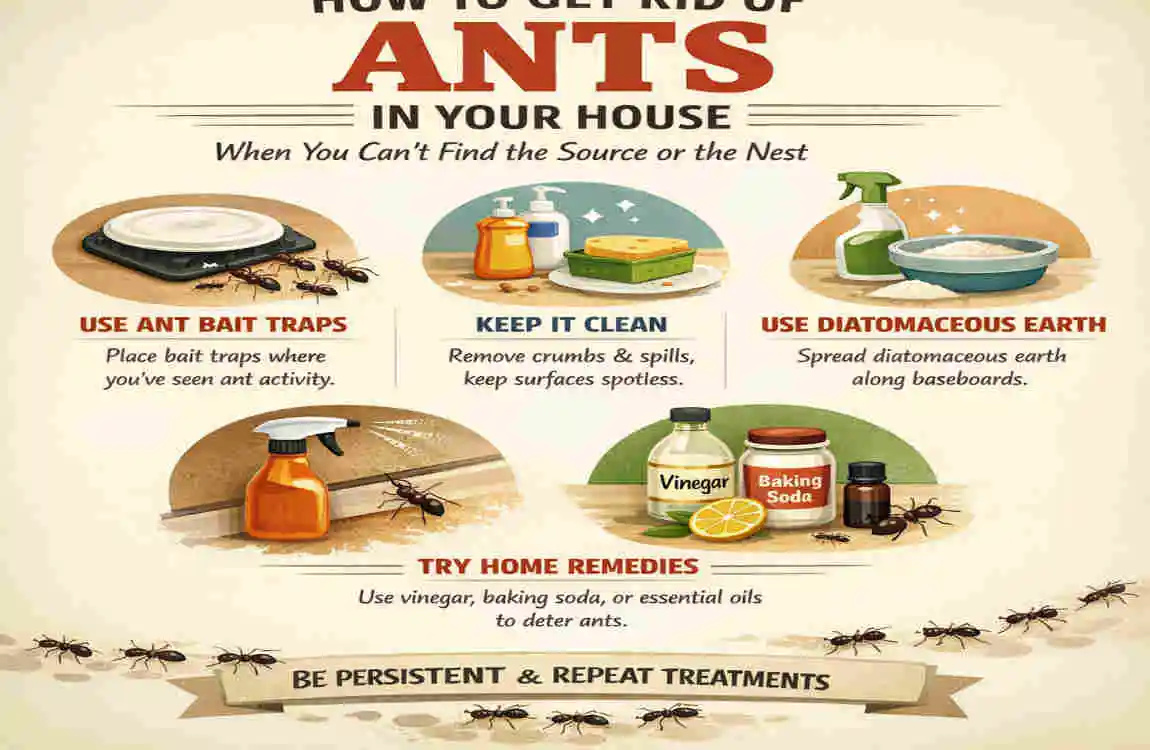
Once you have a better idea of where the ants are coming from, it is time to stop them. The best plan usually combines baiting, cleaning, sealing, and, when needed, professional support.

If you are dealing with ants in house can’t find source, avoid the urge to spray everything immediately. Fast sprays may kill the ants you see, but they often do not solve the bigger problem.

Baits often work better than instant sprays

Baits are among the smartest first moves because ants carry them back to the colony. That means you are not only treating the ants you can see. You are targeting more of the nest.

This is especially useful when you cannot find the source. The bait becomes a tool that helps you control the problem without needing to know every hidden route right away.

Place bait near active trails, but do not place it right on top of the trail if that discourages feeding. Give the ants room to approach and take it back.

Why bait helps:

  • It reaches more ants than a spray
  • It can reduce colony activity over time
  • It works well for hidden nests
  • It helps you observe where ants are traveling

The one thing to remember is patience. Baits do not usually work overnight.

Cleaning removes the trail they follow

Ants leave scent trails behind them. That is how they guide other ants to food and back to the nest. If you clean those trails properly, you can disrupt traffic flow.

Focus on:

  • Wiping counters and floors
  • Cleaning crumbs immediately
  • Vacuuming baseboards and corners
  • Rinsing pet food areas
  • Taking out trash regularly
  • Wiping up sticky spills

Use a cleaner that effectively removes residue. Vinegar water can help with surface cleaning, and regular vacuuming can reduce the scent marks that ants follow.

This step may seem simple, but it is powerful. If ants can no longer smell the path, they have a harder time repeating it.

Sealing cracks shuts down the route

If you want long-term control, sealing matters. Once you find the gap, crack, or opening, close it properly. Use caulk, sealant, foam, or other suitable materials based on the area.

Pay attention to:

  • Window frames
  • Door trim
  • Pipe openings
  • Baseboard gaps
  • Wall cracks
  • Exterior siding gaps

Sealing helps even when you do not know the exact nest location. It reduces access and makes it harder for ants to keep coming inside.

Natural remedies can help, but they have limits

Many people try natural fixes first. Some of them can help in the short term, especially if you are dealing with a small problem.

Common options include:

  • Diatomaceous earth in dry areas
  • Vinegar wipes for cleaning trails
  • Soapy water for wiping visible ants
  • Cinnamon or peppermint scents as temporary deterrents

These methods can be useful, but they are not always enough for a hidden or established infestation. They work best as support tools, not as your only solution.

When professional help makes sense

Sometimes ants are more than a nuisance. They can point to hidden moisture, wood damage, or a persistent structural entry point. If the ants keep returning after you clean and seal, a professional inspection may save you time and stress.

A pro can help with:

  • Identifying species
  • Finding hidden nests
  • Checking moisture-related damage
  • Treating harder-to-reach entry points
  • Creating a more complete control plan

This is especially helpful if you suspect carpenter ants or if you live in a home with many older cracks and openings.

Strategy comparison table

MethodProsConsTypical Cost (PKR)

Bait stations Targets more of the colony Takes time to work 500–1500

Perimeter spray Quick barrier May not solve the nest problem 1000+

Professional treatment More thorough and targeted Higher upfront cost 5000+

Natural remedies Easy to try at home Often temporary Low

A practical order of attack

If you want a simple plan, follow this order:

  1. Find the trail
  2. Place bait
  3. Clean the surface
  4. Seal visible cracks
  5. Check moisture sources
  6. Call for help if ants keep returning

That sequence gives you a better chance of solving the cause instead of just chasing the symptoms.

Prevention for Homes

ants in house can't find source

Once you solve the current problem, the next step is making sure it does not come back. Prevention is about protecting your time, your comfort, and your home.

weather can make ant problems more stubborn. Warm temperatures, monsoon humidity, and hidden moisture around plumbing or walls can all provide the conditions ants like. So prevention should be practical, seasonal, and consistent.

Fix leaks and moisture problems early

This is one of the most important habits you can build. If ants are attracted to water, then controlling moisture helps reduce the appeal of your home.

Check for:

  • Dripping taps
  • Slow pipe leaks
  • Damp under-sink cabinets
  • Condensation around AC lines
  • Wet bathroom corners
  • Leaky outdoor spigots

Keep food sealed and surfaces dry

Ants do not need much to stay interested. A few crumbs, a drop of syrup, or an uncovered snack can be enough. That is why kitchen habits matter so much.

Try to:

  • Store food in sealed containers
  • Wipe counters after cooking
  • Sweep floors regularly
  • Avoid leaving dishes overnight
  • Rinse sticky jars before tossing them
  • Keep pet food stored properly

Dry sinks nightly if possible. This small habit removes both water and food residue from the areas ants love most.

Trim outdoor access points

Your yard is part of the defense line. If branches, bushes, and vines touch the house, ants have a path. If firewood is stacked against the wall, ants have a place to shelter. If soil or mulch is too close to the foundation, ants have an easy landing spot.

Simple outdoor prevention includes:

  • Trimming plants back from walls
  • Keeping firewood away from the house
  • Clearing debris from the foundation
  • Checking potted plants before bringing them in
  • Watching for soil contact with siding

Small changes outside can stop bigger problems inside.

Use seasonal checks, not just emergency cleaning

A lot of people only think about ants once they show up. But the better plan is to inspect before the problem grows.

In hot or humid seasons, walk through your home and look for:

  • Cracks that have widened
  • Damp spots around plumbing
  • Ant activity near windows
  • Damage near vents and trim
  • Food storage mistakes

This is especially useful after rains or during the monsoon, when ants may shift indoors in search of drier shelter.

Create a simple monthly routine

You do not need a complicated prevention plan. A short monthly routine can make a huge difference.

Here is a simple one:

  • Check under sinks
  • Inspect window and door seals
  • Clean behind appliances
  • Look for ant trails near baseboards
  • Trim outdoor vegetation
  • Recheck food storage areas

If you stay consistent, you make your home much less attractive to ants.

FAQs

Why are ants in my house if I can’t find the source?

Usually because the source is hidden. The ants may be entering through cracks, wall voids, pipes, or outdoor pathways you have not noticed yet.

How long do ant baits take to work?

In many cases, baits may take one to two weeks to show clear results. They work gradually because ants carry the bait back to the colony.

Are ants dangerous?

Most ants are more of a nuisance than a danger. However, carpenter ants can damage wood, and any large infestation should be taken seriously.

Why do ants keep coming back after cleaning?

Cleaning removes food, but it may not remove the nest, the entry point, or the moisture source. If those remain, the ants can return.

What is the best first step if ants in house can’t find source?

Start with a careful inspection of kitchens, bathrooms, windows, doors, and utility openings. Then place bait and clean the trail simultaneously.

Can I use natural remedies only?

You can try them, but they usually work best as a short-term support tool. For a hidden nest, you will often need baiting, sealing, and moisture control too.

When should I call a pest professional?

Call a professional if the ants keep returning, spread to multiple rooms, or seem linked to wood damage or a hidden water problem.

You may also like...

Leave a Reply

Your email address will not be published. Required fields are marked *